_1762508637542.webp)
How to Choose a Camellia Oleifera Seed Extract Supplier?
Oct 13, 2026
Choosing the right camellia oleifera seed extract supplier requires evaluating several factors: product quality and active ingredient verification, certification compliance (ISO, GMP, HACCP), extraction method safety, traceability from seed to shipment, and the supplier's ability to meet your specific application needs. Whether you are formulating skincare products, dietary supplements, or agricultural inputs, the supplier you choose directly affects your product performance, regulatory standing, and supply chain stability. This guide walks through each evaluation step so procurement teams and formulators can make confident, well-supported sourcing decisions.
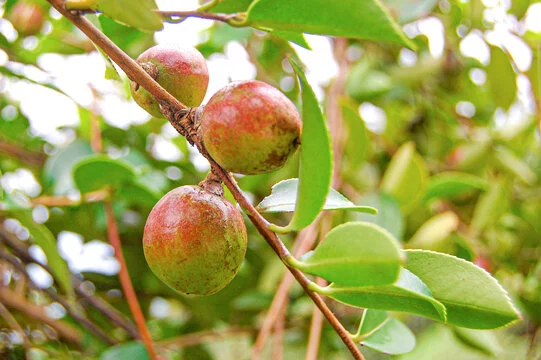
Understanding Your Procurement Needs and Market Landscape
Your team needs to have a clear idea of what they need before they call any camellia oleifera seed extract suppliers. Everything from the grade requirements to the format of the packaging is affected by the application context.
Define Your Application Segment
In each industry, the oil-tea camellia seed extract is used for very different things. To make soft surfactants and antioxidants, cosmetic formulators need high-purity tea saponins. Dietary supplement companies look for tea that has standard amounts of polyphenols and saponins and records for each batch. Companies that make agricultural inputs need sustainable saponin amounts for killing snails and other shellfish. Starting with a clear description of the application stops specs from not matching and sampling cycles from being wasted.
Know the Key Bioactives You Need
Camellia oleifera seed extract is useful because it has a certain group of beneficial compounds, including tea saponins (18% to 98%), unsaturated fatty acids, tea flavonoids, and vitamin E. Tea saponins are natural non-ionic surfactants that have been shown to reduce inflammation and kill germs. You can choose the right grade and test method if you know which of these compounds your product claim is based on. UV spectrophotometry is the standard way to measure saponin levels.
Map Your Regulatory and Volume Requirements
To get plant ingredients into the US market, you have to follow the FDA's rules for food supplements. For cosmetic uses, you have to prove that the ingredients are safe. Set your approval goals early on, such as organic, KOSHER, HALAL, or FSSC22000, before you start looking at providers. Figure out your volume profile as well. Trial orders usually start at a few kilograms, while commercial supply usually starts at 25 kg/drum.
Establishing Core Supplier Selection Criteria
After making a list of your needs, you can make a structured scorecard to use when looking at different companies that make camellia oleifera extract.
Quality Assurance and Certification Stack
As a minimum, a trustworthy company that makes camellia oleifera seed extract should have certifications that can be checked. As a minimum, you should start with ISO9001 (quality control), FSSC22000 (food safety), HACCP, and FDA facility registration. Getting KOSHER and HALAL certifications lets you reach more people. If your suppliers give you batch-level HPLC analysis reports instead of just generic certificates of analysis, your quality assurance team will have the proof they need for regulatory audits and market claims.
Extraction Method and Solvent Safety
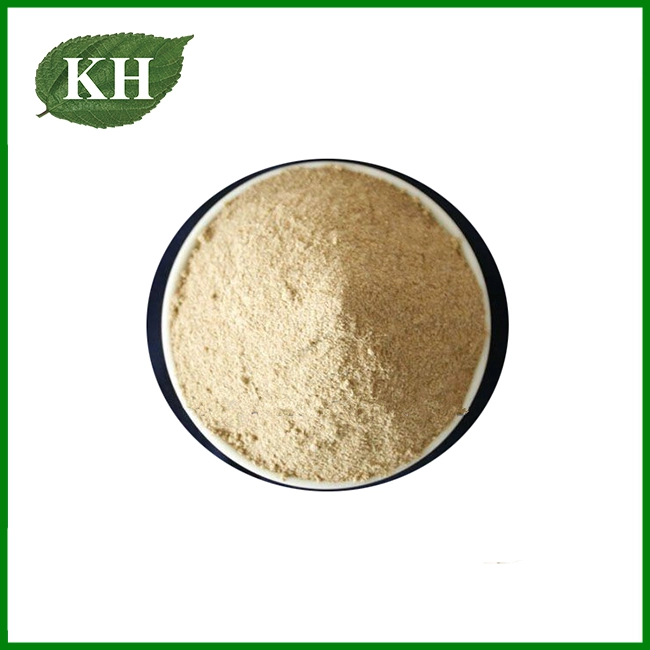
The way the product is extracted has a direct effect on its quality, colour, and safety claims made later on. The camellia oleifera seed is only processed by suppliers who use pure water or food-grade ethanol. This gives the powder its familiar fine off-white to light yellow look and helps with clean-label placement. When suppliers use strong organic solvents, leftover risks arise that make regulatory filings harder and may mean that the ingredient can't be used in natural or organic products.
Pricing Structure and MOQ Flexibility
Coming up with good sources costs money for businesses of all sizes. Check out suppliers who will take samples and small-kilogram orders before they ask for full payment. For botanical extract sellers, a commercial MOQ of 25 kg/drum is normal, and it's a good place to start when trying to grow. To get a good idea of how much it will cost you in the long run to buy something, you should look at the unit price and the extraction grade. Higher saponin purity (60% to 98%) means higher production costs.
Comparing Camellia Oleifera Seed Extract with Alternative Ingredients
Understanding how this ingredient compares to other options helps procurement teams explain their choices to people who work on product development and marketing.
Tea Saponin vs. Synthetic Surfactants
Sulphate-based detergents like SLS and SLES can be replaced with tea saponin, which comes from camellia oleifera seeds and breaks down naturally. At a concentration of 1%, research shows that tea saponin lowers surface tension to about 32 mN/m, which is about the same as mild synthetic surfactants. Unlike SLS, it doesn't form crystals when mixed with cationic conditioning agents. This means that 2-in-1 shampoo and conditioning formulas can use it. Single manufactured substances don't have this dual functionality—the ability to clean and the ability to have biological effects.
Camellia Oleifera Extract vs. Camellia Sinensis Extract
Both products come from the Camellia plant, but their main bioactives and intended uses are very different. EGCG and catechins are the main things that make camellia sinensis (green tea) extract valuable. Camellia oleifera seed extract is unique because it has a lot of oleic acid and a lot of tea saponin. This makes it better for use as a surfactant to help the skin's barrier function and as an agricultural biocide because saponin activity is what makes it work.
Performance Benchmarking Through Sampling
Ask for samples that are standardized to your goal specification, like 40% or 60% tea saponins, and have them checked by a third-party lab before placing a business order. Suppliers who are sure of the quality of their goods will give you samples along with full analytical documentation. By comparing lab results to the supplier's published specifications, you can be sure that the stated active content and physical factors (such as solubility, moisture, and particle size) work in your formulation system.
Assessing Supplier Capabilities and Value-Added Services
When several manufacturers offer similar specs, product quality alone is not enough to tell them apart. Long-term partnership value is based on operational capabilities and technical support.
Customization and Formulation Support
Strong suppliers of camellia oleifera seed extract act as technical partners rather than just selling goods. This means providing custom saponin ratios ranging from 18% standard grades to 98% pharmaceutical-grade, as well as application laboratory support for formulating better, testing for stability, and figuring out how well different types of products work together, such as drinks, gummies, tablets, and skin care systems.
Logistics and Certification Management
Reliable export operations are important for US buyers who buy from producers abroad. Suppliers should offer a range of shipping choices, such as courier for samples, air freight for pressing business orders, and ocean freight for big numbers, along with all the necessary customs and compliance paperwork. Ready stock that can be shipped quickly (samples within 3–5 business days) shortens the time it takes to find something and helps new product development plans.
After-Sales Technical Support
Check to see how quickly the supplier's technical team answers questions about formulation, helps with optimising dosage, and responds to requests for regulatory documentation. If a seller can answer questions like "Does saponin mix with cationic polymers?" or "How does degradation happen in water?" then they really know about applications and not just products.
Final Decision-Making and Long-Term Partnership Considerations
The final choice should strike a balance between the need to buy things right away and the need to make sure the supply chain will be strong in the long term.
Scalability and Supply Stability
The camellia oleifera extract supplier you choose should show that they can produce enough for your business to grow. Suppliers who control the whole process of extracting, growing, and harvesting the raw materials are better able to keep the active ingredient consistent across batches. One of the most common problems with buying plant ingredients is that they can vary from batch to batch. The best way to fix this issue is to do vertical integration at the source.
Sustainability and Ethical Sourcing
Methods that use many solvents are worse for the environment than those that use water or ethanol. Suppliers who can show proof of their environmental practices and the places where they get their raw materials can support your brand's sustainability story in ESG reports and promises made to customers. Tea saponin, which comes from camellia oleifera seeds, is fully biodegradable and breaks down in water within days, which is better for the environment than manmade detergents.
Audit Readiness and Compliance Documentation
Before you choose a provider, you should ask for their most recent third-party audit results, a sample batch paperwork package, and new certificates. If your application needs to be compliant with pharmacopeial standards, make sure that their specifications match USP or EP standards. If your suppliers share this information, it makes your due diligence easier and shows they are open about their business.
Conclusion
To find the best provider of tea saponin or camellia oleifera seed extract, you need to do a structured review of their quality systems, extraction methods, technical support, and how open their supply chain is. Give more weight to suppliers who can provide batch-level analytical data, have the right certifications, and really help with formulation. These standards help keep the quality of the product safe, shorten the time it takes to develop, and create the stable supply chain that growing brands need.
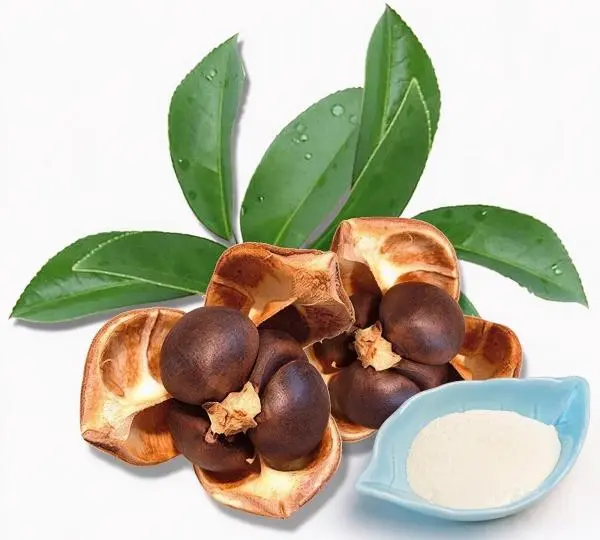
FAQ
What specification range does camellia oleifera seed extract typically come in?
It can be bought with a normal range of 18% to 98% tea saponins, which has been checked using UV spectrophotometry. The right grade relies on what you're using it for. Lower amounts are best for food and farming, while higher purities are used in personal care products and medicines.
Can this extract replace SLS in cosmetic formulations?
It cannot replace SLS in a direct one-on-one way. When it comes to how they react to salt, tea saponin and sulphate detergents are different. People who make medicines often mix it with xanthan gum or another viscosity-changing ingredient in natural systems. They also use it as a co-surfactant.
What is the shelf life of camellia oleifera seed extract powder?
The standard shelf life is 24 months if kept in cool, dry places in containers that are tightly sealed and don't let moisture in. Because the extract absorbs water, storing it incorrectly leads to caking and less saponin action.
What is the commercial MOQ, and how is the product packaged?
Orders for business use start at 25 kg/drum. Before committing to commercial volumes, you can order samples or small amounts to try the product. This lets you test different formulations without having to worry about large inventory risks up front.
Is tea saponin from the Camellia oleifera seed biodegradable?
Yes. It usually breaks down within 2–5 days in water due to microbes, which makes it a good choice for use in personal care and agriculture that wants to be good for the environment.
Request a Sample from KH — Your Trusted Camellia Oleifera Seed Extract Supplier
Since 1996, KH (Kingherbs Limited) has sold plant products to business-to-business buyers around the world. Our camellia oleifera seed extract is made with water or food-grade ethanol. It is standardized to contain between 18% and 98% tea saponins and is approved by ISO9001, FSSC22000, KOSHER, HALAL, HACCP, and FDA. It takes 3–5 business days to ship sample orders. To get your sample today, email us at info@kingherbs.com or go to www.kingherbs.com.
References
1. Xia, E. Q., et al. "Biological Activities of Polyphenols from Camellia oleifera." Journal of Agricultural and Food Chemistry, 2012.
2. Zhang, R., et al. "Tea Saponins: Structure, Bioactivity, and Application." Food Research International, 2015.
3. Wang, Y., et al. "Extraction and Purification of Tea Saponin from Camellia oleifera Abel Seeds." Industrial Crops and Products, 2018.
4. Cosmetic Ingredient Review Expert Panel. "Safety Assessment of Camellia-Derived Ingredients." International Journal of Toxicology, 2019.
5. He, Q., & Lv, Y. "Functional Properties and Applications of Camellia oleifera Seed Extract in the Food Industry." LWT — Food Science and Technology, 2020.
6. U.S. Pharmacopoeia. USP–NF General Chapters: Botanical Extracts Quality Standards. United States Pharmacopeial Convention, 2022.
Send Inquiry
Related Industry Knowledge
- How Does Holy Basil Extract Powder Support Modern Nutrition?
- Can Melissa Officinalis Extract Support Calm and Relaxation?
- Why Choose Natural White Willow Bark Extract Powder for Supplements?
- Blueberry Extract Powder Price and Wholesale Buying Guide
- Angelica Officinalis Extract Extraction Process Explained for Buyers
- Why Choose Astaxanthin Powder And Oil Over Other Supplements?
- Astaxanthin in Sports Nutrition: The Natural Performance Upgrade
- White Willow Bark Extract: Nature’s Salicylic Acid for Gentle Exfoliation
- How to Select Premium Macleaya Cordata Extract Powder?
- Macleaya Cordata Extract in Modern Phytogenic Feed Additives