_1762508637542.webp)
White Willow Bark Extract: Nature’s Salicylic Acid for Gentle Exfoliation
May 14, 2026
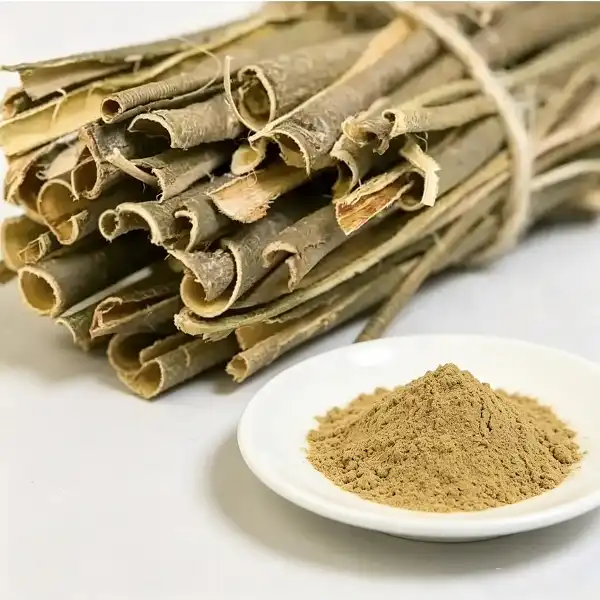
White Willow Bark Extract Powder has become an important plant ingredient in modern formulation science. It combines traditional herbal knowledge with modern uses in dermatology and medicine. This fine brown-yellow powder comes from the bark of the Salix alba tree. It has salicin in it, which is a natural precursor to salicylic acid. Salicin slowly changes into salicylic acid in the body's metabolic pathways, giving it long-lasting anti-inflammatory and cleansing effects. Unlike synthetic alternatives, this plant extract gives producers a clean-label option that can be used in a variety of ways in pain management, skincare, and nutraceuticals. As regulations get more complicated and people want natural ingredients, it's important for B2B procurement professionals to know the technical specs, quality standards, and sourcing strategies for this versatile extract so they can make competitive products.
Understanding White Willow Bark Extract Powder
Controlled water-ethanol methods are used to get the inner bark of Salix alba. This produces a concentrated powder that is high in phenolic glycosides, especially salicin, as well as antioxidants and tannins that are good for you. Salicin is a bioactive molecule that works as a prodrug. It is slowly changed into salicylic acid in the liver and intestines. This slow change in metabolism makes White Willow Bark Extract Powder different from manufactured salicylates. It creates a sustained-release effect that keeps the therapeutic effect while reducing stomach discomfort.
The Biochemical Profile
Along with salicin, the extract has other phytochemicals like salicortin, tremulacin, and populin. These work together with flavonoids like quercetin, kaempferol, and luteolin to make the compound stronger. New drug tests show that polyphenolic parts play a big role in the extract's ability to reduce inflammation by activating pathways for tumor necrosis factor-α, interleukin-1, interleukin-6, and nuclear factor-kappa B. This multi-targeted biochemical method explains why clinical observations often go beyond expectations based only on salicin content. It gives formulators a level of complexity that synthetic compounds alone can't match.
Physicochemical Properties
High-quality White Willow Bark Extract Powder has certain technical properties that are needed for accuracy in formulations. The substance usually comes in the form of a wet powder with 95% particles that are smaller than 80 mesh. This makes sure that the particles mix evenly during the manufacturing process. The bulk density is between 0.45 and 0.65 g/ml, which makes packaging and tableting easier. Standardized grades have salicin amounts that have been confirmed by HPLC tests. They range from 15% purity to 98% purity. Middle grades look more brown because they still have tannins in them, while higher purity isolates look like off-white powder.
Comparing White Willow Bark Extract Powder to Alternatives
When making purchasing choices, plant extracts must be carefully compared to both raw materials, White Willow Bark Extract Powder, and man-made alternatives. When used correctly in product lines, White Willow Bark Extract Powder offers real benefits in terms of standardization, safety, and buyer appeal.
Standardized Extract versus Raw Bark
The amount of active compounds in raw White Willow Bark Extract Powder changes depending on how it was harvested, where it came from, and the time of year. Standardized extracts get rid of this variation by using reduction methods that give the same salicin amounts in every batch. This dependability is very important for makers who need to make sure that formulations can be repeated and meet the claims on the label and the standards for regulatory paperwork. During the separation process, inactive fiber material is also removed. This makes the product more bioavailable and lowers the amount that needs to be used.
Positioning Against Complementary Botanicals
White Willow Bark Extract Powder is often mixed with other anti-inflammatory plants, like turmeric, boswellia, or ginger oils, when formulating new products. White Willow Bark Extract Powder is special because it gently exfoliates and has a straight salicylate route. This makes it very useful for skin care products because its keratolytic action clears out pores and makes the skin feel better. This makes it different from plants that only work on the systemic level to reduce inflammation. This lets it be used in both oral products and cosmetics.
Quality Criteria and Supplier Selection for White Willow Bark Extract Powder
Setting strict quality standards protects the purity of the product throughout the supply chain and makes sure that regulations are followed in target markets. When choosing sources for this important botanical ingredient, procurement managers need to use thorough evaluation methods.
Critical Quality Indicators
The most important requirement is still to check the salicin level using approved HPLC methods. Pharmaceutical-grade products usually have 15–25% standardized salicin. In addition to measuring the amount of active compounds, quality control must also look for heavy metal pollution (lead, arsenic, cadmium, and mercury below 10 ppm total), pesticide residue screening according to USP <561> standards, and microbiological limits that are right for the uses. Physicochemical factors like ash content below 5%, moisture content below 5%, and a specific particle size distribution make sure that the material can be used in production and stays stable while it is stored.
Traceability and Sourcing Transparency
Traceability is used by premium providers from the time the crops are grown until White Willow Bark Extract Powder they are packed. Working with controlled planting bases lets you control the types of plants you use, the conditions of the soil, and when you collect them, all of which have a direct effect on the phytochemical profiles. This control of agriculture gets rid of the differences in raw materials that make standardization attempts less effective. Suppliers who can show where the White Willow Bark Extract Powder came from, when it was harvested, and how it was processed are the key to making sure that the quality of the extract is the same across all production runs.
Applications & Formulation Insights for B2B Buyers
White Willow Bark Extract Powder is useful in many different types of industries. How it is made and which provider is chosen depend on the specific needs of the application.
Cosmetic and Personal Care Formulations
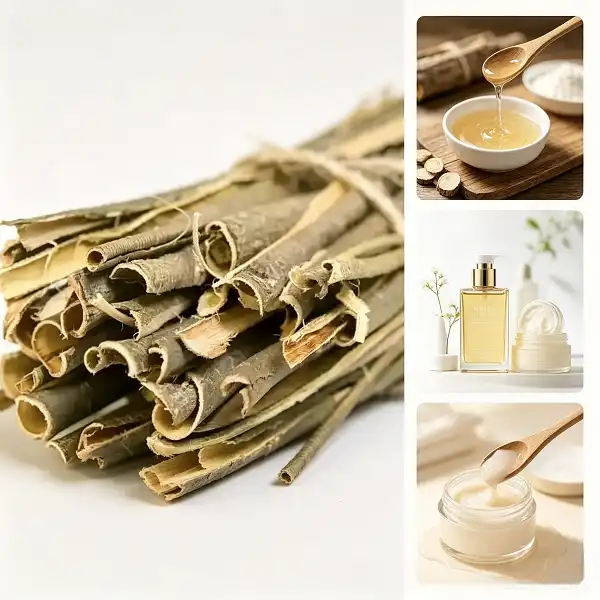
In skin care products, the extract works as a natural beta-hydroxy acid substitute, gently exfoliating skin, which is good for formulas for sensitive skin. In leave-on products like serums, lotions, and anti-aging creams, the usual inclusion rates are between 0.5% and 5%. Higher amounts are used in acne treatments and chemical peels. The anti-inflammatory effects of the extract help soothe skin irritation after exfoliation, and the antioxidant flavonoids give extra protection against oxidative stress and early aging. The extract can be partially dissolved in water, White Willow Bark Extract Powder, which makes it easier to add to both water-based and hydro-glycolic systems. Some grades are very pure and dissolve more clearly, which works well for clear gels. Other grades are less pure but contain helpful tannins that work well in thick creams and lotions. The material is stable between pH 4.0 and 6.5, which works well with skin-friendly formulas and avoids the problems that can happen when using only manufactured acids.
Pharmaceutical and Medical Applications
Companies that make medicines use White Willow Bark Extract Powder in over-the-counter pain killers, topical pain treatments, and medicines for fevers. Different places have different rules about how to get things regulated. Some allow claims about traditional uses, while others need proof from clinical studies. The extract's well-known safety profile and long history of use provide useful regulatory guidance, but makers must still follow current Good Manufacturing Practices and the documentation needs that are unique to medicinal goods. Topical medicine products for joint pain use the extract's ability to penetrate and reduce inflammation in specific areas. Gels with 10–25% extract amounts provide specific relief without affecting the whole body. This lowers the risk of side effects for people who are taking blood thinners or who are sensitive to aspirin.
Procurement Guide: How to Buy Quality White Willow Bark Extract Powder
To strategically source botanical ingredients, you need to use review methods that are well-thought-out and balance quality control, business terms, and operational logistics. Structured assessment systems and clear specification development can help procurement workers get the best deals from their suppliers.
Defining Technical Requirements
Start planning your purchases by making clear technical specs that match the needs of the finished product. Write down the salicin concentration values you want, the amount of variation that is okay, and the licenses your target markets will need. Make sure the testing methods (HPLC for active chemicals, ICP-MS for heavy metals, and GC for pesticide residues) match your quality standards before you hire a provider. Make sure everyone knows what kind of packaging is needed, what materials are needed, how it should be labeled, and if there are any private label options that are needed for branded ingredient strategies. Price structures and supplier choices are affected by predicted quantities. For promised yearly volumes, many makers offer better terms. Small and medium-sized businesses can benefit from wholesalers who are ready to send sample quantities for initial testing. Usually, the commercial minimum order quantity starts at 25 kg, which strikes a good mix between low-cost production runs and easy entry points for growing brands.
Supplier Evaluation Framework
A full supplier assessment looks at White Willow Bark Extract Powder more than just the original quotes; it also looks at how well the partnership will work in the long run. Ask for proof of the certifications for the production site, the quality system methods, and the ways that complaints are handled. Check out the technical support options, such as application lab tools, formulation help, and stable testing services that offer more than just providing ingredients. Response time during the inquiry process is often a good indicator of how well the connection will continue. Professionalism is shown by suppliers who give clear information about wait times, thorough technical data sheets, and Certificates of Analysis for each batch. This leads to reliable supply chain performance. For important or high-value tasks, you might want to ask for facility checks to look at the ways that raw materials are received, how they are extracted, and how the quality of the end product is controlled.
Commercial Terms and Logistics Optimization
Talk about price systems that reflect where you stand in the market and make sure that your suppliers can keep their margins high enough to support consistent quality. Learn about the things that affect costs, like the supply of raw materials, how hard they are to extract, and the need for standards that allow high-quality materials to command higher prices. In supply deals, it should be clear how to make claims about quality, how to pay for them, and how to return items. Logistics issues have a big effect on overall landing costs and the freedom of the supply chain. Check out your shipping choices. For samples and small amounts, use a courier service. For quick restocking, use air freight. For cheap, big moves, use ocean shipping. Suppliers offering ready stock and prompt shipment capabilities (typically 3-5 business days for samples and standard products) provide valuable responsiveness for dynamic market conditions and product launches.
Conclusion
White Willow Bark Extract Powder is an advanced plant ingredient that combines traditional effectiveness with modern standardization. It can be used in a wide range of products in the pharmaceutical, nutraceutical, and skincare industries. The extract's special biochemical profile, which is based on salicin as a natural salicylic acid precursor and enhanced by polyphenols that work together, provides gentle exfoliation and long-lasting anti-inflammatory effects that manufactured options can't fully match. To get materials that meet both legal needs and formulation goals, strategic sourcing needs a close look at quality, a full look at suppliers, and the creation of clear technical specifications. As more people want to use natural ingredients, the market for premium White Willow Bark Extract Powder will grow. Companies that find reliable suppliers of this powder will be in a good position for innovation and growth.
FAQ
1. What standardized salicin concentration is optimal for different applications?
Extracts with 15–25% salicin are often used in cosmetics because they effectively remove dead skin cells and have good safety ratings at inclusion rates of 0.5–5%. Nutraceutical supplements that aim to reduce inflammation throughout the body usually use similar standardizations, with doses changed to provide 60–120 mg of salicin per serving. For accurate doses and to follow the rules, pharmaceutical uses may need higher purity types of salicin that are closer to 50–98%. The best concentration strikes a mix between the need for effectiveness, cost, and agreement with other formulations.
2. How does extraction methodology impact product quality?
The extraction solvents have a direct effect on the safety and quality of the end product. Water-ethanol extraction methods keep the good polyphenolic compounds while avoiding harsh chemical leftovers that could hurt the product's clean label placement or its ability to get regulatory approval. Suppliers who use clean water or food-grade ethanol make extracts that can be eaten or used in cosmetics without worrying about solvent waste. Temperature, time, and the amount of liquid used all affect the amount of active compounds and the phytochemical profiles. The best methods will maximize the salicin content while keeping the flavonoids and tannins that work well together.
3. What documentation should procurement managers request from suppliers?
For a full source review, you need to see Certificates of Analysis for sample batches that show salicin content, heavy metal test results, pesticide screening data, and microbiological testing. Ask for copies of the facility's GMP, ISO, FSSC22000 certifications, allergen statements, BSE/TSE releases, and any non-GMO paperwork that is needed. Technical data sheets should list the physical qualities, the best way to store the substance, and how long it will last if it is handled correctly. Traceability paperwork that connects the source of the raw materials to the finished extract adds to the quality assurance for regulatory reports and audit trails.
Partner with KH for Premium White Willow Bark Extract Powder Supply
Brands that care about quality need suppliers that know how to strike the right mix between using real botanicals, making sure the products are made well, and providing quick technology support. At KH (Kingherbs Limited), we've been making standardized plant extracts that meet the exact needs of cosmetic formulators, supplement makers, and drug creators all over the world for more than 25 years. Standardized from 1% to 98% salicin and proven by thorough HPLC testing, our White Willow Bark Extract Powder gives your products the uniformity and purity they need. Every 25 kg drum has ISO9001, FSSC22000, KOSHER, HALAL, and HACCP certifications to back it up. This gives you a written quality guarantee that helps you meet regulations in global markets. We are more than just a supplier of high-quality materials; we are also your recipe partner. Our application laboratory gives technical advice, stable tests, and compounding suggestions for drinks, pills, skin care systems, and other unique delivery forms, such as softgel encapsulation.
Samples can be shipped within three to five business days if the item is in ready stock, which speeds up the development process. The minimum order quantity (MOQ) policies are also open enough to suit both trial orders and large-scale production needs. We can customize our services to meet your exact needs, whether you need 4:1, 10:1, 15:1, or 25:1 ratio extracts or exact salicin standardizations for specific uses. Email our expert team at info@kingherbs.com if you need full product specs, help with application, or help with custom formulation. Find out how working with an experienced White Willow Bark Extract Powder manufacturer transforms ingredient procurement into a strategic advantage for product innovation and market differentiation.
References
1. Shara, M., & Stohs, S. J. (2015). Efficacy and Safety of White Willow Bark (Salix alba) Extracts. Phytotherapy Research, 29(8), 1112-1116.
2. Vlachojannis, J. E., Cameron, M., & Chrubasik, S. (2009). A Systematic Review on the Effectiveness of Willow Bark for Musculoskeletal Pain. Phytotherapy Research, 23(7), 897-900.
3. Schmid, B., Lüdtke, R., Selbmann, H. K., Kötter, I., Tschirdewahn, B., Schaffner, W., & Heide, L. (2001). Efficacy and Tolerability of a Standardized Willow Bark Extract in Patients with Osteoarthritis. Phytomedicine, 8(4), 241-251.
4. Fiebich, B. L., Chrubasik, S., & Weiser, T. (2006). Mechanisms of Willow Bark Extract STW 33-I in the Treatment of Inflammatory Diseases. Arzneimittelforschung, 56(6), 407-412.
5. Mahdi, J. G., Mahdi, A. J., Mahdi, A. J., & Bowen, I. D. (2006). The Historical Analysis of Aspirin Discovery, Its Relation to the Willow Tree and Antiproliferative and Anticancer Potential. Cell Proliferation, 39(2), 147-155.
6. Nahrstedt, A., Schmidt, M., Jäggi, R., Metz, J., & Khayyal, M. T. (2007). Willow Bark Extract: The Contribution of Polyphenols to the Overall Effect. Wiener Medizinische Wochenschrift, 157(13-14), 348-351.
Send Inquiry
Related Industry Knowledge
- What Are the Benefits of Maca Extract Powder?
- Can Cortex Phellodendri Powder Help with Skin Conditions?
- Premium Isatis Root Extract for Nutraceutical Use
- Is Couch Grass Rhizome Extract Safe and Effective?
- Is Watermelon Powder Good for Digestive Health?
- Does Couch Grass Rhizome Extract Help With UTIs?
- White Paeony Extract Powder: Choosing Quality Raw Material
- Polygonum Cuspidatum Extract for Comprehensive Wellness Solutions
- How Purple Sweet Potato Extract Supports Metabolic Balance?
- Why US Buyers Choose China for Mango Leaf Extract?