_1762508637542.webp)
How to Choose an Apple Root Extract OEM Supplier
Sep 22, 2026
Choosing the right OEM supplier for apple root extract requires more than comparing price lists. You need a partner who delivers verified phloridzin and phloretin concentrations, maintains batch-level documentation, and supports your formulation goals from sampling through commercial scale. This guide walks procurement managers, R&D directors, and brand founders through every stage of supplier evaluation — from understanding what separates a premium dihydrochalcone extract from a commodity powder, to negotiating terms that protect your production schedule and quality standards.
Understanding Apple Root Extract and Its Market Demand
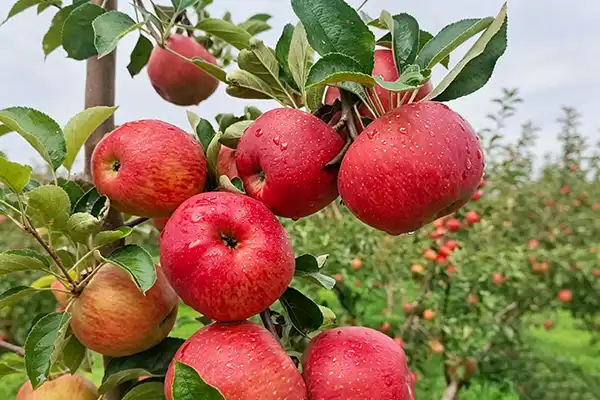
Apple polyphenol extracts made from fruit are botanically different from apple root extracts, which are derived from the root system of Malus pumila Mill. Phloridzin and phloretin are two dihydrochalcone chemicals that drive the ingredient's economic attractiveness across several sectors. Fruit extracts concentrate chlorogenic acid and procyanidins, whereas root material yields significant amounts of these compounds.
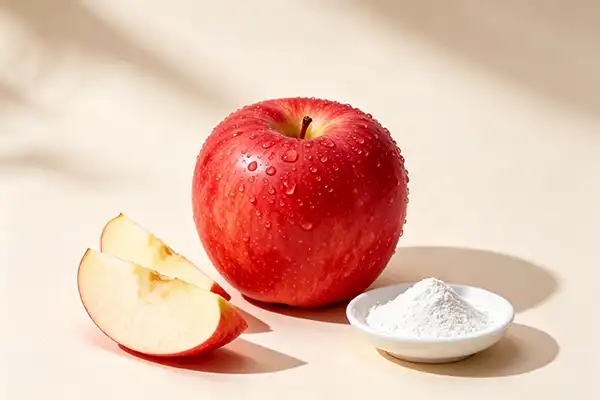
After undergoing HPLC standardisation, the substance appears as a fine white to off-white powder. One of the more clearly characterised botanical actives available to formulators today, phloridzin is normally targeted at 90-98% and phloretin at 80-98% according to commercial requirements.
Products in this market include functional drinks, pharmaceutical-grade metabolic support formulations, dietary supplements that aim to improve glucose metabolism, and cosmetic brightening serums that use tyrosinase inhibition. According to a study published in Nutrients (2021), phloridzin effectively lowers postprandial blood glucose levels by competitively inhibiting the SGLT1 and SGLT2 transporters. This mechanism has led to its rapid adoption in products for metabolic health. There is a growing pool of potential customers for apple root extract since phloretin has a skin penetration profile that lends itself to anti-aging and hyperpigmentation correction solutions.
Key Criteria for Choosing an Apple Root Extract OEM Supplier
When choosing a supplier, be sure to take into account your product category, regulatory landscape, and manufacturing scale. Avoid expensive project course corrections using a structured screening method.
All business-to-business purchasers should consider the following essential evaluation criteria:
- Ensure that the supplier verifies the amounts of phloridzin and phloretin using HPLC, rather than making broad assumptions based on polyphenols, in order to standardise active compounds. You should be able to access the Certificates of Analysis for each batch both before and after making a purchase.
- Reputable producers exclusively utilise pure water or food-grade ethanol in their extraction processes, ensuring process safety. Removing the possibility of residual solvent risk and streamlining regulatory filings in the US and EU are two benefits of solvent-free or USP/EP-grade solvent systems.
- Look for HACCP, ISO9001, FSSC22000, and FDA registration as a minimum in the certification stack. If your final product has a clean-label or organic claim, certifications from the USDA or the EU become crucial. Certifications such as KOSHER and HALAL broaden the pool of potential customers.
- Infrastructure for traceability: Traceability from the planting base all the way to the finished extract decreases the variability in raw materials. It is possible for suppliers to have a significant impact on the yield of active ingredients by partnering directly with cultivation sites and controlling the timing of harvest.
These criteria, taken together, determine whether a supplier can maintain quality across several commercial batches, not simply an initial sample order.
Comparing Different Apple Root Extract Suppliers and Products
Various vendors sell apple root extract; however, not all of them use the same level of technology. Determining long-term partners from transactional vendors is made possible by honest evaluation of portfolios.
Certified organic apple root extract is pricier, but it opens doors to distribution to Whole Foods and other health food stores, as well as to markets in the European Union that have stringent additive rules. For pharmaceutical intermediates, where pharmacopeial purity is more important than organic status, non-organic alternatives are nonetheless cost-competitive. Spending too much or failing to comply with regulations can be avoided if you know which specifications your market needs.
Product shape is another factor that influences buying choices. When it comes to filling capsules, compressing tablets, and creating topical serum bases, powder formats, especially fine off-white powders with controlled bulk density, work seamlessly. A practical indication of manufacturing discipline is stability data showing loss-on-drying < 5%.
One way to find out if a supplier is technically capable beyond just supplying ingredients is to look at their current customer portfolio, get stability data, and ask for formulation advice relevant to your application. Working at the level of a formulation partner, rather than just moving inventory, is a supplier who can advise on the stability of pH-sensitive phloridzin (ideal range: 5.0-6.5) or suggest cyclodextrin encapsulation for aqueous formulations.
How to Vet and Verify an OEM Supplier for Apple Root Extract?
Finding a reliable source for a standardised botanical active is absolutely essential. If there is no supporting evidence, you cannot believe the supplier's assertions regarding the phloridzin content.
First, obtain an HPLC chromatogram and a sample. An appropriate due diligence measure for new connections is to have the supplier's COA retested by an outside party. Each batch report should include microbial safety data, such as total plate count, yeast and mould levels, and the absence of pathogens.
Whether performed in-house or by an accredited third-party auditing company, factory audits look at things like extraction scale, equipment maintenance records, and QC laboratory capabilities. You can speed up your internal approval process by working with suppliers who have FSSC22000 and HACCP certifications. This is because they have previously completed a systematic hazard analysis.
Make sure the source has FDA facility registration if you're importing to the US. Before distributing the extract to the European Union, make sure it complies with cosmetic rules and EC No. 1334/2008 if it will be used in personal care products. If you want to avoid customs delays, make sure you have all of your import paperwork, such as phytosanitary certificates, COI declarations, and residual solvent reports, on hand.
Practical Tips for Negotiating and Building Long-Term Supplier Relationships
The unit price is just one factor in fruitful negotiations with botanical extract suppliers. In a business context, terms pertaining to minimum order quantity (MOQ), lead time, and technical support are all equally important.
The most defensible supplier agreements include clear specifications for active compound tolerances, defined penalty clauses for out-of-spec batches, and agreed re-test protocols. As product sales increase in volume, locking in pricing tiers for this growth protects your margin.
Technical collaboration potential — co-development of unique phloridzin-to-phloretin ratios, stability testing in your specific formulation matrix, private label documentation support — convert a transactional supplier relationship into a competitive moat. Suppliers with application laboratories capable of evaluating extracts in beverage, gummy, pill, and skincare systems give formulation information that decreases your internal R&D burden considerably.
Conclusion
Selecting an apple root extract OEM supplier is a strategic procurement decision that shapes product quality, regulatory readiness, and long-term brand credibility. The right partner delivers verified dihydrochalcone concentrations, clean extraction processes, comprehensive certification coverage, and technical support that extends well beyond ingredient delivery. Whether you are developing a metabolic supplement, a cosmeceutical brightening serum, or a functional beverage, sourcing standardised phloridzin and phloretin from a traceable, certified manufacturer is the foundation every successful formulation requires.
FAQ
What is the difference between apple root extract and apple polyphenol extract from fruit?
Apple root extract is specifically concentrated in phloridzin and phloretin—dihydrochalcone compounds—whereas fruit-derived apple polyphenol extracts are richer in procyanidins and chlorogenic acid. Root extract is the preferred choice for glucose metabolism support and tyrosinase inhibition in brightening cosmetics.
How should phloridzin stability be managed during formulation?
In acidic aqueous environments or at elevated temperatures, the O-glycosidic bond in phloridzin can hydrolyse, converting it to phloretin. Maintaining formulation pH between 5.0 and 6.5 and storing the extract in cool, dry conditions preserve active compound integrity throughout shelf life.
What certifications should a credible apple root extract supplier hold?
At minimum: ISO9001, FSSC22000, HACCP, and FDA registration. USDA Organic and EU Organic certifications are essential for clean-label positioning. KOSHER and HALAL certifications also help to broaden market reach across regulated consumer segments.
What MOQ and lead times are typical for commercial orders?
Reputable suppliers accommodate sample and small-batch trial orders before committing to commercial volumes. The standard commercial MOQ is typically 25 kg per drum, with ready-stock availability enabling shipment within 3–5 business days for qualified orders.
Partner with KH — Your Trusted Apple Root Extract Supplier
KH (Kingherbs Limited) has been producing premium botanical extracts since 1996. Our apple root extract delivers phloridzin at 90–98% and phloretin at 80–98%, verified by HPLC, with full certification coverage including ISO9001, FSSC22000, USDA Organic, EU Organic, KOSHER, and HALAL. We support sample orders, custom formulations, and commercial-scale supply — backed by in-house application laboratory support. Contact our technical team at info@kingherbs.com or visit www.kingherbs.com to request your sample today.
References
1. Ehrenkranz, J. R. L., Lewis, N. G., Kahn, C. R., & Roth, J. (2005). Phloridzin: A review. Diabetes/Metabolism Research and Reviews, 21(1), 31–38.
2. Schulz, H., & Baranska, M. (2007). Identification and quantification of valuable plant substances by IR and Raman spectroscopy. Vibrational Spectroscopy, 43(1), 13–25.
3. Barreca, D., Gattuso, G., Bellocco, E., Calderaro, A., & Laganà, G. (2017). Flavanones: Citrus phytochemicals with health-promoting properties. BioFactors, 43(4), 495–506.
4. Wojdyło, A., Oszmiański, J., & Laskowski, P. (2008). Polyphenolic compounds and antioxidant activity of new and old apple varieties. Journal of Agricultural and Food Chemistry, 56(15), 6520–6530.
5. Rezaei, S., Talebi, M., & Mortazavi, S. A. (2021). Phloridzin and metabolic health: Mechanistic insights and clinical potential. Nutrients, 13(6), 1885.
6. Grand View Research. (2023). Botanical Extracts Market Size, Share & Trends Analysis Report. Grand View Research.
Send Inquiry

Related Industry Knowledge
- Saw Palmetto Extract Powder vs. Extract: Which Is Best?
- What Is Jerusalem Artichoke Extract Used For?
- Ivy Extract Powder: Does It Ease Chronic Cough Naturally?
- Gentle Power: Why Willow Bark Beats Salicylic Acid for Glow
- What Industries Commonly Use Artemisinin Powder Today?
- Can Angelica Officinalis Extract Help Maintain Emotional Wellness?
- How Long Before Tongkat Ali Extract Powder Starts to Work?
- Unlocking the Benefits of Bitter Melon Extract Powder with Essential Specifications and Usage Tips
- Why Rhizoma Coptidis Powder Is a Natural Health Game-Changer
- How Macleaya Cordata Extract Supports Immune Function?