
Why Use Scutellaria Baicalensis Extract in Herbal Supplements?
Oct 30, 2026
Scutellaria baicalensis extract is derived from the dried roots of Scutellaria baicalensis Georgi (Chinese skullcap) and is currently one of the most popular botanical ingredients in the modern supplement market. Its major active flavonoids, baicalin and baicalein, have been clinically shown to have anti-inflammatory, antioxidant, and antibacterial activity in a number of physiological pathways. For companies manufacturing nutritional supplements, functional foods, or skin care products, this root extract delivers a unique blend of therapeutic scope and supply chain maturity that few botanical ingredients can match.
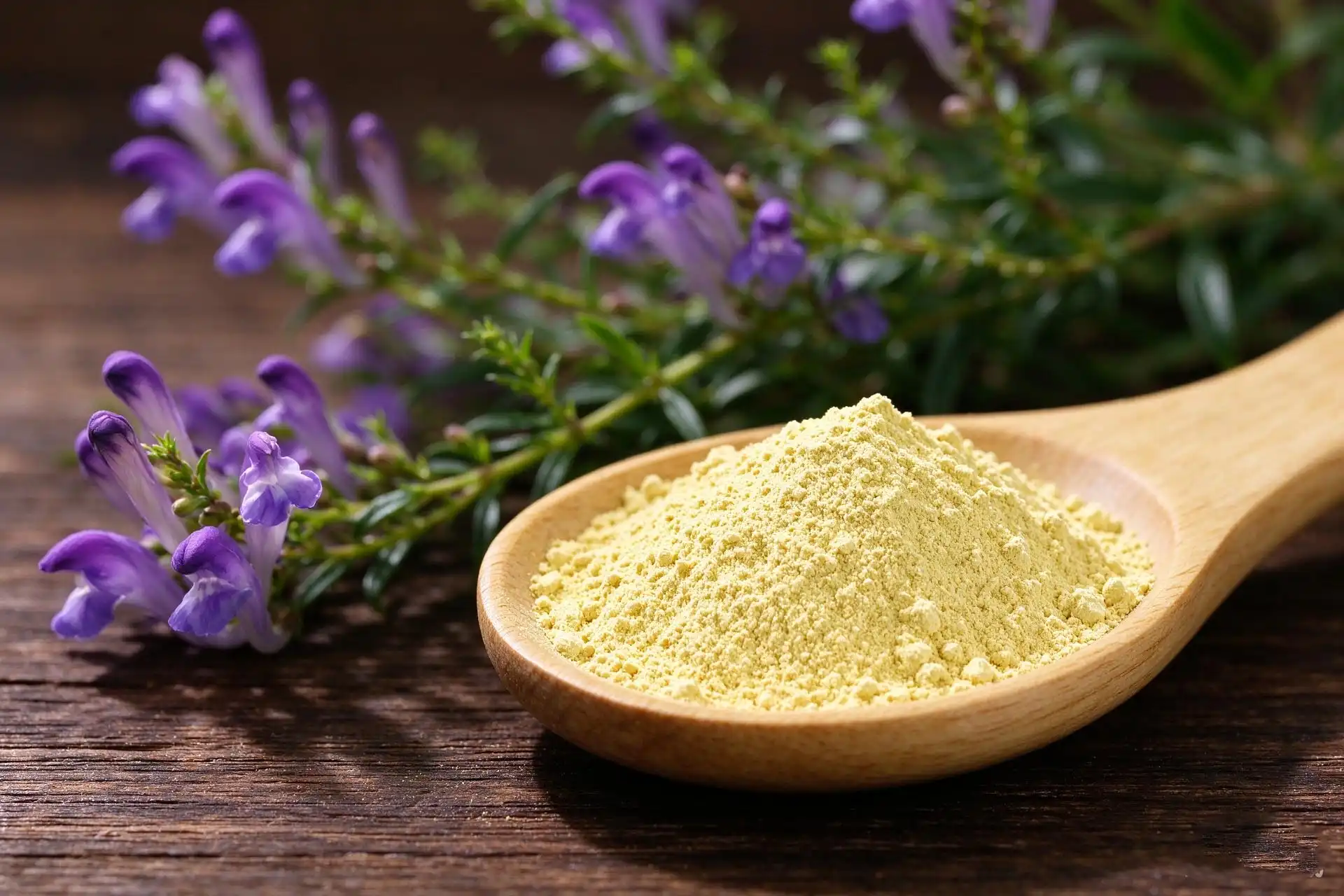
Understanding Scutellaria Baicalensis Extract: Basics and Health Benefits
Botanical Profile and Extraction Methods
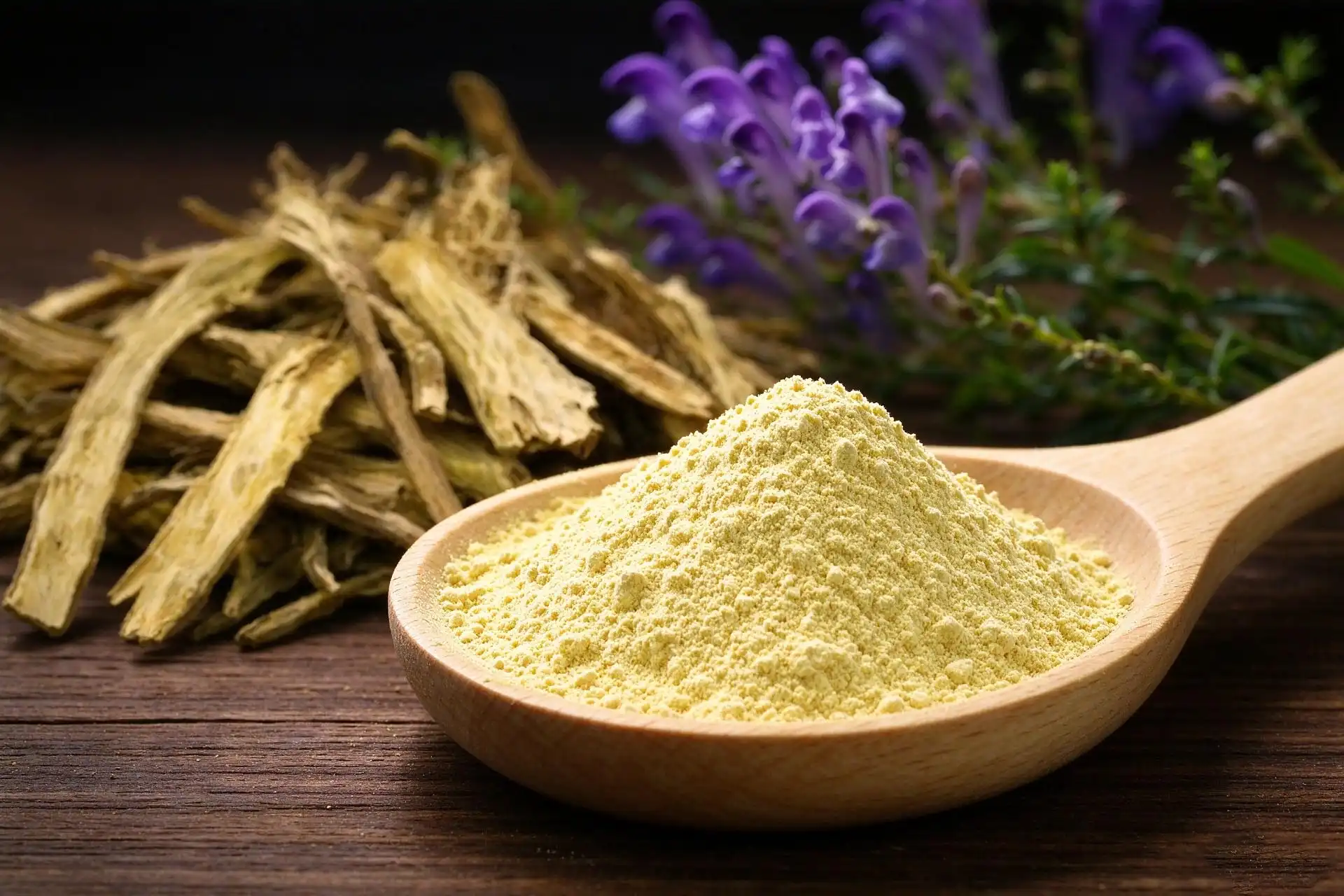
Scutellaria baicalensis Georgi, a member of the Lamiaceae family, has been used in Traditional Chinese Medicine (TCM) for more than 2000 years, known as Huang Qin. It is mostly found in the Chinese provinces of Liaoning, Hebei, Henan, Gansu, Shaanxi, and Shanxi. The root is the primary part of the plant that is harvested for extraction.
Premium Chinese skullcap extract is produced with pure water or food-grade ethanol, with no hazardous solvents. “This clean extraction process retains bioactive components and satisfies clean label demands. The end product is a fine yellow powder, with a peculiar scent and slightly bitter taste.
Key Bioactive Compounds
The root content was characterized by three major chemicals with bioactive activities:
- Baicalin(glycoside): Major marker chemical, may be standardized from 5 to 85 % by HPLC. Significant anti-inflammatory action is shown via inhibition of COX-2 and NF-κB pathways and down-regulation of pro-inflammatory cytokines, including IL-1β and TNF-α.
- Baicalein (aglycone form): Available in up to 98% purity. Conversion of baicalin to baicalein by intestinal flora upon oral consumption facilitates absorption. Baicalein has high membrane permeability and is utilized for targeted topical and oral formulations.
- β-Sitosterol supports cardiovascular health and boosts the anti-inflammatory effects of the full-spectrum extract.
- The combination of these three compounds lends baicalein extract a multi-target mode of action that is hard to match with synthetic alternatives without negative consequences.
Clinically Supported Health Benefits & Dosage Guidance
There is peer-reviewed evidence that supports a number of key benefits for formulation teams to consider. The Scutellaria baicalensis extract is a good inhibitor of histamine production and, thus, is suitable for supplement lines with allergies. It also has hepatoprotective activity with considerable improvement in liver enzyme markers, as observed in studies under chemical stress. Published studies on antiviral activities indicate inhibitory effects against influenza and hepatitis B viruses.
The typical dosing range for oral dietary supplements is often advised to be 200–500 mg/day standardized to ≥85% baicalin. In cosmetics for topical use, anti-inflammatory and antioxidant claims are usually made at dosages of 0.5-3.0%. Dose selection must be aligned with the therapeutic goal, whether it is sleep support, joint health, or skin wellness, since each application has its appropriate concentration range.
Comparing Scutellaria Baicalensis Extract to Other Popular Herbal Extracts
Huang Qin vs. Turmeric and Green Tea
Turmeric (Curcumin): COX-2 inhibition; limited bioavailability unless improved with piperine. The EGCG in green tea is a strong antioxidant, but it has caffeine concerns. Baicalin (Scutellaria baicalensis extract is a dual inhibitor of COX-2 and 5-LOX. So it covers more ground for anti-inflammatory activities and has no stimulating effect. Moreover, it is more stable than arbutin in blocking tyrosinase activity and, therefore, is a better candidate for skin-brightening cosmeceutical formulations.
Isolated Baicalin vs. Whole-Plant Extract
Isolated high-purity baicalin (80%-95%) assures pharmaceutical-grade precision for clinical applications and consistent dosing. Whole-plant ratio extracts (4:1 or 10:1) provide a larger phytochemical profile including wogonin and beta-sitosterol, which may enhance general wellness supplement lines. Choose specifications according to end use. High-purity isolates are necessary for clinical formulations, whereas often ratio extracts work well for broad-spectrum health products.
Organic vs. Conventional Sourcing Transparency
“In today’s regulatory environment, sourcing transparency is a must.” Request HPLC fingerprint data with each batch to verify species validity - Sophora japonica (identical profile of baicalin but different ratios of wogonin) is a known adulteration problem in the market. Verified GAP (Good Agricultural Practices) planting bases and end-to-end traceability documents are important markers of supplier credibility.
Choosing the Right Scutellaria Baicalensis Extract Product for Your Business
Available Formats and Their Applications
There are mainly two commercial forms of the Chinese skullcap root scutellaria baicalensis extract. Fine yellow powder (standardized to particular percentages of baicalin) is suitable for capsules, tablets, and dry-blend functional meals. The ratio extracts (4:1 or 10:1) are economical choices for ordinary supplement lines where one does not need ultra-high purity.
KH has the following main product specs available:
- Ratio Extract: Concentrations of 4:1 and 10:1
- Baicalin Content 5%-85% HPLC Tested
- Baicalein: up to 98% purity
- Appearance: Food-grade fine yellow powder
- Packing: 25 kilogram/drum with double plastic liner. Smaller amounts (100 g to 10 kg) available as well.
These specs satisfy the requirements for small-batch R&D trials as well as complete commercial production runs.
Pharmaceutical-Grade Quality Indicators
Basic assay testing isn't the end of the quality assurance process. A good CoA should have an HPLC fingerprint, heavy metal content (Pb < 3 ppm, As < 1 ppm, Cd < 1 ppm, Hg < 0.1 ppm as per Prop 65 and EU standards), pesticide residue analysis, and solvent residue verification. Ethanol residual levels <5,000 ppm. Class 1 solvents (e.g., benzene) should be non-detectable.
Certifications That Matter
A baicalin extract provider that is recognized with certificates shows discipline in production. All products of the KH line are registered with ISO9001, FSSC22000, KOSHER, HALAL, HACCP, and FDA. We also comply with USP and EP requirements. These certifications lessen the regulatory risk for firms wanting to sell to the US, EU, and Middle Eastern markets concurrently.
Procurement Insights: How to Buy and Source Scutellaria Baicalensis Extract Effectively
Supplier Evaluation and MOQ Considerations
Price comparison is not enough in choosing a scutellaria baicalensis extract source. Assess batch-level documentation processes, response to technical concerns, and the supplier’s ability to expand from trial orders to commercial quantities without impact on consistency. KH offers sample orders (free 100 g samples available) and small-quantity trial orders, with commercial MOQ beginning at 25 kg – a realistic entry point for businesses testing new formulas before full-scale manufacturing.
Logistics, Shipping, and Lead Times
Depending on the amount of the order and location, KH ships via courier, air freight, and ocean cargo. We have stock ready for quick shipping; samples will be sent in 3-5 working days. If you’re a brand working to a tight launch schedule, you’ll need to have verified inventory availability before you place an order – just ask any supplier for recorded stock levels before you commit to anything.
Reducing Supply Chain Risk
The foundation for long-term supply dependability is partnerships with a company that owns the whole value chain, from confirmed planting bases to extraction and quality release. KH works directly with planting bases in the major Chinese producing provinces, so active ingredient consistency is maintained from batch to batch rather than fluctuating with open market raw material variations.
Leveraging Scutellaria Baicalensis Extract in Your Product Line: Benefits for Herbal Supplement Brands
Meeting Consumer Demand for Natural Efficacy
Consumers are increasingly interested in plant-based, clean-label supplements. The worldwide botanical extracts market size is expected to reach USD 15.6 billion by 2030 and grow at a compound annual growth rate of 8.7% from 2023 to 2030 (Grand View Research, 2023). Baicalin extract provides two of the top consumer objectives, natural anti-inflammatory support and antioxidant protection, supported by extensive clinical research.
Cross-Category Application Opportunities
The huang qin extract unlocks formulation doors across many product categories. It’s used in dietary supplement lines for joint health, liver support, and allergy control. It is used in cosmetics to decrease sebum production, inhibit the development of bacteria that cause acne, and it is included in brightening serums. Useful in medicinal compositions for respiratory health and virus suppression. It is also used by animal nutrition and agricultural input firms as a natural antibacterial in feed formulations.
Formulation Support That Goes Beyond Supply
A good baicalin extract partner does more than just send drums of powder. KH offers application lab assistance including compounding guidance, formulation optimization, and stability testing for delivery systems such as gummies, tablets, drinks, and skin care products. We provide custom ratios and mixes for certain functions so your R&D team may accelerate from idea to prototype, without the headache of dealing with many ingredient providers.
Conclusion
Chinese scutellaria baicalensis extract is a star botanical substance on the market with real, multi-pathway potency and decades of study behind it. The extract has a wide spectrum of action, from anti-inflammatory and antioxidant to antibacterial and hepatoprotective, providing the versatility to formulate in supplements, cosmetics, and medicines. When procured from a producer with confirmed traceability, clean extraction methods, and batch-level documentation, it is a reliable ingredient for any company concerned about product quality. Established biology and supply chain transparency make it worth considering for your next formulation cycle.
FAQ
1. Is long-term use of baicalin extract considered safe?
Published toxicological studies indicate that baicalin and baicalein are well-tolerated at recommended doses. No serious adverse effects have been reported at standard dietary supplement dosages (200–500 mg/day). However, brands should include appropriate contraindication language for pregnant women and individuals on blood-thinning medications, as baicalin may interact with certain anticoagulant pathways.
2. How do I prevent color changes in liquid formulations?
Baicalin's phenolic structure can chelate with metal ions (iron, copper) or oxidize at pH above 7.5, causing yellowing to turn green or brown. Adding a chelating agent such as Disodium EDTA and maintaining formulation pH between 5.0 and 6.5 effectively prevents this reaction.
3. How do I verify the authenticity of a skullcap root extract batch?
Request a full HPLC fingerprint report, not just a single-peak assay. Authentic Scutellaria baicalensis shows a characteristic ratio between baicalin and wogonin peaks. A disproportionately low wogonin level relative to baicalin may indicate adulteration with Sophora japonica.
4. What is the shelf life of the powder?
When stored below 25°C in a cool, dry location away from direct light, the fine yellow powder maintains its baicalin content for 24–36 months. The double-lined polyethylene bags inside 25 kg drums protect against moisture absorption, which is the primary degradation risk.
Partner with KH — A Trusted Scutellaria Baicalensis Extract Supplier
KH has manufactured and supplied botanical ingredients since 1996. Our scutellaria baicalensis extract is produced from verified planting bases, extracted with food-grade ethanol or pure water, and certified under ISO9001, FSSC22000, KOSHER, HALAL, HACCP, and FDA standards. Free 100 g samples are available with prompt shipment in 3–5 business days. Contact our team at info@kingherbs.com to request your sample and discuss your formulation requirements.
References
1. Huang, Y., et al. "Pharmacological Activities of Baicalin and Its Aglycone Baicalein: New Insights into Molecular Targets." Phytomedicine, 2021.
2. Li, B. Q., et al. "Scutellaria baicalensis and Its Bioactive Flavonoids in Anti-Inflammatory Therapy." Journal of Ethnopharmacology, 2020.
3. Chen, F., et al. "Antiviral Properties of Baicalin Against Influenza A Virus." Antiviral Research, 2019.
4. Grand View Research. "Botanical Extracts Market Size, Share & Trends Analysis Report." 2023.
5. Shi, H., et al. "Hepatoprotective Effects of Baicalin on Chemical-Induced Liver Injury." Food & Function, 2018.
6. United States Pharmacopeia (USP). "Herbal Extract Monographs and Quality Standards." USP–NF, 2022.
Send Inquiry

Related Industry Knowledge
- What Makes Olive Extract Powder a Powerful Antioxidant?
- What Is Camellia Oleifera Seed Extract Used For?
- Avocado Refined Oil: A Practical Guide to Quality and Uses
- How to Source Reliable Cocoa Seed Extract from China?
- Passionflower Extract Powder for Insomnia: Is It Effective?
- Cold-Pressed Organic Sea Buckthorn Seed Oil Guide
- Can Couch Grass Rhizome Extract Help UTI Symptoms?
- Why Is Macleaya Cordata Extract Popular in Animal Nutrition?
- Is White Paeony Extract Safe for Daily Use?
- Lespedeza Capitata Extract: Targeted Botanical for Urinary Wellness