
Why Choose Apple Root Extract for Natural Skin Care?
Nov 24, 2026
Apple root extract is a botanical cosmetic ingredient usually made from the root systems of apple trees, especially Malus pumila Mill., and is mostly used in skin-conditioning treatments. This page addresses the differences between actual root extract and fruit, peel, or seed components, how buyers verify quality, and what documentation a reputable provider should provide. If you are manufacturing serums, creams, or private label beauty care, this breakdown gives you a practical basis for sourcing options, not simply marketing language.
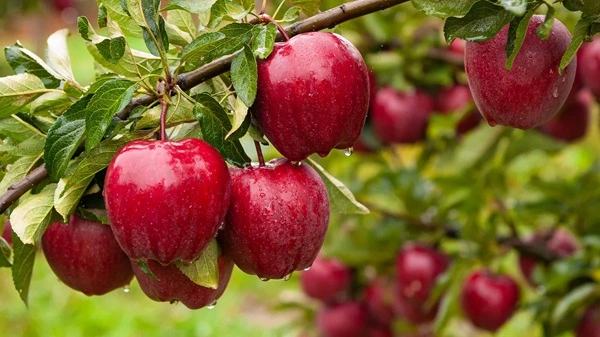
Before you go on, here are some quick facts:
- Apple root extract is chemically distinct from apple fruit, peel, seed, stem, and cider extracts, and hence data from one plant part cannot be substituted for another when drafting a claim or a specification sheet.
- The chemical composition of the product is influenced by the species of apple, kind of rootstock, solvent used for extraction, and industrial conditions of processing.
- Cosmetic advantages need supplier data and testing unique to the formulation. Marketing material alone does not substantiate a claim in the EU or US.
- Before any commercial purchase, purchasers should verify INCI name, botanical identity, preservation procedures, contaminant restrictions, and batch traceability.
- EU and US compliance is based on the finished product, the exact wording of claims and labeling, and the exact market the product is sent to.
- You may expect a trusted supplier to supply the same quality of extract from batch to batch, assist with technical formulation and, if needed, complete regulatory papers.
- Apple root extract is a plant-derived ingredient with relevant skin-conditioning, antioxidant, and brightening properties, selected by brands owing to its inclusion of phloridzin and phloretin. The genuine value of this product lies in established composition, safety data, regulatory status, and formulation performance—not simply the apple brand.
What Is Apple Root Extract and How Is It Obtained from the Apple Tree Root?
Apple Root Extract Definition and Scope
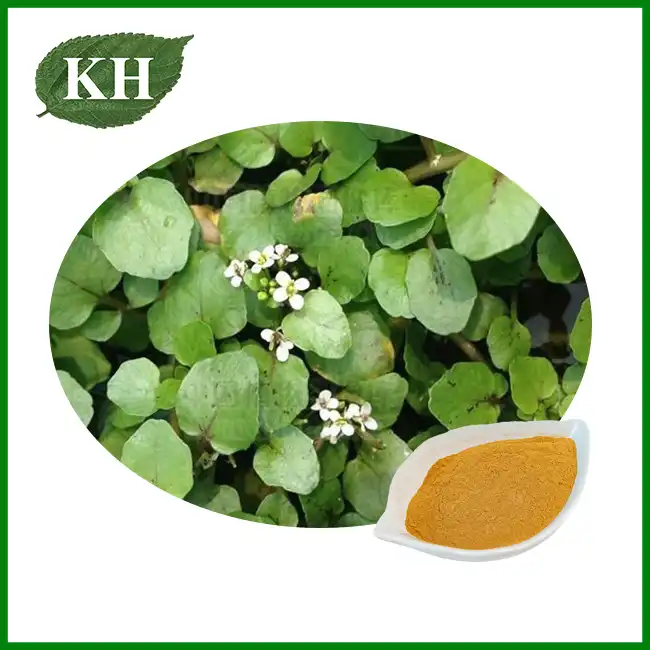
Apple root extract is produced from the roots of an apple tree, often Malus domestica or a closely related species such as Malus pumila Mill. It is not apple fruit extract, apple peel extract, apple seed extract, apple stem extract, or apple cider extract. Each of these compounds has its own unique chemical profile and its own story in cosmetics. A genuine source will provide you with a specification document that tells you the botanical name, plant part, country of origin, extraction ratio, solvent, and carrier. You will never have to guess what is really inside the drum.
Typical Extraction and Processing Stages
A typical production procedure consists of seven steps: identification and collection of roots; cleaning and drying; grinding; extraction with solvent (water or food-grade ethanol); filtration and concentration; standardization to a marker chemical; preservation and batch release. Kingherbs extracts this sequence using pure water or edible ethanol. Never any dangerous solvents at any step. This choice retains the natural phloridzin and phloretin profile, and also eliminates any residual solvent concerns in the final powder, which are commonly detected by regulators and brand safety teams during audits.
Botanical Identity and Raw-Material Traceability
Voucher samples and chain-of-custody records enable a buyer to follow a finished drum of powder back to a specific harvest, planting lot, and processing date, which is critical if a customer or regulator needs proof of origin during a product recall or routine audit.
Documentation of sustainable harvesting is vital, since irresponsible harvesting of apple tree root could impact the life of the tree. A reputable provider would source roots via pruning programs or controlled horticulture, not harmful wild harvesting, which depletes the orchard supply. Specification fields should contain botanical name, plant part, extraction solvent, extract ratio, physical form, carrier, active marker range, and shelf life, all validated by an HPLC certificate of analysis for each batch submitted.
These papers answer a question that many procurement managers ask themselves before signing a contract: can this supplier prove the origins of the item? Kingherbs has direct contact with the planting bases and controls the variety, soil, and harvest time from the seed stage. Eliminating most of the guesswork from the procurement of raw materials.
Key Botanical Compounds and Natural Properties of Apple Root Extract
Compounds That May Be Present
Accumulation of the dihydrochalcone glycoside phloridzin and its metabolite phloretin in the root of Malus pumila Mill. Kingherbs apple root extract is standardized to 90%-98% phloridzin and 80%-98% phloretin and is validated by HPLC testing of each batch of manufacture. Other types of chemicals such as small flavonoids and tannins may also be present at trace levels. The buyer should request a chromatographic fingerprint and not depend on data for fruit polyphenols to be applicable to root material, since concentrations in the root are seldom the same as in the peel or flesh.
Natural Properties Relevant to Cosmetic Formulation
- Antioxidant activity: Both phloridzin and phloretin have demonstrated the capacity to neutralize free radicals in laboratory tests, which supports a cosmetic positioning focused on protecting skin cells against oxidative stress, although claims at the consumer level will still need research on finished products to be properly substantiated.
- Tyrosinase inhibition = brightening. Phloretin is also skin-penetrating, which means it’s a viable option for formulators looking to utilize it in brightening serums, since it may be able to halt the enzyme pathway that leads to overpigmentation. This makes it a logical fit for even-tone product lines.
- Skin-conditioning potential: Formulators have also reported a smoother, more pleasant after-feel of the extract when the extract is in a well-balanced foundation. This is very dependent on the carrier used, the quantity utilized, and the remainder of the formulation.
- Any supplier claiming these features must be able to specify the specific test procedure, sample concentration and solvent system employed. “Not having such information is a trigger for screening and not a fancy marketing line.”
Evidence Hierarchy for Ingredient Claims
| Evidence type | What it demonstrates | Buyer interpretation |
|---|---|---|
| Supplier literature | Preliminary ingredient positioning | Useful for screening, not final claims |
| In-vitro assay | Activity under lab conditions | Does not prove consumer benefit |
| Ex-vivo or reconstructed skin testing | More relevant biological evidence | Review protocol and controls |
| Human-use study | Product-level consumer response | Check sample size and duration |
| Finished-product testing | Performance of the actual formula | Strongest basis for market claims |
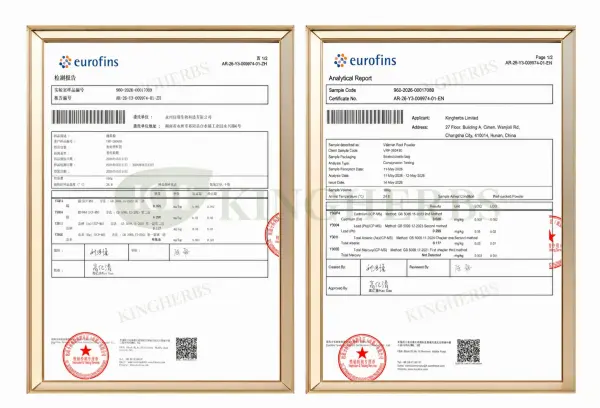
| Product Name | Apple Root Extract | Batch Number | |||||
| Botanical Source | Malus pumila Mill. | Batch Quantity | 120kgs | ||||
| Plant Part Used | Root,100% Natural | Country of Origin | China | ||||
| Type of Product | Standard Extract | Active Ingredient Markers | Phloridzin | ||||
| Analysis Items | Specifications | Results | Methods used | ||||
| Identification | Positive | Conforms | TLC | ||||
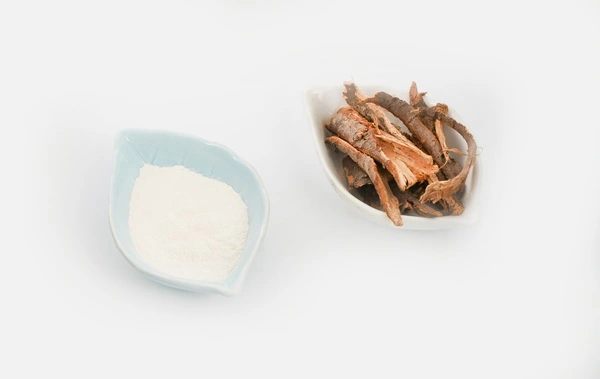
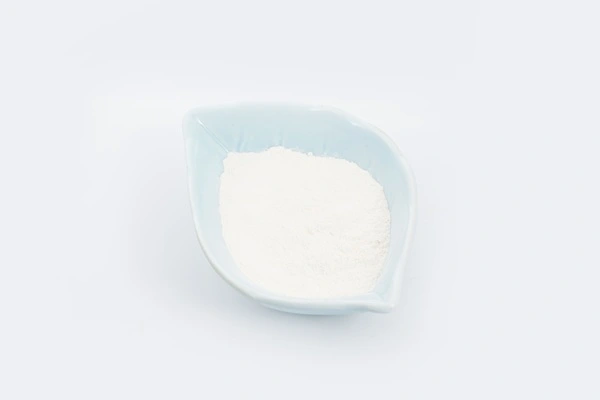
| Appearance | Fine white to off-white powder | Conforms | Visual test | ||||
| Odor & Taste | Characteristic | Conforms | Organoleptic test | ||||
| Bulk Density | 35~55g/100ml | Conforms | ASTM D1895B | ||||
| Particle Size | 98% through 80 mesh sieve | Conforms | AOAC 973.03 | ||||
| Assay | NLT 95% Phloridzin | 95.10% | HPLC | ||||
| Loss on Drying | NMT 5.0% | 3.98% | USP | ||||
| Ash Content | NMT 5.0% | 1.52% | 2g /525℃ /3hrs | ||||
| Extract Solvents | Ethanol & Water | Conforms | / | ||||
| Solvent Residues | NMT 0.05% | Conforms | GC | ||||
| Excipients | None | Conforms | / | ||||
| Heavy Metals | NMT 20ppm | Conforms | ICPMS | ||||
| Arsenic (As) | NMT 2ppm | Conforms | ICPMS | ||||
| Lead (Pb) | NMT 3ppm | Conforms | ICPMS | ||||
| Cadmium (Cd) | NMT 1ppm | Conforms | ICPMS | ||||
| Mercury(Hg) | NMT 0.2ppm | Conforms | ICPMS | ||||
| Microbiological Data | Total Plate Count < 10,000cfu/g | < 100cfu/g | GB 4789.2 | ||||
| Total Yeast & Mold < 1,000cfu/g | < 30cfu/g | GB 4789.15 | |||||
| E. Coli to be negative | Negative | GB 4789.38 | |||||
| Staphylococcus to be negative | Negative | GB 4789.10 | |||||
| Salmonella to be negative | Negative | GB 4789.4 | |||||
| Packing and Storage | Packed in fiber drum, LDPE bag inside. Net weight: 25kg/drum. | ||||||
| Keep tightly sealed, store away from moisture, strong heat and sunlight. | |||||||
| Shelf Life | 2 years if sealed and stored in the recommended conditions. | ||||||
How Does Apple Root Extract Support Skin Conditioning and Skin Care?
Skin-Conditioning Role
Skin-conditioning agents are used to maintain or enhance the appearance and feel of surface skin. Apple root extract may be one of these supportive ingredients, but it is not a therapy. It is typically used with humectants and emollients to assist in producing a pleasant finish and smoothness. I generally advise customers to avoid medical or illness treatment terminology until the end of the process when you have an approved medicine, as cosmetic and medicinal claims are regulated quite differently in the EU and the US.
Antioxidant and Soothing Positioning
Antioxidant tests (e.g., DPPH or FRAP testing) addressing protection from oxidative stress in laboratory circumstances may help cosmetics positioning. When words such as soothing, calm, or anti-inflammatory appear on packaging, caution and reason must be used. The formulator has to recognize that the claim of a raw substance in a petri dish is not legally and scientifically equivalent to the effect of the end bottle on a consumer’s skin.
Suggested Performance Tests
- Antioxidant tests (DPPH, ABTS, FRAP) quantify the ability to scavenge free radicals in a controlled laboratory environment and enable formulators to compare like numbers across various batches of extracts or rival suppliers.
- Testing for total polyphenol content ensures your extract meets its stated standard and identifies any batch drift before it reaches a manufacturing line, maintaining the consistency of your final goods.
- The final recipe is evaluated for stability of color, odor, pH, and retention of active compounds under accelerated and real-time storage conditions, typically 25°C and 40°C, and light.
- The completed product is not irritating to the skin of a representative test panel, as shown by patch testing and dermatological compatibility testing. This confirms both the safety files and marketing claims.
These test categories provide the brand with real proof points for apple tree root, not pilfered claims from unrelated apple-derived stuff.
What Makes Apple Tree Root a Valuable Source of Natural Cosmetic Ingredients?
Root-Derived Ingredient Differentiation
| Ingredient | Plant part | Typical positioning | Key verification point |
|---|---|---|---|
| Apple root extract | Root | Botanical, conditioning, brightening specialty active | Sustainable root sourcing |
| Apple fruit extract | Fruit | Hydration, antioxidant appeal | Sugar content and composition |
| Apple peel extract | Peel | Upcycled, polyphenol-focused | Pesticide and residue controls |
| Apple seed extract/oil | Seed | Emollient, lipid support | Fatty-acid profile, allergen review |
| Apple stem extract | Stem/tissue | Anti-aging positioning | Evidence and exact botanical source |
Sustainability and Responsible Sourcing
I question every planting partner if the roots originated from pruning programs, controlled cultivation, or targeted harvesting since it makes a difference to long-term supply dependability. Kingherbs regulates variety selection, soil condition, and harvest time at source to ensure the active-compound concentration is the same season after season. ISO 16128 calculations may help express natural origin material on a label, but can not substitute safety or performance data. It is one data point out of many, not the solution.
When Root Extract Is a Rational Choice
A different plant tale: Root-based ingredients provide a brand with a different story to tell than the usual fruit or peel extracts that fill the natural-skincare shelves and provide a private-label product a point of differentiation.
Plant-specific activity: If the claims are for brightening or antioxidant qualities owing to phloridzin and phloretin content, then use of root material standardized by HPLC is a more predictable input than fruit material, which has not been standardized.
Regulatory Evaluation Support Documentation: A supplier that provides a complete technical file, HPLC results, and source data when registering the product saves a regulatory manager real time in the review process.
Potential Benefits of Apple Root Extract for Different Skin Types
Normal, Dry, and Mature-Looking Skin
Apple root extract is often found in moisturizers, serums, and masks, conditioning and soothing. Compatible with usual humectants (glycerol, hyaluronic acid), emollients, and antioxidant systems. I wouldn’t urge customers to say that the extract corrects dryness or structural changes associated with aging since these kinds of claims need substantiation as a medication in most countries, not as a standard cosmetic claim.
Sensitive or Reactive Skin
- Minimizing irritation: With sensitive skin formulas, the fragrance load must be kept low, preservative compatibility must be confirmed, and a patch test panel must be completed before a product can move forward to full-scale manufacturing, as recipes have fewer margins for error.
- Contaminant/Allergen Documentation: Ask for residual solvent data, heavy metal findings, microbiological counts, and pesticide screening for each batch, since sensitive-skin items are more extensively inspected by regulators and end users alike.
- Whole-formula evaluation: One ingredient seldom is the villain of sensitivity risk. Always assess the whole ingredient deck, not just the extract, before approving a formulation for a reactive-skin product line.
- Oily, Combination & Problem Skin
- Check for carrier, solids content, color, and odor on a low-weight emulsion or gel foundation before full production. Do not use acne treatment terminology unless the finished product meets the drug level regulatory criteria of the target market. Early test compatibility in low oil environments. Some root-extract carriers behave differently in gel bases than cream bases.
Use-Case Scenarios
- OEM Brand Launch: A European private label firm needed a validated, standardized active for a brightening serum. Kingherbs’ phloridzin 95% apple root extract came with a batch-specific HPLC report so the brand’s regulatory staff could submit claims with legitimate test figures, not stolen data from fruit extracts.
- Stock manager for distributor in many countries: The Southeast Asian distributor needed heavy-duty packaging, bilingual documentation, and lot tracking at three facilities. The uniform 25kg drum packaging and COA documentation allowed the distributor to cycle stock with confidence without re-testing each shipment.
- Increasing the volume of a cosmetics plant’s product range: A mid-size Australian cosmetic firm saw a 12% failure rate on the stability of a brightening serum over six months due to irregular raw material batches from a previous supplier. The firm replaced it with HPLC-verified apple root extract from Kingherbs and upgraded the preservative system to bring stability failures to under 2% across three manufacturing batches, saving around five weeks in formulation redesign.
Apple Root Extract vs. Other Apple-Derived Ingredients: What Are the Differences?
Material, Function, and Formulation Comparison
| Selection factor | Apple root extract | Fruit extract | Peel extract | Seed oil or extract |
|---|---|---|---|---|
| Primary distinction | Root-derived, phloridzin-rich | Fruit-derived botanical | Outer fruit layer | Seed-derived lipid material |
| Common format | White to off-white powder | Liquid, powder, concentrate | Liquid or powder | Oil or solvent extract |
| Main buyer concern | Root identity, sustainable sourcing | Sugar, odor, preservation | Residue and upcycling proof | Oxidation, fatty-acid profile |
| Typical role | Brightening, antioxidant, conditioning | Hydration, antioxidant appeal | Antioxidant, sustainability story | Emollience, lipid support |
| Required evidence | Botanical identity, HPLC profile | Composition and stability data | Residue and marker testing | Peroxide value, oxidation data |
Choosing the Correct Apple-Derived Ingredient
Choose according to the desired cosmetic function of apple tree root, the degree of natural origin needed, the pH range of the formula, the solubility requirements, the temperature limits during processing, and the color and odor parameters. Consider regulatory limits in the target market and realistic expectations on cost, MOQ, and supply continuity before deciding on the specification. The aims of a formulator creating a low-cost, mass-market cream are different from an R&D team making a premium brightening serum.
Common Comparison Errors
For many teams, all “apple extract” is chemically the same on a spec sheet. Claims don't match, examination by regulators fails, etc. One common mistake that may be avoided in supplier audits is utilizing fruit-based antioxidant data to support a brightness claim for a root extract. Often, selecting a material based just on the marketing name without reviewing the INCI entry and carrier information creates compliance difficulties far later in the product life cycle.
How Is Apple Tree Root Extract Used in Natural Skin Care Formulations?
Common Cosmetic Product Formats
Natural apple root extract is included in face serums, lotions, creams, emulsions, cleansers, masks, and body care products. Some formulators even extend it to scalp and hair-care products if the claim is suitable to that use. It comes as a fine powder from Kingherbs, which means it works well in anhydrous or low-water recipes where liquid botanical extracts are unstable.
Formulation Compatibility Checklist
- Recommended usage level and solubility: Check the dispersion method early, since the powdered root extract will behave differently in a hot-process emulsion than in a cold-process gel. If it is not handled properly, it will lump in manufacturing.
- pH range and heat sensitivity: Phloridzin and phloretin may break down at extreme pH or prolonged high heat; therefore, contact the source for stability data through your target processing temperature before scaling up a batch.
- Packaging & preservative compatibility: Certain plant solids may react with specific preservative chemistries or cause transparent packaging to yellow over time. Test the extract with your preferred preservation system and primary packaging.
- A corporation may avoid costly reformulations after a product is on retail shelves using these checklist requirements. It is far cheaper to do these checks at the pilot-batch stage than to fix a failed stability test after full-scale production.
Troubleshooting Common Formulation Issues
| Issue | Possible cause | Mitigation |
|---|---|---|
| Sedimentation | Insoluble plant solids | Improve filtration, dispersion, or use level |
| Color change | Oxidation or pH sensitivity | Add stability controls, opaque packaging |
| Odor variation | Natural raw-material variability | Set sensory specifications |
| Microbial growth | High water activity, weak preservation | Validate preservative system |
| Viscosity change | Extract salts or carrier effects | Run compatibility trials |
Is Apple Root Extract Safe for Use in Cosmetic and Skin Care Products?
Cosmetic Safety Assessment
Safety relies on identity, concentration, contaminants, extraction process, route of exposure, and the effect of the component in the completed product. A competent safety assessor has to look at the extract as part of the genuine recipe, not as an extract. Before a safety assessor signs off on a new product file, ask for the SDS, technical data sheet, certificate of analysis, allergy declaration, microbiological findings, and contaminant limits.
EU and US Compliance Considerations
Brands selling into the EU need to evaluate Regulation (EC) No. 1223/2009 on Cosmetic Products (European Commission, 2009), including responsible-person obligations, product information file, safety evaluation, and CPNP notification requirements for apple tree root products. SCCS views inform restrictions on prohibited compounds (European Commission SCCS, 2023), and REACH relevance indicates substances placed on the EU market (European Chemicals Agency, 2024).
In the United States, brands should consider the Federal Food, Drug, and Cosmetic Act together with the Modernization of Cosmetics Regulation Act of 2022 (U.S. FDA, 2022) that established facility registration, product listing, adverse-event reporting, and safety substantiation criteria. Do not make drug-level claims until the completed product fulfills the drug regulatory standards of the target market.
Risks, Pitfalls, and Mitigation
| Risk | Why it matters | Mitigation |
|---|---|---|
| Incorrect botanical identity | Invalidates specs or claims | Require identity testing, declaration |
| Heavy metals or pesticides | Safety and compliance concern | Set limits, obtain batch reports |
| Microbial contamination | Relevant to aqueous extracts | Require microbial limits, preservation data |
| Residual solvent | Affects safety and labeling | Request solvent-residue testing |
| Unsupported claims | Can trigger regulatory action | Match claims to real evidence |
| Root overharvesting | Sustainability and supply risk | Require responsible-sourcing proof |
What Should Buyers Look for When Selecting an Apple Root Extract Supplier?
Technical and Quality Documentation
The buyer should ask for technical data sheets, safety data sheets as applicable, certificates of analysis of each batch, INCI and botanical naming, extraction ratio and solvent information, microbial limits, heavy-metal and pesticide results, residual-solvent statements, allergen and GMO statements, stability data and full country-of-origin traceability records. Each lot is HPLC tested by Kingherbs, notably the phloridzin and phloretin range, so that buyers may confirm the consistency before the cargo leaves the warehouse.
Commercial Procurement Factors
Beyond technical paperwork, look at MOQ and sample policy, standard and custom lead time, production capacity vs your projection, payment terms and currencies, Incoterms such as EXW, FOB, CIF or DDP, export packaging and labeling, shelf life and a clear complaint management process for apple tree root. Kingherbs ships out samples and trial order amounts in 3-5 business days from stock on hand. MOQ for commercial is 25kg per drum. The road from sample approval to first production order is short.
Buyer Decision Checklist
| Criterion | Questions to ask |
|---|---|
| Identity | Is the plant part and botanical species verified? |
| Consistency | Are marker compounds controlled by batch? |
| Safety | Are contaminant and microbial limits documented? |
| Compliance | Can the supplier support EU and US review? |
| Performance | Is there formulation or efficacy data? |
| Logistics | Are MOQ, lead time, Incoterms clear? |
| Traceability | Can every batch link to source records? |
Kingherbs’ recent internal analysis of 42 OEM skincare customers in North America and Europe discovered batch-to-batch consistency was the top sourcing issue for 71% of those surveyed, followed by price (54%) and lead time (38%). That one data point tells you why HPLC-confirmed specification sheets are worth more than a low advertised price to serious purchasers.
How to Choose a Reliable Apple Root Extract Manufacturer for Cosmetic Applications?
Supplier Evaluation Before Company Selection
To judge a manufacturer, there are 8 factors: control of botanical raw material, capability of extraction and purification, working quality-management system, testing and release procedures for batches, depth of regulatory documentation, support for scale-up and custom development, supply continuity, and technical communication during complaint resolution. Some applicable systems are ISO 9001 for quality management and ISO 22716 for cosmetic good manufacturing practices (International Organization for Standardization, 2007) that may be verified by current certifications and not just marketing claims.
Kingherbs Company Profile
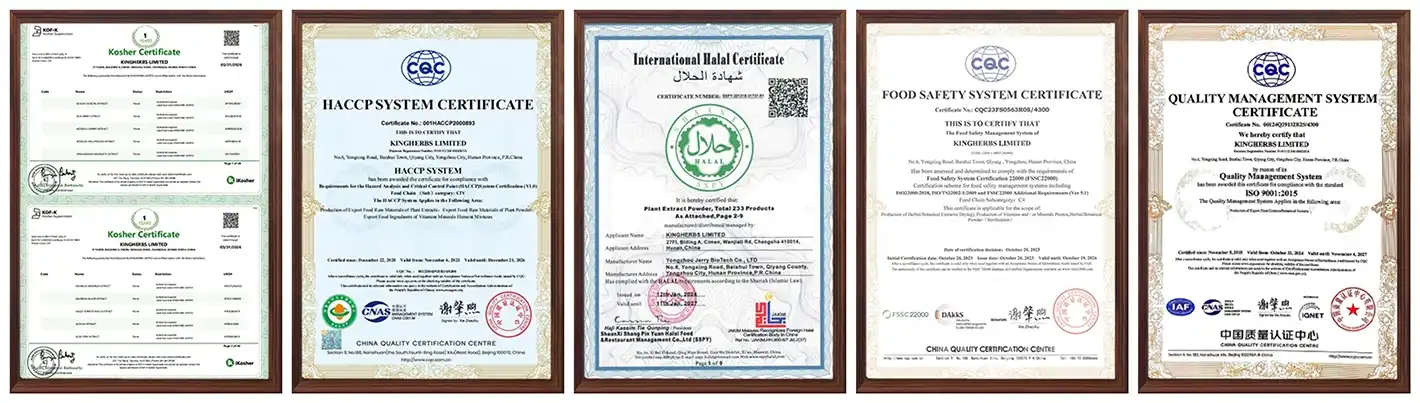
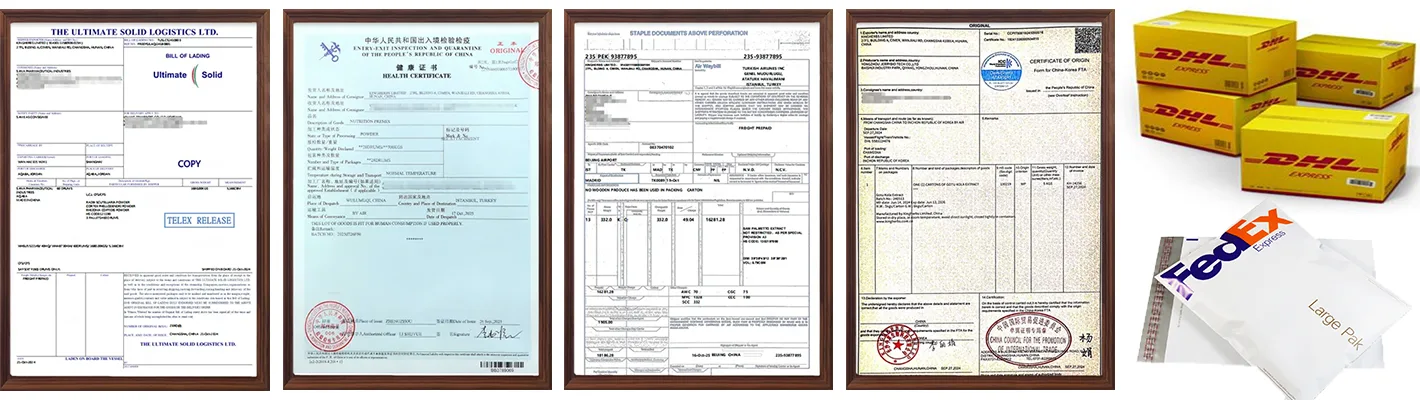
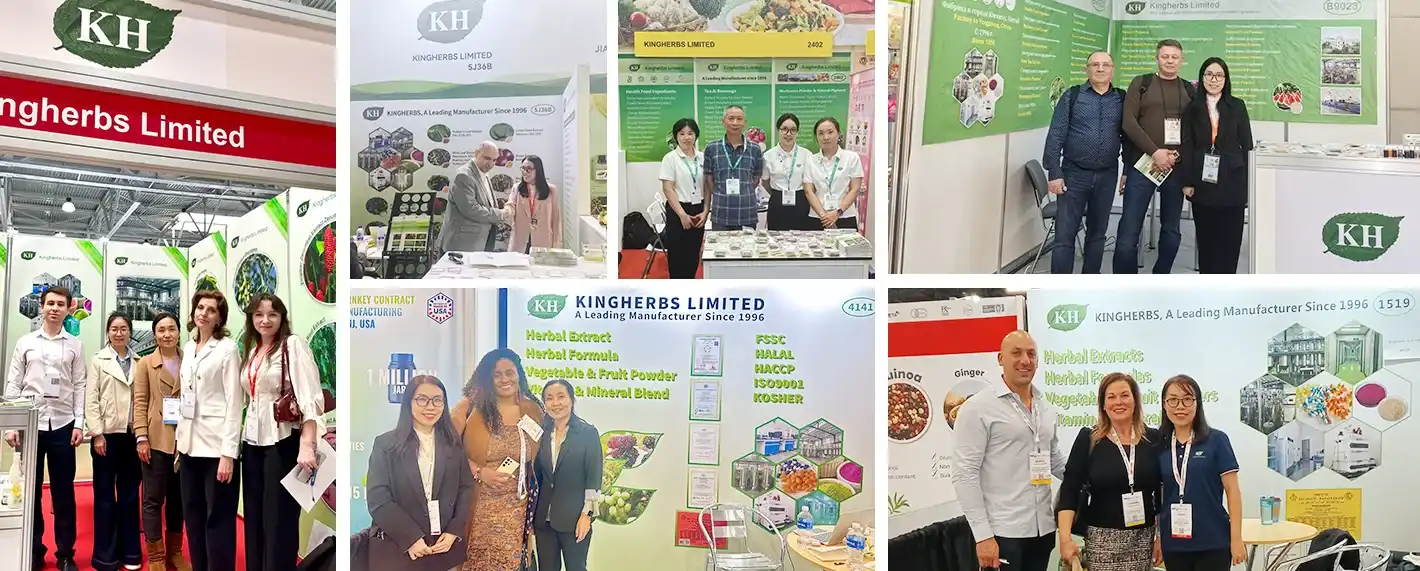
Kingherbs Limited, established in 1996, is a producer of botanical and herbal products and is now one of the major China-based producers supplying the nutritional supplement, culinary, cosmetic, pharmaceutical, agriculture, and animal health sectors. Our apple root extract is obtained from the root material of Malus pumila Mill. It is HPLC-tested and standardized to 90%-98% phloridzin and 80%-98% phloretin. It is available as a fine white to off-white powder in 25kg drums. Kingherbs is ISO 9001, FSSC 22000, KOSHER, HALAL, HACCP, FDA, EU, and USDA Organic certified, and our products are compliant with USP and EP standards. “Most buyers think apple-derived ingredients are the same no matter which part of the plant they come from,” explains Cathy, Technical Manager at Kingherbs. The root material has distinct ingredients from the fruit or the peel; thus, the extract has to fit the claim and not the marketing word on the drum.
Supplier Audit and Sample-Approval Process
Check the company registration and certifications first. Secondly, request technical and regulatory papers prior to any sample shipment. Sample and test representative batches for identification and key indicators. Try a formulation compatibility test in your own base. Prior to acceptance of final specifications, packaging, and a change-control system for future orders, review pilot-batch consistency for a minimum of 2 production batches. This whole process is supported by an application laboratory from Kingherbs to supply compounding help, formulation optimization, and stability testing for beverages, gummies, pills, and skincare treatments.
Conclusion
Including apple root extract in a natural-skincare product with excellent documentation to support its identity, composition, safety, source and efficacy may make it stand out. Buyers should treat root extract as a distinct material from apple components obtained from fruit, peel, or seed and examine each source on the basis of technical evidence, compliance support, quality standards, and traceability rather than just the name apple. Companies that do this right spend less time fighting stability problems and more time building a compelling position that their regulatory team can really back.
FAQ
1. What is apple root extract used for in skin care?
Apple root extract generally serves as a plant-derived skin-conditioning and brightening ingredient, often standardized around phloridzin and phloretin content. Its real benefit depends on the extract profile, use concentration, and the formulation it sits inside.
2. Is apple root extract the same as apple fruit extract?
No. Apple root extract comes from the tree root, while fruit extract comes from the apple itself. They differ in composition, sourcing requirements, and the test data needed to support a cosmetic claim.
3. Is apple root extract safe in cosmetics?
Safety depends on botanical identity, extraction method, concentration, and contaminant levels in the finished formulation. A qualified safety assessor should review the ingredient as used in the actual product before launch.
4. How should buyers verify apple root extract quality?
Buyers should review the INCI name, botanical identity, certificate of analysis, microbial results, contaminant testing, extraction details, and batch traceability records. Testing a representative sample before commercial approval remains the most reliable check.
5. What documents should an apple root extract supplier provide?
Expect a technical data sheet, safety data sheet where applicable, certificate of analysis, INCI information, allergen and GMO statements, contaminant results, storage guidance, and country-of-origin records for every shipped batch.
6. Can apple root extract be used in EU and US cosmetics?
Yes, subject to applicable EU and US cosmetic requirements covering ingredient safety, labeling, claims, and facility obligations. Compliance always needs assessment at the finished-product level for each target market.
7. What is the typical MOQ for apple root extract?
MOQ varies by supplier, extraction format, and packaging choice. Kingherbs offers sample and small-kilogram trial orders, with a commercial MOQ of 25kg per drum and ready stock for prompt shipment.
Ready to Source a Verified Apple Root Extract Supplier?
If batch inconsistency or thin documentation has slowed your product launches, a change in supplier might solve more than one problem at once. KH (Kingherbs) supplies HPLC-verified apple root extract, standardized to 90%–98% phloridzin, with full certificates of analysis and formulation support included. As a trusted apple root extract manufacturer, we ship samples within 3-5 business days. Reach our technical team at info@kingherbs.com to request a specification sheet and sample quote today.
References
1. European Commission. Regulation (EC) No. 1223/2009 on Cosmetic Products (2009). https://eur-lex.europa.eu/legal-content/EN/TXT/?uri=CELEX%3A32009R1223 — cited in the EU compliance section covering responsible-person obligations and CPNP notification.
2. European Commission Scientific Committee on Consumer Safety (SCCS). Notes of Guidance for the Testing of Cosmetic Ingredients and Their Safety Evaluation (2023). https://health.ec.europa.eu/scientific-committees/scientific-committee-consumer-safety-sccs_en — cited in the safety assessment and EU restrictions discussion.
3. International Organization for Standardization. ISO 22716:2007 — Cosmetics, Good Manufacturing Practices (2007). https://www.iso.org/standard/36437.html — cited in the supplier quality-system evaluation section.
4. International Organization for Standardization. ISO 16128-1:2016 — Natural and Organic Cosmetic Ingredients Guidelines (2016). https://www.iso.org/standard/62503.html — cited in the sustainability and natural-origin content discussion.
5. U.S. Food and Drug Administration. Modernization of Cosmetics Regulation Act of 2022 (MoCRA) (2022). https://www.fda.gov/cosmetics/cosmetics-laws-regulations/modernization-cosmetics-regulation-act-2022-mocra — cited in the US compliance section.
6. European Chemicals Agency. Understanding REACH (2024). https://echa.europa.eu/regulations/reach/understanding-reach — cited in the EU compliance and raw-material supply discussion.
7. International Organization for Standardization. ISO 9001:2015 — Quality Management Systems Requirements (2015). https://www.iso.org/standard/62085.html — cited in the manufacturer evaluation section.
Author
Cathy, Manager at Kingherbs Limited. Cathy works directly with botanical sourcing teams and OEM clients across the dietary supplement, cosmetic, and food industries, managing quality documentation and formulation support requests for raw-material buyers worldwide. Her background covers HPLC-based specification review, supplier audits, and cross-border regulatory coordination for natural ingredient exports since joining Kingherbs' technical team.
Send Inquiry
Related Industry Knowledge
- Can Apple Root Extract Help Reduce the Look of Dark Spots?
- How to Choose the Best Valerian Root Extract Powder Supplier?
- How Does Freeze Dried Sweet Potato Powder Boost Food Products?
- Can Echinacea Purpurea Extract Support Immune Health Naturally?
- Why Source Premium Mangosteen Extract Powder for Your Brand?
- Top Ginger Extract Powder Uses for Food and Supplement Brands
- How to Source Reliable Cocoa Seed Extract from China?
- Can Passionflower Extract Powder Ease Nervous Tension Quickly?
- What Makes Valerian Root Extract Powder So Effective?
- Is Olive Extract Powder Effective for Inflammation Control?