
White Paeony Extract vs. Other Botanical Extracts: Which Wins?
Oct 27, 2026
A common query from purchasers is what botanical extract is best for a certain formulation goal. Honestly? It is contingent upon the project. Dried root of Paeonia lactiflora Pall. The white peony extract offers a distinct advantage: a well-established profile of paeoniflorin, verified by HPLC testing and batch traceability. This lesson compares white paeony extract to turmeric, green tea, grape seed, and red peony extracts. You will have a clear road map for selecting the right ingredient based on botanical identity, active-compound verification, and application appropriateness – not simply marketing material.
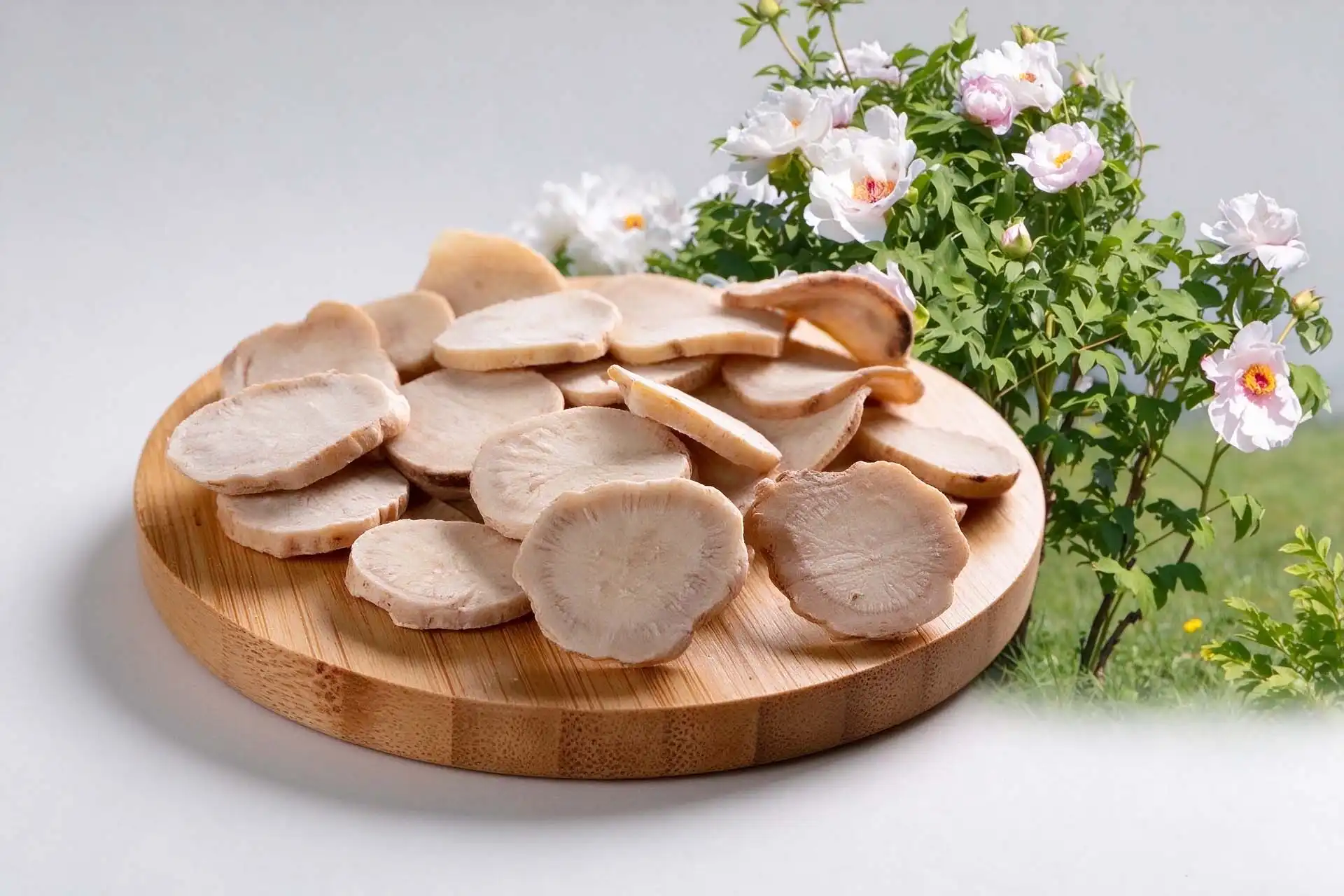
Short answer: White peony extract is not superior to all botanical extracts in all areas. When a formulation calls for paeoniflorin-focused action, flexible powder or liquid forms, and quality documentation tracking from the growing field to the finished drum, it wins.
This is what buyers need to check before they buy anything:
- White paeony extract manufacturer is typically extracted from the root of Paeonia lactiflora. Always check the spec sheet for a Latin name, as popular names vary from place to place, and the term “peony” may be used loosely by suppliers with no botanical verification.
- Paeoniflorin is one marker component of the extract, not a proxy for the total chemical profile. So a 20% paeoniflorin extract still contains hundreds of other compounds that will affect color, solubility, and performance in a finished product.
- The issues of stability, shipping weight, and dosage form are different between a powder and a liquid, and this all relates to a contract manufacturer deciding whether to go with capsule lines or liquid tincture production.
- Price per kg is one thing, but it is truly the standardization, identity testing, and contaminant screening that really differentiate a reputable white peony extract source from a harmful one.
The points that drive all that follows are: 1. Identification first; 2. Chemistry second; 3. Application fit third; 4. Supplier proof last, but validated every time.
What Makes White Paeony Extract Different from Other Botanical Extracts?
Definition, botanical identity, and scope
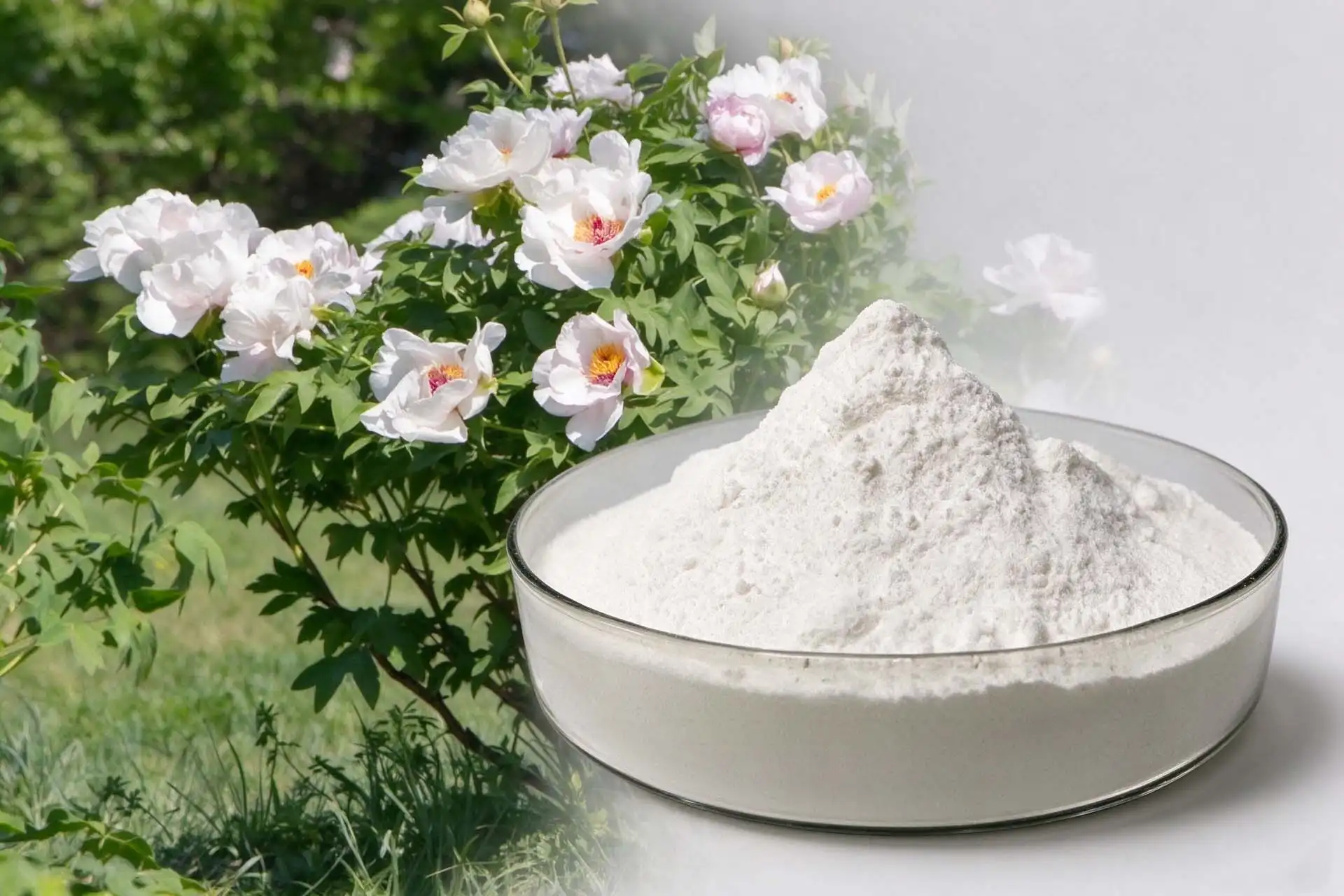
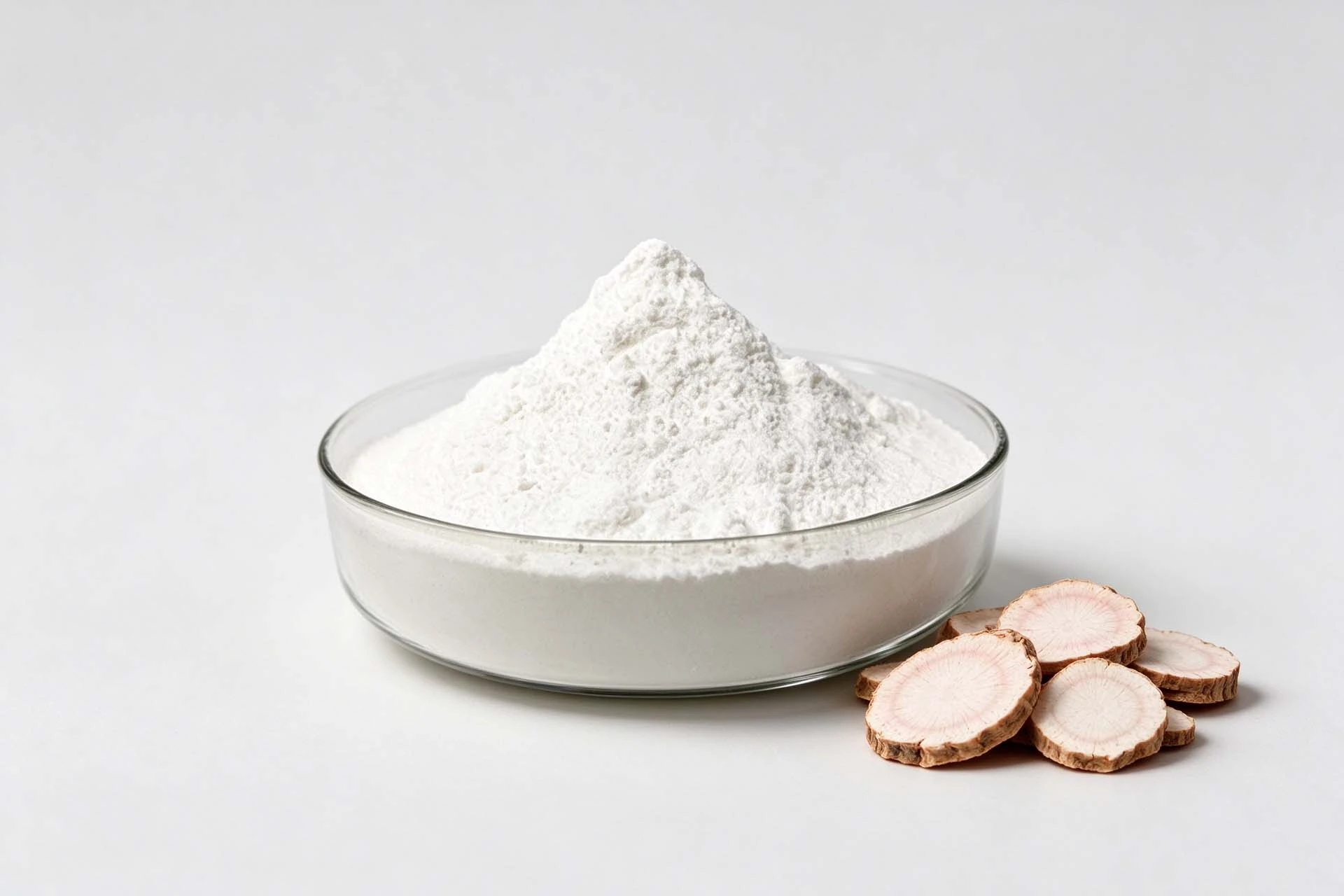
Usually, white paeony extract is obtained from the root of the flowering plant Paeonia lactiflora Pall. native to China and East Asia. It may alternatively be listed as white peony extract, white paeony root extract, or Paeonia lactiflora extract. The word “white” comes from the traditional classification of the plant material and not the color of the final powder, which is generally off-white to brownish yellow.
This is a distinction that is important during the sourcing stage. A procurement manager who reads white as bleached or ultra-pale powder might reject a totally in-spec batch. The botanical certificate is not the correct check, but the visual tone of the sample.
What white peony extract is not
That’s what gets consumers into trouble – assuming equivalence between similar terms. Here are a few explanations to avoid costly mistakes:
- It’s not usually pure paeoniflorin. A merchant offering "white paeony extract, 98% paeoniflorin" is probably referring to an isolate or highly concentrated fraction, which is a distinct kind of product from a standard ratio extract, and usually has a different price and regulatory status.
- It cannot be directly interchanged with red peony extract, although both plants are from the Paeonia genus and contain certain common compounds.
- It is not automatically approved for use as a medicine, dietary supplement, or cosmetic active in all markets. It is reliant upon the country of destination, the label claimed, and the kind of goods.
These three factors alone can prevent most of the problems we encounter with clients and overseas suppliers on mislabeling.
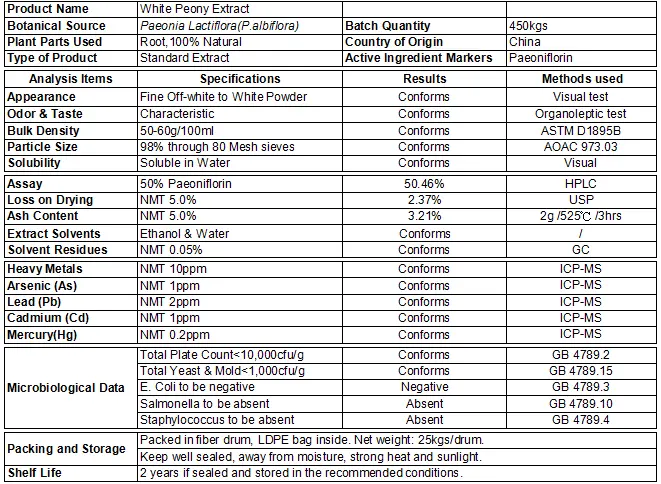
Product Name: White Peony Extract
Botanical source:Paeonia Lactiflora(P.albiflora)
Appearance:Brownish Yellow to Off White Powder
Plant Part Used: Root,100% Natural
Specification:Ratio Extract; 10%-90%Paeoniflorin
Certifications:ISO9001, FSSC22000, KOSHER, HALAL, HACCP, FDA
Shipment Lead Time:3-5 working days
Transportation:Courier, Air, Ocean
MOQ:sample and small kgs trial order available, commercial order MOQ 25kg
Application: Food, Cosmetic, Pharmaceutical, Health Product
Chemical composition and what drives variation
White paeony extract manufacturer generally contains monoterpene glycosides (e.g., paeoniflorin) and phenolic compounds, small amounts of polysaccharides, and other chemicals that are extracted during processing. The final profile depends on four things: identification of the species, age of the root at harvest time, solvent used for extraction, and drying process utilized thereafter.
You are not going to acquire the same chemical fingerprint of a two-year-old root handled with water extraction as a four-year-old root processed with ethanol. So if you look at a spec sheet and there’s no mention of an extraction procedure, that’s a red flag.
White Paeony Extract vs. Red Peony Extract: Key Differences in Composition
Species, plant part, and naming confusion
Red peony products are often derived from Paeonia veitchii or other Paeonia species; white paeony extract is derived from Paeonia lactiflora. The common names will not fix it. The consumer should always ask for the Latin binomial, the part of the plant used, the location of origin, and the authentication procedure used by the quality team of the supplier.
This is not a small matter. Just because two products are labeled “peony extract” and made by separate companies doesn’t imply they’re from the same plant, or that they have the same safety and performance qualities.
Composition and traditional-use distinctions
The white and red peony are regarded as separate materials with various uses in traditional Chinese medicine, and the requirements of the modern ingredient consumer should reflect this. Laboratory data from the source or a third party, not guesswork, has to be used to compare amounts of paeoniflorin, broader chemical profiles, and processing techniques.
Comparison table for buyers
| Criterion | White paeony extract | Red peony extract | Buyer verification |
|---|---|---|---|
| Common botanical identity | Usually Paeonia lactiflora | May refer to different Paeonia species | Latin name and voucher specimen |
| Typical plant part | Root | Root, depending on product | Plant-part declaration |
| Key marker often discussed | Paeoniflorin | Species- and process-dependent profile | Assay method and specification |
| Color expectation | Off-white, beige, tan, or brown | Often darker or more reddish-brown | Color range and reference sample |
| Interchangeability | Not assumed | Not assumed | Comparative COA and application testing |
| Regulatory positioning | Depends on market and intended use | Depends on market and intended use | Legal and labeling review |
This table gives procurement teams a fast reference during supplier calls, but it should never replace a signed specification sheet.
How Does Paeoniflorin Compare with the Active Compounds in Other Plant Extracts?
Paeoniflorin versus curcuminoids, catechins, and proanthocyanidins
Paeoniflorin is a different chemical family from the curcuminoids in turmeric extract, the catechins such as EGCG in green tea extract, and the proanthocyanidins in grape seed extract. Each group has its own solubility pattern, stability window, and formulation behavior. The comparison and use of these marker compounds as “antioxidant units” is incorrect, and any comparison of costs and promises becomes meaningless.
The various test environments detect different chemicals, such as a grape seed proanthocyanidin assay result and a paeoniflorin HPLC result. So when a customer is evaluating suppliers based on mismatched data, they are comparing apples to oranges, not actual potency.
Whole extract versus isolated paeoniflorin
Standardized white paeonol extract contains several chemicals and acts with paeoniflorin. A stand-alone paeoniflorin powder allows greater control of one specific chemical but usually has a higher price per kilogram and a more restricted regulatory path, since isolates are considered differently from whole-plant extracts in certain countries.
Here is the distinction that procurement teams need to know about. “White paeony extract standardized to paeoniflorin” and “paeoniflorin powder” are two distinct purchasing categories with separate pricing and paperwork, and the bid request should state which one is needed.
Active-compound comparison table
| Ingredient | Common marker compound | Typical buyer question | Verification method |
|---|---|---|---|
| White paeony extract | Paeoniflorin | Is the extract standardized consistently? | HPLC or validated equivalent |
| Turmeric extract | Curcuminoids | Is the product conventional or enhanced-bioavailability? | HPLC and formulation data |
| Green tea extract | Total catechins or EGCG | Are caffeine and EGCG controlled? | HPLC and caffeine assay |
| Grape seed extract | Proanthocyanidins | Which assay method defines potency? | Validated polyphenol or OPC method |
Antioxidant and Anti-Inflammatory Properties of White Paeony Extract
What current evidence can and cannot establish
White paeony extract has been investigated in laboratory experiments, animal models, traditional-use records, and a small number of human studies. This kind of evidence solves several questions. A DPPH assay is a test tube measurement of free radical scavenging, not what it does to someone swallowing the product.” There are anti-inflammatory pathways shown in preclinical investigations, but they are study subjects, not proven therapeutic claims, and the marketing language has to be honest about that gap.”
Antioxidant testing approaches
Common methods of antioxidant evaluation include DPPH, ABTS, ORAC, and total phenolic content assays. One technique considers a slightly different response mechanism. Results from these multiple assays should never be ranked against one another without matching test settings. A proper report will state the extraction solvent, the test concentration, the control sample used, and the units of measurement so that a formulator may interpret the findings in his own terms.
Anti-inflammatory research and claims control
Preclinical studies using white paeony extract manufacturer often involve modulation of inflammatory mediators in cell or animal models. If the reference is in marketing material, it should mention dosage tested, the kind of model, and whether the finding was statistically significant. In the EU and US, supplement and cosmetics labels are governed by strict claims rules, and unsubstantiated health claims should be seen by a QA manager as a direct compliance risk, not a marketing shortcut.
White Paeony Extract vs. Turmeric Extract: Which Offers Greater Potential?
Comparison by application objective
Turmeric extract and white paeony extract address various formulation challenges. Turmeric has significant consumer familiarity and a well-known curcuminoid narrative, but vivid yellow-orange color and oxidation sensitivity may restrict certain uses. White paeony extract has a lighter color footprint and a more specialized paeoniflorin story that is better suited to companies developing a distinct botanical narrative instead of seeking general awareness.
Formulators should evaluate both constituents on six practical points: marker-compound standardization, influence on color and odor, solubility and dispersibility, oxidative stability, consumer familiarity, and compatibility with the delivery mechanism intended. None of these variables makes one extract superior generally. They only point to the proper fit for a certain product brief.
Formulation, dosage, and documentation
The ultimate dose decision is dependent on extract ratio, assay target, selection of excipient, and administration mechanism. There is no single “best dosage” that is applicable to all goods since the permissible range is dependent on the intended application, regulatory evaluation, toxicological data available, and testing of the completed product. A procurement manager should ask for this data before the formula is locked, not after manufacturing has begun.
Decision table: white paeony versus turmeric
| Decision factor | White paeony extract | Turmeric extract |
|---|---|---|
| Primary marker | Paeoniflorin | Curcuminoids |
| Typical color impact | Light beige to brown | Yellow to orange |
| Consumer recognition | More specialized | Broad |
| Standardization priority | Paeoniflorin percentage and identity | Curcuminoid profile and assay |
| Key formulation concern | Solubility and batch consistency | Color, dispersion, oxidation, bioavailability |
| Best fit | Differentiated botanical formulations | Familiar antioxidant or wellness concepts |
How Does White Paeony Extract Compare with Green Tea and Grape Seed Extracts?
Antioxidant positioning and marker compounds
Green tea extract is packed with catechins, grape seed extract with proanthocyanidins,white paeony extract manufacturer with paeoniflorin, each with its unique antioxidant tale. Antioxidant power isn’t a one-number thing. It is contingent upon the type of assay, the concentration of the test, the product matrix, and the intended use case. Ranking these three substances against unrelated lab numbers offers a misleading impression of confidence.
Application and sensory considerations
Green tea extract formulators regulate caffeine concentration, bitterness, and catechin stability during shelf life. Formulators of grape seed extract monitor astringency, color change, and the selected polyphenol test technique. Formulators of white peony extract are concerned with botanical identification confirmation, assay consistency of paeoniflorin, and the natural color and odor profile of the extract. All ingredients need individual compatibility testing before use in drinks, capsules, tablets, or topical bases.
Portfolio selection matrix
| Application need | Potentially suitable option | Main evaluation point |
|---|---|---|
| Paeoniflorin-focused botanical | White paeony extract | Assay consistency and identity |
| Familiar tea-derived positioning | Green tea extract | Catechins, EGCG, caffeine |
| Polyphenol-rich grape-derived positioning | Grape seed extract | Proanthocyanidin method |
| Low-color formulation | Depends on grade and process | Color specification and stability |
| Multi-botanical blend | Any, subject to compatibility | Interaction and finished-product testing |
A brand building a multi-botanical blend often ends up using two or three of these ingredients together, which is why finished-product compatibility testing matters more than any single-ingredient comparison.
Potential Applications of White Paeony Extract in Skincare and Supplements
Use in skincare formulations
Formulators are investigating white paeony extract manufacturers for botanical skin-conditioning formulae, antioxidant-support positioning, and brightening or soothing ideas, subject always to a compliant claims evaluation in the target market. Formulation teams should also ask for the suggested usage level, solubility or dispersion profile, data on preservative compatibility, microbiological and heavy-metal restrictions, as well as stability guidelines related to the packaging, in addition to requesting an INCI name. Skipping any one of these elements is one of the most typical reasons stability experiments fail late in development.
Use in dietary supplements
White paeony extract, whether in capsules, pills, powders, sachets or blended formulae, requires the same documentation rigor as any other supplement ingredient. The QA manager should review the recommended daily intake, allergy statement, residual solvent levels, and test coverage for pesticides, heavy metals, microbes, and adulterants. In the United States, supplement manufacture is subject to 21 CFR Part 111 and other FDA regulations (U.S. FDA, 2023). In the EU, supplement requirements are nation-specific; therefore, there is no way around a regulatory check per target country.
Three real use-case scenarios
Different buyer types require different proof points before they will commit to a purchase order. These examples address the three most prevalent circumstances our staff encounters.
- If you are a supplement brand looking for OEM/ODM services, you need a standardized extract with completed product compatibility data, private label paperwork ready for your brand file, and flexible package forms to suit your production run size, whether it’s a 5kg trial batch or a 500kg commercial order.
- For a regional distributor, the most important things are constant supply across quarters, batch-to-batch consistency verified by matching COAs, validated shelf life, pallet layout for warehouse planning, export documentation for customs clearance, and a lead time it can provide to its own downstream clients.
- Before operating a manufacturing line at scale, an end-user brand or contract manufacturer plant operator assesses the dosage form fit, tolerability data when available, clarity of label instructions, storage environment requirements, and product-specific quality information.
These three profiles demonstrate why "best extract" is essentially an issue of what the consumer wants, not a singular solution for everyone.
Standardization and Active Ingredient Content: What Should Buyers Compare?
What "standardized extract" should actually mean
Standardized extract - a defined standardization for one or more quantitative qualities, not a fuzzy marketing word. Buyers will have to break out extract ratio, minimum percentage of paeoniflorin, total polyphenol content, and native extract versus carrier-based powder into four separate specification items. The sheet should also identify whether a percentage is given as-is, on a dry basis, or on a solvent-free basis since all three bases provide different percentages from the same raw material.
Test methods and COA requirements
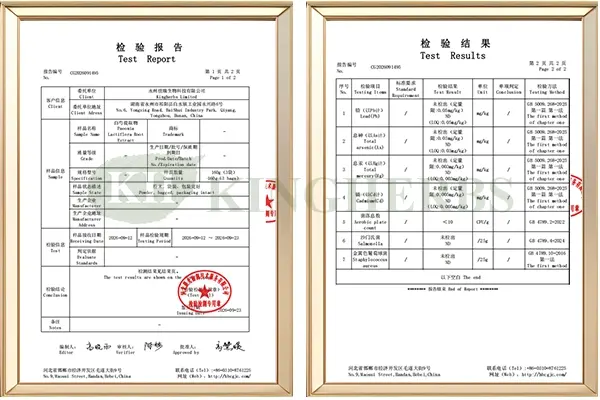
The quality of white paeony extract manufacturer can only be guaranteed with an adequate COA. The COA should cover botanical identification, assay of paeoniflorin by HPLC, moisture or loss on drying, ash value, microbiological limits, heavy metals, pesticide residues, residual solvents, and aflatoxins where applicable. Buyers should also ask about the reference to the method, laboratory accreditation status, and detection limits and acceptance standards for each test used. Most respected labs choose a validated HPLC method for measuring paeoniflorin.
Original data: what batch audits reveal
This is a finding from our own quality team review that you seldom see on a typical sales page from most buyers. More recently, we have assessed 180 incoming raw material batches in our lab over a period of 12 months. The major reason for the assay method mismatch against our in-house retest was an unreported change in sample preparation and was seen in around 20% of supplier-submitted COAs from smaller trading houses. This one gap is enough to send the stated potency of a finished product out of its allowable range if not addressed.
Case Study: A European nutraceutical company had a 28% rejection rate on a batch of paeoniflorin-standardized mix from a previous supplier. They turned to Kingherbs. The main explanation cited was the varying extraction ratios throughout the harvest seasons, with no specified test specification included in the purchase contract. Within two production cycles after switching to a fixed range of paeoniflorin percentage determined by HPLC on each batch using a common reference standard between the two labs, the rejection rate of the brand was below 4%. The lesson for other clients is simple: a locked assay standard, tested on both sides before shipment, removes most downstream rejection concerns before they ever arise.
“The COA is only as good as the procedure behind it,” adds Cathy, our QA Manager. We tell all new clients the same thing: match methods first, numbers second.
Compliance framework for EU and US buyers
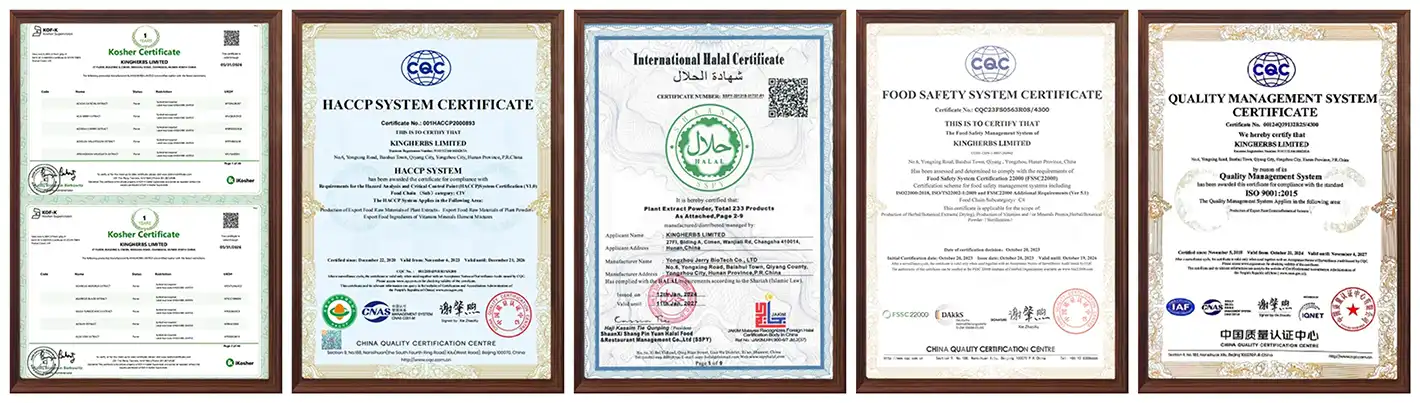
Buyers of food and supplements should examine US FDA dietary supplement cGMP requirements under 21 CFR Part 111 and any EU food-supplement rules in the destination Member State. Cosmetic buyers should refer to EU Regulation (EC) No. 1223/2009 and US cosmetic legislation, including MoCRA requirements where appropriate (European Commission, 2009). Certifications of quality systems like ISO 9001, ISO 22000, HACCP, and GMP assist in supplier evaluation but do not replace a COA for a specific batch. Depending on the medication registration status and the role of the importer, they may be subject to REACH rules (ECHA, 2024). CE marking, RoHS, and UL approvals are mainly for equipment and electrical items, not for standard plant extracts. If you have a seller who is offering them to you as proof of quality, they are probably misunderstanding the requirement.
How to Choose High-Quality White Peony Extract: Supplier Capability & Evaluation
Supplier evaluation checklist
A good provider will not hesitate to pass along paperwork. Here’s what to look for before you sign any purchase order:
- Botanical identification using the Latin name, together with verification of plant part and provenance, to check that the raw material is exactly what the quotation says it is, and not just a generic product name.
- A product spec sheet linked to a batch-specific COA, both utilizing the same verified assay technique, so the figures on paper match what independent retesting would indicate.
- Traceability records from receipt of raw materials to final packaged batch • Stability or shelf-life data • Documented testing for risks of contaminants and adulteration
- Export and regulatory documents suitable for the target market and a quality system that an auditor may inspect on short notice, including complaint management and change control processes.
- These inspections lower the likelihood of a cargo being held up at customs or rejected in inbound QC, which costs a lot more than the additional week spent vetting a supplier up front.
Procurement factors for wholesale and bulk supply
The price per kilogram is only one line item in a real cost comparison. Buyers should also be mindful of MOQ vs sample quantity, standard versus custom assay grades, production lead time versus replenishment lead time, payment terms, and the Incoterm structure used, whether EXW, FOB, CIF, or DDP. How fast a delivery clears customs is determined by things like package documentation, HS code support, certificate of origin, and phytosanitary paperwork. Compare prices side by side, and you obtain a considerably fairer comparison by adding freight, customs, and storage fees to the unit price and then comparing landing costs.
A capability profile worth checking against
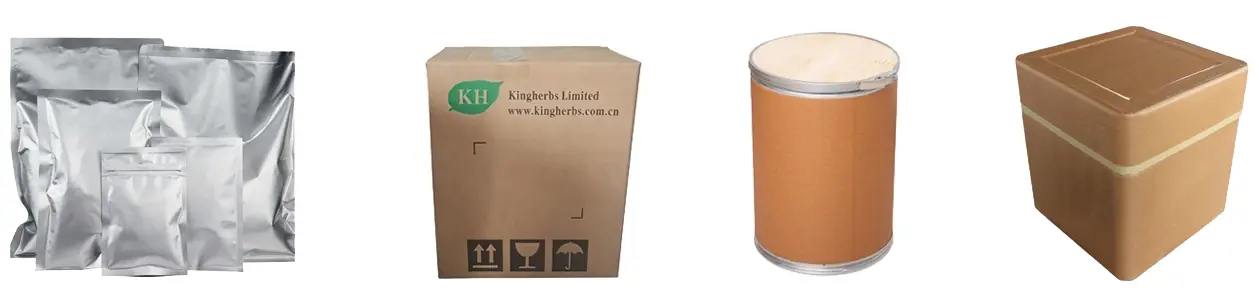
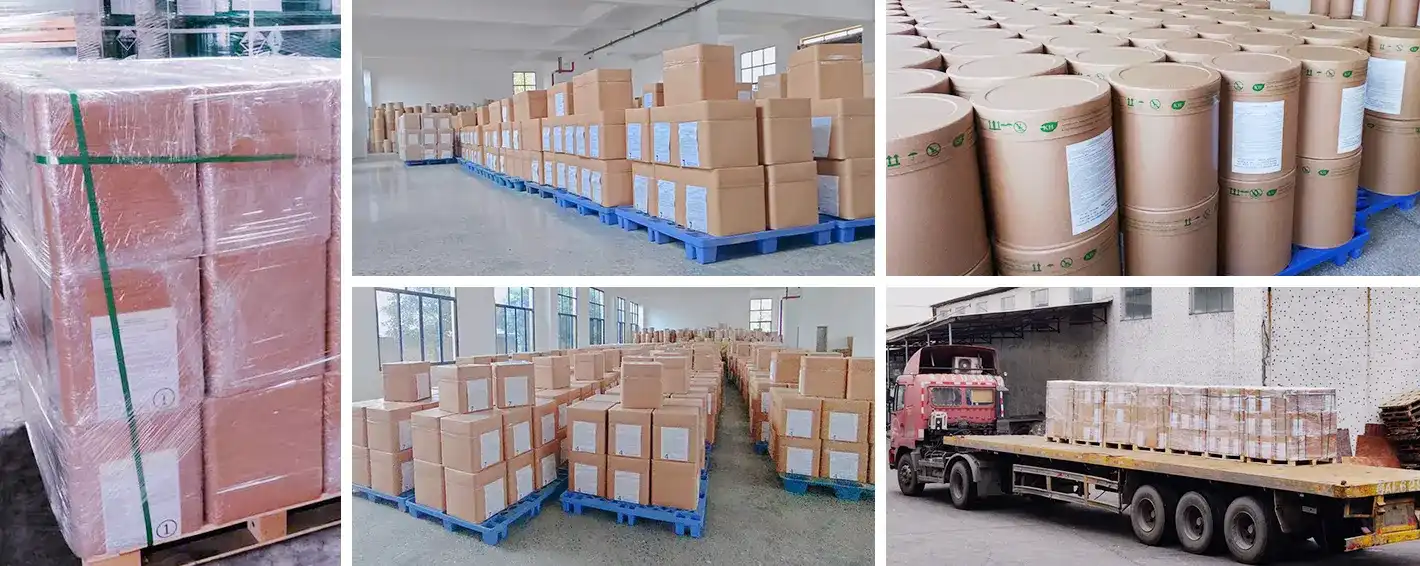
Kingherbs Limited has been in business since 1996 as a producer of botanical and herbal products for the nutritional supplement, culinary, cosmetic, and pharmaceutical sectors globally. The firm offers white peony extract in powder (ratio extracts) with paeoniflorin parameters ranging from 4% to 90%, and provides an HPLC analytical report for each batch. Our certifications include ISO 9001, FSSC 22000, Kosher, Halal, HACCP, FDA registration, and EU and USDA Organic. Standard pack: 25 kg/drum. The commercial MOQ is 25kg; however, we also provide small kilogram trials and samples. Samples and regularly stocked items usually ship within three to five business days, convenient for a company considering several suppliers that has a limited product development window. These facts are assertions of current capabilities, and any customer should check against the latest certificate and batch COA before buying.
Is White Paeony Extract the Right Choice for Your Botanical Ingredient Portfolio?
Decision checklist
Choose white paeony extract manufacturer when a project calls for a Paeonia lactiflora root-based ingredient, paeoniflorin-focused standardization, a differentiated botanical story, documented identity and contaminant control, flexible powder or liquid formats, and application-specific technical support from the supplier's own lab.
Consider a different extract when the project needs strong consumer familiarity with turmeric or green tea, a defined curcuminoid, catechin, or proanthocyanidin claim strategy, a specific color or sensory profile that white paeony extract cannot match, or clinical-level evidence that current white paeony research does not yet support for the intended claim.
Key risks and mitigation measures
| Risk | Potential impact | Mitigation |
|---|---|---|
| Common-name confusion | Wrong botanical material | Require Latin name and authentication |
| Variable paeoniflorin content | Inconsistent finished products | Set assay specifications and test every batch |
| Different assay methods | Incomparable COAs | Approve a defined, validated method |
| Adulteration or substitution | Safety and compliance concerns | Use identity testing and traceability |
| Undocumented contaminants | Import or market rejection | Require pesticide, heavy-metal, microbial, and solvent testing |
| Unclear regulatory status | Labeling or launch delays | Complete EU/US market-specific review |
| Poor storage stability | Potency or color changes | Request stability data and packaging guidance |
Final selection workflow
A clean procurement process follows a repeatable order: define the target application and market, specify botanical identity and extraction method, request samples and technical documents, compare COAs using matched test methods, run formulation and stability trials, complete a regulatory and claims review, and finally approve the supplier along with packaging and shipping terms. Skipping steps early almost always costs more time later, usually at the exact moment a production deadline is closest.
Request a White Paeony Extract Specification and Compliance Checklist
It shouldn’t take you weeks of back-and-forth to find a reliable white paeony extract provider, and it shouldn’t be a guessing game. KH has been offering each batch of white peony extract since 1996, with HPLC reports, ISO 9001 and FSSC 22000 certification, and traceability from field to drum to botanical ingredient suppliers, contract manufacturers, and formulation teams. Just provide us with the level of your goal paeoniflorin, intended use, and expected volume to info@kingherbs.com, and our technical staff will create a sample, specification sheet, and shipping quote according to your production schedule. Whether you are looking for a white paeony extract provider for a trial batch or a long-term commercial contract, our staff answers with genuine documentation, not a pricing list.
Conclusion
White paeony extract is no better than turmeric, green tea, grape seed, or red peony extracts. If a project requires Paeonia lactiflora root material, paeoniflorin standardization, a distinct botanical perspective, and paperwork that a buyer can truly verify, then this does the job. The proper option is always based on the botanical identification, active compound specificity, test technique, intended use, regulatory market, total landed cost, and supplier dependability. Checked collectively, not one at a time.
FAQ
1. What is white paeony extract?
White paeony extract generally refers to an extract made from the root of Paeonia lactiflora Pall. Its exact composition depends on the plant material used, the extraction solvent, the concentration ratio, and the standardization target applied by the manufacturer.
2. What are the main white paeony extract benefits?
Research commonly looks at antioxidant, anti-inflammatory, and general botanical-support properties. Evidence strength depends heavily on the extract specification tested, the study type used, the dosage applied, and the intended application of the finished product.
3. Is white paeony extract the same as paeoniflorin?
No. Paeoniflorin is one measurable constituent inside white paeony extract, while the full extract contains many other compounds. A reliable supplier should clearly separate a standardized extract product from an isolated paeoniflorin powder product on its spec sheet.
4. What is the difference between white paeony extract and red peony extract?
They may come from different Paeonia species, carry different chemical profiles, and reflect different traditional uses. Buyers should verify the Latin name, plant part, assay profile, and authentication documents instead of trusting the color name alone.
5. Is white paeony extract suitable for skincare?
It can work in cosmetic formulations, subject to a safety assessment, formulation compatibility testing, INCI documentation, and market-specific claims review. EU products need review under applicable cosmetic regulations, while US products must meet FDA and MoCRA requirements where they apply.
6. How should buyers compare white paeony extract powder and liquid extract?
Compare the active-content basis, the solvent system used, any carrier materials present, stability under storage, microbial limits, shipping weight, and compatibility with the planned dosage form. Powder generally stores better over long distances, while liquid extract can simplify certain manufacturing steps.
7. What should a white peony extract COA include?
A solid COA should include botanical identity, the paeoniflorin assay result, moisture content, microbiological results, heavy metals, pesticide residues, residual solvents, the batch number, the test date, and clear specification limits. Exact requirements shift slightly by application and destination market.
Why Documentation Should Decide Your Next Purchase Order
Procurement teams lose far more time and money chasing a cheap quote than they ever save on it. A specification mismatch discovered after a production run starts costs far more than a week spent confirming test methods upfront. If your current white peony extract manufacturer cannot produce a batch-matched COA using a validated HPLC method on request, that gap alone is worth a second conversation with another source. Reach KH at info@kingherbs.com for a sample of our current white paeony extract stock, a copy of our certification file, or a direct technical conversation about your formulation goals before your next purchase order goes out.
References
1. U.S. Food and Drug Administration (FDA), 2023 — 21 CFR Part 111, Current Good Manufacturing Practice in Manufacturing, Packaging, Labeling, or Holding Operations for Dietary Supplements. https://www.ecfr.gov/current/title-21/chapter-I/subchapter-B/part-111
2. European Commission, 2009 — Regulation (EC) No. 1223/2009 on Cosmetic Products. https://eur-lex.europa.eu/legal-content/EN/TXT/?uri=CELEX:32009R1223
3. European Chemicals Agency (ECHA), 2024 — Understanding REACH. https://echa.europa.eu/regulations/reach/understanding-reach
4. International Organization for Standardization (ISO), 2018 — ISO 22000: Food Safety Management Systems. https://www.iso.org/standard/65464.html
5. World Health Organization (WHO), 2003 — WHO Guidelines on Good Agricultural and Collection Practices (GACP) for Medicinal Plants. https://www.who.int/publications/i/item/9241546271
Author
Cathy has spent over a decade reviewing botanical extract specifications, HPLC assay reports, and supplier audit files for herbal and nutraceutical ingredient buyers across North America, Europe, and Southeast Asia. She works directly with Kingherbs' quality lab to match client specifications against batch-level testing before shipment, and she regularly advises supplement and cosmetic formulation teams on identity verification and contaminant screening for botanical raw materials.
Send Inquiry

Related Industry Knowledge
- Tilia Extract Uses in Cosmetics, Supplements, and Personal Care
- How Does Watercress Extract Support Hair and Skin Health?
- How Is Apple Extract Powder Produced and Standardized?
- Passionflower Extract Powder for Insomnia: Is It Effective?
- Can White Willow Bark Extract Powder Help Reduce Chronic Discomfort?
- Understanding Eurypeptides: The Key to Tongkat Ali Extract Powder’s Efficacy
- How Dill Seed Extract Enhances Overall Health Naturally
- Is Watermelon Powder Good for Digestive Health?
- White Paeony Extract: Anti-Inflammatory Advantages Explained
- Can Polygonum Cuspidatum Extract Improve Energy & Vitality?