_1762508637542.webp)
How Is Apple Extract Powder Produced and Standardized?
Aug 11, 2026
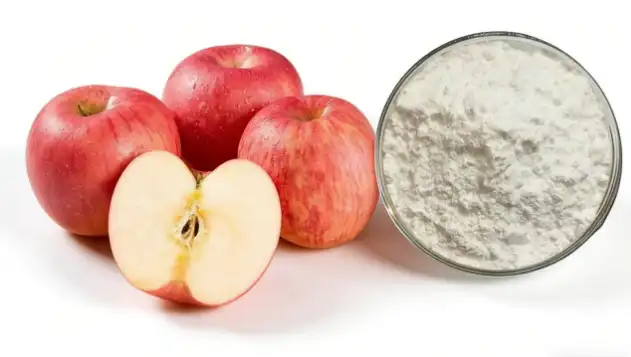
Apple Extract Powder is produced through a multi-stage process that begins with selecting premium-quality Malus Pumila Mill. fruits, followed by solvent extraction using pure water or food-grade ethanol. The extract undergoes concentration and spray-drying to create a fine reddish-brown powder standardized to specific polyphenol concentrations (30%-80%) and Procyanidin B2 levels (0.2%-10%). Standardization involves rigorous testing via UV/HPLC methods to quantify active compounds, ensuring batch-to-batch consistency. This approach guarantees compliance with certifications like ISO9001, FSSC22000, KOSHER, HALAL, and HACCP, delivering reliable, traceable botanical ingredients for nutraceutical, cosmetic, and food formulations.
Understanding Apple Extract Powder: Composition and Benefits
This concentrated organic ingredient comes from the fruit of the Malus Pumila Mill. plant. It is different from apple cider vinegar and juice powders because it has a higher flavonoid profile and a standardized bioactive content. The Apple Extract Powder contains many useful ingredients, including Procyanidin B2, phloridzin, natural pectin, organic acids, and important vitamins. It can help product makers make products that are antioxidant, circulatory, and metabolically supportive.
What Makes This Ingredient Unique?
Unlike raw apple materials, this concentrated form has a consistent nutrient density because the extraction and drying processes were carefully controlled. The concentration factor is based on the extraction ratio, which comes in 4:1 and 10:1 options. This lets formulators exactly adjust the dose for different uses. A polyphenol content range of 30% to 80% allows for a variety of formulation strategies, such as focusing on antioxidant potency or balancing cost-effectiveness for mass production.
Key Bioactive Compounds and Their Industrial Relevance
Procyanidin B2, which can be found in amounts ranging from 0.2% to 10% based on the standard, is a powerful antioxidant and collagen protector. This makes it useful for anti-aging products and heart health supplements. Natural pectin helps digestive health formulas work better, and phloridzin helps control blood sugar. This combination solves a lot of problems at once: product developers get reliable results, buying teams cut down on supply chain variability, and quality assurance managers meet regulatory standards with clear batch-level tracking.
Understanding how this ingredient is extracted cleanly is important for setting it apart from competitors. Using only pure water or food-grade ethanol gets rid of any harmful residues and guarantees fast dissolution and pure coloration, which are important for use in drinks and clean-label cosmetics. We've seen that companies that focus on solvent-safe extraction get better market positioning. This is especially true for brands that want to reach health-conscious customers and markets that have to follow rules, like the US.
Production Process of Apple Extract Powder: From Raw Apples to Finished Product
Every step of the process of making high-quality plant products needs to be done with great care. From the farm to the finished Apple Extract Powder, there are strict rules that affect how well the active ingredients stay in the product, how safe it is against microbes, and how long it lasts. When procurement professionals understand these technical steps, they can better judge the skills of suppliers.
Raw Material Selection and Traceability
The first step in production is to work with certified planting bases that carefully control the types of plants used, how the soil is managed, and when the crops are harvested. We make sure that apple types that naturally have a lot of polyphenols are picked when they are at their ripest to get the most nutritious yield. This upstream control stops changes in the quality of the raw materials, which can be a problem when buying from multiple supply chains. Traceability goes from seeds to powder, with records of how the plants were grown, when they were harvested, and how they were handled afterward.
Extraction Methods: Solvent Selection and Efficiency
Traditional solvent extraction has changed into more complex methods that balance safety and yield efficiency. We don't use any hexane, methanol, or synthetic additives in our production; only pure water or food-grade ethanol is used. Ethanol extraction raises the quantity of polyphenols, while water extraction is best for situations that need to keep as much pectin as possible. Colour, solubility, and stability are all affected by the solvent used. These are three important factors for formulators who work with capsules, tablets, drinks, or topical cosmetics.
Controlled temperature and pressure are used in the extraction process to keep heat-sensitive chemicals like vitamin C and flavonoids from breaking down. Multistage extraction gets both water-soluble and lipophilic parts, which makes sure that all the nutrients are transferred. This method solves the problem of incomplete extraction, which lowers the amount of active ingredients and makes products work less consistently.
Concentration and Drying Technologies
After extraction, vacuum evaporation is used to get rid of the extra solvent while keeping the nutrients that don't change when heated. When the concentrate is spray-dried, it turns into a fine reddish-brown powder with controlled moisture levels and particle sizes. The spray-drying parameters (inlet temperature, feed rate, and atomisation pressure) are fine-tuned to keep the polyphenols stable and get great reconstitution properties. When kept properly, we've found that items with a moisture level below 5% last up to 24 months.
Freeze-drying is an option for ultra-premium uses that need to keep as much bioactivity as possible, but it costs more to make. Solubility, flowability, and hygroscopicity are all affected by the drying method. Procurement teams must weigh these factors based on the needs of the end use and the available budget.
Quality Assurance and Certification Compliance
To meet foreign standards, each batch of output goes through a lot of tests. Testing for microbes like yeast, mould, and E. coli confirms the total plate count. The amounts of E. coli and Salmonella are in line with FSSC22000 and FDA rules. Heavy metal screening for lead, arsenic, cadmium, and mercury makes sure that dietary supplements and cosmetics are safe to use. A study of the residual solvent shows that the amounts of ethanol are still within what is considered safe by different regulatory bodies.
Getting certifications like ISO9001, KOSHER, HALAL, and HACCP shows that you are dedicated to managing quality in a planned way. These badges solve the problem of not knowing what the rules are because they give procurement managers the proof they need for later compliance checks. Third-party lab testing is an addition to internal quality control that confirms the content and cleanliness claims of active ingredients.
Standardization of Apple Extract Powder: Ensuring Consistency and Quality
Standardization is the key to dependable business-to-business purchasing; it turns unpredictable agricultural raw materials into predictable industrial ingredients. Manufacturers face formulation errors, regulatory noncompliance, and unhappy customers if they don't have strong standardization procedures for Apple Extract Powder.
Quantifying Active Ingredients
The main way to standardize something is to measure the amount of polyphenols it contains using UV spectrophotometry at certain wavelengths. High-Performance Liquid Chromatography (HPLC) is a way to look at fingerprints and find and measure specific compounds like catechin, phloridzin, and Procyanidin B2. Our specs include polyphenol ranges from 30% to 80%, so formulators can choose amounts that meet their cost and effectiveness goals.
Standardization of Procyanidin B2 levels between 0.2% and 10% is used for specific tasks that need known amounts of oligomeric proanthocyanidin. This accuracy fixes the problem that R&D directors have when they're making formulations that have been tested in humans and where the biological activity and regulatory claim eligibility depend on specific compound concentrations.
Physical and Chemical Specifications
Besides the active ingredients, performance is controlled by physical factors. Colour stability (fine reddish-brown) makes sure that consumer-facing goods look the same from batch to batch. Solubility testing makes sure that the substance dissolves quickly in water, ethanol, or formulation matrices, which is important for cosmetic and drink uses. The flowability during packaging and tableting is affected by the particle size distribution, and the stability and shelf life are affected by the moisture content.
We keep detailed specifications, such as the ash content, pH range, and bulk density. Technical formulation experts can use these parameters to guess how the product will behave during manufacturing steps such as granulation, encapsulation, and emulsification. Full specification sheets cut down on the time it takes to develop new products and the money it costs to change existing ones.
Third-Party Testing and Certification
Independent labs check the claims made by suppliers, giving an independent check of quality. Every package comes with a Certificate of Analysis (CoA), which lists the test results for physical qualities, contaminants, and active ingredients. Third-party approval from groups like NSF, Informed-Sport, or USP Verified adds to a brand's trustworthiness, especially if it's trying to sell to regulated markets or stand out from the competition.
Buyers should ask for batch-specific HPLC chromatograms that show the purity and identification of the compounds. With this level of openness, sophisticated suppliers can be told apart from commodity brokers, directly addressing the issue of ingredient authenticity and the risk of adulteration.
Organic Versus Conventional Variants
Organic approval makes things more difficult and expensive, but it opens up new high-end markets. To be organic, apple juice must have been grown, processed, and handled in a way that meets USDA or EU organic guidelines. Organic versions usually cost 20 to 40 percent more, but they allow for clean-label claims and appeal to people who care about their health.
Conventional production saves money and makes it easier to get raw materials. When choosing between variants, procurement managers have to weigh the need for effectiveness against legal positioning and budget limits. Standardization of the active ingredient can be done in both ways; the main differences are in how the plants are grown and the paperwork that shows they are certified.
Choosing the Right Apple Extract Powder Supplier: What B2B Buyers Should Know
The supplier you choose has a big effect on the quality of your products, the reliability of your supply chain, and your position in the market. A systematic review approach lowers the risks of procurement for Apple Extract Powder and makes relationships stronger.
Evaluating Supplier Capabilities and Credentials
Vertical integration, controlling farming partnerships, extraction facilities, and quality labs are all signs of a reliable provider. We run application labs that help with formulating, checking for stability, and giving tips on how to make drinks, gummies, tablets, and skin care products. This model of technical partnership takes away the problem of getting ingredients without help with formulation, which speeds up time to market and lowers development costs.
Portfolios of certifications show dedication to quality standards. FSSC22000 shows that you know how to keep food safe, and ISO9001 proves that you use organised management practices. KOSHER and HALAL certifications open up new markets, and FDA registration shows that the product is ready to comply with U.S. market rules. Instead of depending only on what suppliers say, buyers should check licenses with the groups that issue them.
Custom Formulations and Scalability
The best providers let you make your own ratio extracts, co-extraction blends, and private-label products. We offer solutions that are tailored to specific levels of polyphenols, Procyanidin B2, or functional synergies that come from combining different botanical ingredients. This customization feature solves a problem that brands have when they want to stand out by using their own formulations.
Scalability makes sure that the supply stays steady as the business grows. Minimum Order Quantities (MOQ) that start with samples and small-kilogram trial orders let you test the product without any risk. For commercial orders, MOQs of 25 kg strike a balance between production efficiency and accessibility for small and medium-sized businesses. Established suppliers keep stock on hand, so common items can be shipped quickly—within three to five business days—reducing the uncertainty about wait times that can throw off production plans.
Due Diligence and Verification Tactics
To do smart buying, you should ask for samples, have third-party tests done, and, if possible, visit the supplier's facilities. Independent labs should look at the samples and compare the results to the supplier's certificate of authenticity (CoA) data. Differences are a sign of problems with quality control or a false image.
Transparency in the supply line deserves close attention. Asking for documentation on where to get raw materials, how to extract them, and quality control procedures shows that the operation is sophisticated. Suppliers who offer detailed batch traceability, such as HPLC chromatograms and residue testing reports, show that they are committed to transparency, which can help them stand out in markets that value ingredient integrity.
To get good deals, you need to know about the economics of creation and how markets work. Price cuts are often secured by making large orders, and flexible shipping plans work with strategies for managing inventory. Setting up clear communication rules, such as who to call for technical questions, legal paperwork, and problem-solving, makes working together easier over time.
Conclusion
Making apple extract from Malus Pumila Mill. needs to be carefully managed during the growing, draining, drying, and standardization steps. By understanding these technical processes, procurement professionals, R&D directors, and quality assurance managers can more accurately assess the skills of suppliers, ensuring the consistency of ingredients, compliance with regulations, and effectiveness of formulations. Standardization through UV/HPLC testing measures polyphenols and Procyanidin B2, making their performance reliable in food, cosmetics, and nutraceuticals. Choosing suppliers with a wide range of certifications, the ability to make custom formulations, and clear quality documentation lowers the risks of procurement and speeds up product development. We know that partnerships are more than just business deals. To make them work, we offer technical help, quick samples, and scalable processes that are in line with our company's long-term goals.
FAQ
1. What is the typical lead time for bulk orders?
Standard orders that are kept in ready stock ship within three to five business days by courier, air or ocean freight, based on the location and the amount of goods being sent. Custom formulations that need specific amounts of polyphenols or Procyanidin B2 usually take two to three weeks to make and test, but this can change depending on how complicated the formula is and how busy the production schedule is at the moment. Orders for commercial goods that meet the 25 kg MOQ are given priority processing.
2. How can buyers be sure that the organic approval is real?
Ask for copies of organic certificates from the USDA, the EU, or other similar organisations, along with their certificate numbers and expiry dates. Check the validity of the certificate by searching the database of the group that issued it. Ask for organic compliance paperwork that is specific to each batch and third-party testing that proves there are no synthetic pesticide leftovers. Reliable suppliers let you follow the food from certified organic farms all the way through processing.
3. Can suppliers provide customized polyphenol concentrations?
Yes, top manufacturers do offer custom specifications that meet exact needs for polyphenols and Procyanidin B2. Customization means changing the types of raw materials used, the parameters for extraction, and the concentration ratios. Talk to the expert teams about your target specs. They can help you reach your product development goals by giving you formulation advice, HPLC analysis, and stability data.
4. What factors for keeping make the food last the longest?
Keep the items away from direct light and in a cool, dry place where the temperature stays below 25°C and the relative humidity stays below 60%. Because it is hygroscopic, it needs to be sealed airtight to keep moisture from absorbing and caking. Powder stays active for 24 months if it is kept properly. Putting something in the fridge makes it more stable, but it needs to be brought to room temperature before it can be opened to avoid condensation.
Partner with KH for Premium Apple Extract Powder Supply
Since 1996, Kingherbs Limited has been making plant ingredients, like apple extract from Malus Pumila Mill. that is precisely standardised with polyphenol levels ranging from 30% to 80% and Procyanidin B2 levels that can be changed to fit your needs. From approved planting bases to solvent-safe extraction using pure water or food-grade ethanol, we can track everything from start to finish. This makes sure that the active ingredient content is always the same, as shown by UV/HPLC analysis. We offer sample orders, fast shipping (3-5 days) on stock items, and custom compounding for drinks, vitamins, and cosmetics. We are certified by ISO9001, FSSC22000, KOSHER, HALAL, HACCP, and FDA. Our application laboratory can help you improve your formulations and test their stability, whether you need 4:1 or 10:1 ratio extracts, specific polyphenol profiles, or private label services. You can talk to a reliable Apple Extract Powder supplier about your needs by emailing us at info@kingherbs.com. We are dedicated to quality, openness, and technical partnership.
References
1. Boyer, J., & Liu, R.H. (2004). Apple phytochemicals and their health benefits. Nutrition Journal, 3(5), 1-15.
2. Hyson, D.A. (2011). A comprehensive review of apples and apple components and their relationship to human health. Advances in Nutrition, 2(5), 408-420.
3. Wolfe, K.L., & Liu, R.H. (2003). Apple peels as a value-added food ingredient. Journal of Agricultural and Food Chemistry, 51(6), 1676-1683.
4. Kschonsek, J., Wolfram, T., Stöckl, A., & Böhm, V. (2018). Polyphenolic compounds analysis of old and new apple cultivars and contribution of polyphenolic profile to the in vitro antioxidant capacity. Antioxidants, 7(1), 20.
5. Denis, M.C., Furtos, A., Dudonné, S., & Montoudis, A. (2013). Apple peel polyphenols and their beneficial actions on oxidative stress and inflammation. PLoS ONE, 8(1), e53725.
6. Francini, A., & Sebastiani, L. (2013). Phenolic compounds in apple (Malus x domestica Borkh.): Compounds characterization and stability during postharvest and after processing. Antioxidants, 2(3), 181-193.
Send Inquiry
_1779935700347.webp "Onion Extract")
Related Industry Knowledge
- What Are the Main Applications of Bamboo Leaf Extract?
- Blueberry Extract Powder Price and Wholesale Buying Guide
- Nettle Extract Powder for Capsules and Beverage Applications
- How Does White Willow Bark Extract Powder Help Reduce Inflammation?
- How does Angelica extract support digestion?
- Organic Couch Grass Rhizome Extract for Premium Supplements
- Top Reasons to Add Valerian Root Extract Powder to Your Lineup
- What Makes Valerian Root Extract Powder So Effective?
- How Macleaya Cordata Extract Supports Immune Function?
- Mulberry Leaf Extract Powder for Advanced Blood Sugar Support