_1762508637542.webp)
Where to Buy Maca Extract Powder: Supplier and Import Guide
Sep 23, 2026
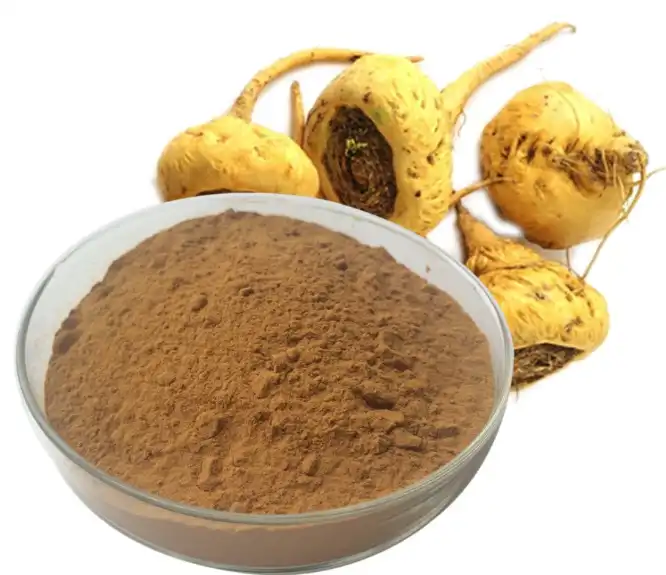
If you're looking to source maca extract powder for making supplements, creating functional foods, or developing cosmetics, this guide is for you. Maca extract powder comes from the root of Lepidium meyenii, a tough plant that grows in the high mountains of the Peruvian Andes. It contains important active ingredients like macaides, glucosinolates, and macaenes, all in a standardized form. Compared to raw maca flour, this concentrated extract has better absorption by the body, more consistent quality, and works better in different product formulas. This guide helps people who buy products learn about the market, how to choose good suppliers, the different types of products available, how to handle import processes, and tips for making smart and well-informed choices when buying.
Criteria for Choosing the Right Maca Extract Powder Supplier
The quality of service provided by vendors selling maca extract powder varies. Instead of relying solely on cost, procurement teams should use a systematic screening methodology to assess potential partners.
Each and every one of your qualified buyers should use these fundamental evaluation criteria:
- For each batch, the supplier must present an HPLC-verified certificate of analysis attesting to the active marker content, with a focus on macamides (0.6%-1%) and glucosinolates (0.6%-1%). This ensures transparency in testing and standardisation. Regulators scrutinise supplement brands, which mustted to provide batch-level verification.
- Verify that they have the following certifications: ISO9001, FSSC22000, HACCP, FDA registration, and, if applicable, Kosher and Halal certifications. These certifications attest to the infrastructure's overall quality, not only the claims made for individual products.
- Integrity of the extraction process: The solvent used to extract has a direct impact on the product's safety and its position in the market. Companies that make their extracts with water or food-grade ethanol are more likely to use cleaner, more widely accepted ingredients than those who use chemical solvents.
- A reliable supplier can support both trial orders and commercial-scale purchases, thanks to their MOQ flexibility and sample availability. A reasonable standard that safeguards purchasers throughout the assessment phase is a minimum order quantity of 25kg with sample availability.
The likelihood of supply interruption, quality failure, or regulatory noncompliance is greatly diminished when these criteria are routinely used. No amount of document examination can substitute for an extra layer of verification provided by supplier audits and client references.
Comparing Types of Maca Extract Powder in the Market
Ratio Extract vs. Standardized Extract
Purchasing from businesses is primarily done in two ways. Extracts with a ratio of 4:1 or 10:1 show the concentration in relation to the weight of the raw roots. Ten kilos of root material produces one kilo of extract at a 10:1 ratio. The difference between standardised extracts and others is that the former are characterised by their confirmed bioactive content. Standardised maca extract powder with verified macamide and glucosinolate concentrations provides more reliability for formulation accuracy.
Organic vs. Conventional
Organic-certified maca extract is more expensive, but it allows for clean-label product lines and access to stores that have strict rules about where ingredients come from. Regular maca extract is cheaper and works well for many supplements and functional foods, as long as each batch has proper test results to back it up.
Raw Maca Powder vs. Concentrated Extract
There is less active chemical concentration per serving and gastrointestinal distress due to the intact starch matrix in raw maca root powder. Maximising bioavailability and formulation efficiency, concentrated maca extract eliminates indigestible starches during extraction. Manufacturers aiming for therapeutic dose precision would benefit greatly from using the extract format.
Where to Buy Maca Extract Powder: Supplier and Import Channels?
Direct Manufacturer Sourcing vs. Trading Platforms
Online marketplaces make it easy to find products, but they usually don’t provide the detailed documents, custom options, or clear supply chain information that business buyers need. Working directly with a botanical extract manufacturer—especially one that has GMP certification, its own testing labs, and full traceability from the raw plant to the final product—leads to better results in the long run.
Companies like KH (Kingherbs Limited) are well-known for making maca extract powder available in two concentration ratios: 4:1 and 10:1.
They also set standards for macamides and glucosinolates between 0.6% and 1%. Each 25kg drum comes with full HPLC test results, and the company is certified by ISO9001, FSSC22000, KOSHER, HALAL, HACCP, and FDA.
Import Logistics Essentials
Preserving procurement budgets is possible with a firm grasp of shipping terms. With FOB (Free on Board) price, the onus is transferred to the port of origin, which is helpful when a goods forwarder is handling the import portion. While CIF (Cost, Insurance, and Freight) simplifies budgeting, it reduces cost management by including those charges to the destination port. Common methods of shipping for maca root extract shipments include courier include courier for small orders, air freight for urgent shipments,mercial volumes of 25 kg drums.
All shipments coming into the United States must have certificates of analysis, certificates of origin, material safety data sheets, and phytosanitary certifications. For first-time supplier engagements, we highly recommend conducting pre-shipment third-party lab testing.
Best Practices for Importing Maca Extract Powder Successfully
Better results are regularly achieved by procurement experts who view quality assurance as an end-to-end process, not just a customs checkpoint. Essential precautions for a hygroscopic powder like maca extract include pre-shipment inspection, moisture testing, and third-party verification of active compound levels.
Equally important is regulatory alignment. The Food and Drug Administration has established 21 CFR Part 111 as the current good manufacturing practice for dietary supplements, and all US suppliers of dietary ingredients are required to follow this standard. You can greatly lessen your compliance load by choosing a provider who is already working under these rules.
Long-term supplier partnerships also generate compounding value. A manufacturer who takes the time to learn your formulation goals can go above and beyond merely supplying basic ingredients by suggesting specification changes, alerting you to potential problems with raw material availability before the season starts, and even working with you to develop new products.
Conclusion
There is more to sourcing maca extract powder on a commercial basis than just looking at prices. Greater supply chain resilience is regularly achieved by procurement experts that place a premium on standardisation, paperwork integrity, extraction purity, and regulatory compliance. You can only go as far as your maca root extract allows in the final formulation of your adaptogenic supplement, functional drink, or performance nutrition product. To shape product quality, regulatory status, and brand reputation for the long term, choosing the proper supplier partner is essentially a strategic decision.
FAQ
Is maca extract powder safe for large-scale supplement production?
Yes. When sourced from a certified manufacturer with verified batch documentation, maca extract powder is well-suited for commercial supplement production. Look for suppliers holding FDA registration, GMP certification, and HPLC-verified certificates of analysis. The extraction process used — ideally water or food-grade ethanol — also determines product safety and regulatory acceptability.
How do I verify the quality of maca root extract before placing a bulk order?
Request a sample alongside the full certificate of analysis before committing to a commercial order. Confirm that the COA includes HPLC test results for key biomarkers such as macamides and glucosinolates. Independent third-party verification through an accredited lab adds an additional layer of confidence.
What are typical lead times for bulk maca extract orders?
Suppliers with ready stock typically ship samples within 3–5 business days. Commercial orders in the 25kg–500kg range generally ship within 7–15 business days depending on destination, shipping mode, and customs processing timelines. Ocean freight to US ports from major Asian manufacturing hubs typically adds 18–28 transit days.
What specifications should I request for a standardized maca extract?
For most supplement and functional food applications, request a standardized extract specifying 0.6%–1% macamides and 0.6%–1% glucosinolates, tested by HPLC. Ratios of 10:1 are common for general wellness applications, while higher standardised specifications serve premium or clinical-adjacent formulations.
Source Your Maca Extract Powder Through KH — Request a Sample Today
KH (Kingherbs Limited) has supplied certified botanical ingredients to global manufacturers since 1996. As a trusted maca extract powder manufacturer, KH delivers fine brownish-yellow powder standardised by HPLC, backed by ISO9001, FSSC22000, HALAL, KOSHER, HACCP, and FDA credentials. Every batch ships with full documentation. Trial orders and commercial volumes are both welcome — MOQ starts at 25kg with sample availability. Contact the team directly at info@kingherbs.com or visit www.kingherbs.com to request your sample today.

References
1. Grand View Research. Herbal Supplements Market Size, Share & Trends Analysis Report. 2023.
2. Gonzales, G. F. Ethnobiology and Ethnopharmacology of Lepidium meyenii (Maca), a Plant from the Peruvian Highlands. Evidence-Based Complementary and Alternative Medicine. 2012.
3. Meissner, H. O., et al. Therapeutic Effects of Pre-Gelatinised Maca (Lepidium peruvianum Chacon) Used as a Non-Hormonal Alternative to HRT in Perimenopausal Women. International Journal of Biomedical Science. 2006.
4. United States Food and Drug Administration. Current Good Manufacturing Practice (CGMP) Regulations: Dietary Supplements — 21 CFR Part 111. FDA. 2023.
5. Stone, M., et al. A Pilot Investigation into the Effect of Maca Supplementation on Physical Activity and Sexual Desire in Sportsmen. Journal of Ethnopharmacology. 2009.
6. Natural Products Insider. Botanical Ingredient Sourcing and Supply Chain Transparency in the Nutraceutical Industry. Informa Markets. 2022.
Send Inquiry
You may like