_1762508637542.webp)
Natural Ferulic Acid Import Guide for Global Buyers
Sep 14, 2026
Importing natural ferulic acid demands careful attention to sourcing quality, regulatory compliance, and supplier reliability. As a potent plant-derived antioxidant extracted primarily from rice bran and wheat, natural ferulic acid plays an increasingly essential role in cosmeceuticals, nutraceuticals, and functional foods. Our guide walks through crucial considerations that procurement managers, R&D directors, and quality assurance professionals must address when navigating the global supply chain for this valuable botanical ingredient, ensuring you secure consistent quality and traceability.
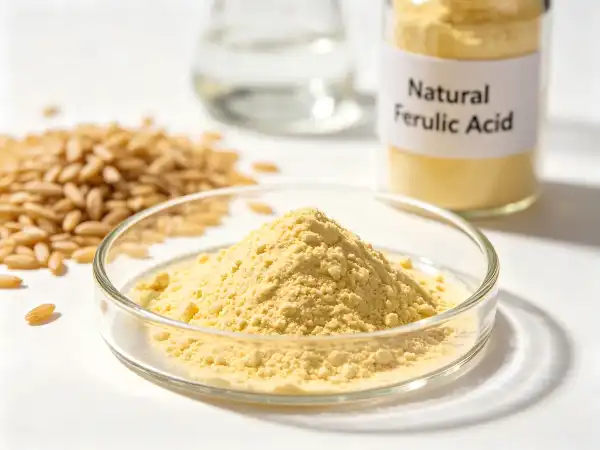
Understanding Natural Ferulic Acid: Key Knowledge for Buyers
Natural Ferulic Acid (4-hydroxy-3-methoxycinnamic acid) is a hydroxycinnamic acid derivative that is valued for its strong antioxidant and UV-absorbing properties. Natural Ferulic Acid has a bio-based carbon signature that is different from synthetic versions made through petrochemical processes. It meets clean label standards that appeal to today's quality-conscious consumers.
Molecular Structure and Natural Extraction Methods
The structure of Natural Ferulic Acid molecules includes a phenolic hydroxyl group and a methoxy residue on a cinnamic acid backbone. This gives it a great ability to remove free radicals. To get natural extracts from sources like rice bran oil gamma-oryzanol, wheat bran, or ferula plants, enzymes or solvents are usually used. Today's makers use only pure water or food-grade ethanol for extraction instead of harsh chemicals that damage the purity of the ingredients.
At KH, we work with certified planting bases to choose the seeds, change the soil's makeup, and decide when to harvest. This end-to-end traceability makes sure that our Natural Ferulic Acid always has the same amount of active ingredient and the botanical authenticity that buyers want. The way the color is extracted has a direct effect on how pure it is and how quickly it dissolves, which are two important factors that affect how well the mixture works.
Natural Versus Synthetic: Understanding the Differences
The main difference is where the carbon comes from. Radiocarbon dating (C14 research) clearly shows that Natural Ferulic Acid has 100% bio-based carbon, while synthetic forms made from vanillin or petrochemicals have 0% bio-based content. Brands that sell natural, organic, or clean beauty items need to do this testing very carefully.
In addition to its origin, Natural Ferulic Acid is more stable when mixed with other antioxidants. Researchers have found that adding 0.5% Natural Ferulic Acid, 15% L-ascorbic acid, and 1% tocopherol together makes photoprotection that is stronger than the sum of the effects of the three ingredients alone. This selfless antioxidant action makes vitamin C more stable by giving off secondary electrons that slow down oxidative degradation.
Recommended Dosages and Safety Considerations
Concentration ranges that work depend on the application. Antioxidant effects are usually found in amounts between 0.5 and 1.0% in cosmetics, while 50 to 500 mg daily doses may be used in nutraceuticals. According to clinical studies, Natural Ferulic Acid is very good at getting along with the skin. It causes less irritation than glycolic or salicylic acids and lowers the redness caused by UV light.
The safety profiles are still good for all applications. At approved amounts, there aren't many possible side effects. However, very high concentrations may cause slight stomach pain when taken by mouth. For pharmaceutical-grade uses, buyers should ask for batch-level toxicology data and certificates of analysis that say the purity is higher than 98%. For cosmetic uses, they should ask for 95%.
How to Evaluate and Select Quality Natural Ferulic Acid Suppliers
The choice of supplier has a big impact on the quality of the ingredients, compliance with regulations, and long-term stability of the supply chain. Tough testing keeps quality problems from happening that hurt the performance of the recipe and the brand's image.
Defining Clear Procurement Specifications
Different fields need different levels and requirements of cleanliness. For cosmetic-grade Natural Ferulic Acid, color stability and absorption are the most important properties. For pharmaceutical-grade Natural Ferulic Acid, strict heavy metal limits must be met by USP or EP. For food-grade ingredients, allergen statements and GRAS status proof are needed. Suppliers can give you the right paperwork and samples if you are clear about your technical needs, such as particle size, moisture content, and microbe limits.
KH has detailed standard sheets that list all of the parameters and their acceptable levels. Our HPLC analysis results show clear component spectra, which lets quality assurance teams check the amount of active ingredients before placing large orders. We know that when purchasing managers look at raw materials, they need clarity, not ambiguity.
Verifying Certifications and Quality Management Systems
Important certifications show that a supplier cares about quality and following the rules. ISO 9001 certification shows that a quality management system is being used, GMP certification shows that good manufacturing practices are being used for pharmaceutical products, and organic certifications like USDA Organic or COSMOS prove that statements of natural sourcing are true. Verification of the Halal, Kosher, and Non-GMO Project may be needed based on the markets that the products are meant for.
In addition to certificates, you should look at audit reports, customer references, and how long the business has been in business. Suppliers that have been in business for ten years or more usually have stronger quality systems than younger companies that just started doing business. Since 1996, we've been in business and have been making hundreds of botanical ingredients while constantly improving our quality standards to meet changing regulatory requirements in a number of different countries.
Assessing Bulk Pricing, MOQ, and Negotiation Strategies
Prices are different depending on the number of orders, the purity grade, and how the market is moving. For initial samples, the minimum order quantity for Natural Ferulic Acid is usually between 1 and 25 kilograms. When commitments of 100 kilograms or more are made, a preferential price kicks in. To make true cost comparisons, you should ask for thorough quotes that include FOB terms, payment conditions, and lead times.
When you negotiate well, you weigh price concerns against quality assurance and technical support. Suppliers who offer full application advice, help with formulation optimization, and teamwork for stable testing are more valuable than suppliers of basic ingredients. We offer this consultative relationship method and work with you as technical partners instead of transactional providers.
Step-by-Step Import Process for Natural Ferulic Acid: A Buyer's Checklist
Streamlined shipping needs careful planning, from researching the market to making sure the quality is perfect at the end. If you skip important steps, it can cause delays, extra costs, or problems with the law.
Initial Market Research and Regulatory Assessment
Before you place your order, find out what the rules are in the country where it will be sent. The US requires dietary supplements and makeup to follow FDA rules, which include making sure that ingredient lists are correct and that facilities are registered. The markets in Europe need REACH registration and CLP classification. Find out if the use you want to put it to needs pre-market approval or certain testing procedures.
Look at different suppliers at the same time by doing a study online, going to trade shows, and connecting with people in your business. Ask the companies you've chosen to send you technical data sheets, safety data sheets, and sample certificates of analysis. This preliminary evaluation keeps expectations from being mismatched and finds suppliers who can meet your technical needs.
Documentation Essentials and Ordering Protocol
Getting through customs and checking for quality is faster when you have the right paperwork. Purchase orders with specifics and amounts, commercial invoices with standardized tariff codes, packing lists, bills of lading or air waybills, certificates of analysis proving batch quality, and phytosanitary certificates when needed are all important papers that must be kept. Contracts should spell out the criteria for quality acceptance, payment terms, liability rules, and ways to settle disagreements.
When you order from KH, we give you full documentation packages that include HPLC reports that are specific to the batch, microbial testing results, heavy metal analysis, and verification of the residual solvent. Our normal wait time for in-stock items is three to five business days after we receive payment confirmation. Custom formulation projects need longer development times.
Logistics Considerations and Customs Clearance
The choice of freight method strikes a balance between speed, cost, and product stability. Air freight is best for urgent orders and smaller quantities because it usually delivers within 5–10 days. Ocean freight, on the other hand, is cheaper for large shipments but takes 30–45 days to get there. During the summer, temperature-controlled shipping may be needed to keep things from breaking down because of the heat.
Specifications for packaging affect how stable a product is while it's being shipped. Natural Ferulic Acid needs to be kept in containers that don't let light or moisture in and are kept below 25°C. We use pharmaceutical-grade HDPE canisters that are filled with nitrogen to keep oxygen levels low. This keeps the products from breaking down during foreign shipping.
How hard it is to clear customs depends on where you live. Hire expert customs traders who know how to classify botanical ingredients. Delays are usually caused by missing paperwork or differences in standardized code, not by rules that say they can't happen. Correct tariff classification stops taxes or inspection holds that aren't needed.
Post-Import Quality Verification
Receiving inspection makes sure of the quality one last time before adding ingredients to the production inventory. A visual check should make sure that the labels are correct, the package is whole, and there are no signs of contamination. Lab tests should look like the ones on the supplier's certificates and prove the product's identification using FTIR or HPLC, as well as its purity levels, moisture content, and microbial limits.
Setting receiving specifications with pass/fail criteria for each parameter lets you make quality decisions that are based on facts. By writing down this verification, you create audit trails that show you did your job and meet traceability standards. Any problems must be reported to the provider right away, and they must be looked into before the material can be used in production.
Making Informed Decisions: Comparing Natural Ferulic Acid Products and Alternatives
To choose the right ingredients strategically, you need to know how Natural Ferulic Acid stacks up against other antioxidants and when mixtures are better than pure compounds.
Synergistic Formulations with Vitamin C and E
Rather than working alone, Natural Ferulic Acid works best when paired with vitamins that work well with it. When Natural Ferulic Acid, L-ascorbic acid, and alpha-tocopherol are mixed together, they form protection that is stronger than the sum of their benefits. Natural Ferulic Acid keeps ascorbic acid stable by serving as a sacrificial antioxidant. This stops vitamin C from quickly oxidizing, which would otherwise change the color of the formula and make it less effective.
This synergy is very important for cosmetics companies that are making high-end anti-aging serums. Brands that use properly stable Natural Ferulic Acid blends can back up claims that their products protect against UV rays better than single-antioxidant products. Through our application laboratory, we help with formulation development by giving advice on compounding and testing for stability in drink, gummy, tablet, and skin care systems.
Pure Versus Blended Product Considerations
Pure Natural Ferulic Acid powder gives formulators the most options for how to make products, so they can make unique mixes that work best for certain uses. However, water-based systems have problems with solubility, so they need to be dissolved first in propanediol, ethoxydiglycol, or ethanol. Heating to 40–50°C and adjusting the pH to 3.0–3.5 make the substance more stable and soluble.
Pre-blended combinations solve problems with fluidity and make the manufacturing process easier. Natural Ferulic Acid is usually mixed with solubilizers, preservatives, and other active ingredients in ready-to-use forms. There are some downsides, like less formulation freedom and possibly higher unit costs. Your choice should be based on your ability to make the product, how you want to place it, and your cost goals.
Organic Versus Conventional Quality Impact
Organic approval helps brands stand out in the market and set themselves apart as premium, especially clean beauty and natural goods brands. Organic Natural Ferulic Acid costs 20–40% more than synthetic versions because it meets strict farming rules that don't allow synthetic fertilizers and pesticides. This certification is necessary for goods that want to be sold to people who care about the environment or to get organic product approvals.
Conventional Natural Ferulic Acid stays true to its plant-based roots and bio-based carbon signatures while being cheaper. When suppliers do strict testing for pesticide residue and heavy metals, there aren't many differences in quality. Instead of assuming that organic approval alone means better quality, this choice should be based on how you place yourself in the market and how much you care about price.
Best Practices and Risk Mitigation for Importing Natural Ferulic Acid
Common mistakes that lower the quality of ingredients, break rules, or interrupt supply chains can be avoided with proactive risk management.
Identifying and Avoiding Common Sourcing Mistakes
The biggest problem with getting botanical ingredients is that the quality isn't always the same. Changes from batch to batch in active ingredients, color, or solubility cause problems with preparation and customer issues. Reduce this risk by setting clear standards and acceptable ranges and making sure that all shipments come with certificates of analysis.
In markets where there isn't enough regulatory control, fake goods and adulteration are very dangerous. When synthetic Natural Ferulic Acid is mislabeled as natural, it hurts the trustworthiness of brands that say they use clean labels. For high-value contracts, you should always use C14 analysis to check the bio-based carbon content. Requesting building audits or inspection records from a third party gives you more peace of mind.
Not following the rules can lead to legal trouble and make it hard to get into markets. Suppliers who don't know what the target country needs may send incomplete paperwork or goods that don't meet the standards. Work with makers that have experience registering products in more than one market and a track record of knowing the rules.
Packaging Innovations and Stability Preservation
Natural Ferulic Acid is kept safe in distribution networks by using advanced packaging solutions. Changes in temperature during shipping and storage speed up the breakdown process, especially in warm places. We use pharmaceutical-grade packaging with materials that keep out light, oxygen, and moisture to keep the ingredients' integrity from the time they are made until they are used by a customer.
Temperature monitoring devices built into shipments allow for real-time tracking, which lets people step in before the cold chain breaks. This technology is especially helpful for recipes that are sensitive to temperature changes and for long-distance packages that go through a lot of different climate zones. Talking about packing choices with potential suppliers while evaluating them makes sure that you get the right safety for your distribution needs.
Building Long-Term Supplier Partnerships
Transactional interactions are only about agreeing on prices and placing orders. Strategic relationships include working together on technology, aiming to improve quality, and growing both businesses. Suppliers who care about your success help you with creation, give you information about the market, and give you priority when supplies are low.
Regular quality audits keep performance standards high and find ways to make things better. Suppliers can plan their capacity and raw material purchases well when they can talk openly about expected volumes, changes to specifications, and market trends. At KH, we see our clients as partners, and we provide ongoing technical support that goes beyond just supplying ingredients. This support includes helping clients improve their applications and following the rules.
Conclusion
To successfully import Natural Ferulic Acid, you need to pay close attention to quality control, follow the rules, evaluate suppliers, and manage operations. Because it's hard to find partners who can help you with foreign botanical ingredient sourcing, you need partners who can offer transparency in quality paperwork, technical support, and the ability to track ingredients from seed to finished product. Procurement experts can reduce risks and get regular, high-quality products by following the organized method described, which includes market research at the start and quality checks after importation. Strategic partnerships with suppliers based on open communication, regular audits, and working together to solve problems make the supply chain strong, which is good for long-term business growth and new product development.
FAQ
How can I tell the difference between natural and artificial ferulic acid?
HPLC purity analysis can't tell where something comes from because the molecular structure stays the same. Radiocarbon dating (C14 research) is the only way to be sure of something. It shows that plant-derived materials have 100% bio-based carbon while petroleum synthesis materials have 0%. For high-value contracts that need to prove natural origin, ask for C14 certificates regarding Natural Ferulic Acid.
What kinds of licenses do I need to buy in bulk?
Some important certifications are ISO 9001 for managing quality, GMP for pharmaceutical uses, and organic certifications like USDA Organic or COSMOS for natural claims. Check that the purity, microbial limits, heavy metals, and chemical residues on the records of analysis match your requirements and the rules of the country where the goods are going.
Why does my ferulic acid solution change color?
Most of the time, color changes happen because of oxidation, which can be caused by pH levels above 5.0, interactions between metal ions, or UV exposure. Keep the pH level between 3.0 and 3.5, use chelating agents like disodium EDTA, cover the manufacturing process with nitrogen, and store finished goods in opaque, airtight containers to keep oxygen and light out.
What are typical lead times for natural ferulic acid imports?
Standard items that are in stock usually ship three to five business days after payment is confirmed. For plane freight, international transport adds 5–10 days, and for ocean freight, it adds 30–45 days. For custom formulas or certain purity grades, production time may need to be extended. Make sure that the lead times given in the quote match up with your production plans at all times.
Partner with KH for Reliable Natural Ferulic Acid Supply
Finding a reliable Natural Ferulic Acid supplier is important for the success of your formulations and the continuity of your production. KH has been working with organic ingredients for almost 30 years and can provide full traceability from verified planting bases to final quality proof. Our pure extraction methods, which use water or food-grade ethanol, give you very pure colors and fast dissolution. Our detailed HPLC analysis reports give your quality assurance team the clear proof they need.
We know that procurement managers need more than just vendors of common ingredients. They also need technical partners to help them with things like formulating better products, testing their stability, and making sure they follow all the rules. Our application laboratory is well-equipped and offers compounding services for medicines, vitamins, makeup, and drinks. We can also make changes to meet your unique ratio or function needs. Samples and in-stock items are shipped within three to five business days. Our one-stop buying services combine chemicals, vitamins, and extracts into efficient supply lines.
Our team gives your projects the knowledge, quality, stability, and quick service they deserve, whether you're making high-end skin care serums, functional foods, or nutraceutical formulations. Get in touch with us at info@kingherbs.com right away to talk to one of our technical experts about your Natural Ferulic Acid needs and find out why top brands trust KH to make their plant ingredients.
References
1. Zduńska, K., Dana, A., Kolodziejczak, A., & Rotsztejn, H. (2018). "Antioxidant Properties of Ferulic Acid and Its Possible Application." Skin Pharmacology and Physiology, 31(6), 332-336.
2. Saija, A., Tomaino, A., Lo Cascio, R., Trombetta, D., Proteggente, A., De Pasquale, A., Uccella, N., & Bonina, F. (1999). "Ferulic and Caffeic Acids as Potential Protective Agents Against Photooxidative Skin Damage." Journal of the Science of Food and Agriculture, 79(3), 476-480.
3. Lin, F.H., Lin, J.Y., Gupta, R.D., Tournas, J.A., Burch, J.A., Selim, M.A., Monteiro-Riviere, N.A., Grichnik, J.M., Zielinski, J., & Pinnell, S.R. (2005). "Ferulic Acid Stabilizes a solution of Vitamins C and E and Doubles Its Photoprotection of Skin." Journal of Investigative Dermatology, 125(4), 826-832.
4. Graf, E. (1992). "Antioxidant Potential of Ferulic Acid." Free Radical Biology and Medicine, 13(4), 435-448.
5. Kumar, N., & Pruthi, V. (2014). "Potential Applications of Ferulic Acid from Natural Sources." Biotechnology Reports, 4, 86-93.
6. Mancuso, C., & Santangelo, R. (2014). "Ferulic Acid: Pharmacological and Toxicological Aspects." Food and Chemical Toxicology, 65, 185-195.
Send Inquiry
Related Industry Knowledge
- Mangosteen Extract Powder for Supplements, Foods, and Cosmetics
- Where to Buy Scutellaria Baicalensis Extract from a Supplier
- How Does Watercress Extract Support Hair and Skin Health?
- Why Choose ISO-Certified Cocoa Seed Extract Suppliers?
- What Is Melissa Officinalis Extract Used for Today?
- Can Angelica Officinalis Extract Help Maintain Emotional Wellness?
- Why Rhizoma Coptidis Powder Is a Natural Health Game-Changer
- How Is Watermelon Powder Processed for Max Potency?
- Vine Tea Extract Benefits: Science-Backed Health
- Why Vine Tea Extract Is the Next Big Functional Ingredient?