
How Is Mulberry Leaf Extract Powder Made and Tested?
Nov 13, 2026
Mulberry leaf extract powder is made by cleaning and authenticating Morus alba L. leaves, extracting them with water or food-grade ethanol, filtering and concentrating the liquid, and then drying, milling, and packing it. Testing follows at every stage. Labs confirm botanical identity, measure 1-deoxynojirimycin (DNJ) and flavonoids by HPLC, and screen for moisture, microbes, heavy metals, and pesticides. At KH, we have produced botanical extracts since 1996, and we send a detailed HPLC report with each batch. This guide walks you through every step so you can judge any supplier with confidence.
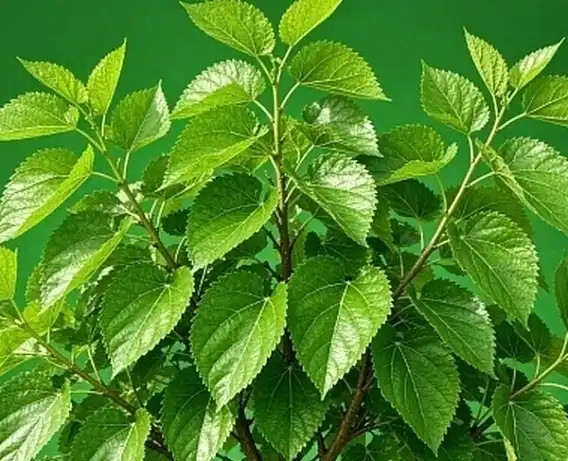
Raw Material Selection for Mulberry Leaf Extract Powder
Botanical Identity and Plant Part
To make this powder from mulberry leaves, you always need to use the right plant. The leaf of a Morus alba L. tree is our only source, and we only use that part of the plant. Each piece of paper should have the Latin name, plant part, growth area, and date of production for something that someone wants to buy. It is important to know what these things mean because mulberries come in many types and kinds, and each one may have a different set of chemicals. The year 2001 saw scientists look at Morus alba leaves and discover DNJ and other polyhydroxylated alkaloids that were very much like it. And this is why leaf identity is important for all DNJ-standard goods. If you don't know what plants are in the drum, the DNJ number doesn't tell you much.
Planting Bases, Soil, and Harvest Timing
We don't just buy planting bases from anywhere; we work with good ones. We pick the type of plant, the land, and the time of gathering, so the amount of active ingredients stays the same at the source. There are different amounts of DNJ in different types of leaves and at different times of the year. To put it another way, these things happen because of the end extract. You can get a source of raw leaf that doesn't change much from lot to lot. This makes it easier to guess how much oil will be taken out. This makes the base of our mulberry leaf extract powder stronger. For organic projects, make sure you get the most recent approval and proof that they are cared for differently. Organic (USDA) and Organic (EU) are on our list of certificates. Make sure they cover your order.
Incoming Inspection and Quarantine
A quality team should check the leaves before they are used for extraction to make sure they are the right ones and don't have any bacteria, heavy metals, chemical leftovers, or foreign matter on them. Things that were turned down should be put in a separate area and written down so they don't get to the rest of the work. By concentrating both the compounds you want and the ones you don't, this step is important because it keeps the next ones safe. A leaf lot can grow while it is being kept if it has too much water in it. Also, if it still has pesticides on it, it might not meet a finished-product standard, which a filter can't fix. As you get to know a provider better, look at their receiving inspection log and the way they number their lots so that each leaf lot is linked to its finished batches.
How Mulberry Leaf Extract Powder Is Made, Step by Step
Cleaning, Sorting, and Extraction
The dried leaves are cleaned and sorted to get rid of dust, stems, and other things that don't belong. After that, the leaves are broken or cut so that the liquid can get to the plant cells. Extraction is the next step. It is done in tanks with clean water or ethanol that is safe for food. KH only uses these two harmful solvents. They don't use any other ones. The item stays clean so it can be used for food and vitamins. DNJ can be used right away with water or a mix of water and ethanol. More antioxidants are taken out when the water is hot. More polar chemicals are taken out when the ethanol share is high. A good plant keeps track of time, temperature, and the ratio of leaf to solvent for each batch.
Filtration, Concentration, and Standardization
Screens get rid of the green stuff after the oil is taken out, leaving a clear liquid behind. When the plant squeezes this liquid, it's usually done in a vacuum so that the liquid disappears at lower temperatures. This keeps chemicals safe that are easily damaged by heat. The next step is to make everything the same. HPLC is used to test the concentrate, and the process is changed to get the right powder. This mulberry leaf extract powder has between 0.3% and 10% DNJ and between 3% and 10% flavonoids. This range means that the people who make the drugs don't have to pick just one number. Instead, they can pick a grade that works with the dose and dosage form. Always look to see if a carrier was added to reach a target. It's important to know if one of the active shares per gram is being used.
Drying, Milling, Sieving, and Packing
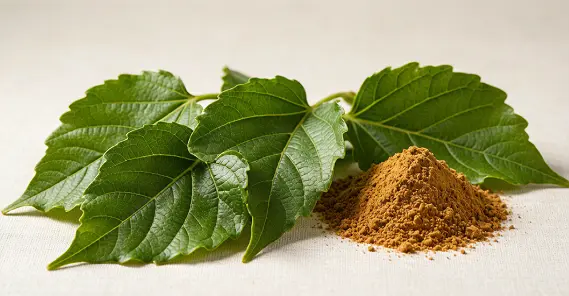
After that, the concentrate turns into a rock. Vacuum drying, spray drying, and freeze drying are all common ways to dry things. All of them change how much water there is, how well it moves, and how well it dissolves. A mill turns dried things into a fine powder, and a sieve sorts the powder into pieces of different sizes. At the end, there is a fine powder that is brown or yellow-brown and comes in drums of 25 kg. A lot of buyers don't know how important particle size is. Fine, even powder works better for pills, tablets, and drink mixes. Your drinks will look good when they're done if you use pure color powder that melts quickly. The DNJ will stay safe and not clump if you store the mulberry leaf extract powder somewhere cool, dry, and out of the light. For each step, the batch number should be tied to the process record.
How Mulberry Leaf Extract Powder Is Tested for Quality and Safety
Identity and Active Content by HPLC
To start a test, you have to know who the person is. Labs can look at the plant material, use chemical fingerprints, or use the DNA method to be sure it comes from Morus alba L. The next step is to work on the test. A standard is used in high-performance liquid chromatography (HPLC) to sort the chemicals in a sample and compare each one to the standard. This is because DNJ doesn't soak up a lot of UV light. To find it first, many labs change its shape or use ELSD or mass spectrometry. Each batch comes with a full study report that shows how the amounts of DNJ and flavonoids meet the needs. The tests are done with HPLC. To check the number, your QA team doesn't need a label. If the HPLC report is clear, they can just look at the number itself.
Safety, Purity, and Microbial Screening
You can protect your business and the goods you make by making sure they are safe. Some of the things that are usually looked for in mulberry leaf extract powder are water, ash, heavy metals (like mercury, arsenic, cadmium, and lead), pesticide residues, mycotoxins, leftover solvents, and bacteria like yeast, mold, and mycotoxins. There are two types of E. coli. When ethanol is used, it is most important to check for solvents that are still present. This is one reason we only use water or food-grade ethanol to press. In the US, companies that make food supplements must follow 21 CFR Part 111 to ensure that each item is exactly what it claims to be and that the level of contaminants does not rise too high. That's why the details your service provider gives you go right into your safety file. You can ask for the things your project needs, and they will be given to you. Our goods are up to USP and EP standards.
Physical Properties and Stability
The mulberry leaf extract powder has been tried out in your process to see how it works. Labs look at the substances' looks, smells, and tastes, as well as how well they dissolve and how much weight they lose when they dry. For drinks and sachets, the best powder is one that melts quickly. It is best to use a powder with a steady density for pills. Next, stability studies use the same packaging you get to keep track of how much DNJ is kept, how much wetness is kept, the quality of the bacteria, the color, the smell, and the caking over the time that the product is said to be stable. It stays true to its name when you store mulberry leaf extract powder in cases with lids. You can plan your stock this way. You can come up with a new formula in our application lab. It works with systems for drinks, gum, and skin care. You can also ask for information on how stable something is in the pH range and heat step you choose.
Quality Systems, Certifications, and COA Review
Quality Systems Behind Mulberry Leaf Extract Powder
A good method can take good ideas and make things that can be used over and over again. You should find written instructions on how to train staff, keep things clean, use tools, keep an eye on work, spot problems, and fix them. GMP and HACCP rules keep the risks of making things and food safe in check. You should be able to find the batch's leaf lot, processing record, packing record, and lab data once it's done. As of 1996, KH has been making herbal and plant-based fillers. There is no one else but us who plants the seeds and puts them on the drum. If someone complains, this chain helps the team figure out what went wrong right away. Ask the seller to show you a real batch record that shows when they got the leaves and when they sent them out.
Certifications to Verify
You can only use certificates if they are current and cover the right places and things. The following certifications are on our list: FDA, Kosher, Halal, Organic (EU), and Organic (USDA). Everybody has a different experience. Food is safe with FSSC22000 and HACCP, and you can only sell certain things in certain stores with Kosher and Halal. The organic seal backs up goods that are labeled as organic when the right supply chain is in place. Make copies and check the dates to make sure they are correct. Also, make sure that the license says which company makes the mulberry leaf extract powder. It only takes a minute to do this check, which will keep you safe during customer audits.
Reading a Certificate of Analysis
There should be the real test results, the date it was cleared, the batch number, the name of the product, and the times it was made and when it ends on a Certificate of Analysis (COA). Pay close attention to DNJ. Look into whether the amount given is the bare minimum, the standard, "as-is," or "dry basis," and see if carrier content is part of it. If you get the same results in different lots, don't know the limits, or have certificates that have expired, these are all red flags. What technology, rules, and quality guarantee do you choose? A strong COA that comes with the drum you buy backs it up. It's a good idea to compare the sample COA to a test from your own lab or another lab before you buy a lot more.
Choosing a Mulberry Leaf Extract Powder Supplier
Extract Powder vs. Whole-Leaf Powder
These two things are not the same. Leaf powder works well in smoothies, drinks, and whole-food mixes because it keeps the plant fiber. Mulberry leaf extract powder combines soluble components, allowing it to deliver DNJ in pills, tablets, drinks, and smaller-dose packages. It's called alpha-glucosidase, and it breaks down carbs. But DNJ stops it from doing its job. A 2007 study with healthy people found that a mulberry powder high in DNJ slowed the rise in blood sugar after eating a lot of sugar. But there are times when a bigger amount isn't better. You can see how much extract is in it, how well it ships, and how well it dissolves. You can also taste it and see how it looks. DSHEA is the name of the rules that the US has for these kinds of claims. You should talk to your lawyers about how to word them.
Common Buying Mistakes with Mulberry Leaf Extract Powder
People always do the same bad things when they buy things. Not everyone thinks about how well it breaks, how safe it is, or how well it fits the dosage form. They only look at the DNJ amount that is advertised. Some people mix up leaf powder and extract powder, or they don't read the batch number on a generic COA. They may not pay attention to carriers such as maltodextrin, gum, or silica, which can change the allergen statement, the active ingredient, and the cost per effective dose, among other things. Not following the rules for the target market is another mistake. As soon as possible, talk to your regulatory boss in the US about necessary labels, claims that can be made, and import papers. This should be done before you choose a formula. If changes, delays, extra work, or missing papers stop a start, the best bulk price might cost more in the long run.
From Sample to Commercial Order
It's better to have a clear process. The first thing you need to do is send your application along with your DNJ goal, yearly demand, licensing needs, packing information, and a note as to where the package is going. Second, see how it looks, feels, tastes, dissolves, and how much DNJ is in it. It's best to do this in your own recipe. Third, make a test batch when you're done with a big job to make sure everything is stable, processed, and packed well. Finally, agree on what needs to be done, how to handle changes and issues, and how long it will take to get everything ready. KH ships items that are in stock and samples in three to five business days. You can try it out with a small order, and business orders start at 25 kg. We ship by UPS, air, or sea. When we're done, our products only come in soft capsules. We also make mixes that need to be used in certain ways or amounts.
Conclusion
There are many steps in the process that can be seen in the mulberry leaf extract powder. First, check out the Morus alba L. roots of plants that were in charge of the leaves. To begin, water or food-grade ethanol are used to separate the sugar from the booze. Following that, it is standardized, filtered, dried, ground, packed, and tested in small groups. DNJ and flavonoids can be tested with HPLC. Contaminants, microbes, and leftover solvents are checked for by safety panels, and the shelf life is confirmed by stability work. Full COAs and up-to-date certifications are only useful if they match the number you're looking at. There is more to the powder than just the DNJ percentage. Whole-leaf powder and extract powder are used for different things. Also, they should look at the percentage, the type of carrier, how stable it is, and the papers. When the sample-to-order process is done in steps, the chance is even lower. You can be sure that an ingredient is safe because it has been tested, has clear records, and comes from controlled sources.
FAQ
What is the difference between extract powder and mulberry leaf powder?
Leaf powder is made from crushed leaves that still have their fibers. There are a lot of liquid chemicals in extract powder that is made to a DNJ level.
How do you figure out DNJ?
Labs use HPLC to see if a sample matches a standard. They then follow a set of rules to write down the result. After each run, we send an HPLC report.
What kinds of papers should I ask for?
The list of chemicals, the batch COA, the technical data sheet, the SDS, the most recent certificates, and the list of technical data sheets are some of the things you should ask for.
What do I do with it?
Food packages with tight lids should be kept in a cool, dry place away from light.
Could you give me a sample first?
Yes. If you're a business, you have to buy at least 25 kg. Samples and things that are already in stock ship in 3–5 business days.
Request Mulberry Leaf Extract Powder Samples from KH
Are you ready to use your own list to compare sellers of mulberry leaf extract powder? Email KH at info@kingherbs.com with your DNJ goal, application, total amount, and where you want to send it. We offer real samples, ready stock, HPLC reports, and custom ratios. You can see proof of this in our application lab. You can start the approval process once our team sends back a definition and COA.
References
1. Journal of Agricultural and Food Chemistry, 2001 – Asano et al., "Polyhydroxylated alkaloids isolated from mulberry trees (Morus alba L.) and silkworms (Bombyx mori L.)"
2. Journal of Agricultural and Food Chemistry, 2007 – Kimura et al., "Food-grade mulberry powder enriched with 1-deoxynojirimycin suppresses the elevation of postprandial blood glucose in humans"
3. Chinese Journal of Natural Medicines, 2016 – Chan et al., "Phytochemistry, pharmacology, and clinical trials of Morus alba"
4. Complementary Therapies in Medicine, 2018 – Thaipitakwong et al., "A randomized controlled study of dose-finding, efficacy, and safety of mulberry leaves on glycemic profiles in obese persons with borderline diabetes"
5. Food Chemistry, 2012 – Vichasilp et al., "Development of high 1-deoxynojirimycin (DNJ) content mulberry tea and use of response surface methodology to optimize tea-making conditions for highest DNJ"
6. Federal Register, 2007 – U.S. Food and Drug Administration, "21 CFR Part 111: Current Good Manufacturing Practice in Manufacturing, Packaging, Labeling, or Holding Operations for Dietary Supplements"
Send Inquiry
_1773796485210.webp "Honeysuckle Flower Extract Powder")
Related Industry Knowledge
- Natural Ferulic Acid Import Guide for Global Buyers
- Is Artemisia Argyi Extract the Next Breakthrough in Wellness?
- Why Tart Cherry Extract Is Growing in Sports Nutrition
- How to Choose a Tart Cherry Extract OEM Supplier
- Mangosteen Extract Powder Buying Guide: Quality and Price
- Cocoa Seed Extract Wholesale for Global Supplement Brands
- Can Rosehip Extract Powder Boost Immune Health?
- Cold-Pressed Organic Sea Buckthorn Seed Oil Guide
- What Is Bacopa Monnieri Extract Powder Used For?
- Does Polygonum Cuspidatum Extract Promote Healthy Circulation?