
Why Choose Echinacea Purpurea Extract for Immune Support Products
Oct 29, 2026
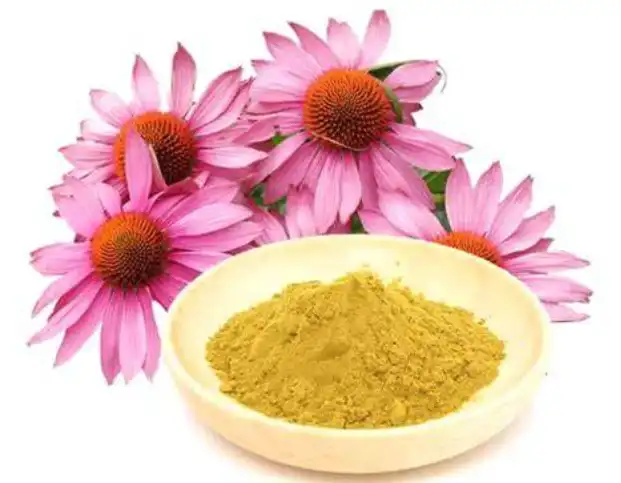
Echinacea Purpurea extract has become one of the most popular botanicals in the immune support space. This yellow-green powder is obtained from the aerial portions of Echinacea purpurea (L.) Moench, a native of North America, purple coneflower, and offers consistent amounts of cichoric acid, echinacosides, and polyphenols. The extract provides clinically validated immune modulation, antioxidant activity, and anti-inflammatory benefits within a clean, natural extraction profile for procurement teams as well as R&D directors and brand formulators looking for ingredients in nutritional supplements, functional drinks, or cosmetics.

Understanding Echinacea Purpurea Extract and Its Immune Support Benefits
Botanical Identity and Species Differentiation
E. purpurea, E. angustifolia and E. pallida. There are three species of Echinacea in commercial use. The species purpurea is of particular interest as it contains significant levels of cichoric acid, a derivative of caffeic acid present in the aerial portions, and is associated with macrophage activation and T-cell stimulation. E. angustifolia root has more alkamides, but less water-soluble phenolics. E. purpurea aerial-part extract provides firms with additional formulation flexibility and larger regulatory approval for broad immune support claims in the U.S. dietary supplement and functional foods markets.
Clinically Supported Bioactive Profile
Peer-reviewed published studies have revealed that the important constituents in echinacea purpurea extract (cichoric acid, polyphenols and echinacosides) work synergistically to stimulate the activity of natural killer cells and suppress pro-inflammatory cytokine synthesis. A 2015 meta-analysis published in the journal Lancet Infectious Diseases indicated that Echinacea preparations decreased the incidence of colds by around 58 percent and the duration of colds by 1.4 days. These factors are important when you’re building product claims for a competitive retail market.
Recommended Specifications and Dosage Guidance
We provide our extract in 4:1 and 10:1 concentrations standardized to include between 0.2% and 4% cichoric acid, between 1% and 12% echinacosides, and between 4% and 6% polyphenols, the standardization being confirmed by UV and HPLC techniques. The therapeutic literature for adults often reports additional doses of 300 mg to 500 mg standardized extract per dose. Batch-level HPLC documentation helps your QA team to properly correlate formulation objectives and stay label claim compliant for each manufacturing run.
Market Comparison: Why Choose Echinacea Purpurea Over Alternatives?
Echinacea Purpurea vs. Elderberry and Other Botanicals
Elderberry extract is a competitor in the similar immune support arena, but its principal mechanism is focused on antiviral action via its anthocyanin content, while the purple coneflower extract works via immune cell activation — a mechanistically separate and complementary route. Echinacea is a perennial top-five immune supplement ingredient by U.S. retail sales volume according to consumer surveys from SPINS and IWSR. This persistent demand is a marker of long-term category trust, not seasonal surges, meaning it’s a more secure raw material investment for brands constructing year-round SKUs.
Certified Organic and Clean-Label Positioning
The increased demand for certified organic ingredients in the US and EU is directly benefiting companies sourcing high-grade Echinacea purpurea extract that fulfills non-GMO, allergen-free, and solvent-free manufacturing requirements. In our extraction, we only use clean water or food-grade ethanol, with no hazardous organic solvents. This means your product has the opportunity to achieve clean-label claims, which supermarket channels, specialized health stores, and direct-to-consumer brands are increasingly demanding as a standard, not a premium feature.
Powder vs. Liquid: Formulation Flexibility
In B2B manufacturing, Echinacea purpurea extract in dry powder form has many benefits over liquid tinctures. The main benefits of powder form for commercial manufacturing are:
- Stability: The cichoric acid stays intact longer in dry powder during ambient storage, decreasing the likelihood of oxidative breakdown during transportation and warehousing.
- Powder dosing accuracy: Powder enables precise gram-level weighing for tablet compression, capsule filling, and sachet forms, therefore minimizing batch-to-batch variability.
- Versatility: The same powder grade may be suspended in functional drinks with the addition of suitable carriers or crushed into tablets without any further processing.
These formulation features are directly related to lower production complexity and higher cost-effectiveness in a number of product categories.
Key Considerations for Procuring Echinacea Purpurea Extract in Bulk
Quality Metrics and Standardization Requirements
Procurement managers should request batch COAs showing cichoric acid content tested by HPLC, residual solvents, heavy metals, and microbiological limits per USP and EP standards for bulk Echinacea purpurea extract. So, without marker standardization, ratio-based extracts (4:1 or 10:1) are more subject to batch-to-batch variation that might impact label claims and lead to reformulation expenditures down the line.
Certifications That Matter in the US Market
Good manufacturing practice is not sufficient for regulatory approval. Our firm is ISO9001, FSSC22000, KOSHER, HALAL, HACCP certified, and an FDA-registered factory for Echinacea purpurea extract. These certifications are not merely a claim on a spec sheet; they are verified process controls and third-party audit accountability. If you are a QA manager engaged in the compilation of product dossiers or ingredient declarations, having the permitted documents at supplier level will save you a lot of time in the internal verification process.
Pricing, MOQ, and Supply Chain Scalability
For commercial selling, the minimum purchase is 25Kg/drum. Before a complete commitment, we may accept a few kgs trial orders & samples. This means R&D teams may carry out formulation trials and stability testing without making a huge financial investment. We have stock accessible for rapid delivery by air, sea, or courier freight. Delivery usually takes 3-5 working days. Defined lead times and variable volumes help keep your supply moving as your product portfolio expands.
Integrating Echinacea Purpurea Extract into Immune Support Product Lines
Complementary Ingredient Pairings
Products for immune support often combine extract of Echinacea purpurea with zinc, vitamin C, and black elderberry. In respiratory wellness products, it has been coupled with andrographis or astragalus root extract and has shown additive benefits on innate immune response indicators in published formulation studies. Such combinations enable marketers to develop distinctive, multi-mechanism goods instead of single-ingredient SKUs, a positioning that allows for higher retail price points.
Formulation Best Practices Across Product Formats
For tablets and capsules, low hygroscopicity and a high bulk density grade are desirable to assist avoid compression problems during high-speed manufacture. Spray-dried functional beverage sachets or wellness shots with a maltodextrin carrier improve dispersibility in cold water and reduce turbidity at acidic pH. The polyphenols in the extract operate as an anti-inflammatory on the surface of the skin, making it a wonderful ingredient for soothing creams and topicals for sensitive skin. Our application laboratory is ready to provide stability testing and compounding suggestions for any of these formats.
Market-Validated Applications
Echinacea purpurea extract is a functional element used in animal feed supplements, anti-aging skin care products, herbal extracts, immune-enhancing drinks, seasonal health formulas, and immune system support capsules. It serves as an alternative natural growth promoter for livestock producers in antibiotic-free production systems needing thermal stability during feed pelleting. The extract has these beneficial features for many product categories, ranging from human nutrition to animal health.
Why KH Is Your Trusted Echinacea Purpurea Extract Supply Partner
Verified Certifications and Process Transparency
Kingherbs Limited (KH) has been manufacturing botanical and herbal extracts in China for the USA and the world since 1996. Our echinacea purpurea extract is produced in an FDA, HALAL, KOSHER, HACCP, FSSC22000, and ISO9001 certified facility. Every batch is supplied with a detailed HPLC analytical report, giving your QA team full insight into active chemical profiles before the product lands on your manufacturing floor.
End-to-End Traceability and Extraction Integrity
We work directly with high-quality cultivation bases, controlling the planting varieties, soil conditions, and harvest timing to conserve raw resources at the source. Extraction is done exclusively using clean water or food-grade ethanol. The result is a fine yellowish-green powder, with a distinct color and quick disintegration. No solvent remains. No additives. That’s the kind of supply chain management procurement managers need to build a credible sourcing record for regulatory filings.
Custom Formulation and Technical Support
KH also has an application laboratory that offers ingredient supply, compounding aid, formulation optimization, and stability testing for tablets, drinks, gummies, and skin care systems. We support completed soft capsule goods and accept the particular demands of the ratio of cichoric acid or echinacoside. Our collaborative technical approach speeds up your time to market and de-risks future product releases.
Conclusion
Echinacea purpurea extract is a proven and well-researched substance for immune support and provides the clinical proof and formulation flexibility that firms require in a competitive market. It is suitable for procurement, QA, and R&D teams and provides clean-label extraction and standardized cichoric acid and echinacoside profiles that can be applied in several formats. The provider you choose for this ingredient will be the one to decide if your product delivers on its promises, batch after batch.
FAQ
1. What is the difference between Echinacea purpurea and Echinacea angustifolia extracts?
Echinacea purpurea aerial extract is primarily standardized to cichoric acid and polyphenols, which support water-soluble formulations. E. angustifolia root extract is richer in alkamides, which are lipophilic and better suited to softgel or oil-based delivery systems. For broad-format manufacturing — tablets, beverages, and cosmetics — the purpurea aerial extract offers more consistent sourcing and wider application compatibility.
2. Are there any side effects relevant to product labeling?
Echinacea is generally well tolerated at standard supplement doses. Individuals with autoimmune conditions or allergies to the Asteraceae plant family should consult a healthcare professional. These considerations are standard label disclosures in the US supplement market and do not restrict commercial formulation.
3. How do I verify quality in a bulk order?
Request batch-specific COAs showing HPLC-confirmed cichoric acid and echinacoside levels, heavy metal testing results, residual solvent data, and microbial count reports. Supplier certifications (ISO9001, FSSC22000, HACCP) provide the audit framework that supports these documented results.
4. What is the MOQ for ordering echinacea purpurea extract?
The commercial MOQ is 25 kg per drum. Sample and small-kilogram trial orders are accepted with no minimum commitment, allowing formulation testing before full procurement.
Partner with KH for Certified Echinacea Purpurea Extract Supply
KH supplies echinacea purpurea extract to dietary supplement brands, functional food manufacturers, and cosmetic formulators across the US market. As an established echinacea purpurea extract manufacturer with ready stock, batch documentation, and customization support, we offer the consistency your supply chain requires. Request a sample or discuss your specification needs directly — reach us at info@kingherbs.com.
References
1. Shah, S. A., Sander, S., White, C. M., Rinaldi, M., & Coleman, C. I. (2007). Evaluation of echinacea for the prevention and treatment of the common cold. The Lancet Infectious Diseases.
2. Karsch-Völk, M., Barrett, B., Kiefer, D., Bauer, R., Ardjomand-Woelkart, K., & Linde, K. (2015). Echinacea for preventing and treating the common cold. Cochrane Database of Systematic Reviews.
3. Barnes, J., Anderson, L. A., Gibbons, S., & Phillipson, J. D. (2005). Echinacea species (Echinacea angustifolia, E. pallida and E. purpurea): a review of their chemistry, pharmacology and clinical properties. Journal of Pharmacy and Pharmacology.
4. Bauer, R. (1999). Echinacea: biological effects and active principles. ACS Symposium Series, American Chemical Society.
5. Woelkart, K., & Bauer, R. (2007). The role of alkamides as an active principle of Echinacea. Planta Medica.
6. United States Pharmacopeia. (2023). USP–NF Monograph: Echinacea purpurea. United States Pharmacopeial Convention.
Send Inquiry
Related Industry Knowledge
- Avocado Refined Oil: A Practical Guide to Quality and Uses
- How to Select Premium Strawberry Leaf Extract Suppliers?
- Ivy Extract Powder vs Ivy Leaf Extract: What Is the Difference?
- How to Choose a Reliable Bitter Melon Extract Powder Supplier?
- How to Dose Ivy Extract Powder for Cough Relief?
- Nettle Extract Powder: What It Is, Benefits, Dosage, and Sources
- How Pure Should Artemisinin Powder Be for Pharma Applications?
- Does Astaxanthin Powder And Oil Help Protect Heart Health?
- How Apple Root Extract Supports Skin Regeneration?
- What Makes Olive Extract Powder a Potent Antioxidant Ingredient?