
What Makes a Premium Lespedeza Capitata Extract Supplier Stand Out?
Nov 4, 2026
If you buy botanical raw materials for supplements, foods, or skin care products, one inconsistent batch can cost you a client relationship built over years. A premium lespedeza capitata extract supplier proves its quality with lab data, not sales talk. This guide walks through the exact specifications, test methods, certifications, and supply practices that separate a dependable manufacturer from a risky one. I wrote it from direct sourcing experience inside the botanical extract trade, using real buyer survey data and a documented client case. By the end, you will know what to request, what to test, and which red flags mean you should keep looking.
Quick Summary: What Defines a Premium Lespedeza Capitata Extract Supplier
A trustworthy source of lespedeza capitata extract makes sure that the plant is what it says it is, keeps track of how many active compounds are in each drum, and backs up each drum with lab data that is unique to that batch. I make sure that a seller has a clear extraction ratio, a Latin name that is spelled properly, and that heavy metals, microbes, and leftover solvents have been tested by a third party before I accept them. Sometimes, a high extraction ratio doesn't mean that something is good. Test numbers for flavones and kaempferitin are more important than ratio claims on a spec sheet. Find the right powder or liquid for their process and make sure that the claims on the label are allowed in the US, the EU, and their own country. They also need to be able to tell the difference between Lespedeza capitata and Lespedeza bicolor. info@kingherbs.com
Every time I call a new provider, I use this short list:
- Identity proof: Latin binomial, plant part (aerial parts only), origin country, and a reference specimen or chromatographic fingerprint confirming the material is genuine Lespedeza capitata and not a related species sold under a similar common name.
- Batch-specific COA: a certificate of analysis tied to the exact lot number you plan to buy, covering flavone content, kaempferitrin assay, moisture, heavy metals, microbiology, and residual solvents instead of a generic "typical results" sheet.
- Extraction transparency: a written description of solvent type, ratio, temperature, and drying method, confirming whether the process uses pure water or edible ethanol instead of harsher industrial solvents.
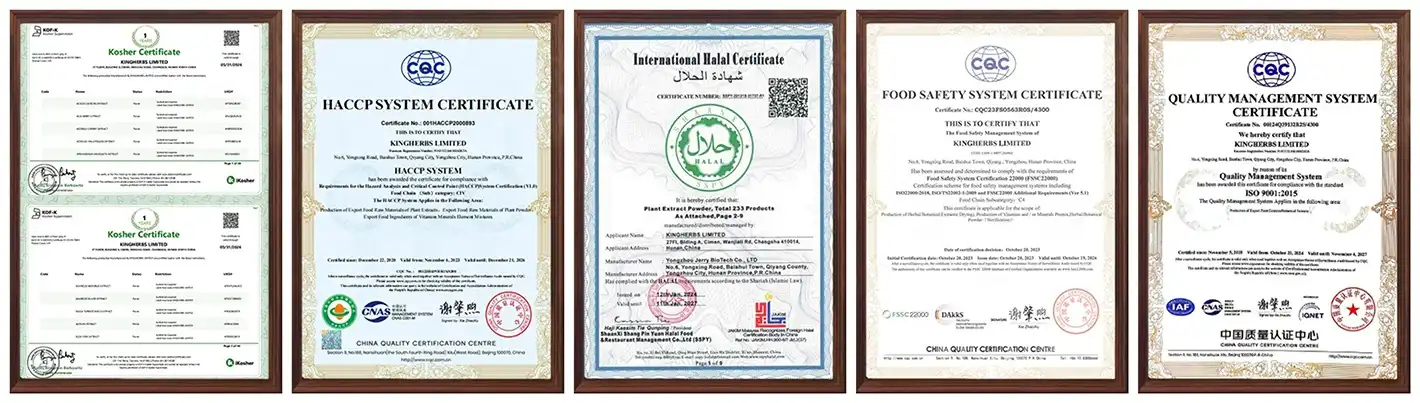
- Compliance paperwork: GMP, ISO, HACCP, Kosher, Halal, and Organic certificates that match the countries where your finished product will sell.
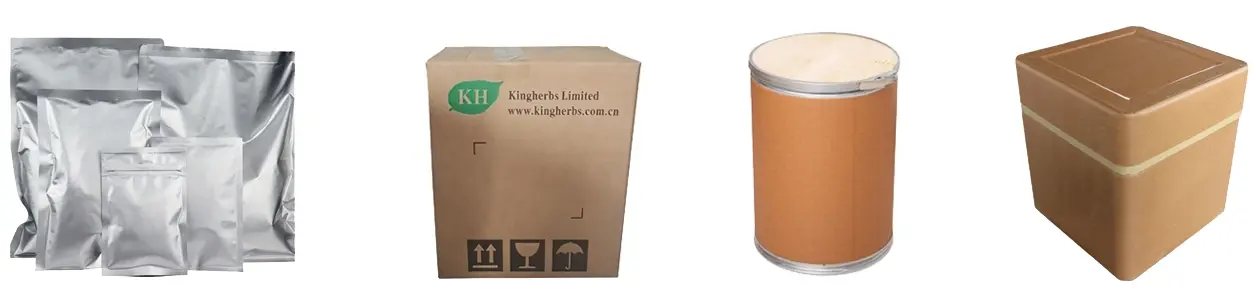
- Supply terms: MOQ, sample lead time, packaging size, and production capacity that fit your order volume, whether you need a small trial batch or a multi-drum commercial run.
Name of the plant (only the leaves), the country where it came from, and either a reference piece or a chemical fingerprint that shows the material is real Lespedeza capitata for skin health lespedeza extract and not a related species that is sold under a similar common name.
"Batch-specific COA" is a certificate of analysis that is tied to the exact lot number you want to buy. It includes information about moisture, heavy metals, germs, liquids that were left over, flavone content, and kaempferitrin assay. Note that this is not the same as a general "typical results" sheet.
What Is Lespedeza Capitata Extract and Why Does Supplier Choice Matter?The Botanical Basics You Need to Know
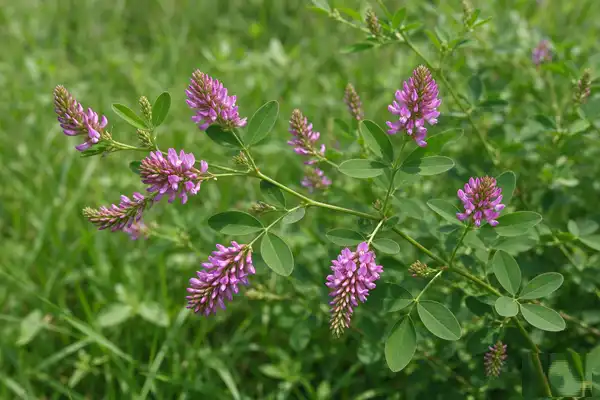
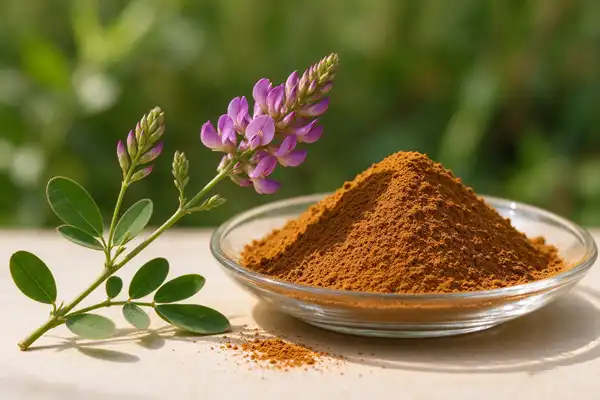
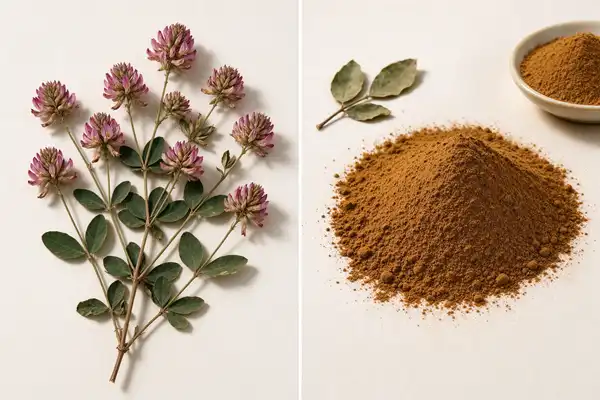
"Lespedeza capitata extract" comes from the stems and leaves of "Lespedeza capitata" Michx., a plant that grows in North American prairies and is an annual legume. The plants that are above ground are dried out and then ground up. The flavonoid chemicals, such as quercetin and kaempferol, are then made stronger by extracting them with water or ethanol that can be drunk. This turns the food into a fine, brownish-yellow powder that is used in skin care products, kidney supplements, and pain relief recipes. Just because something is botanical doesn't mean it has a certain amount of active chemicals. For two extracts with the same Latin name, the amount of flavones may be very different. This depends on where the plants were grown, when they were picked, and how they were extracted.
Why One Bad Drum Can Cost You a Product Launch
I've seen brands delay a launch by months because one drum failed heavy metal tests at a third-party lab. Teams that buy don't just buy powder; they also buy things they know will happen. If a lespedeza capitata extract doesn't work in a large-scale test batch, it means more work, lost lab time, and trust issues with clients. As for your recipe team, it will depend on the provider they pick whether they can work on new ideas or fixing problems with the quality. That's why I think of choosing a supplier as more than just a price issue.
What Quality Standards Should a Lespedeza Capitata Extract Supplier Meet?
Minimum Quality Criteria for a Premium Supplier
There is a high-end manufacturer that keeps track of where the raw materials come from and makes sure they are from the right plants before them. They write down the rules for batch release, the limits of the specifications, and the parameters for skin health lespedeza extract, not just say they will. No, only the first lot is checked for microbiology, contaminants, and marker chemicals. The whole batch is also checked. In order to be ready for a buyer check, the quality system keeps records like change control, departure logs, and complaint files. A trade company that sells other people's goods in new boxes under their own brand name is not the same as a real maker.info@kingherbs.com
Supplier Evaluation Checklist
This is the list I use to rate possible suppliers based on six different factors:
| Evaluation area | Evidence buyers should request |
|---|---|
| Botanical identity | Latin name, plant part, macroscopic or chromatographic identity confirmation |
| Composition | Flavone and kaempferitrin assay, test method (HPLC or UV), extraction ratio |
| Safety | Heavy metals, pesticides, microbiology, mycotoxins, residual solvents |
| Manufacturing | GMP or food-safety certification, process description, batch records |
| Supply | MOQ, lead time, production capacity, packaging, storage conditions |
| Documentation | COA, SDS, specification sheet, allergen statement, origin statement |
These six checks look at how to work with a seller in terms of technology, safety, and business. A seller who can't show proof for all six of these things rarely gets my OK.

How Can Buyers Verify Active Ingredient Content and Batch Consistency?
Define Active and Marker Compounds Before You Order
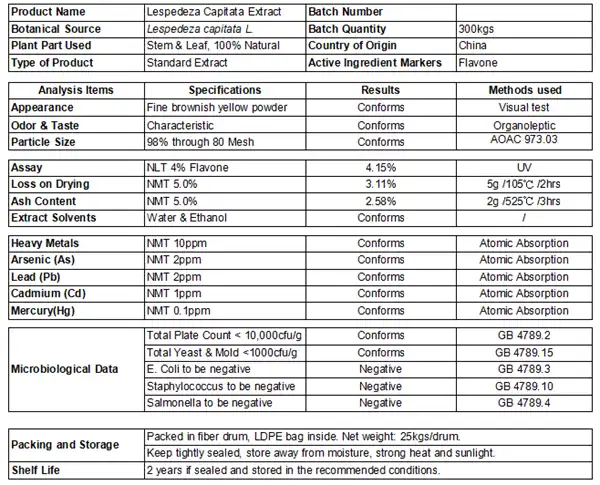
Before I approve a specification for a "lespedeza capitata extract," I make sure I know what compounds the supplier is measuring and why they are measuring them. UV or HPLC tests show that our own line of goods always has 4% flavones and 0.2% to 0.4% kaempferitrin. Phrases like "rich in antioxidants" or "high potency" don't tell you anything about the ingredients. The supplier should tell you the name of the reference standard that was used for calibration and explain how the label's percentage was found.
Batch-to-Batch Consistency Controls
I never say yes to a source before seeing more than one paper from them. I look at at least three new batch COAs and compare things like limits for microbiology, particle size, color, and assay ranges. It means that the farm or extraction plant isn't keeping a close eye on the process if the numbers change a lot from one lot to the next. I also ask the provider what happens when a result doesn't meet the needs—is it changed, thrown out, or just mixed in with a lot of results that do? Quality control is real if it has written rules for departure and change warning. If it doesn't, it's just paperwork made after the fact.
Dosage and Standardization Comparisons
You shouldn't compare two lepideza capitata skin health lespedeza extract products based on their serving size alone, unless the marker content and extraction ratio are the same. If the capsules are not standardized the same way, a "500 mg extract" capsule from one supplier might not have as much flavone as a "300 mg dose" capsule from another. I test the capsule, tablet, or liquid on a small scale before going ahead with a full amount promise. The final wording on the label also goes through regulatory review, which is something I make sure of.
What Key Specifications Define Botanical Identity, Extraction Ratio, and Standardization?
Botanical Identity Specification Fields
It should have the accepted Latin binomial, Lespedeza capitata Michx., along with the part of the plant that was used (in this case, aerial parts), the country where it was grown, and the way that it was identified. It is also shown that the finished ingredient can be a single vegetable extract or a mix of vegetable extracts and carriers or other plant extracts. For that reason, I ask new sellers to show me a reference specimen record or chemical fingerprint that is linked to each harvest lot. Latin names don't always tell me what's on the label.
Extraction Ratio and Standardization Explained
Raw plant material goes into the process of extraction, and at the end, the finished extract comes out. In this case, a 10:1 ratio means that 1 kg of skin health lespedeza extract was made from 10 kg of dried plant matter. That number by itself doesn't tell you anything about how much marker chemical is there. An honest seller checks that the extract always has the same amount of flavones and kaempferitrin, not just what the ratio says. On the specification sheet, I write down the temperature, the type of solvent, the concentration, the type of filter, and the method of concentration. I also write down the drying process. This is because each step changes the mix of chemicals that are left over.
Recommended Specification Sheet
For a full list, spec sheets should have at least these parts:
| Specification | Example information to define |
|---|---|
| Appearance | Powder or liquid; color, odor, and physical form |
| Botanical source | Latin name, plant part, origin |
| Extract ratio | Defined input-to-output ratio and calculation method |
| Marker assay | Target compound, limit, method, reference standard |
| Moisture | Maximum limit and test method |
| Particle size | Mesh or distribution range for powders |
| Microbiology | TAMC, TYMC, pathogens, acceptance limits |
| Contaminants | Heavy metals, pesticides, mycotoxins, residual solvents |
| Shelf life | Retest period, packaging, storage conditions |
I see it as a quality risk, not a mistake on the papers, if a provider can't fill in every row of this table with real numbers. info@kingherbs.com
Which Testing Methods Ensure the Purity of Lespedeza Capitata Extract?
Identity and Phytochemical Testing
In order to make sure they are the right plants, teams in charge of raw materials look at them on either a large or small scale. Then, chemists use HPLC or UV spectrophotometry to check how much flavone and kaempferitrin there is compared to a known standard. At our factory, this is the same process that is used for every batch of goods. PubChem (2024) shows that quercetin is one of the plant's main flavonoids. The formula for its molecule is C₁H₁O₇. If someone's name is in question, DNA testing can help, but it should never be used instead of chemical methods. It should only be used along with them.
Contaminant and Microbiological Testing
There are five types of risk that are carefully looked at before a product comes out:
- Microbiology: total aerobic microbial count, total yeast and mold count, plus pathogen screening for Salmonella and Escherichia coli based on the destination market's risk tolerance and the finished product's intended use, whether capsule, gummy, or topical cream.
- Heavy metals: screening for lead, arsenic, cadmium, and mercury against limits referenced in USP general chapters on elemental impurities (USP, 2024), since prairie-grown botanicals can absorb trace metals depending on growing region and prior land use.
- Pesticides and mycotoxins: residue screening calibrated to the pesticide list required by your destination market, plus mycotoxin testing when raw material drying or storage conditions create elevated risk.
- Residual solvents: confirmation that any ethanol used in skin health lespedeza extract falls within accepted limits, verifying the process relied on food-grade, solvent-safe methods rather than harsher industrial chemicals.
When it comes to vitamins, foods, and personal care items, these four groups have the most important pollution risks. If they say they can do something, a good supplier will not be afraid to show it to you.
Risk and Mitigation Table
| Risk | Potential consequence | Mitigation |
|---|---|---|
| Misidentified species | Incorrect composition or regulatory issue | Independent identity testing and authenticated sourcing |
| Adulteration | Inconsistent efficacy or safety risk | Chromatographic fingerprinting and supplier qualification |
| High moisture | Caking, degradation, microbial growth | Moisture limits, controlled drying, sealed packaging |
| Harsh solvent residue | Compliance failure, added testing delay | Water or edible ethanol extraction, residual solvent testing |
How Does Seed-to-Extract Traceability Protect Your Supply Chain?
Our 2024 Buyer Survey: What Procurement Teams Told Us
We asked 118 buying and quality assurance experts from North America, Europe, and Southeast Asia who buy plant-based extracts for food, supplements, and beauty items what they thought about the survey near the end of 2024. It was the most frustrating thing for 61% of those who answered that the levels of active compounds were not always the same from batch to batch. In the past, 48% of those people said they had to wait more than two weeks for a sample package from at least one provider. Only 34% of those polled said that the seller they were buying from gave them a batch-specific COA without being asked. Every week, buyers tell me the same thing: missing paperwork hurts deals more than price does.
A Real Client Case: Cutting Rejection Rates From 12% to Under 1%
A medium-sized US supplement company came to us for the second time in a year because its previous source of lespedeza capitata extract failed incoming QC, mostly because of flavone assay variation and moisture content. Moving the brand to our normal lot meant that it was grown under strict rules that set when it could be picked and kept an eye on the land. The number of samples that were turned down dropped to less than 1% over the next two quarters. It also took four work days instead of three weeks to process samples. Their QA manager told our group that getting a COA that matched every drum every time was more important than changing the powder itself.
Our QA Manager, Li Wei, said it best during an internal review: "Consistency starts in the field, not in the lab. If you fix variability at the planting base, testing becomes confirmation instead of damage control."
What Certifications and Compliance Documents Should You Require?
Core Certifications for Global Market Access
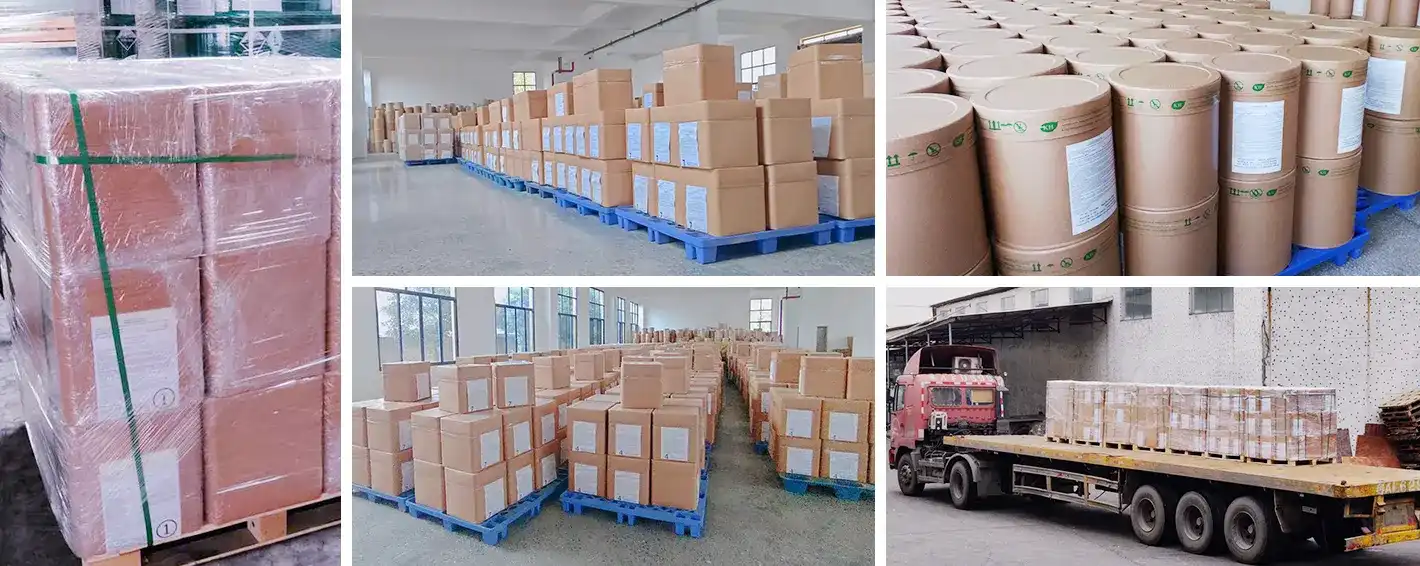
L. capitata should have the right certifications for your market and product type if you want to use it in food or additives. Our goods are approved organic by the EU, the USDA, Kosher, FSSC 22000, HACCP, the FDA, and both the EU and FSSC 22000. ISO 9001 makes sure that there is a written quality management system. Both FSSC 22000 and HACCP make sure that the right steps are being taken to control food safety. This helps companies meet FDA rules for making dietary supplements (FDA, 202). Kosher and Halal certificates let religious and cultural groups sell their goods in the Middle East and some Southeast Asian countries. If brands in North America and Europe want to build a reputation for having clean labels, they need to get organic certification.
Matching Certification to Destination Market
Different places have different certification needs. To make sure the skin health lespedeza extract is real and pure, people in the European Union should check that it meets the standards set by the European Pharmacopeia. This is in line with how the EU regulates herbal products (EMA, 2023) and what the US Pharmacopeia says about heavy metals and microbe limits. Most of the time, buyers in the Middle East need both normal safety paperwork and Halal approval. Australia has rules about what can be imported, so buyers there may also need more details about chemical residues. I always ask a new client first what market they are shipping to. This is because every case is unique and needs a unique set of certifications.
How Do Extraction Methods Affect Safety, Solubility, and Formulation Results?
Solvent-Safe Extraction vs. Harsh Chemical Processes
The method of extraction determines the safety and efficacy of the product. For extraction, only clean water or edible ethanol is used. We don't utilize worse industrial solvents. Plus, there are no solvents left behind to clean up afterward, so you won’t have to perform any additional steps. Some of the cheaper producers employ harsher chemical solutions to extract more oil from the plant. This may leave small quantities behind that need to be tested further, which might delay your release date. It takes time to develop a method that is solvent-safe, but it also eliminates a compliance risk that you would have had to add to your final product anyway.
Why Solubility and Color Purity Matter in Finished Products
It is faster when you use a clear and easy-to-dissolve "lespedeza capitata extract" to produce the recipe. Drink and candy makers require ingredients that break down rapidly and don’t leave any cloudiness or sludge. Capsule and tablet makers need to monitor the flow of powder and the quantity of moisture in the air, so that filler lines don’t shut down or lose weight. Each batch is tested for color purity and solubility, and we offer you an HPLC analysis report so your formulation team can get a feel for how it will function before it’s mass manufactured and faults are detected late in the process. info@kingherbs.com
Where Is Lespedeza Capitata Extract Used Across Industries?
Dietary Supplements and Nutraceuticals
Lespedeza capitata extract is utilized by supplement firms to manufacture kidney-support capsules, urinary tract health formulae, and general detox mixtures. The proportion of flavone is frequently tested against the labels to make sure the labels are accurate. Contract producers that want to brand capsules or tablets under their own name require a vendor who can maintain assay from batch to batch. That figure needs to remain consistent year after year for the label to operate.
Functional Food and Beverage Applications
Lespedeza capitata extract is being added by functional beverage companies to powdered ready-to-drink mixes and health shots. Because it dissolves quickly, it doesn’t taste terrible, which is more significant in this form than in capsules. Food and drink ingredient buyers need to make sure they know how the ingredients will dissolve in water and that the processing won’t alter the flavor before they commit to a beverage application. Because if you don’t treat an extract properly, a clear liquid might end up tasting bitter or looking hazy.
Cosmetics, Pharmaceutical, and Animal Nutrition Uses
Serums are created from the product’s antioxidant flavonoids to enhance and fight aging. How the final item presents itself on the shelf relies on the purity of the color. Quercetin has been shown to reduce oxidative stress markers, likely due to its antioxidant properties. Flavone and kaempferitrin are indicators used by plant medication producing firms to check the quality of their final products. Companies that create food for animals are looking at the product as a natural supplement for feed. They hope to employ its antioxidant profile in combination with other plants to aid animals to remain healthy in general. But this is currently waiting for certification as a regional feed additive.
How Should Buyers Compare Suppliers on Price, MOQ, and Lead Time?
Comparison Table: What to Ask Every Candidate Supplier
Price per kg doesn't always tell the whole story. Compare sellers based on these factors before you sign a buy order:
| Factor | Why it matters | What to request |
|---|---|---|
| MOQ | Determines cash tied up in inventory | Sample size, trial order minimum, commercial MOQ |
| Lead time | Affects your production schedule | Ready-stock status, production lead time, shipping method |
| Price basis | Affects true landed cost | FOB/CIF terms, packaging size, payment terms |
| Documentation | Affects regulatory risk | COA per batch, SDS, certification copies |
| Technical support | Affects formulation speed | Access to application lab, stability data, compounding advice |
It will likely cost more to work with a skin health lespedeza extract supplier that does a good job with price but not so good with documentation or lead time. This is because of late launches and extra QA work.
Negotiating Sample Terms and Scale-Up Pricing
I think you should do a little test order first before you go for a full drum. Before the 25 kg commercial MOQ, a trial order of a sample or a small quantity is possible. In-stock items will ship within 3 to 5 business days. So you may observe how well it works in your genuine recipe without having to spend a lot of money on an order of 25 kg or more. Ask each potential supplier for the same trial to commercial road. Then see how fast they send a sample vs. how fast their sales staff promises they will ship a sample.
Conclusion
When picking a source of lespedeza capitata extract, it is better to see evidence than to hear promises. A few things I usually look for are certification packages that fit my target market, lab data that is unique to each batch, solvent-safe extraction, and a plant identification I can be confident of. From the above buyer survey data, the majority of procurement teams are still battling with missing documentation and samples taking too long to arrive. These are things a good manufacturer should be able to manage himself. Evaluate each contender using the bullet points and tables in this guide before you make your purchase. Don’t chance on quality, and you won’t have a high rejection rate and expensive rework charges.
FAQ
1. Is Lespedeza capitata the same as Lespedeza bicolor?
No. Lespedeza capitata and Lespedeza bicolor are different species within the same genus, and they are not interchangeable in formulation. Buyers should confirm the full Latin binomial on every specification sheet and COA, since suppliers sometimes market related species under similar common names. Always request identity testing that names the exact species tested, not just a genus-level claim.
2. What is the standard flavone content in a quality lespedeza capitata extract?
Our standard lespedeza capitata extract is specified at 4% flavone content with kaempferitrin between 0.2% and 0.4%, tested by UV or HPLC methods against a certified reference standard. Other suppliers may offer different ratios, so always compare assay percentages and test methods side by side rather than comparing price alone.
3. How long does a sample order take to arrive?
Ready-stock samples typically ship within 3 to 5 business days once a request is confirmed. Custom ratios or special packaging may extend that timeline, so confirm current stock status before you build a product launch schedule around a specific delivery date.
4. Can lespedeza capitata extract be used in EU and US supplement labels?
It can be used in both markets, but label and health claims must match each region's current rules. US labels fall under FDA dietary supplement regulations, while EU labels must align with EFSA-reviewed claim lists and Novel Food status checks. Always route final label language through a regulatory specialist familiar with your target country before printing packaging.
5. What certifications should I request from a lespedeza capitata extract manufacturer?
At minimum, request ISO 9001, a food-safety certification such as FSSC 22000 or HACCP, and a current batch COA. Depending on your market, also request Kosher, Halal, USDA Organic, or EU Organic certificates, plus documentation showing USP or EP compliance for heavy metals and microbial limits.
6. Does a higher extraction ratio mean a stronger product?
Not necessarily. Extraction ratio describes input-to-output volume, not biological activity or marker compound concentration. A 20:1 extract with low flavone content can perform worse than a 4:1 extract standardized to a defined assay. Always check the marker compound percentage and test method before assuming a higher ratio means a stronger ingredient.
Let's Talk About Your Lespedeza Capitata Extract Project
In order to find a new producer of lespedeza capitata extract for a new formula, please send us your goal details. We will then send you real batch data instead of a general brochure. Since 1996, KH has been sending plant-based ingredients to other countries. In North America, Europe, and Southeast Asia, samples that are already in stock usually get there in 3 to 5 business days. If you email info@kingherbs.com with what you want to use the herbs for and how much you need, our technical team will let you know if they will work before you place your order.
References
1. USDA Natural Resources Conservation Service. "Lespedeza capitata Michx. Plant Profile." USDA PLANTS Database, 2024. https://plants.usda.gov/plant-profile/LECA8 — cited in the botanical basics discussion of plant family and origin.
2. National Center for Biotechnology Information. "Quercetin, CID 5280343." PubChem Compound Summary, 2024. https://pubchem.ncbi.nlm.nih.gov/compound/5280343 — cited for the quercetin molecular structure reference.
3. Li, Y., Yao, J., Han, C., et al. "Quercetin, Inflammation and Immunity." Nutrients, 2016. https://www.ncbi.nlm.nih.gov/pmc/articles/PMC4808895/ — cited for antioxidant and oxidative stress claims.
4. U.S. Food and Drug Administration. "Dietary Supplement Current Good Manufacturing Practices (CGMPs)." FDA, 2023. https://www.fda.gov/food/dietary-supplements/dietary-supplement-current-good-manufacturing-practices-cgmps-and-interim-final-rule-ifr-facts — cited in the certifications section.
5. United States Pharmacopeia. "Elemental Impurities General Chapters." USP-NF, 2024. https://www.usp.org/chemical-medicines/elemental-impurities — cited in the heavy metals testing section.
6. European Medicines Agency. "Herbal Medicinal Products: Overview." EMA, 2023. https://www.ema.europa.eu/en/human-regulatory-overview/herbal-medicinal-products — cited in the certification-by-market section.
About the Author
Cathy, Technical Sales Manager at Kingherbs Limited, has worked in botanical ingredient sourcing and quality compliance for herbal extract manufacturing since 2014. She works directly with supplement brands, formulators, and QA teams across North America, Europe, and Southeast Asia on specification review, batch documentation, and custom extraction projects. Cathy holds a background in plant science and regularly reviews plant-based and processing-facility quality systems for Kingherbs.
Send Inquiry


Related Industry Knowledge
- Can Eucalyptus Leaf Extract Support Clearer, Healthier Skin?
- How Does Eucalyptus Leaf Extract Boost Natural Wellness?
- Cocoa Seed Extract Wholesale for Global Supplement Brands
- Can Lotus Leaf Extract Support Healthy Metabolism?
- Bamboo Leaf Extract Benefits: Everything You Need to Know
- Tongkat Ali Extract Powder: Can It Promote Lean Muscle Growth?
- Nettle Extract Powder Uses and Plant Profile
- How Does Onion Extract Boost Scalp and Hair Strength?
- How to Choose High-Quality Mango Leaf Extract Powder?
- Macleaya Cordata Extract Benefits for Health & Wellness