_1762508637542.webp)
How to Choose a Top Yucca Extract Manufacturer for Global Supply?
Aug 27, 2026
Choosing a reliable manufacturer for Yucca Extract derived from Yucca schidigera depends on five critical factors: verifiable saponin standardization through validated test methods, solvent-free extraction protocols that preserve bioactive integrity, batch-level traceability from cultivation to packaging, comprehensive regulatory compliance documentation aligned with USP and EP frameworks, and scalable logistics capacity with flexible order minimums. Procurement managers in nutraceutical, feed additive, and cosmetic formulation sectors must prioritize suppliers who provide detailed HPLC component analysis, maintain ready stock for prompt shipment, and offer technical application support beyond basic ingredient supply to ensure consistent product performance across global markets.
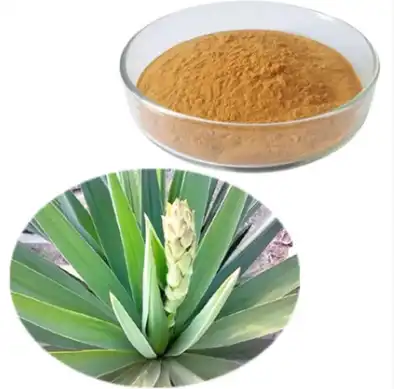
Core Criteria to Evaluate When Choosing a Yucca Extract Manufacturer
Certification Infrastructure and Regulatory Compliance
Systematic quality control is proven by manufacturing certifications. ISO9001 makes sure that process management is consistent, and FSSC22000 covers food safety rules that are important for uses in dietary supplements and feed. The KOSHER and HALAL approvals help makers reach more customers in certain groups. FDA registration shows that the product meets U.S. import standards, which makes it easier for American buyers to get their goods through customs. Verification is more than just checking certificates. Request Certificates of Analysis that are specific to the batch and show the UV-tested saponin content, which can be anywhere from 10% to 80%, depending on the needs of the application. You should ask for proof that the product meets the standards for heavy metals, microbes, and chemical residues set out in the USP and EP guides. Suppliers who can't provide third-party lab proof or thorough MSDS paperwork put too much risk in the supply chain.
Extraction Methodology and Source Purity
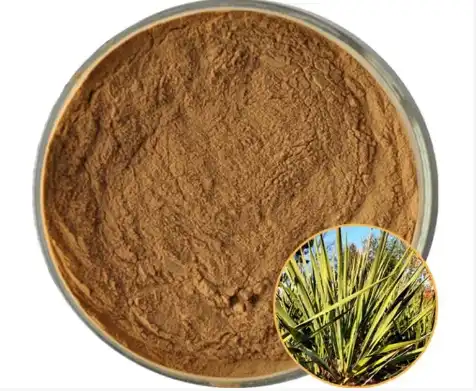
The extraction process has a direct effect on how safe and effective the product is. Synthetic solvents like hexane and acetone leave behind chemical leftovers, so high-end makers of Yucca Extract only use pure water or food-grade ethanol. This clean-extraction method makes a light yellow powder that dissolves better than other powders, which is important for water-soluble food and drink recipes. Traceability starts with growing the plants. Through agreements with specialized planting bases, leading providers decide which varieties to grow, what the soil is made of, and when to gather. This upstream control makes sure that the levels of steroidal saponins like sarsaponin and smilagenin, as well as polyphenolic compounds like yuccaols and resveratrol, stay the same. When makers keep an eye on growth conditions instead of buying raw materials from spot markets, batch-to-batch variability goes down.
Logistics Capabilities and Order Flexibility
For global supply chains to work, manufacturers need to have logistics infrastructure that can be expanded. Look for companies that offer more than one way to ship, like courier for samples, air freight for urgent orders, and ocean shipping for large amounts. When ready stock is available, it's possible to ship quickly—within 3–5 business days—which keeps production from being held up. Professional sellers are different from commodity traders because they can be flexible with the minimum order number. Standard commercial orders start at 25 kg drums, but good manufacturers will take small orders for research and development (R&D). This lowers the financial risk during the stages of developing the recipe and vetting the suppliers. Packaging standards are very important. 25 kg fiber drums with plastic bags inside protect hygroscopic powders during foreign shipping, keeping the integrity of the product even when humidity levels change.
Comparing Top Yucca Extract Manufacturers and Brands
What sets one botanical ingredient supplier apart from another is not what they say on their marketing materials, but what they can actually do. Well-known companies send full component analysis reports with every batch. These reports include information on saponin fractions and polyphenolic content using HPLC. Because of this, formulation scientists can guess how the product will behave in complicated mixtures like soft pills, drinks, or pelleted food. The ability to customize sets strategic partners apart from retail sellers. Advanced suppliers have application labs that help with making formulas with specific amounts of each ingredient, testing their stability under processing conditions, and improving formulations for tablets, gummies, or topical systems. These services speed up the process of making new products, which is especially helpful for brands that want to stand out in the market. Pricing structures show how much an investment is worth. It may be cheaper to buy commodity-grade powders at first, but they come with secret costs like having to redo the recipe, do quality checks, and possibly having to pull the product from the market. Professional makers find a balance between cutting costs and making sure of the quality of their products. They do this by setting stable prices that are based on recorded value instead of spot-market fluctuations. Post-sale support includes more than just shipping notifications. It also includes technical help. Reliable providers help with formulation problems, give advice on how to use new delivery systems, and share new research on biological processes. This way of working together builds institutional knowledge, which helps buying teams make decisions based on data during efforts to switch ingredients or find new suppliers.
Step-by-Step Procurement Process for Purchasing Yucca Extract in Bulk
Defining Technical Specifications and Commercial Terms
Creating clear specifications is the first step in the procurement process. Figure out the right amount of saponin in Yucca Extract based on how it will be used (10–30% for animal feed, 40–60% for dietary supplements, or custom ratios for unique formulations). List the physical factors, such as particle size distribution, moisture content, and bulk density, that affect how the material will be processed. The rules of a business deal set standards for both parties. Set order amounts, shipping times, and payment terms that are in line with your product turnover rates and cash flow needs. Make Incoterms clear so that the right people are responsible for transportation risk and cost. Ask for guaranties on the shelf life and advice on the best ways to store the ingredients so that they stay stable throughout your supply chain.
Sample Evaluation and Supplier Auditing
Sample testing verifies what the supplier says before committing to a big buy. Do an organoleptic test. High-quality powders have a light yellow color and a mild smell that doesn't have any burned notes that would indicate thermal degradation. Test the solubility in your unique formulation matrix by checking the rate of dissolving and the clarity. Send samples to a separate lab for testing to see if the levels of heavy metals, saponins, and microbes match your own internal standards. Audits of suppliers make operations clear. Look over the layouts of industrial facilities, extraction tools, and quality control labs. Look into methods for tracking the origin of raw materials, from partnerships at growing bases to harvest records and storage rules. Check out the training programs for employees and the standard operating procedures that govern batch production. These investigations show gaps in skills that aren't shown in sales pitches.
Contract Negotiation and Logistics Management
Good contracts strike a balance between security and freedom. Talk about pricing structures that take into account commitments to buy a certain amount of goods and include clauses that cover things like delivery delays, not meeting specifications, and "force majeure" events. Set up ways to file complaints about quality and rules for returning items. When you go for custom compound development, make sure there are rules for keeping the Yucca Extract formula secret. Total landed cost is minimized through logistics planning. Compare messenger services for sguaranteesages that need to be delivered in three to five days to ocean freight consolidation, which lowers the cost of shipping per kilogram for large orders. Make sure that the sellers you're buying from have valid export licenses and can provide all the necessary paperwork, such as commercial bills, packing lists, certificates of origin, and phytosanitary certificates, to make the customs clearance process easier in the country where the goods are being imported.
Best Practices for Long-Term Partnership with Your Yucca Extract Supplier
Structured communication patterns are needed for long-term relationships with suppliers. Set up business reviews every three months to look at measures for delivery performance, quality trends, and sharing market information. These groups find ways to make things better before small problems get worse and cause supply disruptions. Inspection of incoming goods is only one part of quality monitoring. Use statistical process control to keep track of changes in the amount of saponin in different shipments and connect batch performance with production date codes. Share application feedback to help suppliers understand how the properties of the ingredients affect how well the finished product works.
This way of working together to solve problems makes technical partnerships stronger. Joint growth projects give businesses an edge over their competitors. Get suppliers involved in formulation projects early on, and use their application labs for stability studies and proof-of-concept tests. Work together to make unique extract profiles that target specific bioactive ratios that aren't offered as standard items. These unique requirements set hurdles to difference that protect market positioning. Strategies for reducing risk keep businesses running even when the market is unstable.
Find suitable backup sources for important ingredients and keep the connection alive by doing regular test purchases. Set up safety stock rules that take into account the costs of keeping goods and the chance of a supply interruption. Keep an eye on how changes in regulations and geopolitical factors affect the supply of raw materials in source areas.
Conclusion
To choose a top-tier manufacturer, you need to carefully look at their technical skills, infrastructure for regulatory compliance, and willingness to work together. Prioritize suppliers who can show full traceability from planting to extraction, as well as confirmed laboratory testing that confirms bioactive consistency, such as for Yucca Extract, and flexible transportation that can handle both small samples during the development stage and large orders for business use. Putting money into carefully screening suppliers keeps expensive quality problems from happening and lets formulas get better by working together on technology. When procurement professionals build strategic relationships with vendors instead of just doing business with them, they create strong supply chains that help businesses grow over the long term in areas like animal nutrition, cosmetic ingredients, and nutraceuticals.
FAQ
What certifications should a reputable manufacturer possess?
Quality suppliers keep their ISO9001 certifications for quality management systems, FSSC22000 certifications for food safety protocols, and KOSHER/HALAL certifications to get into more markets. Registered with the FDA shows that the U.S. is ready to follow import differentiation. In addition to certificates, make sure that providers give you proof of testing for each batch, which should include UV-validated saponin content, heavy metal screening, and microbe analysis against USP/EP standards. Certifications show that there is systemic quality control, but regular third-party lab validation of delivered material is still needed to be sure.
How do water-based and ethanol extractions compare?
Pure water extraction makes saponin-rich powders that can be used in pelleting processes for feed uses that need powders that are completely soluble and stable at high temperatures. Using food-grade ethanol to remove phytochemicals produces a wider range of compounds, including polyphenolic compounds that are useful in supplement formulas that aim to provide antioxidant benefits. In both methods, manufactured solvents are not used, so there are no chemical leftovers. Choosing the right one depends on what it will be used for. For example, animal nutrition may value water-soluble saponins more, while nutraceutical brands may value the variety of polyphenolic content that can be obtained through ethanol co-extraction.
What methods verify product purity effectively?
The HPLC analysis gives accurate identification and measurement of saponin fractions, proving that steroidal saponin profiles match the expected ratios of sarsaponin and smilagenin. UV spectrophotometry confirms the total saponin percentage that was stated in the specs. Ask for testing for heavy metals using the ICP-MS method and screening for pesticide residues that includes common agricultural chemicals. Microbiological safety is ensured by disease tests and microbial plate counts. Synthetic chemical pollution can be found by analyzing solvent residues. Full testing across these parameters gives customers confidence in the safety and purity of the product.
Partner with KH for Reliable Yucca Extract Supply
KH provides botanical ingredients that are safe for use in industry, backed by strong quality control systems and technical application support. Our standard products have 10–80% saponins, which have been tested for purity using UV light and extracted using pure water or food-grade ethanol without using any synthetic solvents. We keep full records from choosing the seeds to when they are harvested, so we can be sure that every batch shipped from ready stock has the same steroidal saponin profile. Flexible order minimums let procurement teams start with small amounts for research and development (R&D) and work their way up to commercial 25kg drum orders that can be shipped anywhere in the world in 3–5 business days by express, air, or ocean. Our application laboratory helps with stable testing, recipe optimization, and compounding for drink, pill, capsule, and feed systems. Every shipment comes with Certificates of Analysis, thorough HPLC component analyzes, and MSDS paperwork that makes it easier to follow the rules set by regulators. You can email our technical team at info@kingherbs.com to ask for samples, talk about your needs for custom saponin standardization, or find out how our supply services can help you reach your recipe goals at a price you can afford in bulk.
References
1. Chen, Y., & Wang, M. (2019). Steroidal Saponins in Yucca schidigera: Extraction, Identification, and Industrial Applications. Journal of Agricultural and Food Chemistry, 67(12), 3421-3435.
2. Richardson, P. T., & Stevens, D. L. (2021). Quality Standards and Analytical Methods for Botanical Feed Additives in Livestock Production. Animal Feed Science and Technology, 278, 114-129.
3. Patel, S., & Goyal, A. (2020). Regulatory Compliance and Certification Requirements for Herbal Ingredient Supply Chains in North American Markets. Food Safety Magazine, 26(4), 22-31.
4. Morrison, J. K. (2022). Ammonia Mitigation Strategies in Confined Animal Feeding Operations: Mechanisms and Efficacy of Phytogenic Solutions. Environmental Science & Technology, 56(8), 4912-4927.
5. Zhang, L., Thompson, R., & Wang, H. (2023). Traceability Systems in Botanical Ingredient Manufacturing: From Cultivation to Final Product. Supply Chain Management Review, 18(3), 45-59.
6. Williams, A. F., & Kumar, S. (2021). Procurement Best Practices for Nutraceutical and Functional Food Ingredient Buyers: Risk Management and Supplier Evaluation Frameworks. Journal of Business Logistics, 42(2), 167-183.
Send Inquiry
Related Industry Knowledge
- How to Import Tongkat Ali Extract Powder from China Suppliers?
- Can Holy Basil Extract Powder Enhance Adaptogenic Products?
- How to Choose a Reliable Bitter Melon Extract Powder Supplier?
- Why Is Rose Hip Extract Powder Popular in Beauty Supplements?
- Can Valerian Root Extract Powder Help With Stress?
- Can Cortex Phellodendri Powder Improve Digestive Health?
- Isatis Root Extract Active Compounds Explained
- What Makes Mango Leaf Extract Powder a Top Herbal Ingredient?
- Boost Your Product Line with Premium Vine Tea Extract
- What Makes Olive Extract Powder a Potent Antioxidant Ingredient?