_1762508637542.webp)
How Does Jerusalem Artichoke Extract Support Gut Health?
Aug 13, 2026
Jerusalem Artichoke Extract offers exceptional gut health support primarily through its high inulin content, a soluble prebiotic fiber that nourishes beneficial intestinal bacteria. Derived from the tubers of Helianthus tuberosus, this botanical ingredient modulates gut microbiota composition, enhances digestive regularity, and strengthens the intestinal barrier. Clinical evidence demonstrates that standardized inulin extracts promote the growth of Bifidobacteria and Lactobacilli species, essential for maintaining digestive homeostasis and supporting immune function through the gut-immune axis.

Comprehensive Benefits of Jerusalem Artichoke Extract for Gut Health
Enhanced Digestive Function and Regularity
Jerusalem Artichoke Extract has been shown in studies to improve bowel function, which can be used by people who make products for digestive health. The prebiotic fiber makes stools bulkier by increasing bacterial biomass and keeping water in the stool. This helps with occasional constipation without the harshness of stimulant laxatives. In studies where people took 5–10 grams of inulin-rich products every day, their stools became more regular and solid within two weeks. This fiber source is gentle, so it can be used with sensitive people. This is different from fibers that ferment quickly, which can lead to too much gas production. This moderate fermentation rate allows for higher doses without affecting consumer comfort when making dietary supplements or functional foods. The neutral taste of the Jerusalem Artichoke Extract makes it easy to mix into a variety of delivery forms, such as capsules or drinking powders, without having to hide the flavor too much.
Strengthening the Gut-Immune Axis
The link between gut bacteria and immune system health has become a major area of research for new nutraceuticals. Adding inulin to your diet changes your immune system in many ways, starting with the barrier in your gut. When you digest inulin, you get SCFA. This makes the tight junction proteins between intestine cells stronger. This stops antigens from moving around and causing inflammation throughout the body. This improvement to the barrier is a basic safety system. Taking prebiotics can also help good bacteria grow and connect directly with lymphoid tissue in the gut, which changes how immune cells work. Studies show that regularly eating prebiotics can boost the activity of natural killer cells and raise the production of secretory IgA, which is the first line of defense for mucosal immunity. Because they help the immune system, inulin-rich Jerusalem Artichoke Extracts are useful for making immune health products, especially when mixed with probiotic strains to make synbiotic products.
Metabolic and Weight Management Support
In addition to helping with digestion, the substance also has metabolic benefits that are useful for a wider range of health issues. Taking extra inulin has been linked to better signals for fullness, possibly by making the body make more gut hormones like GLP-1 and PYY. These effects that control hunger help people stay at a healthy weight, which opens up cross-category product possibilities for companies that want to promote metabolic wellness. The prebiotic fiber also changes how glucose is used by making insulin work better and slowing down the absorption of carbohydrates. Results from clinical studies show that people who take inulin-type fructans have more stable glucose reactions after eating. This change in blood sugar happens because the stomach takes longer to empty and the production of SCFAs has biological effects on the liver's glucose metabolism. Formulators can make products with broad metabolic health claims that are backed up by strong scientific evidence when the benefits are so many-sided.
Comparing Jerusalem Artichoke Extract with Other Prebiotic Supplements
Inulin Source Comparison: Jerusalem Artichoke vs. Chicory Root
When making a purchase decision, people often look at different sources of inulin. Chicory root is the most common alternative. Both sources have inulin-type fructans, but the chain length distribution and antioxidants that go with them are very different. Some studies show that Jerusalem Artichoke may have shorter average chain lengths, which may make fermentation go faster and have stronger effects on the health of the proximal colon. Chicory root products usually have higher concentrations, sometimes more than 95% pure inulin, and their average chain lengths stay longer. This difference in structure affects how much to take and how fast the fermentation process happens in the digestive tract. Chicory grows in more places, which could lead to price advantages. On the other hand, Jerusalem Artichoke offers a unique positioning for brands that highlight different botanical sources or specific traditional use claims. A simple inulin amount should not be the only thing used to judge quality. Different sources and providers have different amounts of heavy metals, residual protein, and moisture. Asking for full Certificates of Analysis that include testing for microbes, pesticides, and active ingredients lets you make smart comparisons. At KH, our Jerusalem Artichoke Extract is put through a lot of tests to make sure they meet ISO9001, FSSC22000, and HACCP standards. This makes sure that there is consistency from batch to batch, which is important for commercial production.
Product Form Considerations: Powder vs. Liquid Formats
The requirements for manufacturing have a big impact on the choice of format. Powder Jerusalem Artichoke Extracts are more stable, last longer, and are easier to store, all of which are important for brands that have to deal with foreign supply lines. Spray-dried powders don't have much water in them, which stops microbes from growing and keeps the structure of inulin intact while it's being shipped. Powder formats also offer dosing flexibility, which lets formulators fine-tune concentrations for various product categories. Liquid inulin extracts have some benefits in some situations, especially when they are used to make drinks, and the speed at which they dissolve is important. But liquid formats need preservatives, to be kept in the fridge, and to be handled carefully so that they don't ferment or get contaminated. When shipping weight and temperature-controlled logistics are taken into account, the price difference between formats can be big. Most business-to-business buyers in the supplement and functional food industries like powder formats because they are cost-effective and can be used in a variety of ways.
Organic vs. Conventional Sourcing
Certification affects both how you place yourself in the market and how well you follow the rules. Organic Jerusalem Artichoke Extract is expensive, but it can reach health-conscious customers and niche store outlets. The organic certification process makes sure that crops are grown without using pesticides and that synthetic processing aids are not used. This is in line with the clean-label trends that are popular in the natural products industry. Traditional Jerusalem Artichoke Extracts that meet strict quality standards can provide the same useful benefits at prices that are easier for most people to afford. This is especially important for brands that want to reach general markets or apps that need to be cost-effective. The choice should take into account what the end consumer wants, how the company is positioned, and the budget. No matter if a product is organic or not, certifications like KOSHER and HALAL make it easier to get into new markets, and FDA registration shows that you are committed to following the rules. KH's extensive certification packages cover all of these issues.
Procurement Guide: Sourcing Quality Jerusalem Artichoke Extract for B2B Buyers
Critical Quality Indicators and Certification Requirements
Checking the production skills of a supplier is the first step in establishing their quality. The ISO9001 certification shows that quality management is done in a planned way, and the FSSC22000 certification talks about food safety management, which is very important for ingredient producers. Regular third-party checks are needed for these certifications, which makes sure that production standards are always met. Buyers should ask for copies of current certificates and check with the organizations that issued them to make sure they are real. Along with building certifications, it's important to have paperwork that is specific to the product. Full Certificates of Analysis should have inulin levels checked by HPLC, moisture levels below 5% to keep the Jerusalem Artichoke Extract from breaking down, microbiological testing to make sure there are no pathogens, and heavy metal screening within FDA and EU limits. At KH, we include specific component spectra with every batch. This makes it possible to track the product from the field to the finished product. This openness helps with your quality assurance and regulatory filings. The way the tests are done is very important. High-Performance Liquid Chromatography (HPLC) is the best way to measure inulin because it gives a precise reading of the fructan content and chain length distribution. If suppliers only use less accurate methods like enzymatic assays or spectrophotometry, they might not be able to provide the stability needed for medicinal Jerusalem Artichoke Extract uses. Asking for validation data for testing methods protects against differences in specifications that could hurt the effectiveness of the product.
Evaluating Supplier Capabilities and Service Quality
Beyond product quality, operational flexibility is often what makes a partnership work or fail. Minimum order amounts can be hard to meet, especially for new names or companies trying out new Jerusalem Artichoke Extract formulas. During the product development phase, suppliers who offer sample quantities and small trial orders (minimums of 25 kg) lower the company's financial risk. This makes it easier for people to get the product to market faster and lets developers test it thoroughly for security and compatibility. Lead times and managing supplies are both very important things to think about. Having ready stock of Jerusalem Artichoke Extract that can be shipped quickly—ideally within three to five business days for standard orders—avoids production delays and frees up working capital that would otherwise be used to buy more safety stock. Suppliers who keep regular inventories show that the supply chain is mature and that they have the production capacity to support your growth without stopping. The ability to provide technical support sets true Jerusalem Artichoke Extract partners apart from commodity suppliers. Access to application laboratories that can test for compatibility, help with formulation optimization, and advise on stability is very valuable in and of itself. These services are especially helpful when creating new ways to send medicines or mixtures where the relationships between ingredients could affect how well they work or how long they last.
Price Benchmarking and Total Cost Analysis
The price of inulin extract depends on a number of factors, such as the concentration grade, the status of the Jerusalem Artichoke Extract approval, the order amount, and the state of the market. On the market right now, 90–95% inulin powder usually costs between $12 and $25 per kilogram for regular grades and $28 to $45 per kilogram for certified organic varieties. Larger orders get big discounts. The purchase price, on the other hand, is only one part of the total cost of acquisition.Logistics for transportation have a big effect on landed costs, especially when buying Jerusalem Artichoke Extract from other countries. Ocean freight is the cheapest way to ship large amounts of goods, but it needs inventory management that can handle big shipments and longer lead times. Air freight is fast, but it costs a lot. It's good for pressing restocking or keeping inventory levels low. It's easy to send samples and small orders with a courier service. Logistics are made easier by looking for providers who can handle multiple types of shipping and have experience with customs clearance. When figuring out value, you should think about things like payment terms, Jerusalem Artichoke Extract quality guarantees, and technical support. A slightly higher unit cost from a supplier that offers full analytical support, formulation consulting, and flexible MOQs may be a better deal overall than basic commodity pricing. At KH, we buy extracts, vitamins, and amino acids all in one place. This cuts down on routine work and makes sure that the supply chain is clear and accountable.
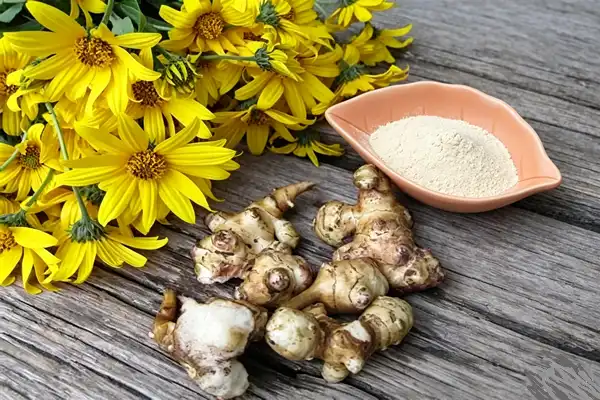
Practical Usage & Dosage Recommendations for Jerusalem Artichoke Extract in Gut Health Formulations
Evidence-Based Dosing Protocols
For prebiotic benefits, clinical research shows that inulin doses ranging from 5 to 15 grams per day work best, with most studies showing that 10 grams per day is the best amount. This means that you would need about 10.5 to 11 grams of Jerusalem Artichoke Extract powder to get 10 grams of active inulin when making a recipe with 90 to 95% inulin extracts. Along with serving size limits and consumer acceptance factors for different product formats, these therapeutic doses should be considered. Because of their small size, Jerusalem Artichoke Extract capsule formulations have some built-in limits. Normal "00" capsules contain around 500 to 750 mg of powder. To hit healthy inulin levels, you would have to take 14 to 22 capsules every day, which is not a reasonable plan for most people. So, capsules are usually sold as digestive support supplements with smaller daily amounts (2–5 grams of inulin equivalent), which means that you might have to use them for a longer time to see results. Setting realistic standards for customers through clear labels is essential for keeping customers happy and getting them to buy again. Powder vitamins and functional drinks are more convenient ways to get the right amount of Jerusalem Artichoke Extract into the body. Single-serving powder packets with 10 to 12 grams of extract make it easy to mix into water, smoothies, or other drinks. The extract is moderately sweet (about 10–30% of sucrose equivalent) and has a neutral taste profile, which makes it easier to mix without adding a lot of flavor. The ingredient can be used in ready-to-drink drinks, but heat processing needs to be looked at to make sure that the inulin stays stable during steaming or UHT treatment.
Formulation Compatibility and Synergistic Combinations
When you mix prebiotic Jerusalem Artichoke Extract with bacterial strains, you get synbiotic formulations that work better. Probiotics introduce good bacteria directly, and prebiotics feed their growth. Together, these two methods support the microbiome right away and over time. But for synbiotic development to go well, moisture control needs to be very careful, since inulin's ability to absorb water can affect how stable probiotics are while they're stored. Using encapsulation technologies or careful Jerusalem Artichoke Extract moisture shields can help keep probiotics alive in products that contain inulin. For powder blends, it's especially important to use blister packaging, add desiccant, and store them in a way that controls the humidity. Instead, dual-chamber delivery methods keep probiotics and prebiotics physically separate until they are used. This gets rid of stability issues while keeping the synbiotic benefits. To make sure that the claims on the package stay true throughout the shelf life, these formulation methods need to be looked at during stability testing.
Safety Profile and Contraindications
At the suggested doses, Jerusalem Artichoke Extract has a very good safety rating, with few side effects. As the gut bacteria get used to more fermentation, the most common side effects are minor digestive problems like bloating, gas, or abdominal pain at the start of supplementation. These short-term effects usually go away in one to two weeks as the bacterial populations adjust. These adaptation symptoms are lessened by slowly increasing the dose, starting with 5 grams per day and going up over 7–10 days. People who are on low-FODMAP diets to treat irritable bowel syndrome should be careful about taking Jerusalem Artichoke Extract supplements, since fructans are a main type of FODMAP. Many people with IBS can handle small amounts, but sensitive people may have worse symptoms when they are given higher medicinal doses. Product labels should include the right information for people who know they are sensitive to FODMAPs, and suggestions for talking to a healthcare worker are another way to protect customers. There have been no reports of major drug reactions with Jerusalem Artichoke Extract supplements. However, because the fiber lowers blood sugar, people who are taking diabetes medicines should be closely monitored to avoid hypoglycemia. The element is generally recognized as safe (GRAS) in the US and is an accepted food additive in most other countries. This makes it easier to follow the rules in each country. Women who are pregnant or nursing can usually use inulin-containing products safely, though it is still a good idea to talk to your doctor before starting any supplementation.
Conclusion
For companies making digestive health products, Jerusalem Artichoke Extract is a scientifically proven and marketable option. Its high inulin content has prebiotic effects that have been shown to change the gut bacteria, make digestion easier, and boost immune function through the gut-immune axis. The Jerusalem Artichoke Extract can be used in a wide range of products, from functional beverages to dietary supplements, because it is safe, doesn't change the taste of food, and can be easily mixed with other ingredients.To make a good product, you need to work with Jerusalem Artichoke Extract providers who not only give you good ingredients but also full technical help, clear traceability, and flexible payment terms. Your supply chain should be carefully checked for certifications, analytical skills, and service infrastructure to make sure it meets both current production needs and plans for future growth.
FAQ
How does Jerusalem artichoke extract compare to other fiber supplements for gut health?
Through inulin, Jerusalem Artichoke Extract offers unique prebiotic benefits that simple bulk fibers can't match. Inulin feeds only good bacteria, unlike cellulose or psyllium, which mostly make stools bulkier. This leads to long-lasting gut benefits. Compared to man-made prebiotics like polydextrose, this plant extract has benefits for consumers who want a clean label. The 90–95% inulin content has therapeutic benefits at useful Jerusalem Artichoke Extract dose sizes, unlike whole food sources that need to be eaten in huge amounts that are not practical.
Can Jerusalem artichoke extract be safely combined with probiotic supplements?
When you mix inulin-rich Jerusalem Artichoke Extracts with probiotics, you get synbiotic formulations that work better overall. The prebiotic fiber feeds the new bacterial types, which helps them colonize and work better. This mix is good for your gut health because it works in two different but complementary ways. The probiotics help the bacteria right away, and the prebiotics create conditions that support long-term microbiome balance. Formulation worries about controlling wetness and packing protect the viability of probiotics, but there are no safety concerns with this combination of ingredients.
What certifications should I prioritize when evaluating Jerusalem artichoke extract suppliers?
Manufacturing certificates like ISO9001, FSSC22000, and HACCP that confirm systematic production rules are the first step in Jerusalem Artichoke Extract quality assurance. Product-specific certifications like KOSHER and HALAL make it easier for more people to buy a product, and organic certification helps brands that want to sell high-end natural products. In addition to certificates, you should ask for Certificates of Analysis that are unique to each batch and include HPLC-verified inulin content, microbial testing, heavy metal screens, and pesticide residue analysis. Suppliers who offer full documentation, traceability systems, and validation of analytical methods show that they have the quality infrastructure needed for long-term partnerships.
Partner with KH for Premium Jerusalem Artichoke Extract Supply
Since 1996, KH has been making plant ingredients. They offer Jerusalem Artichoke Extract that is standardized to 90–95% inulin and comes with full batch-level paperwork. From forming relationships with growers to using clean water or ethanol for natural extraction, we keep an eye on the whole process and make sure the quality is always up to ISO9001, FSSC22000, KOSHER, HALAL, and HACCP standards. As a well-known supplier of Jerusalem Artichoke Extract, we keep a lot of it in stock so that samples and regular orders can be sent out quickly (within 3–5 days), and our commercial MOQ is as low as 25 kg. We do more than just supply ingredients; we also act as your technical partner by helping you with formulation optimization, stability testing, and full HPLC Jerusalem Artichoke Extract component analysis with every batch in our application laboratory. You can get extracts, vitamins, and amino acids all from one place, which makes managing your supply chain easier. Email our team at info@kingherbs.com to get samples, talk about custom requirements, or find out how our Jerusalem Artichoke Extract can make your gut health products stand out with its science-backed effectiveness and high quality.
References
1. Roberfroid, M. et al. "Prebiotic Effects: Metabolic and Health Benefits." British Journal of Nutrition, vol. 104, no. S2, 2010, pp. S1-S63.
2. Slavin, J. "Fiber and Prebiotics: Mechanisms and Health Benefits." Nutrients, vol. 5, no. 4, 2013, pp. 1417-1435.
3. Gibson, G.R. et al. "Expert Consensus Document: The International Scientific Association for Probiotics and Prebiotics (ISAPP) Consensus Statement on the Definition and Scope of Prebiotics." Nature Reviews Gastroenterology & Hepatology, vol. 14, no. 8, 2017, pp. 491-502.
4. Niness, K.R. "Inulin and Oligofructose: What Are They?" Journal of Nutrition, vol. 129, no. 7, 1999, pp. 1402S-1406S.
5. Caselato-Sousa, V.M. and Amaya-Farfán, J. "State of Knowledge on Jerusalem Artichoke (Helianthus tuberosus L.) as a Medicinal Plant." European Journal of Medicinal Plants, vol. 3, no. 4, 2012, pp. 633-647.
6. Shoaib, M. et al. "Inulin: Properties, Health Benefits and Food Applications." Carbohydrate Polymers, vol. 147, 2016, pp. 444-454.
Send Inquiry

Related Industry Knowledge
- How Quickly Can Blueberry Extract Powder Show Visible Benefits?
- Can Bitter Melon Extract Powder improve blood sugar?
- The Anti-Aging Power of Rosehip Botanical Extract
- Ivy Extract Powder: Uses, Benefits, Safety & Quality Guide
- How Effective Is Rhizoma Coptidis Powder for Detox Support?
- Dill Seed Extract: Natural Support for Digestive Comfort
- Does Watermelon Powder Boost Immune Function?
- Can Olive Extract Powder Help Manage Blood Pressure Naturally?
- Premium Watermelon Powder for Functional Beverage Formulas
- Can Polygonum Cuspidatum Extract Help Reduce Inflammation?