_1762508637542.webp)
Echinacea Purpurea Extract vs Echinacea Angustifolia: Key Differences
Oct 14, 2026
Echinacea purpurea and Echinacea angustifolia are the two species that dominate debates about procurement when it comes to those who are looking for immune-supporting botanicals. They are standardised to contain cichoric acid, echinacosides, and polyphenols, which are bioactive substances that boost broad-spectrum immune function. Echinacea purpurea extract is obtained from the aerial portions of Echinacea purpurea (L.) Moench. Echinacea angustifolia, on the other hand, is derived from roots and has a greater quantity of alkylamides. The phytochemical composition, clinical evidence, supply scalability, and regulatory placement of the two species have different characteristics, although both species serve legitimate formulation aims. The first step toward making a competent judgement on source is to get an understanding of these variances.
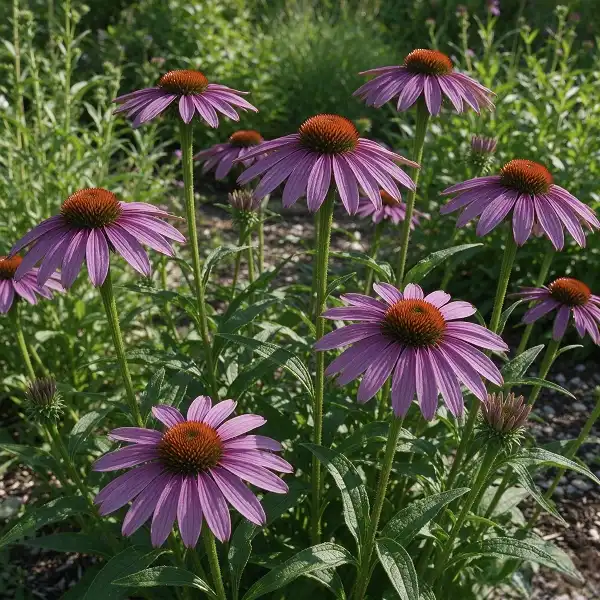
Understanding Echinacea Purpurea and Echinacea Angustifolia
Botanical Origins and Plant Architecture
Echinacea purpurea is a flowering plant that is relatively tall and grows naturally in the eastern and central regions of the United States. For the most part, the flower, the stem, and the leaf are the components that are extracted. The Great Plains are home to the arid plant known as Echinacea angustifolia, which is mostly cultivated for its roots. This distinction in geography and structure has a direct impact on the phytochemical output of each species as well as the commercial availability of products from that species.
Phytochemical Composition at a Glance
In the extract of Echinacea purpurea, the amounts of cichoric acid from 0.2% to 4% by HPLC, echinacosides from 1% to 12%, and total polyphenols from 4% to 6% are all higher than average. Through the activation of macrophages and the regulation of cytokines, these substances that are water-soluble contribute to the modification of the immune system. On the other hand, the root of Echinacea angustifolia has a greater quantity of lipophilic alkylamides, also known as isobutylamides. These compounds interact with cannabinoid receptors CB2 and have powerful anti-inflammatory properties.
Safety Profiles and Contraindications
For hundreds of years, humans have been able to use both types without any adverse effects. However, products containing alkylamides from angustifolia may have slightly different comfort profiles in individuals who are more prone to experiencing discomfort. Generally speaking, it is believed that aerial products of Purpurea are safe for persons of all ages to use. Before deciding on the ultimate formulation aims, procurement teams should review the papers that are specific to respective species. In this regard, both USP and EP are able to be of assistance.
Comparative Efficacy: Echinacea Purpurea Extract vs Echinacea Angustifolia Extract
Immune Support Evidence Base
Echinacea products were found to reduce the number of colds by 10% to 58% and the length of the cold by 1 to 4 days, according to a meta-analysis that consisted of 24 randomised studies and was published in the Journal of the American Medical Association in 2015. The aerial-part echinacea purpurea extract performed wonderfully in a wide variety of different kinds of testing. Specifically, this is due to the fact that cichoric acid and polysaccharides stimulate dendritic cells and natural killer cells through distinct signalling pathways.
Anti-inflammatory and Antioxidant Activity
Polyphenols included in echinacea purpurea extract prevent reactive oxygen species from causing damage and reduce the release of cytokines that are responsible for inflammation. Due to the fact that it functions as both an antioxidant and an anti-inflammatory, it is appealing to individuals who manufacture functional foods and skin care products, in addition to those who manufacture supplements. When it comes to reducing inflammation, Angustifolia alkylamides are likewise effective; however, they do so through a CB2-receptor route, which requires oil-based transport mechanisms in order to remain bioavailable.
Formulation Compatibility by Application
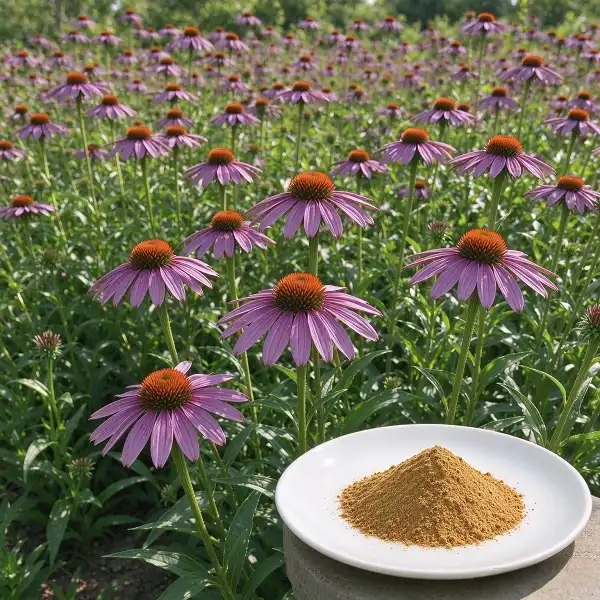
The extract of Echinacea purpurea, which has a fine powder consistency and a yellowish-green colour, is easily dissolved in water and works well in tablet compression, beverage sachets, wellness injections, and topical applications. Within the context of lipid-based softgels and tinctures, where the objective is to provide oil-soluble alkylamides, angustifolia root extract is an effective ingredient. The solubility profile of purpurea is beneficial for businesses that are interested in developing high-speed tablet lines or water-based tablet technologies.
Procurement Considerations for Global B2B Buyers
Certifications, Standards, and Documentation
Documentation is the first step toward regulatory trust. The echinacea purpurea extract from KH is certified by ISO9001, FSSC22000, KOSHER, HALAL, HACCP, and the FDA. There is a full HPLC analysis record for each business batch that confirms the amount of cichoric acid, echinacoside, and polyphenols in it. Before accepting a seller for the U.S. market, buyers should make sure that they follow USP/EP and ask for batch-level certificates of analysis (COA).
Supply Chain Scalability and MOQ
KH offers echinacea purpurea extract in drums that hold 25 kg, and they have plenty of it ready to ship right away. Sample and small-kilogram trial orders are welcome, which lets R&D teams test the material before committing to large orders. No harmful solvents are used in the extraction process; only pure water or food-grade ethanol are used. This supports the clean-label stance and makes regulatory applications easier in the EU and U.S. markets.
Pricing, Lead Times, and Logistics
You can choose from courier, plane, and ocean freight shipping choices, so you can get samples quickly or order a lot of them in a container. For standard grades, "ready stock" means that they can be sent out within 3–5 business days. Supply chain managers who have to deal with yearly demand spikes will like that KH keeps its inventory levels steady. This lowers the risk of line stops during peak immune supplement season (usually Q3–Q1).
Making the Right Choice: Which Echinacea Extract Best Fits Your Needs?
Match Phytochemical Profile to Product Goal
If you need to make a pill, capsule, or useful drink that works well and helps the immune system, your body during the cold season, or your lungs, echinacea purpurea extract is the better choice. Its water-soluble marker molecules, cichoric acid and echinacosides, can be measured by HPLC, which makes it easy to back up what the label says.
When to Prioritise Angustifolia?
In the event that your formulation requires alkylamide action and also requires a tincture or softgel form to administer the medication, Angustifolia is the most suitable option. Some practitioners and brands sell it as an alternative that is "potency-focused" through their marketing. On the other hand, the supply of Angustifolia roots is restricted to the Great Plains, which are located in North America. The purpurea aerial part supply company typically steers clear of sourcing variances because of this possibility.
Supplier Evaluation Criteria
You should also consider how consistent the batches are, how eager they are to disclose whole component spectra, and how much application laboratory assistance they provide. In addition to phytochemical compatibility, you should take these factors into consideration. In addition to providing stability testing, KH also provides advice on compounding, formulation optimisation, and stability testing for skin care systems, gummies, and tablets. These services transform the purchase into a technical partnership.
Trends and Future Outlook in Echinacea Extract Procurement
Rising Demand for Verified, Traceable Botanicals
The global echinacea market is expected to grow at a compound annual growth rate (CAGR) of about 7% until 2030. This is because people want immune system support that is backed by science. In both retail and private-label channels, brands that can show where their ingredients come from (from the plant to the finished extract) have a clear advantage. To protect the active ingredient content from the source, KH works with controlled cultivation sites to choose the varieties, make sure the earth is healthy, and time the gathering.
Extraction Technology and Clean-Label Expectations
As clean label rules get stricter in North America and Europe, solvent-free and ethanol-based extraction processes are becoming more popular. KH's water and food-grade ethanol extraction keeps the polyphenols' integrity, doesn't leave behind any residual solvents, and makes a fine yellowish-green powder with a consistent bulk density that is best for filling capsules and pressing tablets. There are different kinds of microencapsulation that can be used to keep cichoric acid from going bad over time.
Regulatory Trajectories in the U.S. and EU
Echinacea purpurea and Echinacea angustifolia are the two species that dominate debates about procurement when it comes to those who are looking for immune-supporting botanicals. It is standardised to contain cichoric acid, echinacosides, and polyphenols, which are bioactive substances that boost broad-spectrum immune function. Echinacea purpurea extract is obtained from the aerial portions of Echinacea purpurea (L.) Moench. Echinacea angustifolia, on the other hand, is derived from roots and has a greater quantity of alkylamides. The phytochemical composition, clinical evidence, supply scalability, and regulatory placement of the two species have different characteristics, although both species serve legitimate formulation aims. Becoming aware of these distinctions is necessary in order to arrive at a sourcing selection with complete assurance.
Conclusion
When deciding between echinacea angustifolia extract and echinacea purpurea extract, the most important factor to consider is which one is more suitable for your requirements in terms of phytochemicals, as well as delivery technique and supply reliability. The cichoric acid and polyphenols found in purpurea are water-soluble and can be used in a variety of tablet, pill, and liquid applications. It is possible to employ its active ingredients to promote uniform manufacturing around the globe. In certain lipid-based processes, the alkylamides found in Angustifolia are considered to be useful. When it comes to procurement teams that want to be certain of the quality, the purity of the extraction process, and the technical formulation support, KH has both species that are fully certified and ready to ship.
FAQ
What is the main phytochemical difference between the two species?
Echinacea purpurea extract is rich in cichoric acid, echinacosides, and polyphenols, all water-soluble and measurable by HPLC or UV methods. Echinacea angustifolia root extract contains higher levels of alkylamides (isobutylamides), which are lipophilic and require oil-based delivery for optimal bioavailability.
Can I substitute one species for the other in an existing formula?
Not without reformulation work. The two extracts have different solubility profiles, active compound classes, and dosage ranges. Switching species mid-production cycle requires a new stability study and potentially updated label claims.
How do I verify quality and authenticity in bulk shipments?
Request a batch-specific COA that includes HPLC marker compound data, heavy metal testing, and microbial limits. Third-party testing by an ISO 17025-accredited laboratory adds an additional verification layer. Confirm that the supplier holds current GMP and ISO9001 certification.
What specifications does KH's echinacea purpurea extract offer?
KH supplies ratio extracts (4:1 and 10:1), cichoric acid grades (0.2%–4%), echinacoside grades (1%–12%), and polyphenol grades (4%–6%), all tested by UV and HPLC. Packing is 25 kg per drum with multi-modal shipping options.
Source Echinacea Purpurea Extract with KH — Request a Sample Today
As a plant ingredient supplier, KH has been around since 1996, and our echinacea purpurea extract maker can meet all of your formulation team's needs. We offer HPLC recording at the batch level, clean solvent-free extraction, and application lab support for systems that make tablets, drinks, skin care products, and food for animals. We welcome trial orders—you don't have to make a big commitment to see how good the quality is for yourself. You can email our technical team at info@kingherbs.com or go to www.kingherbs.com to ask for a sample, look over product details, or talk about making a custom formula.
References
1. Barrett, B. (2003). Medicinal properties of Echinacea: A critical review. Phytomedicine, 10(1), 66–86.
2. Karsch-Völk, M., et al. (2015). Echinacea for preventing and treating the common cold. Cochrane Database of Systematic Reviews, Issue 2.
3. Shah, S. A., et al. (2007). Evaluation of echinacea for the prevention and treatment of the common cold. The Lancet Infectious Diseases, 7(7), 473–480.
4. Brinker, F. (2010). Herb Contraindications and Drug Interactions (4th ed.). Eclectic Medical Publications.
5. United States Pharmacopoeia (USP). (2022). USP–NF General Chapter <561>: Articles of Botanical Origin. United States Pharmacopeial Convention.
6. European Medicines Agency (EMA). (2015). Community Herbal Monograph on Echinacea purpurea (L.) Moench, Herba Recens. EMA/HMPC.
Send Inquiry
Related Industry Knowledge
- Where to Buy Isatis Root Extract: Importer’s Sourcing Guide
- Can Wild Yam Extract Powder Support Women’s Wellness?
- Artemisia Argyi Extract: A Smart Choice for Clean Beauty
- How Does Artemisia Argyi Extract Enhance Herbal Skincare?
- Finding quality Tongkat Ali Extract Powder: Six golden rules to follow.
- How Does White Willow Bark Extract Powder Help Reduce Inflammation?
- What Industries Commonly Use Artemisinin Powder Today?
- Can White Willow Bark Extract Powder Promote Joint Health?
- How Cortex Phellodendri Powder Supports Immune Balance
- Vine Tea Extract Uses, Benefits & Results