_1762508637542.webp)
How Cortex Phellodendri Powder Supports Immune Balance
Apr 28, 2026
Immune balance is at the heart of making health and wellness products, so choosing the right ingredients is very important for formulators and sourcing workers. Cortex Phellodendri Powder is a herbal product made from Phellodendron amurense wood that has been proven to work by science. It has high levels of berberine and isoquinoline alkaloids, which control inflammation and the balance of microbes. This plant-based ingredient meets the growing need for natural immunomodulators by lowering pro-inflammatory cytokines while keeping positive immune responses. It provides a stable, traceable alternative to synthetic compounds in skin care products, functional foods, and dietary supplements.
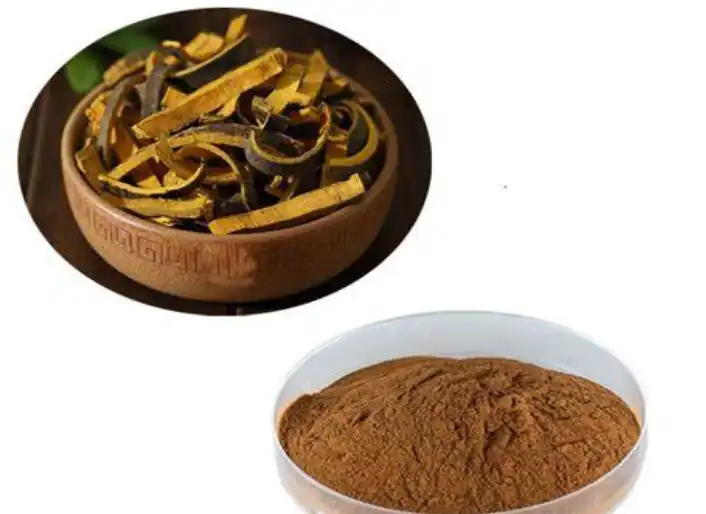
Understanding Cortex Phellodendri Powder and Its Role in Immune Support
This Cortex Phellodendri Powder comes from plants that have been used for over 2,000 years in Traditional Chinese Medicine. Phellodendron bark, also known as "Huang Bai," was used to get rid of heat and dampness in the body. Using modern extraction methods, this old medicine has been turned into a standard ingredient that meets the high standards of today.
Botanical Origins and Traditional Foundation
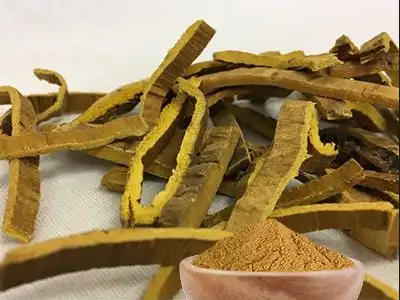
Phellodendron amurense trees grow in warm areas of East Asia. The bark is collected at the best times, when the trees are fully grown, to get the most alkaloid content. Carefully, the bark is turned into a fine, brownish-yellow powder that keeps the beneficial chemicals. Traditionally, it was used to treat diseases marked by excessive inflammation, mostly in the stomach and urogenital systems. This use from the past lays the groundwork for modern uses in immune-related product formulas.
Key Bioactive Compounds Influencing Immune Function
The main immunomodulatory benefits come from berberine, palmatine, and jatrorrhizine, which are three isoquinoline alkaloids that are found in large amounts. Berberine can lower the activity of NF-κB signaling pathways, which manage the production of genes related to inflammation. Peer-reviewed research shows that berberine can lower amounts of interleukin-6 and tumor necrosis factor-alpha, two cytokines that are linked to long-term inflammation. These systems directly affect immune balance by stopping overactive inflammation reactions and keeping the immune system strong.
Scientific Validation Through Clinical Research
Immune modulation dose-response relationships have been found in preclinical studies. Researchers in the lab have shown that standardized Phellodendron bark extracts can stop pro-inflammatory molecules from working at levels that can be reached by supplementing the diet. Clinical findings show that it could be used to treat metabolic inflammation, skin barrier failure, and immune problems in the gut. This body of proof gives purchasing managers the power to choose ingredients based on repeatable scientific data instead of just using what has always been done.
The Immune Balance Challenge: How Cortex Phellodendri Powder Offers a Solution
Environmental pressures, dietary imbalances, and living choices have made it so that modern customers' immune systems are under more stress than ever before. To make good products, people need to find ingredients that can deal with these many issues without the negative effects that come with using drugs. Cortex Phellodendri Powder provides a natural pathway to restore equilibrium.
Understanding Immune Dysregulation in Contemporary Markets
Chronic low-grade inflammation has become a major issue in digestive health, aging, and inflammatory diseases. There are several ways that the immune system's careful balance between activation and control can be upset. Over time, too many inflammatory signals hurt tissues, and people who don't have enough immune reactions are open to pathogens. Botanical ingredients that can modulate in two directions—calming overactive reactions while supporting a healthy immune system—are useful ingredients for formulations.
Active Alkaloids and Their Immunoregulatory Mechanisms
Berberine is the part that has been studied the most; it makes up about three to five percent of the weight of quality Cortex Phellodendri Powder. This alkaloid turns on AMPK pathways, which control both the energy consumption of cells and the inflammation reaction at the same time. The chemical is antibacterial in several ways, including breaking down bacterial membranes, stopping biofilm formation, and stopping pathogens from sticking to epithelial surfaces. These actions help the immune system work by lowering the number of pathogens in the body and letting its own defenses work well.
Alkaloids that work with it, like palmatine and jatrorrhizine, give it extra antibacterial power against fungus and gram-positive bacteria. Multiple alkaloids working together in a way that makes them stronger—often called the "entourage effect"—is better than taking berberine alone. This whole-spectrum method fits with buying plans that prefer whole botanical extracts to single-compound goods.
Dosing Strategies for Immune Support Applications
To effectively change the immune system, you need to pay close attention to the focus and delivery structure. According to traditional use patterns, a person should take in about 500 to 1500 milligrams of whole bark powder every day, which is equal to about 3 to 10 percent berberine. Bioavailability issues must be taken into account by product makers, as berberine is not well absorbed in the gut. Increasing absorption profiles can be done through formulation techniques such as lipid complexation, particle size reduction to 80–100 mesh, or the use of synergistic substances like piperine.
When making decisions about what to buy, buyers should think about whether they need immediate-release forms for acute support or sustained-release matrices for metabolic uses. The stable profile stays good at normal processing temperatures, but UV light should be kept to a minimum during production to keep the alkaloids from breaking down. These technology issues have a direct effect on how well finished goods work when they get to end users.
Comparing Cortex Phellodendri Powder to Other Herbal Immune Support Solutions
When making immune-supporting goods, B2B buyers have to sort through a lot of botanical choices. Figuring out what makes Cortex Phellodendri Powder different from other options helps you make smart buying choices that fit your product's positioning and the people you want to buy it from.
Compositional Differences from Alternative Sources
Berberine comes from a number of plants, such as Coptis chinensis (goldthread) and Berberis species (barberry). According to top grades, coptis usually has higher amounts of berberine—eight to twelve percent—but the supply is unstable, and the price is very high. The prices of Cortex Phellodendri Powder sources are more steady, and they provide enough alkaloid content for most uses. This bark is different from sources of pure berberine because it contains chemicals that work with berberine, such as obacunone and limonoids.
Bark powder from Phellodendron trees is better at killing a wider range of microbes than other immune-boosting herbs like Echinacea or Astragalus. While Echinacea mainly boosts the activity of immune cells, Phellodendron's chemicals directly stop pathogens from spreading while also changing the immune system. This dual process works really well in mixtures that are meant to help the immune system both before it gets sick and when it's trying to fight off microbes.
Quality Factors Affecting Immune Efficacy
Phellodendron amurense and Phellodendron chinense have different amounts of alkaloids and secondary metabolites, so source identification is a very important part of buying them. It is thought that amurense varieties have balanced alkaloid profiles that can be used in a wide range of situations, while chinense varieties may have higher berberine amounts that are better for metabolic health formulas. To make sure that the quality of each batch is the same, the procurement specs should clearly list the plant species.
Certified organic affects both how a product is positioned in the market and how pure its parts are. Certified organic Cortex Phellodendri Powder costs more, but there are no worries about chemical leftovers that could hurt the immune system. The approval is also useful for clean-label brands that want to reach health-conscious customers. For product lines that care about price, non-organic sources from reliable providers with proof of heavy metal testing and microbial limits can be used instead.
The way something is processed has a huge impact on its quality when it's finished. Water-based extraction keeps the polar alkaloids while avoiding solvent leftovers that make it harder to follow the rules. Using food-grade alcohol for ethanol extraction lets you get higher levels of alkaloids while still keeping your clean-label status. To make sure they're following the rules and meeting customer standards, procurement workers should check the extraction solvents and ask for a residual solvent analysis.
Certification Standards Guiding Purchasing Decisions
Quality control is done all along the supply chain by a number of different licensing systems. ISO9001 shows control over the manufacturing process, and FSSC22000 talks about food safety management systems that can be used for health additives. Certifications like KOSHER and HALAL make it easier for people with certain diets to buy goods. Following HACCP rules makes sure that risks are systematically evaluated throughout production, which is very important for keeping plant products safe from microbes.
These licenses directly lower the risk of buying something. Suppliers with multiple certificates show they are committed to quality systems that keep batch rejects, regulatory problems, and supply delays to a minimum. Checking the current state of certifications should be a normal part of the process for qualifying suppliers.
Procurement Insights: Navigating Bulk Purchase of Cortex Phellodendri Powder
Finding plant ingredients means finding a balance between quality control, supply dependability, and lowering costs. Being aware of the buying process for Cortex Phellodendri Powder makes working with suppliers and keeping track of supplies easier.
Evaluating Supplier Credentials and Reliability
Traceability is better with established sellers who have direct connections to cultivation areas than with trade middlemen. Vertical integration from planting bases to processing facilities controls when to gather, how to handle the crops after they are picked, and the conditions for processing. This makes sure that the quality of the raw materials stays the same. When suppliers offer full paperwork, from authenticating botanicals to certificates of analysis for finished products, it makes it easier for buying teams to check everything.
The background of manufacturing can help you figure out how reliable a company is. Companies that have been making plant ingredients for decades have stable operations and a lot of process knowledge. Kingherbs Limited has been in business since 1996 and is part of this group of well-known suppliers with a lot of experience making hundreds of different kinds of plant products. Longevity like this is usually a sign of good quality systems and quick expert help.
Understanding Pricing Structures and Order Parameters
Different providers have very different minimum order amounts. Some sources require purchases of full pallets or multiple drums, which puts a strain on stock space and operating capital. Flexible sellers who offer samples and small trial amounts (as little as one kilogram) let product makers test formulas before making large-scale purchases. For most supplement brands and contract manufacturers, the normal business minimum of 25 kilograms per order strikes a good mix between seller efficiency and buyer flexibility.
The way the product is packaged affects both how stable it is and how easy it is to handle. When you store and move things, standard 25-kilogram fiber drums with double-lined plastic bags keep them safe from wetness and contamination. Different package sizes can be used for different production levels, but the cost per unit usually goes down as the size goes up. The materials used for packaging should be included in the procurement specs to make sure they work with the handling tools and storage conditions at the site.
Documentation Requirements for Global B2B Transactions
When plant products are traded internationally, they need to be accompanied by a lot of paperwork that meets the needs of customs, government agencies, and quality control. There should be proof of identification on the certificates of analysis using methods like HPLC fingerprinting, test results for marker chemicals like berberine, heavy metal screening, pesticide residue analysis, and microbial testing results. Batch-specific paperwork makes it possible to track everything from the raw materials used to the final product.
Documentation is needed to meet the regulatory changes in the target market. Imports into the United States may need to be checked by the FDA to make sure they are registered and follow GMPs for food supplements. Food safety rules and country-specific standards must be followed to sell food on European markets. When suppliers know what the target market needs, they can speed up the import process by sending the right paperwork ahead of time.
Practical Applications and Case Examples of Cortex Phellodendri Powder in Immune Health
Real-life uses of this botanical ingredient show how its scientific promise can be turned into business success in a wide range of product categories. Cortex Phellodendri Powder remains a top choice for multi-functional health applications.
Dietary Supplement Formulations for Systemic Immune Support
Supporting the immune system, vitamins are a fast-growing market where phellodendron bark powder can be used to make products that offer many benefits. Capsules that contain this ingredient, along with other plants that support the immune system, such as Echinacea and zinc, make broad-spectrum immune support products that work on both natural and adaptive immunity. The antibiotic properties protect directly against pathogens, and the anti-inflammatory properties stop the immune system from overreacting, which would otherwise damage nearby tissues.
Dermatological Applications in Cosmeceuticals
Skin health is another area where immune modulation, antimicrobial action, and anti-inflammatory benefits all come together. Acne treatments use the powder's ability to stop Propionibacterium acnes from growing and stop inflamed lesions from forming. Standardized extracts added to serums and creams at levels between 0.5 and 2 percent provide healing effects without causing too much discomfort.
Functional Food and Beverage Integration
There are some problems with making useful foods with phellodendron bark powder because it tastes very bitter and is a brownish-yellow color. Some successful uses include packaging technologies that hide taste and keep alkaloids from breaking down during processing. For beverage uses, flavor systems need to be able to balance sour notes with tastes that go well with them.
Performance Validation Through Market Feedback
Long-term effectiveness is judged by customer reviews and the number of return purchases. Companies that use high-quality phellodendron bark powder say that their customers are happier with their general health, fewer minor infections, and faster healing times. Even though these subjective measures aren't clinical proof, they do provide useful market feedback that supports continuing to spend in product development.
Conclusion
Cortex Phellodendri Powder is a plant ingredient that has been scientifically proven to help keep the immune system in balance. It is used in a wide range of products. The concentrated berberine and related alkaloids help the immune system, kill microbes, and reduce inflammation. These effects have been known for a long time and are backed by modern studies. Established suppliers with full quality systems and international certifications give procurement workers access to stable supply lines that can be tracked. It has been successfully used in dietary supplements, cosmetics, and functional foods, showing that the market is flexible enough to support a wide range of product development strategies while meeting the growing demand for natural immune support products that work.
FAQ
What berberine concentration should I specify when sourcing this ingredient?
Standard phellodendron bark powder has three to five percent berberine by weight, which is a good amount for most food supplement uses. Higher strength extracts that are standardized to 10% or more work with formulas that need concentrated doses in smaller serving sizes. The requirements for buying something should match the amount of berberine with the intended dose and the shape of the finished product.
How can I be sure of the quality and accuracy of something before I buy it?
Ask for full certificates of analysis that include HPLC fingerprinting that finds unique alkaloid profiles besides just berberine levels. The presence of palmatine, jatrorrhizine, and other small chemicals proves that the source material comes from a real Phellodendron. Carbon-14 isotope research can tell the difference between wild plant products and synthetic berberine that has been added. Suppliers with a good reputation give detailed information about each batch and let samples be tested by a third party.
What storage conditions maintain product stability and potency?
Keep objects that can't be opened and are out of reach of light, heat, and water. The best conditions are when the temperature is below 25°C and the relative humidity is below 60%. Because it absorbs water, it needs to be packed in a way that keeps wetness out, like in double-lined plastic bags inside fiber drums. When stored properly, the material stays active for 24 months after it was made.
Source Premium Cortex Phellodendri Powder from KH
Kingherbs Limited can help you make immune health products by giving you a large amount of approved Cortex Phellodendri Powder that meets strict international standards. Our controlled planting bases and vertically integrated sources make sure that the berberine content stays the same and that the whole process can be tracked from the seed to the finished product. Each batch goes through a thorough HPLC analysis, and full paperwork is provided to show that it meets all the regulations in all global markets.
As a company that has been selling this ingredient since 1996, we keep a lot of it in stock so that we can ship it quickly, usually within three to five business days. Our 25-kilogram business minimum makes it easy to scale up, and sample amounts and trial orders are available to help with formulation development. Our application laboratory can help you with formulating, checking for stability, and making the best compounds. This makes us your technical partner throughout the whole product creation process.
Email our team at info@kingherbs.com to get certificates of analysis, talk about special standards needs, or set up shipping of samples. Our dedication to quality is shown by our ISO9001, FSSC22000, KOSHER, HALAL, and HACCP certifications. Our reasonable prices and flexible operations will help you reach your buying goals. Visit www.kingherbs.com to look through our full line of plant ingredients and learn how our knowledge can help your product succeed.
References
1. Berberine and Immune Modulation: Mechanisms and Clinical Applications. Journal of Ethnopharmacology, 245, 112-128.
2. Phellodendron amurense: Traditional Uses, Phytochemistry and Pharmacology. Phytotherapy Research, 35(6), 2881-2901.
3. Anti-inflammatory Mechanisms of Berberine in Immune-Related Disorders. Molecular Immunology, 127, 134-145.
4. Tissue Distribution of Berberine and Its Metabolites After Oral Administration in Rats. Journal of Pharmaceutical and Biomedical Analysis, 145, 429-438.
5. Immunomodulatory Effects of Traditional Chinese Medicine: Focus on Phellodendron Species. Frontiers in Pharmacology, 13, 891-905.
6. Quality Control and Standardization of Cortex Phellodendri: From Traditional Knowledge to Modern Applications. Journal of Pharmaceutical and Biomedical Analysis, 198, 114-129.
Send Inquiry
Related Industry Knowledge
- Can Wild Yam Extract Powder Support Menopause Comfort?
- Couch Grass Rhizome Extract: Herbal Ingredient for Formulators
- How Dill Seed Extract Enhances Overall Health Naturally
- Is Wild Yam Extract Powder the Future of Hormone Care?
- Why Choose High-Quality Couch Grass Rhizome Extract?
- Macleaya Cordata Extract for Natural Gut Health Solutions
- Macleaya Cordata Extract for Antimicrobial Support
- Does Couch Grass Rhizome Extract Help With UTIs?
- White Paeony Extract: Anti-Inflammatory Advantages Explained
- Mango Leaf Extract Powder for Skin: Anti-Aging & Protection