
Best Rice Bran Extract Factory: What Should Buyers Check?
Oct 26, 2026
When you are looking for rice bran extract for supplements, cosmetics, or functional meals, the factory you choose will directly affect the safety, efficacy and marketability of your product. Rice bran extract is extracted from the bran layer of Oryza sativa L. and standardized for bioactives such as gamma-oryzanol, ferulic acid, and ceramides. Stringent manufacturing conditions are needed to ensure efficacy. Prior to every commercial transaction, procurement professionals must evaluate raw material traceability, extraction procedures, certification status, logistical flexibility, and the amount of technical help. This guide will take you through all the important checkpoints.
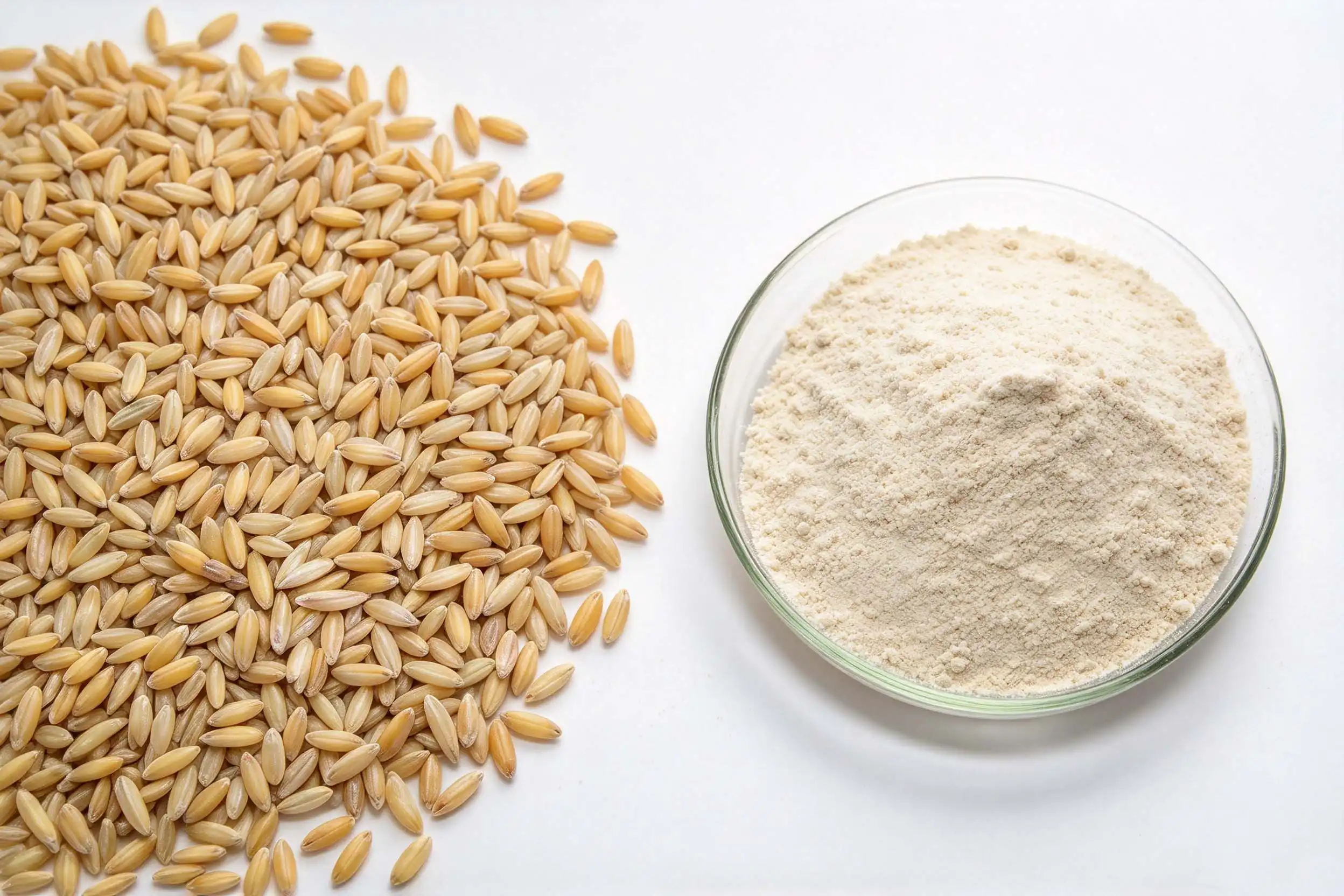
Understanding Core Buyer Needs When Selecting a Rice Bran Extract Factory
Rice bran extract is purchased and utilized differently in various areas. To be able to acquire a nutritional supplement γ-Oryzanol 97%–102%, batch-level HPLC data is needed. A cosmetics formulator using a standardized powder of ceramides (1%, 3% or 10%) needs stability data. If you are a functional food company adding ferulic acid 98%, you need food-grade certifications. Before you evaluate manufacturers, determine your individual application. It saves you time and costly supplier mismatches.
Matching Specifications to Your Application
Rice bran extract is available in numerous grades, including ratio extracts (4:1, 10:1), ceramide-standardized powders, and high-purity isolates. It is up to the purchaser to decide which standard suits their own aims. Both are from the same plant source; a 10:1 ratio concentration is not the same as a ceramide 10% grade.
Volume Flexibility and MOQ Requirements
Not all customers start at commercial scale. Find suppliers who have trial orders in sample amounts so you are not constrained to a commercial minimum order quantity of 25 kg. R&D teams may test performance without financial risk due to this flexibility. Factories with ready stock and the capacity to ship at a moment’s notice also drastically decrease development cycle times.
Packaging, Labeling, and Private Label Options
Packaging format affects shelf stability and compliance with regulations. Normal size is 25 kg/drum for most business customers. For OEM, it may be essential to use bespoke packaging or private branding. Ensure your supplier can accommodate such requirements without penalty for minimum volumes.
Essential Quality Factors to Verify in Rice Bran Extract Production
The quality of rice bran extract production begins far before the stage of extraction. The ultimate concentration of bioactive chemicals is dependent on rice type, area of cultivation, harvesting time, and post-harvest management. A provider that has control over these upstream factors will produce more consistent outcomes from batch to batch.
Raw Material Traceability and Origin Control
Ask for proof of where the rice bran comes from. Suppliers have more consistent active ingredient profiles in their raw materials because of established planting base agreements that manage varietals, soil conditions, and harvest timetables. This traceability decreases the danger of contaminated or low-potency inputs entering your composition.
Extraction Process and Solvent Safety
Purity and safety are determined by the process of extraction. Ethanol or water extraction maintains the natural profile of γ-oryzanol and ferulic acid without hazardous solvent residues. Another established approach for heat-sensitive bioactives is supercritical CO₂ extraction. Buyers should specifically ask for data on solvents and make sure that none of the banned solvents are used in the production process.
Third-Party Testing and Analytical Documentation
Every commercial batch of rice bran extract must come with a Certificate of Analysis (COA) that verifies the identification, purity, active content, limitations on heavy metals, and microbiological counts. UV and HPLC testing, the approved procedures for measurement of gamma-oryzanol and ferulic acid should be standard. Third-party verification from recognized laboratories offers an additional degree of reassurance that in-house QC alone can’t.
Comparing Rice Bran Extract Suppliers: What Differentiates Top Factories?
Price is not everything. It is the quality of documentation, technical response, and post-sale support that usually makes the difference between an ordinary supplier and an excellent manufacturing partner. Those are the major differentiators that buyers should be looking at systematically.
- The combination of an ISO9001, FSSC22000, HACCP, KOSHER, HALAL, and FDA registration certification portfolio suggests a facility operating to many overlapping quality management systems. The many certifications are for different areas of risk – food safety, religious dietary compliance, and US market regulatory status. This plant has been independently audited against several standards at the same time, with all these certifications.
- Analytical openness: Top factories give batch-specific HPLC chromatograms, not just summary COAs. As long as the supplier can give the chromatographic fingerprint for each batch of rice bran extract, you may validate the identity of active constituents and detect any adulterants.”
- Support for laboratory application: Procurement is simply one aspect of the cooperation. Certain manufacturers have application labs of their own and may suggest levels of incorporation, stability in acidic systems (pH 3.0-5.0), compatibility with vitamin C and E in cosmetic serums, and microencapsulation in beverage applications. This is far more than simply giving ingredients.
Combined, these differentiators help reduce sourcing risk. A vendor is a supplier. A partner is a provider that monitors quality at each phase and helps with formulation outcomes.
Additional Procurement Considerations for B2B Buyers
Regulatory Compliance for U.S. Import
Any rice bran extract provider wishing to sell in the U.S. market must be registered with the FDA and must meet the requirements of 21 CFR Part 111 (dietary supplement GMPs). U.S. Buyers must verify that the plant has paperwork to support FDA facility registration and that COAs agree with label claims per FTC and FDA guidance.
Logistics and Lead Time Management
The choice of shipping method—courier, air freight, or ocean freight—affects both the cost and the lead time. If your R&D project is fast, ready-stock air freight may get you there in days. Ocean freight has a large amount of per-unit cost reduction with commercial volume. Flexible transportation options from suppliers provide greater control over scheduling in the hands of procurement teams.
Sustainability and Ethical Sourcing Standards
Consumer brands are being asked more and more about ingredient source ethics. A responsible manufacturer is a provider that uses water- or food-grade ethanol extraction, has verifiable planting bases, and recognized certificates. This evidence supports the sustainability claims of your own brand at retail or B2B sales level.
Case Studies and Buyer Tips: How Leading Enterprises Choose Their Rice Bran Extract Factory
A functional food firm evaluating possible antioxidant chemicals performed parallel stability tests using three different sources of rice bran extract. Of these, only the supplier with the 98% ferulic acid criteria and batch-specific HPLC data passed the accelerated shelf-life test. The study indicated that analytical documentation, not price, determined formulation success.
Start With a Pilot Order Before Committing to Scale
A small trial purchase before full commercial commitment lets your QA team assess real-world product performance vs. the supplier’s COA claims. If the pilot batch is in spec and on schedule, you have evidence-based reasons to scale up the relationship.
Evaluate Technical Support Depth Early
In the evaluation phase, ask prospective providers specific technical questions. For example, compare ceramides in rice bran extract to synthetic alternatives for TEWL reduction. What does gamma-oryzanol do in softgel matrices? These questions may be addressed by a vendor with genuine application expertise based on data. The inexperienced individual will dodge or provide a generic answer.
Build Dual-Supplier Contingency Into Your Plan
If you depend on just one source, your supply chain is vulnerable. The lead procurement teams identify a primary and secondary supplier for critical elements. Even if your rice bran extract provider is continually functioning, having a certified backup keeps your manufacturing line rolling in case of a force majeure or capacity constraint.
Conclusion
To choose the right rice bran extract manufacturer, you have to systematically review quality controls, certification lists, extraction safety, analytical transparency, and technical support capabilities. "Better formulation results are often seen by those buyers who need raw material traceability, solvent-free or food-grade extraction, and batch-level HPLC documentation." Practical ways to reduce the procurement risk include the use of a sample order, the evaluation of application laboratory assistance, and the development of contingency sourcing methods. The difference between a reputable and unreliable rice bran extract source is sometimes only evident after a quality failure – hence, do the verification job in advance.
FAQ
1. How do I verify the purity of gamma-oryzanol in a rice bran extract sample?
Request HPLC chromatograms alongside the COA for each batch. γ-Oryzanol purity between 97% and 102% is the accepted commercial standard. UV absorbance testing provides a secondary check. Third-party lab verification from an accredited ISO/IEC 17025 facility gives the highest level of confidence.
2. What certifications should a rice bran extract supplier hold for the U.S. market?
At minimum: FDA facility registration, ISO9001, FSSC22000, and HACCP. KOSHER and HALAL certifications expand your market access. These credentials confirm the factory meets both domestic and international food safety and quality management standards.
3. Is rice bran extract gluten-free?
Rice is inherently gluten-free. However, cross-contamination risk exists in shared milling facilities. Request a gluten-free COA based on ELISA testing showing levels below 20 ppm if your application requires celiac-safe claims.
4. Can rice bran extract be used in clear beverage formulations?
Native extracts are lipophilic and will separate in water-based systems. For clear beverages, request microencapsulated or cyclodextrin-encapsulated grades specifically designed for aqueous applications.
5. What is the minimum order quantity for trial purposes?
Reputable suppliers accept sample and small-kilogram trial orders before commercial commitments. The standard commercial MOQ is typically 25 kg/drum.
Source Your Rice Bran Extract from KH — Request a Quote Today
KH (Kingherbs Limited) has supplied botanical ingredients since 1996. As a trusted rice bran extract manufacturer, KH offers γ-Oryzanol 97%–102%, Ferulic Acid 98%, and ceramide-standardized grades with full batch HPLC documentation, ISO9001, FSSC22000, KOSHER, HALAL, HACCP, and FDA certifications. Sample orders ship within 3–5 business days. Contact the KH team at info@kingherbs.com to request specifications, COAs, and pricing for your next formulation project.
References
1. Friedman, M. (2013). Rice Brans, Rice Bran Oils, and Rice Hulls: Composition, Food and Industrial Uses, and Bioactivities in Humans, Animals, and Cells. Journal of Agricultural and Food Chemistry.
2. Cicero, A. F. G., & Gaddi, A. (2001). Rice Bran Oil and Gamma-Oryzanol in the Treatment of Hyperlipoproteinaemias and Other Conditions. Phytotherapy Research.
3. Juliano, C., Cossu, M., Alamanni, M. C., & Piu, L. (2005). Antioxidant Activity of Gamma-Oryzanol: Mechanism of Action and Its Effect on Oxidative Stability of Pharmaceutical Oils. International Journal of Pharmaceutics.
4. Tong, L. T., Zhong, K., Liu, L., Zhou, X., Qiu, J., & Zhou, S. (2015). Effects of Dietary Hull-Less Barley β-Glucan on the Cholesterol Metabolism of Hypercholesterolaemic Hamsters. Food Chemistry (referenced for comparative phytosterol mechanism).
5. Nagendra Prasad, M. N., Sanjay, K. R., Shravya Khatokar, M., Vismaya, M. N., & Nanjunda Swamy, S. (2011). Health Benefits of Rice Bran — A Review. Journal of Nutrition & Food Sciences.
6. U.S. Food and Drug Administration. (2023). Current Good Manufacturing Practice (CGMP) Regulations for Dietary Supplements. FDA Guidance Document, 21 CFR Part 111.
Send Inquiry
_1779935733082.webp "Lespedeza Capitata Extract")
Related Industry Knowledge
- Can Onion Extract Help Reduce Hair Loss Naturally?
- Why Choose OEM Saw Palmetto Extract Powder for Supplements?
- What Are the Key Uses of Strawberry Leaf Extract?
- Is Holy Basil Extract Powder Right for Your Product Line?
- Can Melissa Officinalis Extract Support Calm and Relaxation?
- Holy Basil Extract Powder Bulk Purchasing Guide for Importers
- Wild Yam Extract Powder: Top Uses in Nutritional Products
- How Apple Root Extract Supports Skin Regeneration?
- Can Watermelon Powder Support Nitric Oxide Production?
- Lespedeza Capitata Extract: Targeted Botanical for Urinary Wellness