_1762508637542.webp)
Holy Basil Extract Powder Bulk Purchasing Guide for Importers
Aug 3, 2026
Navigating the global market for premium botanical ingredients requires specialized knowledge, particularly when sourcing Tulsi extract for dietary supplements and functional formulations. This comprehensive purchasing guide addresses the critical procurement considerations for Holy Basil Extract Powder, derived from Ocimum sanctum, known traditionally as "The Queen of Herbs" in Ayurvedic medicine. Our analysis examines supplier selection criteria, quality verification protocols, regulatory compliance requirements, and logistics optimization strategies specifically designed for procurement managers, R&D directors, and quality assurance professionals operating in the nutraceutical and functional food sectors throughout the United States market.
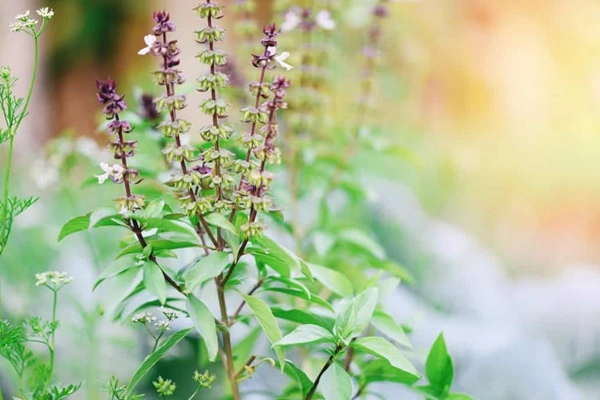
Understanding Holy Basil Extract Powder: Essential Knowledge for Importers
Botanical Origins and Extraction Methods
This adaptogenic ingredient comes from the stems and leaves of Ocimum sanctum Linn. These parts are full of bioactive compounds like eugenol, ursolic acid, oleanolic acid, and other flavonoids. Standard Tulsi leaf powders contain the whole plant, but concentrated extracts are processed in a special way to increase the amount of active ingredients they contain. Professional extraction methods use either water or food-grade ethanol as a liquid, which keeps the natural compounds' purity while meeting standard requirements.
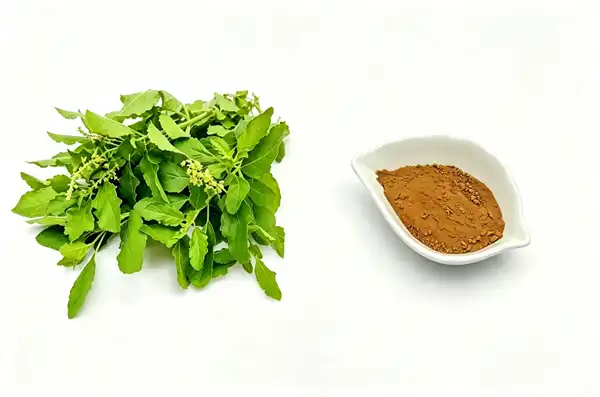
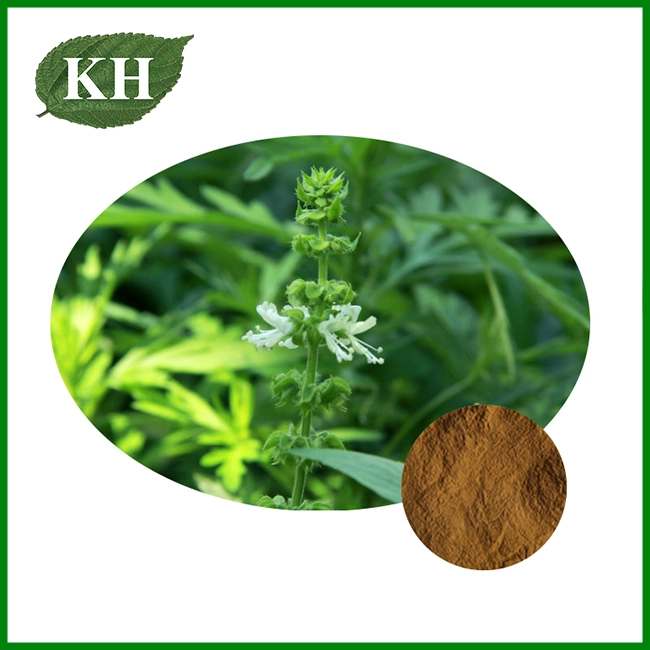
Good manufacturers use HPLC to check the amount of active ingredient in their products. They make fine, brownish-yellow powders that are standardized to specific ursolic acid concentrations between 1% and 2.5%. This standardization makes sure that each batch is the same, which is very important for formulators who need to know exactly what the strength levels will be. The extraction process concentrates therapeutic compounds while getting rid of unnecessary plant parts. This makes products that are more bioavailable than raw herbal powders.
Health Benefits and Functional Properties
The adaptogenic nature of Tulsi extract covers a wide range of health issues that are important to modern supplement formulations. Through cortisol modulation pathways, clinical research has shown that this ingredient can help with stress management. This makes it useful for mental health applications. Its antioxidant power, which is shown by its ORAC value, helps protect cells from oxidative damage, which makes it a good choice for anti-aging and longevity products.
Another main use is to help the immune system. Polysaccharides and phenolic substances have been shown in tests to have immunomodulatory effects. The bioactives that reduce inflammation work together to help with systemic inflammation issues. Early studies also show that they might be good for controlling blood sugar and heart health. The expectorant and bronchodilator qualities make it useful for respiratory health because they help the body naturally during weather changes. Because these functional benefits are so different, formulators can put products in a lot of different health categories, from capsules for stress relief to formulations for overall wellness.
Safety Considerations and Regulatory Compliance
Buying groups need to know how to use Holy Basil Extract Powder herbal supplement ingredients and the rules that govern them. Standard dose suggestions for extract powders are between 300 mg and 600 mg per day, but individual formulations may be different depending on the level of standardization and the purpose of the product. The safety profiles show that the drug is well tolerated when it is made according to GMP guidelines. However, the product documentation should include the right warnings about drug interactions.
Following the FDA's dietary supplement rules under 21 CFR Part 111 is required for the U.S. market, along with following USP or EP monograph standards when they are available. Importers should make sure that suppliers keep their ISO9001, FSSC22000, HALAL, KOSHER, and HACCP certifications up to date. This will make sure that suppliers have complete quality management systems. As part of the paperwork needed, you have to show Certificates of Analysis that show tests for heavy metals, microbes, chemical residues, and active ingredients using approved HPLC methods.
Key Criteria for Selecting Bulk Holy Basil Extract Powder Suppliers
Volume Requirements and Certification Standards
To choose a strategic seller, you must first be clear about how much you want to buy and what quality you expect. For commercial production, the smallest order size is usually 25 kg, but forward-thinking providers can handle sample requests and trial orders during the development stages of a product. This flexibility is very important for brands that are focused on research and development and want to improve formulations before making large purchases.
Certification files are the most important quality markers because they show how well a product is made and how well it meets legal requirements. Food safety certifications like FSSC22000 go beyond the basic ISO9001 quality management certification. They show thorough risk analysis and key control point execution. Religious food certifications like KOSHER and HALAL make the market bigger, especially for brands that want to reach certain groups of people. If a facility is registered with the FDA, it means that it follows U.S. regulations. However, importers should check the specifics of the registration and the history of inspections.
When judging a seller, the following certification standards should be used:
- Quality Management Systems: ISO9001 certification shows that quality processes are written down, that there are protocols for ongoing growth, and that management is responsible. Check that the license is up-to-date and that it covers only the production of botanical extracts and not general trade.
- Food Safety Standards: FSSC22000 or similar certifications make sure that ingredients are safe by analyzing risks, following sanitation rules, and using systems for tracking products. To figure out how well the program is working, ask for proof of the results of internal audits and reports from third parties that watched over it.
- Religious and Dietary Certifications: For KOSHER and HALAL certifications, they need to be regularly checked by official certification groups. Check that the certificates cover the particular product and not just general building approvals, because worries about contamination could make the certificates not valid.
These certification requirements are in line with best practices in the industry and meet regulatory requirements for a wide range of distribution channels and geographic markets. To keep supplies from running out, procurement teams should keep up-to-date copies of all certifications and keep an eye on when they need to be renewed.
Manufacturing Standards and Quality Control Practices
Evaluations of Holy Basil Extract Powder suppliers look at more than just certifications; they also look at the supplier's actual manufacturing skills and quality control systems. Traceability from the botanical source to the finished extract is a key differentiator, and the best suppliers keep working with controlled cultivation bases to do just that. This vertical integration gives exact control over the plant varieties chosen, the conditions of the soil, and the time of harvesting. This has a direct effect on the amount of active ingredients present and stops changes in the quality of the raw materials.
Professional makers are different from basic sellers because they can do analytical testing. In-house labs that are set up for HPLC analysis, ICP-MS heavy metal detection, microbial enumeration, and pesticide residue screening make it possible to quickly check the quality of a batch and release it. Request proof of the lab's accreditation, method validation reports, and participation in proficiency testing to figure out how reliable the analysis is. Full Certificates of Analysis, chromatography profiles showing active ingredient peaks, and stability testing data at the batch level give the information that is needed to make smart purchasing choices.
Product Format and Potency Options
By knowing the available product specs, you can find the best match between what the seller can do and what the formulation needs. Ratio extracts that aren't standardized and standardized extracts that guarantee certain ursolic acid concentrations are both standard offerings. Ratio extracts, which are usually labeled as 5:1 or 10:1, show concentration factors but don't promise active ingredient levels. This means that they can be used for general health purposes where consistency is more important than exact potency.
Standardized extracts with an ursolic acid level of 1% to 2.5% give the stability needed for clinical-strength formulations and uses that need to show proof of effectiveness. The main compound used to judge quality is ursolic acid, but full-spectrum extracts also have other bioactives that add to their overall therapeutic effects. The traits of flowability and dissolution are affected by particle size. For example, fine brownish-yellow powders work best in drinking and capsule filling processes.
Market Insights: Pricing, Packaging, and Logistics Considerations
Wholesale Pricing Trends and Budget Planning
Botanical extracts' prices depend on a lot of things, like how standardized they are, how certified they are, how much you order, and where the plants come from. On the market right now, standardized Tulsi extract usually costs between $45 and $85 per kilogram for large orders. Products with lower ratios sell for less, while products with full certifications and high standards sell for more. Organic approval usually adds 20% to 35% to the base price, because it costs more to grow and there are fewer supplies.
Volume-based price levels encourage bigger promises; for example, orders of 100 kg or more often get discounts of 10 to 15 percent compared to orders of 25 kg or less. When discussing prices, procurement managers should look at the total yearly needs and the amount of space that can be used. Origin also affects price. Material from India usually has lower prices while still meeting quality standards, since the plant has been grown there for a long time and there is a well-established supply network there.
Packaging Solutions and Shelf Life Preservation
The security of a product is directly affected by how well it is packaged during transportation and storage in the supply chain. Standard packaging uses two-layer polyethylene bags made of food-safe material inside fiber drums. The standard unit size in the industry is 25 kg net weight. This arrangement creates a shield against wetness and makes it easier to handle and store. Drums should come with desiccant bags and be shut as soon as they are full to keep them from being exposed to air.
To keep sensitive compounds from clumping together and going bad, hygroscopic botanical powders need to be kept in cool, dry places that are out of direct sunlight. When stored correctly, properly packaged material stays stable for 24 months from the date it was made. Importers should make sure that the materials used for packaging meet the food contact rules in the places where the goods will be sold and that the labels have all the necessary identification information, such as batch numbers, manufacture dates, and the right product name.
Transportation and Customs Clearance Strategies
Logistics planning includes choosing the way of delivery, preparing the paperwork for customs, and finding a storage facility. There are different shipping options for different levels of urgency and cost. For example, courier services can deliver samples in 5–7 days, air freight can take 10-14 days for urgent restocking, and ocean freight takes 25–35 days for cheap bulk shipments. Stock that is ready to ship from well-known suppliers lets orders be shipped quickly after they are confirmed, preventing supply disruptions as much as possible.
For customs clearance, you need a lot of paperwork, like business invoices, packing lists, Certificates of Analysis, and maybe even Certificates of Free Sale or Health Certificates, based on the rules for your import. Working with experienced customs brokers who know how to handle imports of botanical supplements can help you figure out classification issues and make sure you're following phytosanitary rules. Temperature and humidity should be controlled in storage sites. For botanical ingredients, the best conditions are buildings with temperature ranges of 15–25°C and relative humidity below 60%.
Step-by-Step Guide to Purchasing Holy Basil Extract Powder in Bulk
Supplier Screening and Verification Protocols
Setting minimum qualification criteria that reflect your quality standards and operational needs is the first step in a systematic supplier evaluation. The first screening should look at how long the company has been in business, whether it manufactures or trades goods, how complete its certification collection is, and references from well-known clients in related industries. Online lists of verified suppliers can give you some initial leads, but for real supplier ties, you still need to check with the business directly.
As part of your due diligence research, you should ask for pictures of the facility, reports of any regulatory inspections, customer reviews, and specific statements of what you can do. Normally, now is the time to take videoconference tours of factories. This way, purchasing teams can see how things are made, stored, and tested without having to fly across foreign borders. Check the paperwork for registering a business, export licensing, and insurance coverage to make sure you're following the law and lowering your risk.
Sample Testing and Quality Verification
Before committing to large sales, you have to try samples of your product to make sure they work. Professional suppliers can provide samples upon request, usually in amounts of 100g to 500g for thorough testing. Once you get it, do a sensory evaluation, making notes on how it looks, how uniform the colors are, how consistent the particle sizes are, and whether there are any foreign materials. The typical brownish-yellow color means the food has been processed correctly. On the other hand, strange smells or visible contamination mean the food should be thrown away right away.
Independent confirmation of claimed specs of Holy Basil Extract Powder comes from tests done by a third-party laboratory. Priority testing includes measuring the amount of active ingredient (ursolic acid) using HPLC to make sure it meets the stated levels, checking for heavy metals like lead, arsenic, cadmium, and mercury against known limits, testing for microbes like total plate count, yeast/mold, and pathogens, and checking for pesticide residues that include common agricultural chemicals. To check the accuracy of the documentation, compare the lab results with the supplier's Certificates of Analysis. Large differences can mean that there are problems with quality control or that information is being given falsely on purpose, both of which are very bad for supplier relationships.
Negotiation Strategies and Contract Finalization
Cost optimization, quality assurance, and building relationships for long-term partnerships are all important parts of effective negotiation. In addition to unit prices, you should also talk about payment terms, such as letter of credit choices, deposit requirements, and when payments are due in relation to shipments. Delivery schedules should include lead times from placing an order to being ready to ship, with options for faster processing if needed. To avoid confusion in the future, it's important to be clear about minimum order amounts, reorder processes, and volume commitment savings.
It's important to write down what kind of after-sales support is expected, such as how to handle quality complaints, product returns, technical questions about composition, and getting help from application labs for development. Setting clear communication rules, such as primary contacts, expected response times, and escalation procedures, is important for managing relationships over time.
Leveraging Holy Basil Extract Powder for Business Growth and Differentiation
Market Opportunities in Natural Wellness Segments
People are still looking for natural ways to deal with stress, and plant adaptogens are one of the supplement groups that is growing the fastest. According to market research, adaptogenic ingredients will grow at rates higher than 8% per year until 2028. This is because more people are becoming aware of the health effects of stress and prefer plant-based wellness solutions. Putting out goods with standardized Tulsi extract takes advantage of this trend while also setting them apart through their history in traditional medicine and new clinical evidence.
Immune support formulas are another high-growth area, especially since people are paying more attention to taking care of their health proactively. Putting together adaptogenic stress support and immune modulation makes a strong case for health goods that cover a lot of areas. Organic and clean-label products are more expensive, but they draw health-conscious customers who care about ingredient clarity and ethical sources. Products aimed at these groups benefit from both the growth of the category and the trend toward higher prices in the supplement market as a whole.
Building Strategic Supplier Partnerships
When you only negotiate with suppliers based on price, you often end up with inconsistent quality and supply problems that hurt your brand's reputation and your customers' loyalty. Through collaborative product creation, priority access during supply constraints, and ongoing quality improvement efforts, strategic relationships with capable makers give businesses a competitive edge. Suppliers who offer technical support beyond just providing ingredients, such as help with formulation optimization, stability testing, and application guidance for different delivery systems, are useful additions to a company's own research and development (R&D) department.
Long-term relationships make it possible to customize things like standardization ratios that are specific to your own formulations, particle size standards that make your production processes run more smoothly, and private labeling arrangements that make the supply chain run more smoothly. These partnership benefits make the higher prices fair while lowering the total cost of ownership by making things run more smoothly and causing fewer quality problems.
Conclusion
To successfully buy Holy Basil Extract Powder, you need to carefully look at things like quality standards, the supplier's skills, legal compliance, and the best way to organize your shipping. Knowing about the features of plants, how they are extracted, and the different ways they can be standardized lets you make specifications that are accurate and fit the needs of your intended uses. Partners who can meet strict standards are found through thorough supplier screening that looks at certifications, factory facilities, and quality control practices. Long-term relationships that work well are built on strategic negotiations about things like pricing, payment terms, and technical support. The organic, stress-relieving, and immune-supporting markets are all growing, which is good for brands that can reliably get high-quality Tulsi extract by forming partnerships with smart suppliers.
FAQ
1. What distinguishes standardized extract from ratio extract?
Standardized extracts guarantee certain amounts of active compounds, usually between 1% and 2.5% ursolic acid, which can be checked using HPLC. Ratio extracts show concentration factors like 10:1 without stating the exact amounts of constituents. Standardized goods offer the stability needed for clinical-strength formulations, while ratio extracts are better for general health uses where processing quality is more important than exact potency.
2. How can I verify supplier quality claims?
Ask for a lot of proof, like copies of the most recent certifications, Certificates of Analysis with full testing panels, customer references from well-known brands, and audit reports from a third party. Test samples in a separate lab before placing commercial orders. Virtual plant walks let you see the facilities and how they work, which helps you tell the difference between makers and trading companies.
3. What are typical lead times from order to delivery?
Samples and standard products can be shipped within 3–5 business days from suppliers who keep stock on hand. Lead times are extended to 15–25 days for custom specs that need special handling. For couriers, it takes an extra 5 to 7 days, 10 to 14 days for air freight, and 25 to 35 days for ocean shipping. The whole process from placing an order to getting it in the warehouse usually takes between 2 and 6 weeks, but this depends on the product's availability and the shipping method chosen.
Partner with KH for Premium Holy Basil Extract Powder Supply
Kingherbs Limited offers high-quality Tulsi extract and has been making botanical ingredients since 1996, so they know what they're doing. Our full-circle tracking method checks the quality of everything from choosing the seeds to extracting them and packaging them. This makes sure that the active ingredient content stays the same and that there are no differences in the raw materials. As an established Holy Basil Extract Powder manufacturer, we only use pure water and food-grade ethanol for extraction and never use dangerous solvents. This way, we can make fine brownish-yellow powders that dissolve quickly and are safe. Our ready-to-ship inventory means that samples and regular orders can be sent out within three to five business days. In addition, our application laboratory helps with recipe optimization for cosmetic systems, pills, tablets, and drinks. We meet the strict rules for the U.S. market by having many certificates, such as ISO9001, FSSC22000, KOSHER, HALAL, HACCP, and FDA registration. We can handle small-batch trial sales before making a business commitment, and our flexible MOQs will help you build your product. You can email our technical team at info@kingherbs.com to ask for samples, talk about custom formulation needs, or find out how our botanical extract procurement services can make your supply chain more efficient.
References
1. Pattanayak, P., Behera, P., Das, D., & Panda, S.K. (2010). Ocimum sanctum Linn: A reservoir plant for therapeutic applications. Pharmacognosy Reviews, 4(7), 95-105.
2. Cohen, M.M. (2014). Tulsi - Ocimum sanctum: A herb for all reasons. Journal of Ayurveda and Integrative Medicine, 5(4), 251-259.
3. Mondal, S., Varma, S., Bamola, V.D., Naik, S.N., Mirdha, B.R., Padhi, M.M., & Mehta, B.K. (2011). Double-blinded randomized controlled trial for immunomodulatory effects of Tulsi in healthy volunteers. Journal of Ethnopharmacology, 136(3), 452-456.
4. Jamshidi, N. & Cohen, M.M. (2017). The Clinical Efficacy and Safety of Tulsi in Humans: A Systematic Review of the Literature. Evidence-Based Complementary and Alternative Medicine, 2017, Article ID 9217567.
5. Saxena, R.C., Singh, R., Kumar, P., Yadav, S.C., Negi, M.P., Saxena, V.S., Joshua, A.J., Vijayabalaji, V., Goudar, K.S., Venkateshwarlu, K., & Amit, A. (2012). Efficacy of an Extract of Ocimum tenuiflorum in the Management of General Stress. Evidence-Based Complementary and Alternative Medicine, 2012, Article ID 894509.
6. Kelm, M.A., Nair, M.G., Strasburg, G.M., & DeWitt, D.L. (2000). Antioxidant and cyclooxygenase inhibitory phenolic compounds from Ocimum sanctum Linn. Phytomedicine, 7(1), 7-13.
Send Inquiry
Related Industry Knowledge
- Blueberry Extract Powder Price and Wholesale Buying Guide
- Nettle Extract Powder Wholesale Guide for Global Buyers
- Tongkat Ali Extract Powder: Effective for Low Testosterone or More BS?
- How Can Artemisinin Powder Strengthen Herbal Product Lines?
- Can Bitter Melon Extract Powder Improve Nutritional Formulations?
- What Industries Use Nettle Extract Powder the Most Today?
- White Willow Bark Extract Powder Benefits: Nature’s Time-Tested Remedy for Resilience and Relief
- Valerian Root Extract Powder for Beverage & Tea Formulations
- Cold-Pressed Organic Sea Buckthorn Seed Oil Guide
- Does Lespedeza Capitata Extract Support Toxin Clearance?