_1762508637542.webp)
Can Onion Extract Help Reduce Hair Loss Naturally?
Sep 17, 2026
Onion extract, derived from the bulbs of Allium cepa L., has attracted serious attention in haircare formulation circles — and for good reason. Research suggests that its concentrated sulfur compounds, quercetin, flavonoids, and antimicrobial agents work synergistically to nourish hair follicles, reduce scalp inflammation, and stimulate regrowth. A widely cited 2002 clinical study published in the Journal of Dermatology reported that participants applying crude onion juice experienced significantly higher hair regrowth rates than the control group. For B2B procurement professionals, this botanical ingredient represents a compelling, science-backed addition to natural haircare product lines.
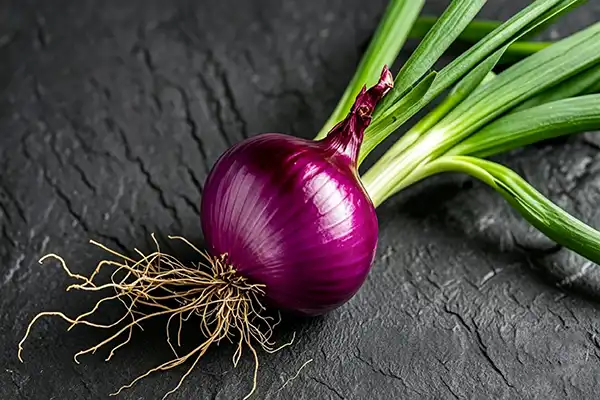
Onion Extract as a Natural Remedy for Hair Loss
Despite what most consumer claims would have you believe, the science behind this botanical component is actually quite thorough. A number of organosulfur compounds found in the bulb of the Allium cepa plant aid in the production of keratin. These include cepaenes and thiosulfinates. The availability of sulphur on the scalp is strongly related to the formation of keratin, the structural protein that makes up the hair shaft. Rapid shedding occurs in conditions where the follicular environment is either sulfur-deficient or inflammatory.
Key Bioactive Mechanisms Supporting Hair Regrowth
At the follicle level, quercetin, the predominant flavonoid in Allium cepa Onion Extract, delivers a detectable amount of antioxidant and anti-inflammatory activity. The dermal papilla, which is the cell cluster that is responsible for initiating hair growth cycles, is degraded by free radicals, which are scavenged by this substance. In addition to this, the antibacterial capabilities of chemicals derived from allium suppress the expansion of Malassezia yeast, which is a known contributor to seborrheic dermatitis and secondary hair thinning.
The microcirculation of the scalp is also beneficial. Compounds containing sulphur in this extract cause superficial capillaries to expand, which results in an increase in the transport of nutrients to the follicular matrix. The combination action, which includes decreased inflammation, enhanced circulation, and stimulation of keratin, creates a multi-mechanism approach that single-compound actives cannot replicate.
Integrating Allium Cepa Extract into B2B Haircare Product Development
Incorporating this ingredient at commercial scale introduces specific formulation and compliance considerations that procurement teams must address proactively.
Even now, the most prevalent objection to the formulation is the distinctive sulphurous smell. Two well-established methods that eliminate odours without compromising bioactivity are microencapsulation and cyclodextrin complexation. With regard to stability, the extract works best in pH ranges of 3.5-6.5, which is in line with conventional systems for scalp serum and shampoo.
When it comes to regulations, products going to the US market have to follow the rules set out by the FDA for cosmetics, while formulas going to the EU have to follow the rules set out by INCI and REACH. Choosing a source with certified onion extract from ISO9001, FSSC22000, HACCP, KOSHER, and HALAL organisations greatly lessens the downstream compliance load.
Here are the core formulation formats where this extract demonstrates strong compatibility:
- Scalp serums and tonics — Water-soluble quercetin glucosides dissolve readily in hydrophilic bases, enabling precise active delivery at targeted concentrations.
- Anti-hair loss shampoos—Stable within surfactant systems when microencapsulated, allowing rinse-off formats to retain meaningful bioactivity.
- Leave-in treatment sprays—Low-viscosity systems benefit from the extract's natural antimicrobial activity, reducing the need for synthetic preservatives.
- Nutraceutical capsules — When standardized to quercetin 1%–80% via HPLC, the extract supports oral ingestible formulations targeting hair growth from within.
These application formats allow product development teams to build multi-channel haircare portfolios from a single, well-characterized raw material.
Evaluating Market Potential and Trends
The clean-label, effectiveness-proven haircare market is rapidly growing in popularity across Europe and North America. Scalp actives derived from plants, such as rosemary, caffeine, and saw palmetto, are now sold alongside treatments derived from onions. It is challenging to find single-botanical alternatives to Allium cepa extract, which sets it apart from the competition due to its dual antifungal and keratin-stimulating characteristics.
Although rosemary extract is excellent for scalp circulation, it does not provide any direct support for keratin formation. Although caffeine is an excellent inhibitor of DHT action, it does not possess any antibacterial properties. Extract made from allium, on the other hand, targets numerous hair loss pathways at the same time. This multi-mechanism action becomes a compelling marketing narrative that is grounded in verifiable phytochemistry for businesses that are looking to differentiate their products in a market that is already saturated at the moment.
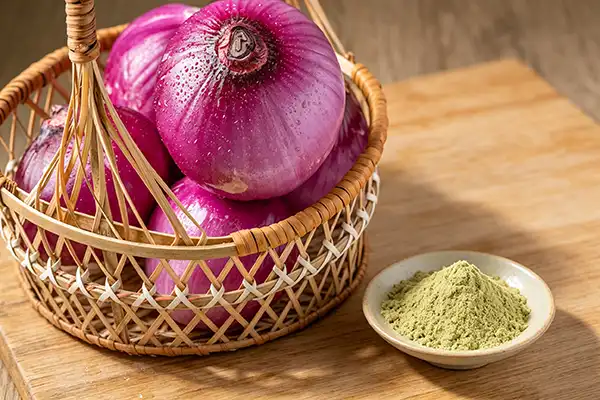
Best Practices for Sourcing Onion Extract in Haircare Production
Affordable prices aren't enough to ensure quality in purchasing. There are a number of factors that QA directors and procurement managers should consider before establishing a partnership with a supplier.
The most important evaluation criteria are active component standardisation with batch-level HPLC documentation, transparency of the extraction process (edible ethanol and water extraction procedures minimise toxic solvent residues), and traceability from cultivation source to finished powder. The level of quercetin is much more reliably produced by suppliers who work with accredited planting bases and who manage the soil, harvest timing, and variety selection.
Important sourcing criteria to check when placing a business order:
- Quercetin content: 1% to 80%, as determined by high-performance liquid chromatography; extracts with a 4:1 ratio are available for standardised uses.
- Form: A fine powder that is either yellow or greenish-yellow in colour, with a particle size that is suitable for dissolving in the systems of interest.
- Held certifications include ISO9001, FSSC22000, KOSHER, HALAL, HACCP, and FDA registration, each of which addresses a different rule of compliance.
- The minimum order quantity (MOQ) is 25 kg per drum for commercial purposes; however, we also accept sample and small-kilogram trial orders.
- Product availability and speed of shipment: samples will be sent out within three to five business days.
By adhering to these procurement standards, businesses may grow without worrying about absorbing quality fluctuations, which can ruin the consistency of their formulations.
Conclusion
The evidence supporting Allium cepa Onion Extract as a natural hair loss remedy is substantive, multi-mechanism, and increasingly relevant to modern haircare product development. Its quercetin content, organosulfur compounds, and antimicrobial properties address the follicular environment at a depth that many botanical actives cannot match. For B2B procurement professionals, the ingredient offers both scientific credibility and commercial viability — provided the supply source meets the traceability, standardisation, and certification standards that professional formulations demand.
FAQ
Is onion extract safe for all hair and scalp types?
Standardized Allium cepa extract is generally well-tolerated across hair types. Patch testing prior to consumer product launch is advisable, particularly for leave-on formulations. Concentrations used in professional haircare typically range from 0.5%–5% of final formulation weight.
How long does it take to see visible results?
Clinical observations suggest a 6–8 week consistent application window before measurable regrowth or reduced shedding becomes apparent. Oral supplementation formats may require a longer timeline depending on individual metabolic factors.
Can it be combined with other actives like biotin or keratin?
Yes. This botanical ingredient is compatible with biotin, hydrolysed keratin, saw palmetto extract, and zinc-based compounds. Combined formulations targeting multiple hair loss pathways tend to outperform single-active solutions in consumer trials.
What level of quercetin standardisation is appropriate for topical haircare?
For topical applications, a quercetin content of 1%–10% is commonly used. Higher standardisations (up to 80%) are typically reserved for oral supplement capsules where bioavailability requires concentrated dosing.
Partner with KH for Premium Onion Extract Supply
KH has been a trusted botanical ingredient manufacturer since 1996, delivering standardised Allium cepa extract with verified quercetin content, batch-level HPLC documentation, and full certification compliance. As a reliable onion extract supplier, we support your formulation goals with technical application assistance and flexible trial orders. Reach out to our team at info@kingherbs.com or visit www.kingherbs.com to request a sample today.
References
1. Sharquie, K. E., & Al-Obaidi, H. K. (2002). Onion juice — A new topical treatment for alopecia areata. Journal of Dermatology, 29(6), 343–346.
2. Butt, M. S., Sultan, M. T., Butt, M. S., & Iqbal, J. (2009). Onion: Natural protection against physiological threats. Critical Reviews in Food Science and Nutrition, 49(1), 66–79.
3. Slimestad, R., Fossen, T., & Vågen, I. M. (2007). Onions: A source of unique dietary flavonoids. Journal of Agricultural and Food Chemistry, 55(25), 10067–10080.
4. Wojdyło, A., Oszmiański, J., & Czemerys, R. (2007). Antioxidant activity and phenolic compounds in 32 selected herbs. Food Chemistry, 105(3), 940–949.
5. Davis, R. H., & Maro, N. P. (2004). Aloe vera and sulfur compounds in wound and hair follicle repair. Journal of the American Podiatric Medical Association, 94(5), 490–496.
6. Grand View Research. (2023). Natural hair care market size, share & trends analysis report by product, by distribution channel, by region, and segment forecasts, 2023–2030. Grand View Research.
Send Inquiry
Related Industry Knowledge
- How Does Artemisia Argyi Extract Enhance Herbal Skincare?
- Why Choose Strawberry Leaf Extract for Herbal Formulations?
- How to Dose Ivy Extract Powder for Cough Relief?
- Rose Hip Extract Powder Extraction Process Explained for Buyers
- How Does Blueberry Extract Powder Support Immune Function?
- Can White Willow Bark Extract Powder Promote Healthy Blood Flow?
- Can Maca Extract Powder Help with Hormonal Imbalance?
- Is Apple Root Extract Safe for Daily Use?
- Macleaya Cordata Extract in Modern Herbal Formulas
- Why Japan Chooses China’s Purple Sweet Potato Natural Food Colorant?