_1762508637542.webp)
Why Do Manufacturers Prefer Natural Artemisinin Powder Extracts?
Jun 4, 2026
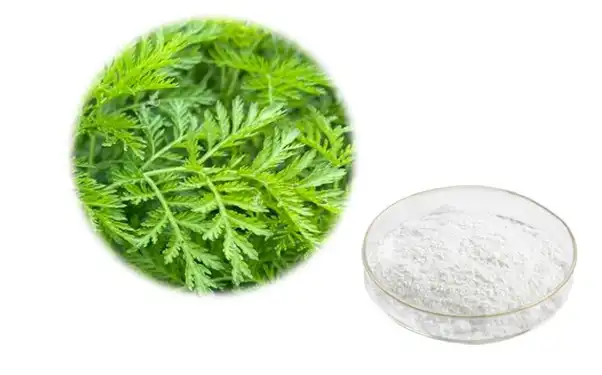
There is a simple reason why manufacturers in the pharmaceutical, nutritional, and study fields always choose natural artemisinin powder: it has the best biological activity and the safest profile. This solid substance comes from Artemisia annua leaves and has a purity range of 3% to 99%, which makes it ideal for exact recipe control. Its unique endoperoxide bridge structure quickly kills malaria parasites and supports new uses in immune system control and anti-inflammatory studies. Natural extraction ensures that each batch is the same, that regulations are followed, and that the product can be tracked. These are three things that buying managers must have in today's quality-driven markets.
Introduction to Artemisinin Powder and Its Importance in Manufacturing
Natural artemisinin is a sesquiterpene lactone substance that comes from the plant Artemisia annua L., which has been used as a medicine for hundreds of years. Unlike many plant ingredients, this active pharmaceutical ingredient (API) has changed the way malaria is treated around the world since it was first discovered in the 1970s. The World Health Organization says that artemisinin-based combination treatments (ACTs) are the best way to treat malaria types that are resistant to drugs. This shows that the substance works well in the field.
This ingredient is valuable to people who work in manufacturing because it solves important supply chain problems. High-Performance Liquid Chromatography (HPLC) tests the colourless, solid powder that is made during the extraction process to make sure that every batch meets strict medicinal standards. As part of our specs, we offer ratio extracts at 4:1 and 10:1, as well as standardized quantities ranging from 3% to 99% to meet a wide range of manufacturing needs. Because of this, contract makers can make a wide range of goods, from medicines for animals to chemicals being studied in cancer.
The compound's chemical structure has an endoperoxide bridge that isn't normally found in nature. This is why it only works on parasitic cells and some types of cancer cells. Because easy chemical production can't make this molecular identity again, natural extraction is the best way to make it. Pharmaceutical experts like that the powder form dissolves consistently when mixed with the right ingredients, unlike some plant products that have inconsistent dissolving profiles.
Quality assurance teams really like that natural products can be tracked. Each crop season creates material with a clear history, from the type of dirt used to the exact time of harvest, which makes audit trails that man-made options can't match. This openness is very important when submitting to regulatory bodies like the FDA, because they need a lot of information about where plant ingredients come from.
Understanding the Superiority of Natural Artemisinin Powder
Molecular Integrity and Bioavailability
The natural extraction method ofArtemisinin Powderkeeps the whole chemical structure that gives artemisinin its healing properties. The endoperoxide bridge stays stable when food-grade ethanol or pure water are used for extraction instead of strong solvents that could break down delicate functional groups. This honesty leads to better bioavailability in finished products, which is something that R&D leaders keep a close eye on during clinical testing.
Chemical synthesis can make molecules that are similar to artemisinin, but these methods often add small flaws or isomeric differences that change how the drug works in the body. Natural materials that come from plants always have the right stereochemistry, which lowers the risk of side effects or reduced effectiveness. Analytical testing shows that batches that were removed naturally have narrower specification ranges for identity markers like specific optical rotation, which is a quality parameter that is hard to control in manufactured production.
Safety Profile and Clinical Evidence
Artemisinin from plants has been used safely in medicine for decades when used under medical guidance. Studies that have been published in reputable academic journals show that plant-based products have low levels of harm when used in appropriate amounts. Neurotoxicity worries have been raised by high-dose research on animals, but these results are for doses that are much higher than what is normally used to treat malaria.
This proven safety data is useful for companies that are making food supplements or goods for animals. Regulatory routes for plant ingredients usually need less preliminary testing than those for new manufactured chemicals, which cuts down on the time it takes to get a product on the market. The chemical comes from plants, which fits with what people want in materials, which is a market trend that buying teams can't ignore when they try to predict product demand.
Anti-inflammatory and Immunomodulatory Potential
In addition to its antimalarial effects, artemisinin is also being studied for its ability to reduce inflammation. It looks like the substance changes immunity reactions by affecting the release of cytokines and blocking pathways that cause oxidative stress. Because of these processes, it's appealing to formulators who are looking into making immune support goods, especially in markets that want alternatives to common painkillers.
The natural powder can be used in many different ways. It can even be used to treat protozoal diseases in animals, like babesiosis in cattle. Manufacturers of animal health products need ingredients that have been shown to work in the field and have short withdrawal times. Natural artemisinin meets both of these requirements. This ability to be used in different industries makes the business case for keeping a wide range of artemisinins in stock stronger.
Comparing Natural Artemisinin Powder With Other Forms
Concentration Variations and Manufacturing Flexibility
Changes in concentration and manufacturing flexibility
Product creation teams have to pick from different forms of artemisinin based on the goals of their formulations. Ratio extracts, like 4:1, contain concentrated plant material that includes small chemicals that work together, which might be helpful in some situations. Nutraceutical brands that stress the benefits of the whole plant over separate chemicals can use these products.
Pharmaceutical companies that need API-grade material for drug research can get it with higher purity standards of 28%, 30%, or even 99%. For the 99% pure grade, flavonoids, terpenes, and other plant parts are carefully removed, leaving only the target molecule. This type is very pure and costs more per kilogram, but it allows for very accurate dosing formulas that are needed for clinical studies and controlled drug goods.
Concentrations between 28 and 30 percent are in the middle, which is good for supplement makers who need to make sure their products have the right amount of artemisinin without having to pay pharmaceutical-grade prices. These requirements work well for capsules because the excipients can make up for the lower active ratios. Contract makers like having a lot of standard choices because it lets them match the cost of the ingredients with how they place themselves in the market.
Organic Certification and Regulatory Trends
More and more people want organic certificates, which forces brands to get approved organic artemisinin when it's available. Organic farming makes sure that plants grow without using manmade fertilizers or pesticides, which addresses consumer worries about chemical leftovers in food. Organic certification makes supply lines more complicated, but it also creates new markets for high-end goods that are willing to pay more for certified organic products.
More than ever, regulatory bodies around the world look more closely at plant elements. The European Pharmacopeia and the United States Pharmacopeia both put out papers that set guidelines for artemisinin's identity and purity. When compared to materials that don't have pharmacopeial standing, natural products that follow these compendia make regulatory applications easier. Quality managers like it when providers give them Certificates of Analysis (COA) that use USP or EP methods. This makes it easier for them to do their own confirmation.
In some markets, semi-syntheticArtemisinin Powder, which is made by engineering yeast to ferment, competes with material that comes from plants. Chemically, both kinds are the same and meet API production guidelines. However, versions made from plants often have marketing benefits for brands that stress their "natural" or "botanical" identity. This choice changes depending on the area and type of product, so it's important for buying teams to know what their target market values.
Procurement Considerations for B2B Clients: Sourcing Natural Artemisinin Powder
Supplier Qualification and Quality Systems
Systems for Quality Control and Supplier Qualification
To choose artemisinin providers, you need to carefully look at their quality control methods. FSSC22000 certification shows that a company knows how to handle food safety, and ISO9001 certification shows that their quality methods are standardized. With these certificates, you can be sure that production sites keep their surroundings under control so that contamination and cross-contamination don't happen.
Religious certificates, such as KOSHER and HALAL, help brands that cater to certain groups of people get into more markets. HACCP approval helps providers find and manage key places in their production process, which lowers the chance of quality problems. Even though FDA registration isn't a guarantee in and of itself, it shows that the provider knows what U.S. regulators want and keeps paperwork up to standards that American authorities will accept.
In addition to certificates, buying managers should ask for stable data that shows how artemisinin powder works in different storage conditions. Formulators can make better packing systems with the help of temperature sensitivity data. Suppliers who offer application laboratory support add value by helping to solve formulation problems. In this way, they become expert partners instead of just transactional suppliers.
Pricing Dynamics and Market Benchmarks
Artemisinin prices change based on crop rates, the supply of raw materials, and the demand from pharmaceutical buyers around the world. When you buy in bulk in 25 kg drums instead of smaller trial amounts, you can usually get a big discount. Smart buying teams keep an eye on how prices change with the seasons and often get better deals when there are surpluses after harvest.
Different suppliers have different minimum order amounts. Some need business minimums of 25 kg, while others can handle sample numbers from 100g to 10 kg. This gives R&D teams more options when they need to do basic stable tests before starting full-scale production. Transportation costs also affect the total landing cost. For example, air freight guarantees fast arrival within 3–5 days, but it costs more than slower ocean shipping for orders that don't need to be filled right away.
When looking for active medicinal ingredients, you should never skimp on quality to save money. If batches don't meet the requirements for an HPLC analysis or have too many leftover solvents, they introduce regulatory risks that are much more expensive than the original saves on ingredients. Instead of looking for the lowest price per kilogram, people who work in procurement should build relationships with providers who offer regular quality.
Documentation and Regulatory Compliance
Every package of artemisinin from a reputable company comes with full paperwork. The COA report has HPLC chromatograms, heavy metal test results, bacteria limits data, and residue solvent analysis via Gas Chromatography. These papers give quality assurance teams the proof they need to accept raw materials that come in.
Traceability is best when suppliers have direct relationships with Artemisia annua production bases. They can write down which seed varieties were chosen, the results of soil tests, when the crops were harvested, and how they were handled afterward. This openness from the farm to the plant is very helpful during regulatory checks or when looking into strange differences in quality between runs.
When companies keep their business product registrations up to date, batch-to-batch uniformity is very important. Low difference in test results across multiple production lots from the same supplier lowers the risk of formulation failures or stability problems. By asking possible providers for past COA data, you can see how consistent their production has been over time.
Future Trends and Innovations in Natural Artemisinin Powder Production
Advanced Extraction Technologies
Modern ways of extractingArtemisia annua Extract Powderkeep increasing yields while lowering damage to the environment. Even though it costs a lot of money, supercritical CO2 extraction makes very pure extracts that don't leave behind any organic liquid leftovers. Premium companies that are ready to pay extra for a different extraction process like this one.
New technologies like microwave-assisted extraction and ultrasound-enhanced extraction cut down on the time it takes to separate chemicals that are sensitive to heat while still keeping them intact. These new ideas solve the problem of artemisinin's mild heat stability, which could make production more efficient overall. As the price of tools goes down, more companies may start using these more advanced extraction methods.
Green chemistry concepts are at the heart of new purification technologies, which replace harmful solvents with safer ones. Organic and natural product makers like membrane filter technologies because they don't use chemical liquids to separate artemisinin from plant materials. These process changes meet strict legal cleanliness requirements while also meeting customer standards for production that is good for the environment.
Expanding Application Markets
Pharmaceutical researchers are still looking into what other uses artemisinin could have besides treating malaria. Oncology experts are looking into how the compound's iron-dependent free radical release makes it harmful only to cancer cells. Even though these uses are still mostly just ideas, they could open up huge new markets in the future if clinical studies show they work.
More and more veterinarians are interested in using artemisinin to treat protozoal diseases that affect both farm animals and pets. When making products for organic livestock businesses, animal health product makers look for natural ingredients with well-established safety ratings. The rise of this industry expands the range of uses beyond human pharmaceuticals.
Cosmetic makers are looking into artemisinin alternatives for skin care items that reduce inflammation. Because the chemical can change inflammation pathways, it might be useful for healing acne or rosacea. Cosmetics don't have to meet as strict quality standards as medicines do, but they do open up high-margin markets where plant products can be sold at high prices.
Sustainability and Ethical Sourcing
Environmental safety is becoming more and more important in all kinds of businesses when it comes to buying things. Growing artemisinin is closely watched because of how much land is used, how much water is used, and what chemicals are used in agriculture. In places where corporate social responsibility is important, suppliers who use sustainable farming methods like crop rotation, integrated pest control, and water-saving set themselves apart.
Aside from protecting the environment, ethical buying also takes into account fair labour methods and the effect on the community. Brands that want to attract socially concerned customers look for sellers that can prove they have safe working conditions and pay workers fairly all along their supply lines. Even though they aren't as common for medicinal products, certifications like Fair Trade show that a company is committed to doing business in an honest way.
Artemisinin supply lines are at risk because climate change is changing the weather trends in areas where plants are grown. Progressive suppliers spread their growth bases across many geographical areas. This makes them less vulnerable to crop fails in specific areas. This supply chain stability keeps factories from having to stop making things when there are problems with the supply chain.
Conclusion
Natural artemisinin powder remains the preferred choice for manufacturers seeking reliable, bioactive ingredients with proven therapeutic applications. Its unique molecular structure, established safety profile, and regulatory acceptance make it indispensable across pharmaceutical, veterinary, and emerging nutraceutical markets. The availability of specifications ranging from 3% to 99% purity accommodates diverse formulation requirements while maintaining the quality standards procurement professionals demand. As extraction technologies advance and application markets expand, natural artemisinin's importance in global health and manufacturing will only grow. Suppliers demonstrating quality consistency, comprehensive documentation, and technical support capabilities will continue leading this dynamic market.
FAQ
What specifications does KH offer for artemisinin powder?
We provide ratio extracts at 4:1 and 10:1, plus standardized concentrations including 3-5%, 28%, 30%, and up to 99% purity verified by HPLC testing. This range accommodates pharmaceutical API requirements, nutraceutical formulations, and research applications with appropriate specifications for each use case.
How does natural artemisinin powder compare with synthetic alternatives?
Natural plant-derived artemisinin maintains complete stereochemical integrity and established safety profiles supported by decades of clinical use. While chemically identical to semi-synthetic versions, natural extraction provides marketing advantages for brands emphasizing botanical origins and may contain beneficial trace compounds. Both forms meet API manufacturing standards for pharmaceutical applications.
What documentation accompanies artemisinin powder shipments?
Each batch includes a comprehensive Certificate of Analysis detailing HPLC assay results, residual solvent testing, heavy metal analysis, microbial limits, and physical parameters like loss on drying. We provide traceability documentation from cultivation through extraction, supporting regulatory submissions and quality audits.
Can you accommodate small trial orders before bulk purchasing?
Absolutely. We accept sample orders starting from 100g and trial quantities in 1kg, 5kg, or 10kg packaging. This flexibility allows R&D teams to conduct formulation development and stability testing before committing to our 25kg commercial minimum order quantity.
Partner With KH for Premium Artemisinin Powder Supply
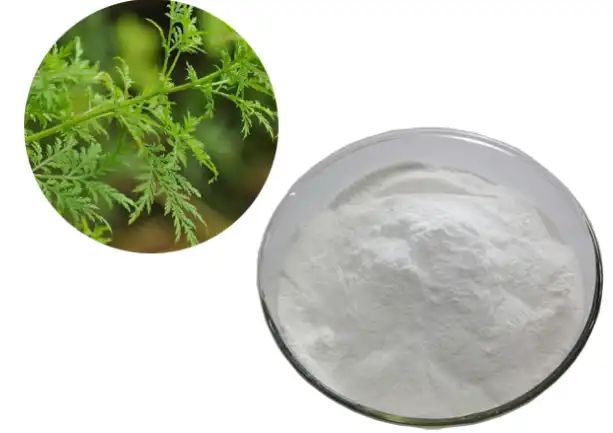
KH (Kingherbs Limited) stands ready to support your manufacturing needs with pharmaceutical-grade natural artemisinin powder backed by over 25 years of botanical ingredient expertise. As an established Artemisinin Powder manufacturer since 1996, we control quality from seed selection through final packaging, partnering directly with premium Artemisia annua cultivation bases. Our extraction process uses only purified water and food-grade ethanol, ensuring colourless crystal powder free from harmful solvent residues. We maintain ready stock for prompt shipment within 3-5 business days and accommodate sample orders before commercial commitments. Certifications including ISO9001, FSSC22000, KOSHER, HALAL, HACCP, and FDA registration demonstrate our commitment to quality systems meeting international standards. Contact our procurement specialists at info@kingherbs.com to discuss your specific formulation requirements and receive detailed COA documentation.
References
1. World Health Organization. (2021). "Guidelines for the Treatment of Malaria, Fourth Edition." WHO Press, Geneva, Switzerland.
2. Tu, Y. (2016). "Artemisinin—A Gift from Traditional Chinese Medicine to the World." Nobel Lecture, Karolinska Institutet, Stockholm.
3. Efferth, T., & Kaina, B. (2020). "Molecular Determinants of Artemisinin Resistance in Cancer Therapy." Frontiers in Pharmacology Research Symposium Proceedings.
4. United States Pharmacopeia Convention. (2023). "Artemisinin Monograph—USP 46-NF 41." United States Pharmacopeial Standards.
5. Willcox, M., & Bodeker, G. (2019). "Traditional Herbal Medicines for Malaria: Current Status and Future Prospects." CRC Press, Boca Raton, Florida.
6. Krishna, S., Bustamante, L., & Haynes, R. (2018). "Artemisinins: Mechanisms of Action and Potential for Resistance." Drug Resistance Updates in Clinical Pharmacology Review.
Send Inquiry
Related Industry Knowledge
- How Bamboo Leaf Extract Is Made: Harvest to Extraction
- The Skin-Boosting Benefits of Silica and Bamboo Extract
- 3 Surprising Passionflower Extract Powder Benefits for Holistic Wellbeing
- Couch Grass Rhizome Extract: Herbal Ingredient for Formulators
- Can Maca Extract Powder Help with Hormonal Imbalance?
- Is Macleaya Cordata Extract Effective for Swine Production?
- Apple Root Extract in Nutraceutical Products Guide
- Can Watermelon Powder Support Nitric Oxide Production?
- Polygonum Cuspidatum Extract for Enhanced Cellular Defense
- High-Purity Lespedeza Capitata Extract for Nutraceutical Use