_1762508637542.webp)
Why Buy Echinacea Purpurea Extract from a Certified Supplier?
Oct 8, 2026
Decisions regarding the supply of botanical ingredients have significant repercussions when procurement teams evaluate them. The purchase of echinacea purpurea extract from a certified source is not merely a formality; rather, it helps to determine whether or not your finished product satisfies the claims made on the label, whether or not it passes regulatory assessment, and whether or not it earns the trust of consumers over time. In addition to maintaining traceability from raw plant material to final powder, certified suppliers document each and every step of the production process, which includes verifying the quantities of active compounds using HPLC and UV testing. This level of accountability differentiates a dependable ingredient from one that contributes to liability for brands that are involved in the production of nutritional supplements, cosmetics, or functional foods.

Understanding Echinacea Purpurea Extract and Its Importance
What Does the Plant Provide?
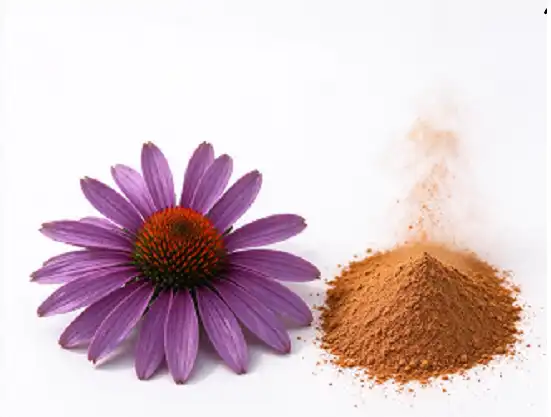
Over the course of several hundred years, people have utilised the plant known as Echinacea purpurea (L.) Moench, which is indigenous to North America, in herbal remedies. Cichoric acid, echinacosides, and polyphenols are the three primary bioactive groups that can be found in the stems, leaves, and flowers of the plant in the highest concentrations. The combination of these substances makes it easier for immune cells to function, reduces oxidative stress, and calms inflammatory responses. It is possible for echinacea purpurea extract to consistently offer functional activity that raw plant powder is unable to provide if it is extracted and standardised correctly.
How Extraction Method Shapes Quality?
The manner in which the chemicals are extracted determines which compounds are present and at what percentage. Only pure water or ethanol of food grade is used by reliable manufacturers in order to maintain the bioactive purity of their products. They never use harsh industrial solvents. Using this procedure, a fine powder that is yellowish-green in colour and easy to dissolve is produced. This powder retains all of the natural health advantages that the plant provides. Both the supplier's level of responsibility and the product's level of safety can be inferred from the choice of solvent.
Why B2B Buyers Need Standardized Specifications?
Supplement brands and contract manufacturers can't use raw materials that change to make stable formulas. Formulators can be sure that the echinacea extract they use has the right amount of cichoric acid (0.2% to 4%), echinacosides (1% to 12%), and polyphenols (4% to 6%) by using UV/HPLC to check the levels. Documentation at the batch level makes sure that every drum meets the same standards. This helps with both regulatory filings and quality control protocols.
Risks of Purchasing from Non-Certified or Unverified Suppliers
Contamination and Adulteration
In the event that the source is not approved, it may make use of less expensive plant material, dilute the active substances, or incorporate significant amounts of heavy metals and chemical residues. Food Chemistry published a study in 2019 that discovered that many commercial echinacea products did not match what the labels claimed they did for key marker chemicals. The investigation was conducted on a large number of products. Raw materials are the source of these issues, and the purchasing teams are responsible for dealing with the consequences.
Regulatory and Legal Exposure
The FDA, FTC, and state officials are all keeping a close eye on products that use plant ingredients that haven't been proven to work. If contamination leads to a batch recall, the finished-goods brand, not the ingredient supplier, has to pay for it financially and in terms of reputation. If you choose an uncertified source, you are putting your organization at risk.
Supply Chain Disruption
Often, suppliers that are not competent do not possess the necessary systems for controlling inventories, maintaining records of manufacturing, or ensuring that quality standards are met. In the event that there is an increase in demand or a problem with the quality, these suppliers are unable to resolve the issue using documented instructions. Because of this, there are delays in production, a loss of shelf space in retail stores, and they have to re-formulate products. All of these are intended to be avoided through the use of a certified supplier relationship.
Key Certification Standards and What They Guarantee
ISO9001 and FSSC22000
ISO9001 makes sure that a company has a written quality control system that covers production, testing, and making changes. FSSC22000 adds a management layer for food safety that is in line with GFSI standards. These two certifications show that every drum of echinacea purpurea extract that leaves the building has been through a structured process that can be checked.
KOSHER, HALAL, and HACCP
At the same time, these certificates cover both an individual's safety and their ability to enter the market. KOSHER and HALAL approvals make it possible for firms that cater to certain diets to obtain ingredients, and HACCP certification demonstrates that risks were evaluated at each and every significant stage of production of the product. More items are eligible for reformulation as a result of these qualifications, which also reduce the cost of reformulating those products for purchasers who service a diverse variety of consumer groups.
FDA Registration and USP/EP Compliance
When a plant registers with the FDA, it follows current Good Manufacturing Practice (cGMP) standards for the U.S. market. Products that have been checked against USP and EP book standards have purity levels that can be measured and testing methods that are accepted by both American and European officials. This connection makes compliance paperwork easier for buying managers who are responsible for distributing goods to multiple markets.
How to Evaluate and Choose a Certified Echinacea Purpurea Extract Supplier?
Verify Certifications and Testing Documentation
Don't just rely on names listed on a product sheet; make sure to ask for up-to-date certificates. A reliable echinacea purpurea extract provider will give you batch-specific HPLC analysis results that show how much cichoric acid, echinacoside, and polyphenols are in each lot. There should be proof that each batch is linked to a unique crop, extraction run, and test result. In itself, a supplier's inability to provide these when asked to is a red flag.
Assess Formulation Flexibility and Technical Support
The company you buy from should give you more than just a regular powder. The company you buy from should give you more than just a regular powder. Verify to see if they can give you ratio extracts (4:1 or 10:1), change the specs for tablet compression vs. beverage application, and give you stability data for the format you want to use. A provider with an in-house application laboratory can help your R&D team save a lot of time by giving them tips on compounding, recipe optimisation, and compatibility testing.
Confirm Logistics Capability and Lead Times
For production to keep going, inventory must be stable, and shipping must be reliable. Make sure the seller has stock on hand, can ship samples within 3–5 business days, and can handle industrial orders of 25 kg or more. There should be easy access to shipping choices like courier, air freight, and ocean cargo. You will have trouble getting things done when your supplier won't talk about logistics details.
Advantages of Partnering with a Certified Supplier: Real Business Benefits
Certified sourcing gives you real benefits that go far beyond the cost of the ingredients. Here are the main benefits that buying professionals always list after switching to certified suppliers:
- Batch-to-batch consistency: Each production run of echinacea purpurea extract is tested against fixed specifications. R&D teams build formulas once and reproduce them at scale without reformulation.
- Faster regulatory filing: Pre-existing HPLC reports, certificates of analysis, and compliance documentation reduce the time spent assembling submissions for FDA, Health Canada, or EU regulators.
- Traceability from source: End-to-end records link final extract powder to specific planting bases, harvest dates, and extraction batches. This documentation supports label transparency claims and audit readiness.
- Technical partnership: Access to application laboratory support means that questions about solubility, carrier compatibility, or shelf-life stability get answered by the supplier's technical team, not absorbed by your own staff.
These benefits directly lead to faster time-to-market, lower costs for reformulation, and a quality story that procurement managers can tell both internal stakeholders and governmental bodies that they can back up.
Conclusion
Where to get echinacea purpurea extract has effects at all stages, including formulation, regulatory filing, customer safety, and the image of the brand. Certified sellers offer proof, strict testing, and a steady supply that sources that haven't been checked out can't match. Each certification, from ISO9001 to FDA registration, is a structural promise to maintain quality. When purchasing managers put approval above price alone, they regularly report fewer supply problems, better audit results, and better product performance. When it comes down to it, the provider you choose shows how much risk your business is willing to take.
FAQ
What specifications are available for bulk orders?
We offer uniform grades of echinacea purpurea extract with cichoric acid at 0.2% to 4%, echinacosides at 1% to 12%, and polyphenols at 4% to 6%. The ratios of the extracts are 4:1 and 10: 1. The product comes from the plant's leaves and looks like a fine yellowish-green powder. Orders for business use start at 25 kg per drum, and you can also place a trial or sample order.
How is the extract tested and documented?
UV and HPLC tests are done on every run. For each batch, we provide certificates of analysis that include the amount of active compounds, how the product looks, and microbiological parameters. This paperwork helps with quality checks and regulatory submissions.
Is this extract suitable for cosmetic and beverage applications?
Yes. This purple coneflower extract dissolves in water, so it can be used in functional drinking systems. Its anti-inflammatory and antioxidant properties make it useful in skin care products like anti-ageing serums and relaxing creams. If you're interested, we can talk about application-specific scores.
What certifications does the product carry?
The item is certified by ISO9001, FSSC22000, KOSHER, HALAL, HACCP, and FDA, and it is made according to USP and EP rules.
Partner with KH for Certified Echinacea Purpurea Extract Supply
Since 1996, KH has been making botanical ingredients. As an echinacea purpurea extract manufacturer, we can make standard powder grades, custom ratio extracts, and full batch documentation. We have stock that can be shipped right away; we take sample orders, and we offer application laboratory help for preparation needs. You can email us at info@kingherbs.com or go to www.kingherbs.com to ask for a sample or talk about your supply needs.
References
1. Barnes, J., Anderson, L. A., & Phillipson, J. D. (2005). Echinacea species (Echinacea angustifolia, Echinacea pallida, Echinacea purpurea). Journal of Pharmacy and Pharmacology, 57(8), 929–954.
2. Manayi, A., Vazirian, M., & Saeidnia, S. (2015). Echinacea purpurea: Pharmacology, phytochemistry, and analysis methods. Pharmacognosy Reviews, 9(17), 63–72.
3. Woelkart, K., & Bauer, R. (2007). The role of alkamides as an active principle of Echinacea. Planta Medica, 73(7), 615–623.
4. U.S. Pharmacopoeia. (2023). USP–NF General Chapter <561>: Articles of Botanical Origin. United States Pharmacopeial Convention.
5. Food Chemistry. (2019). Authentication and quality assessment of commercial Echinacea products using phytochemical profiling. Food Chemistry, 279, 249–258.
6. European Medicines Agency. (2015). Assessment report on Echinacea purpurea (L.) Moench, herba recens. EMA/HMPC/557979/2013.
Send Inquiry

Related Industry Knowledge
- Best Tilia Extract Supplier for Bulk Cosmetic Ingredients
- How to Select Premium Strawberry Leaf Extract Suppliers?
- Passionflower Extract Powder Benefits for Nutraceutical Products
- Tongkat Ali Extract Powder Benefits for Athletic Performance
- Where to buy organic nettle extract powder?
- Nettle Extract Powder Benefits for Functional Formulations
- How Pure Should High-Quality Angelica Officinalis Extract Be?
- Vine Tea Extract Benefits: Science-Backed Health
- Boost Your Product Line with Premium Vine Tea Extract
- How Polygonum Cuspidatum Extract Supports Heart Health Naturally?