
Which Watermelon Powder Certifications Matter for Importers?
Nov 12, 2026
For US importers, the certifications that matter most for watermelon powder are those that prove food safety control, supplier traceability, and market access. A HACCP-based system, or a GFSI-recognized scheme such as FSSC 22000, shows that a plant manages hazards in a structured way. ISO 9001 supports consistent quality management. USDA Organic, Kosher, and Halal matter when your customers request those claims. Alongside any certificate, I recommend a batch-specific Certificate of Analysis (COA), a product specification, and traceability records. A logo alone cannot confirm what is inside a drum.
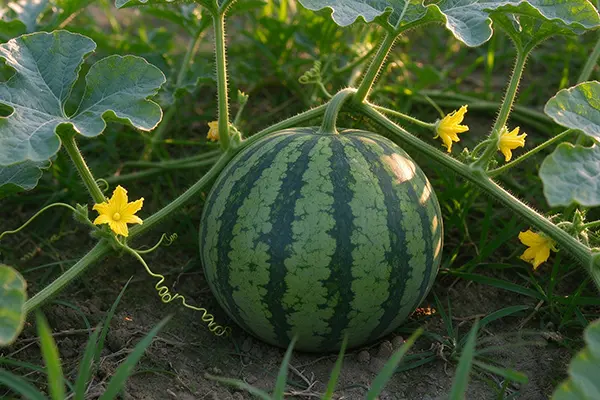
Start With Import Market Requirements Before Choosing Certifications
Mandatory Rules Versus Voluntary Certifications
Legal responsibilities and business tastes are often mixed up by buyers, so I suggest you separate them first. People who bring food into the US must follow FDA rules. The FDA Food Safety Modernization Act has a program called Foreign Supplier Verification Program (FSVP). Other things that the law requires are Prior Notice of each food shipment and building registration for the producer. The law says you have to do those things. Most of the time, labels that say FSSC 22000, Kosher, Halal, or organic are not needed. But stores and brand owners need them a lot of the time to make sales. Before you call any watermelon powder suppliers, write down both lists. This will help you be clear about what you want and save you weeks of back and forth.
How Destination Markets Change the Document List
A package going to Texas doesn't need the same forms as a package going to Dubai or Rotterdam. When it comes to living matter and contaminants, the European Union has its own rules. In places where Muslims are the majority, many stores need Halal certificates. In North America, stores often need Kosher certificates. Choose a service provider whose licenses cover all of the places you sell to if you do business in more than one. The FDA, FSSC 22000, HACCP, Kosher, Halal, the EU, and the USDA have all found that our watermelon powder is organic. This helps people who have more than one market they sell to. Check to see if each of your credentials works with the product code you want to buy.
Application Drives Certification Priority
For what they will be used, the papers that are the most important change. For someone who makes drinks, microbiology, stability, and color are all important. One supplement brand checks the label to make sure there are no heavy metals and that the supplement is pure. The size and amount of moisture are checked by the company that makes bars and snacks. The Citrullus lanatus plant's fruit is used to make our fine, light pink to light yellow watermelon powder. It is bought and put in various foods and drinks, such as nutrition bars, functional yogurts, pre-workout mixes, and hydration drinks. They will be able to find the right document package much faster if you tell them about the application first.
Core Food Safety Certifications Importers Should Evaluate
HACCP as the Starting Point
Most of the ways that food is kept safe start with HACCP. The General Principles of Food Hygiene of the Codex Alimentarius are then used. A plant has to think about the biological, chemical, and physical risks, set important limits, keep an eye on them, and keep track of them. When you clean, dry, mill, sieve, and seal watermelon powder, these risks show up. It is common for US inspectors to see systems that are based on HACCP. This is because the FDA's preventive controls rule, 21 CFR Part 117, also requires registered food plants to look at risks. There are more than just the certificate I look at when I visit a plant. I also ask to see the hazard analysis and monitoring logs.
FSSC 22000 and ISO 22000
FSSC 22000 adds to ISO 22000 by setting more plan rules and standards for programs that must be run first. One of the rules is set by the Global Food Safety Initiative (GFSI), and a lot of big buyers choose providers based on GFSI approval. It is likely that this credential will speed up the approval process if you sell to multinational companies. On the paperwork for our watermelon powder, both FSSC 22000 and HACCP are written down. The certificate should have the correct factory address, the type of product, and the most recent date. A certificate for one site doesn't cover another.
ISO 9001 and FDA Registration
ISO 9001 covers quality management, which includes keeping records, fixing problems, and handling concerns. It's not used instead of HACCP or FSSC 22000; I use it along with them. It doesn't prove that a product is safe. The FDA is also on our list of credentials. Facilities that handle food are not approved or certified by the FDA. The information that importers need to compare with what their customs broker and the FSVP program need is to ask for the registration information. When people bring watermelon powder into the country, they often mistakenly believe that a "FDA" mark means the powder is safe. That can't happen because of this check.
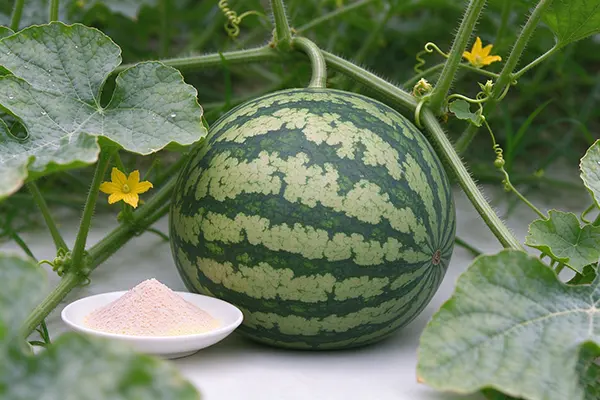
Product-Specific Documentation That May Matter More Than a Logo
Batch COA and HPLC Reports
It's not the same thing as a COA, which is about your whole lot. Ask for a COA that is special to the batch and talks about things like how it looks, how wet it is, the size of the particles, microbes, heavy metals, and pesticide residues. You don't have to trust what the label says to find the active amount of watermelon powder because L-citrulline is a key functional marker in it. Instead, you can use an HPLC report. KH keeps a full HPLC analysis record for every batch we make, and the products we sell are in line with USP and EP standards. Read the COA and spec sheet line by line before you accept a package.
Specification Sheet and Traceability Records
It should say in the item's description what kind of plant it comes from (Citrullus lanatus), what part of the plant it is (fruit), how it looks, how it was processed, if there are any carriers or additions, how long it will last, and how to store it. Carriers need to be taken care of. Some fruit powders have maltodextrin added to them to help them move around better. This changes the label and the amount of sugar they have. It should be possible to track every order of watermelon powder back to the place where the raw materials came from, the batch that was made, the lot that was packed, and the shipping papers. Because we can pick the type of plant, the land, and the time of gathering, we can track each batch back to where it came from. Find out how a complaint or refund would be handled.
Independent Laboratory Testing
Having someone else test it is a good way to add one more check. Data about suppliers is helpful. Any lab that has ISO/IEC 17025 certification has proven that it can do certain types of tests correctly. They often send samples to this kind of lab to check for heavy metals, chemical residues, bacteria, or just to make sure the goods are real. I believe you should test the first batch of watermelon powder that you sell to the public and then make a sampling plan based on risk and what people want. As a guide, keep some examples from each lot. In a few months, you can look back at the complaint sample and the notes you made in case you have a question.
Organic, Halal, Kosher, and Other Market-Claim Certifications
USDA Organic and EU Organic
Being "natural" does not mean being "organic." In the United States, you can only buy organic food from places that are approved by the USDA National Organic Program. Organic goods that are brought into the country must have an electronic NOP Import Certificate since March 19, 2024, according to the Strengthening Organic Enforcement. When it comes to organic farming, the EU sticks to its own rules. Organic watermelon powder is good for high-end brands and people who ask for it. For many recipes that don't say they are organic, regular watermelon powder is still a good choice. Our credentials say that we are both USDA and EU organic, and if you ask, we can show you the proof.
Kosher and Halal Certification
In North America, a lot of stores, snack makers, and people who buy food have Kosher certification. Approval for Halal helps with sales in places where Muslims are the majority and with food service users all over the world. Find out what kinds of things and websites each certificate covers. This is because they are both based on the tools used, the certification body, and the scope of the certificate. Make sure your customer will accept that certifier and check the date it expires. People further down the chain who sell the same thing to many people will find Kosher and Halal watermelon powder useful. It also keeps you from having to switch suppliers every time a new customer comes along with different needs.
Matching Credentials to Your Product Type
In general, I match qualifications with three types of buyers in this way.
- Sports nutrition and supplement brands: For sports diet and supplement brands, it's important to have a batch COA with HPLC data, heavy metal results, and a clear recipe list. You should only put USDA Organic, Kosher, or Halal on the label or in the store if they ask for it. The reason for this is that each claim has to be true for both the certificate and the delivered item.
- Beverage and food manufacturers: Companies that make food and drinks: When you make your own recipe, you should think about microbial reports, color stability, solubility, and FSSC 22000 or HACCP. Before letting a lot of them be made, test items that will be used in the end, like hydration drinks or healthy yogurts, because lab data can't replace a test run.
- Private label and OEM buyers: People who buy private labels or OEMs can ask for the full set of papers, which includes certificates, specs, details on how the items will be packed, and lot codes. You should make sure that every claim on your label is backed up by a valid certificate and transaction record before you print the art.
This way, the cost of approval stays in line with what the market needs.
How to Verify a Watermelon Powder Supplier and Avoid Costly Mistakes
Verifying Certificates and Facilities
First, check each certificate with the group that gave it to you. Check the scope, the business name, the address where the product was made, the certificate number, and the dates it is valid. Next, review the plant or read more about it to get a better idea of what it does. Check the quality of the water, the conditions for drying, the ability to find metals, the integrity of the packaging, the storage, and the ability to keep pests away. If the company that makes watermelon powder is honest, they will share their records right away and answer these questions. See how long it takes to respond to complaints, the MOQ, the capacity, the lead time, and the experience with exporting. Your production schedule can still be messed up by a certified plant that talks slowly.
Common Certification Mistakes
When people buy things, they often think that labels that say "natural," "pure," or "clean label" are regulated. They're not. Read the whole list. It has things like citric acid, sugar, maltodextrin, spices, colors, and things that keep the mix from sticking together. When it comes to suppliers, a certificate that is valid in one country might not meet the needs of another country or a store. Site badges and copied pictures don't show anything without the license. Certificates also don't promise a good batch, a mix without any ingredients, or enough supply. Before you print any labels for watermelon powder, make sure you have written proof of the name of the product, how it was processed, when it expires, a notice of change, and where the raw materials came from.
A Practical Checklist and KH Supply Terms
Before you ask for samples, make a list of your target market, application, chemical limits, testing limits, and a list of the certifications you want most. You should look at how it flows and dissolves in your own formula, as well as how it looks and smells. Before you make your order, you need to agree to the price, the wait time, the documents, the testing plan, and the minimum order number (MOQ). Before it ships and when it gets there, check the final COA, lot numbers, production dates, and storage conditions. Then, keep a sample as a guide. KH takes small test orders and samples, but the least amount that can be ordered is 25 kg, which is packed in drums of 25 kg. In-stock items and samples are sent out within 3–5 business days by express, air, or ocean. Our ready-to-ship watermelon powder also makes shipping quick.
Conclusion
Before you choose certifications for watermelon powder, you need to know where the powder is going. People who bring goods into the US must follow the rules for FDA registration, Prior Notice, and FSVP. There may be other needs, such as FSSC 22000, HACCP, ISO 9001, Kosher, Halal, and organic labels, based on what the customer wants and how the product will be used. Food safety systems show that a plant is responsible for risks, but the only way to be sure of the lot you get is to have batch-specific COAs, HPLC data, specifications, and records of traceability. If something is said to be organic, it needs to have the right certificates and the right forms for importation. Supplier checks, such as issuer verification, plant review, independent testing, and sample trials in the final application, can help lower risk. That's not the end of your search for the right package for your label claims, market, and use.
FAQ
Which certification matters most for watermelon powder imports?
Not a single certificate wins every time. I start with a food safety system based on HACCP or FSSC 22000 when I bring something into the US. When I'm done, I look at my FDA registration and a batch COA. If the customer asks for it, Kosher, Halal, or organic paper should be used.
Does an organic claim for watermelon powder need formal certification?
Yes. Organic goods must come from a certified farm in order to be sold in the US. Goods from other countries need a NOP Import Certificate in order to be sold in the US. That's not what the word "natural" means. What does the certificate cover? What is the name of the object on the certificate? How long is it good for?
Which documents should accompany a bulk shipment?
Ask for the COA, the list of ingredients and any allergens, the packing list, information on where the product came from, how long it will last, and any certificates that back up the claim. Our team can go over the whole list of papers for your market with you, and each batch will come with an HPLC report.
Request a Verified Watermelon Powder Specification and Certification Package from KH
Want a business that can back up everything they say about their watermelon powder? Some of the things that KH offers are samples, small test orders, ready stock, and a commercial minimum order quantity (MOQ) of 25 kg. They ship by express, air, or water and pack 25 kg per drum. Our team will send you certificates and a batch COA to look over after you send an email to info@kingherbs.com with your application and the people you want to reach.
References
1. U.S. Food and Drug Administration, FSMA Final Rule on Foreign Supplier Verification Programs for Importers of Food for Humans and Animals (2015)
2. Codex Alimentarius Commission, General Principles of Food Hygiene, CXC 1-1969 (2020)
3. USDA Agricultural Marketing Service, Strengthening Organic Enforcement Final Rule (2023)
4. International Organization for Standardization, ISO 22000:2018 Food Safety Management Systems (2018)
5. Foundation FSSC, FSSC 22000 Scheme Version 6 (2023)
6. International Organization for Standardization, ISO/IEC 17025:2017 General Requirements for the Competence of Testing and Calibration Laboratories (2017)
Send Inquiry
_1782975403669.webp "Cinnamon Oil")
Related Industry Knowledge
- Is Isatis Root Extract Safe for Skincare Applications?
- Is Apple Root Extract Safe for Sensitive Skin?
- Best Tart Cherry Extract: A Buyer’s Guide to Quality and Specs
- Artemisia Argyi Extract: A Smart Choice for Clean Beauty
- Astaxanthin Powder And Oil Factory Direct Supply for Brands
- Can Passionflower Extract Powder Ease Nervous Tension Quickly?
- The Skin-Boosting Benefits of Silica and Bamboo Extract
- 3 Surprising Passionflower Extract Powder Benefits for Holistic Wellbeing
- Mango Leaf Extract Powder Market Trends: What to Expect?
- Can Lespedeza Capitata Extract Promote Healthy Fluid Balance?