
Is Apple Root Extract Safe for Sensitive Skin?
Nov 2, 2026
Some formulations using apple root extract may work for sensitive skin, but I can't say it's safe for everyone. Safety relies on the purity of the extract, the amount of use, and everything else in the completed product, such as preservatives, scent, acids, and pH. Natural does not mean kind, since many botanical substances may cause reactions in sensitive skin. Better answers come from patch testing, batch-level HPLC data, and finished-product safety assessments—not marketing speak. Here I describe how to appraise apple root extract, what to ask suppliers, and how our team at KH assists customers who require verified, traceable material.
What Is Apple Root Extract and Why Is It Used in Skincare?
Botanical Identity and Source
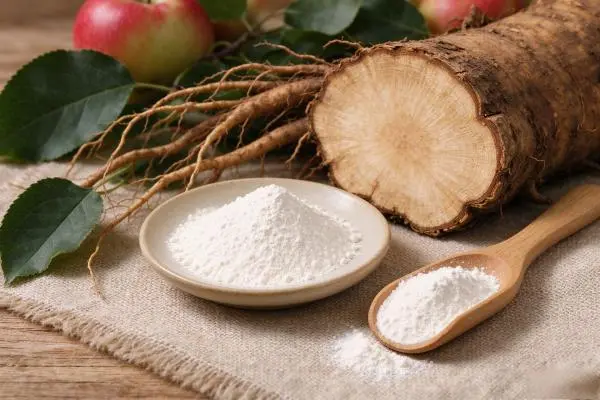
Apple root extract originates from the root of the apple tree. We utilize only the root of the plant Malus pumila Mill. in our work. The composition depends on the plant species, where it is grown, when it is harvested, the solvent used, and the preparation method. If you want to purchase anything, make sure you know the INCI label, the plant part, the extraction process, the carrier, and the name of the species. In a 2010 review article in the journal Phytochemistry, the authors discuss phloridzin, a dihydrochalcone glycoside, as a medicine that is unique to apple tree tissue. It has a sugar ingredient called phloretin. A mere "apple-derived" label doesn't tell us anything; HPLC is considerably more beneficial for checking both markers.
What Makes It Different From Other Apple-Derived Ingredients
They are all linked by the one word "apple". Most of the sugars and tannins in berry juice are in the peel or flesh. Seed oil is a fat. It is composed of numerous items. No roots were dug up to create the apple stem cells. They are from developing cells of plants that go into them. The powder contains phloridzin and phloretin from apple root extract. Before you purchase, ensure sure the COA has the correct INCI name, plant part, and marker compounds. If the two don't match, there's a risk the color, solubility, scent and irritation may alter. This implies that a trial batch may be squandered.
Where Formulators Use It
Apple root extract is used in skincare products to aid with antioxidants and improve the appearance of the skin. The reduction in tyrosinase is because it is used in cosmetics; our product description explains. A lot of individuals use serums, creams, and masks. For delicate skin lines, I believe you should use moderate wording like "supports skin conditioning" if you don't have clinical proof to back up bolder claims. The same powder is used to manufacture medications, health supplements, and helpful meals. So shoppers could see the same ingredient in many products.
Is Apple Root Extract Safe for Sensitive Skin?
Irritation vs. Allergic Contact Dermatitis
Irritation is not the same thing as an allergy. Anger can happen to anyone, and it shows up faster on skin that isn't as strong as it usually is, as redness, stinging, or burning. The skin becoming sensitive is the first sign that it's there, and it usually shows up 24 to 72 hours after being exposed. There was a review of sensitive skin by Zoe Draelos in the American Journal of Contact Dermatitis in 1997. It looked at how doctors diagnose and talk about it. An herbal powder can make either reaction happen. Alcohols, acids, and essential oils that are close by can also do this. This is why I look at the whole recipe, not just one part of it.
Evidence That Matters
Health and safety data that comes from natural sources is not safety data. I look for toxicological data, repeat-insult patch tests on humans, dermatological evaluation, sensitization studies, stability results, and microbiological controls when someone makes a claim about having sensitive skin. This law from 2022 in the US says that products need to have enough proof that they are safe. This proof keeps your business safe too. Each batch gets an HPLC report from us, but the tests on the end product are done by the brand that sells the formula. We don't offer a broad guarantee for sensitive skin with any apple root extract because we're not an honest business.
Potential Benefits and Possible Risks
Phloretin was found to be a strong antioxidant in a study that came out in Biochemical and Biophysical Research Communications in 2002. In a broader sense, its effect on living things is summed up in a 2017 study in this journal. It's good to know that antioxidants are good for you, but this is not the same as clinical proof on sensitive skin. The risk goes up when it is used a lot, when standards aren't followed consistently, when solvents, pesticides, heavy metals, contamination, or bad storage are used. The kind of goods is also important. Leave-on serums stay on the skin for hours, while rinse-off washes only touch it for a short time. Start with the level that doesn't work the best and work your way up to the end result.
How to Evaluate and Use Apple Root Extract More Safely
Review the Documents First
This is what you should do first: fill out the paperwork. Find out what kind of plant part it is, where it came from, how it was extracted, what kind of material it is made of, how it was transported, and how it was changed. Then read the COA, SDS, TDS, specification sheet, contaminant declarations, microbiological results, stability data, shelf life, and storage conditions. A clear HPLC report for phloridzin and phloretin shows what's in the powder. It's less expensive to fix the mistakes in this file now than after the project has grown for apple root extract.
Test the Extract in Your Finished Formula
Once the paperwork is okay, test the powder in your real base. Look at the pH level, how well it dissolves, how thick it is, and whether it can work with preservatives. Watch out for reactions with acids, retinoids, vitamin C, peptides, detergents, and emulsifiers. Having a lot of active ingredients can make skin that is already sensitive more likely to get hurt. We get rid of it with either clean water or food-safe ethanol. This helps with the dispersion tests because the powder breaks down quickly. For people with sensitive skin, the final product may also need to be tested in a lab, on a patch of skin, and by a doctor.
Safer Use and Patch Testing
A safer recipe starts out small. Lessen the amount of fragrances you use and stick to the lowest concentration that works. After making a stable base, add humectants, emollients, and occlusives to make it stronger. In charge of the pH, storage, and packaging. Put a small amount on a small area, like the inside of your forearm, and watch for reactions right away and over the next 24 to 48 hours. This is called a patch test. It should be stopped if the burning, swelling, rash, or redness doesn't go away. Always check the name of things, keep track of deals, limit contaminants, and know what to do when something doesn't meet your needs.
How to Choose an Apple Root Extract Supplier for B2B Procurement
Criteria Beyond Price
Price and color samples don't tell you much. Check how easy it is to keep track of plants and locations, how consistent the extraction is, how batches are made the same, the quality control systems, the availability of expert support, the minimum order quantity (MOQ), the wait time, the packaging, and the experience with exporting. You can also look at different provider types. The people who grow the plants locally know the area very well, big manufacturers offer standard output, contract manufacturers can make finished doses, and trading companies need more proof of origin. Find out about carriers, pesticide and heavy metal testing, marker compounds, OEM services, payment terms, shelf life, and solvents. Based on your needs in R&D, production, or private name, choose the best choice for apple root extract.
KH Apple Root Extract Specifications
These are the questions that buyers usually have. Our apple root extract is made from the root of the Malus pumila Mill tree. It is a fine, off-white to white powder. The HPLC test showed that it had 90% to 98% phloridzin and 80% to 98% phloretin. To get the stuff out, we only use pure water or food-grade ethanol, never any dangerous solvents. The following are some of the certifications: FDA, KOSHER, HALAL, HACCP, FSSC22000, ISO9001, and ORGANIC (EU). We send drums that hold 25 kg by express, air, or sea. You can buy a small amount as a test or get samples. Orders for business use that are bigger start at 25 kg.
Traceability, Speed, and Technical Support
Since 1996, Kingherbs Limited has been making plant-based products. To keep uniqueness and active content safe, we work with growing grounds and keep an eye on the type of plant, the land, and the time of harvest. There is a full HPLC report for every batch. It usually takes 3 to 5 business days to ship samples and regular items that are in stock. We have this extract in stock and can ship it right away. Our application laboratory helps mix things, make changes to formulas, and make sure that drinks, sweets, tablets, and skin care systems are safe. You can also ask us to make functions or ratios for you. We only sell finished goods that come in soft capsules and meet USP and EP standards.
Regulatory and Approval Decisions for U.S. Buyers
U.S. Regulatory Basics
The FDA does not check most cosmetics or the things that are in them before they are sold in the US. Color chemicals are the only ones that don't count. Companies still have to follow rules about labels and safety. The Modernization of Cosmetics Regulation Act, which was signed into law in December 2022, made it necessary to register facilities, list products, show proof of safety, and report adverse events. Compliance isn't based on what the supplier says, but on what you want to sell and who you want to sell it to. Ask for proof that the product meets INCI standards, along with its specs, COA, SDS, allergy and contaminant statements, origin records, and any vegan or non-animal testing statements you may need for apple root extract.
Claims Need Matching Evidence
A sign that says "for sensitive skin" needs to show that the product is safe for sensitive skin, like a dermatologist's report or the results of a patch test. If a product says it can treat eczema, rosacea, acne, or other skin problems, it may be pushed toward drug regulation, which has different duties. When you make claims about food and supplements, the rules are different, so make sure that the language you use for each line of products stays in its own category. Do not use harsh language, and make sure that the artwork has been approved by the people in charge of rules before you begin. Even though our proof backs up your file, it's up to the brand owner to prove the claim.
Approve, Review, or Reject
Decisions are always made in the same way: documents are looked over, samples are looked over, a pilot version is made, it is tested for safety, and then it is approved for sale. Sign off on the authorization when the identification, plant part, contaminant, and microbiological data look good. The recipe's stability and safety tests and the supplier's capacity should also look good. If there aren't many details about how safe the product is for people, how the carrier or solvent works, how the results of the test vary from lot to lot, or marketing claims that aren't backed up by proof, you should take a break and look at them again. If you can't track it, if batch changes aren't clear, if you're worried about contamination, if samples or files are turned down, or if finished-product tests keep giving you trouble, you should reject it.
Conclusion
Apple root extract can be used in skin care products, but the finished formula, not a natural label, is what proves it. The story explained that the phloridzin and phloretin in the extract come from plant roots, which is different from stem cell ingredients, seed oil, and fruit extracts. As you may know, irritation and allergy are not the same thing. It depends on how much is used, the chemicals, the pH, and other factors. Patch tests and medical evaluations back up claims that phloretin is safe for people with sensitive skin. An antioxidant study on the drug supports these claims. When buyers check documents, see if they work together, confirm the seller, and do U.S. regulatory checks, they can confidently accept, review, or reject a lot of apple root extract. A qualification process with steps is the best answer.
FAQ
Is natural origin enough to call apple root extract safe?
Not at all. Even natural ingredients can irritate or make skin red. It is necessary to test the finished item since its safety relies on the recipe, how it is used, the solvents, and everything else for apple root extract.
Is apple root extract the same as apple fruit extract?
Our extract only comes from the root of Malus pumila Mill. to make sure it has the right amount of phloretin and phloridzin. There are different things that make up fruit products.
Which documents should a supplier provide?
Find out about contaminants and microbes and get a COA, an SDS, a TDS, a specification sheet, and more. This is a full HPLC report that we send with every run.
Can it support organic product development?
This item is certified as ORGANIC in both the EU and the USA. Your product is finished, but it still needs to be checked to make sure it meets organic standards.
How should I store it?
Follow what the TDS says. Put the powder somewhere dark, warm, damp, oxygenated, and free of microbes that could make it dirty.
Request Apple Root Extract Samples From KH
Want to buy apple root extract for sale from a business that will let you see documents before you sign up? KH has a minimum order quantity (MOQ) of 25 kg for business orders. They also offer samples, small trial orders, and products that are compliant with USP and EP. Tell us about your use in an email to info@kingherbs.com. We'll get back to you with more information, a lead time, and a price quote.
References
1. Diabetes/Metabolism Research and Reviews, 2005. "Phlorizin: a review."
2. Phytochemistry, 2010. "Phloridzin: Biosynthesis, distribution and physiological relevance in plants."
3. Biochemical and Biophysical Research Communications, 2002. "The antioxidant activity of phloretin: the disclosure of a new antioxidant pharmacophore in flavonoids."
4. Phytochemistry Reviews, 2017. "Health effects of phloretin: from chemistry to medicine."
5. American Journal of Contact Dermatitis, 1997. "Sensitive skin: perceptions, evaluation, and treatment."
6. U.S. Food and Drug Administration, 2022. "Modernization of Cosmetics Regulation Act of 2022 (MoCRA)."
Send Inquiry
Related Industry Knowledge
- OEM Yucca Extract: Custom Formulation and Packaging Guide
- Why Choose Tart Cherry Extract for Private Label Products?
- Bamboo Leaf Extract Benefits: Everything You Need to Know
- Can Bamboo Leaf Extract Improve Hair Strength and Growth?
- Can White Willow Bark Extract Powder Help Reduce Chronic Discomfort?
- About White Willow Bark Extract- Beauty Benefits
- Premium Couch Grass Rhizome Extract for Urinary Tract Support
- Watermelon Powder: Heart Health & Hydration Support
- How Mulberry Leaf Extract Powder Supports Glycemic Response?
- Mulberry Leaf Extract Powder: A Key Ingredient in Metabolic Health