_1762508637542.webp)
Mango Leaf Extract Powder Market Trends: What to Expect?
May 9, 2026
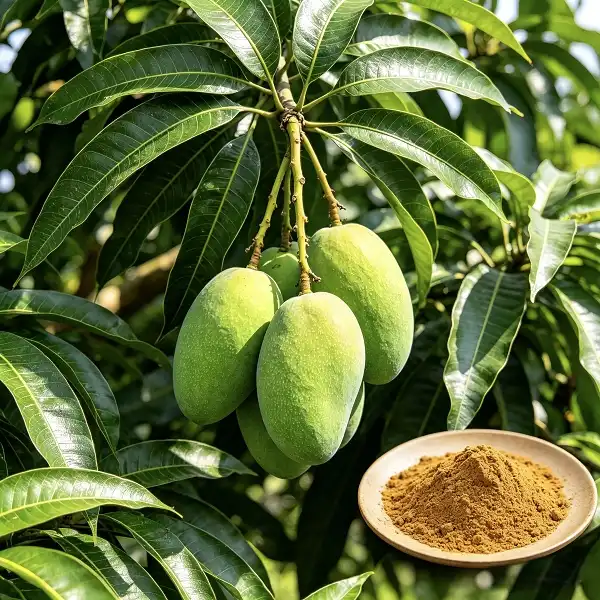
The market for mango leaf extract powder is growing very quickly because purchasing managers Mango Leaf Extract Powder and research and development directors are looking for natural ingredients that have been proven to work by science. This fine brownish-yellow powder comes from the plant Mangifera indica L. It is standardised to have a Mangiferin content range from 10% to 95%. It is quickly becoming an important ingredient in dietary supplements, cosmetics, and medicines. In North America and Europe, where clean label and regulatory compliance are important, demand is growing quickly for this botanical extract. It is now seen as a top choice for brands that want to improve metabolic health, brain function, and anti-ageing.
Current Market Landscape and Key Drivers
The global botanical extract sector is experiencing transformative growth, with mango leaf powder emerging as a high-value ingredient. Market analysts project steady expansion through 2030, fueled by consumer preference for plant-based actives and regulatory shifts favouring natural over synthetic compounds.
Rising Demand Across Multiple Industries
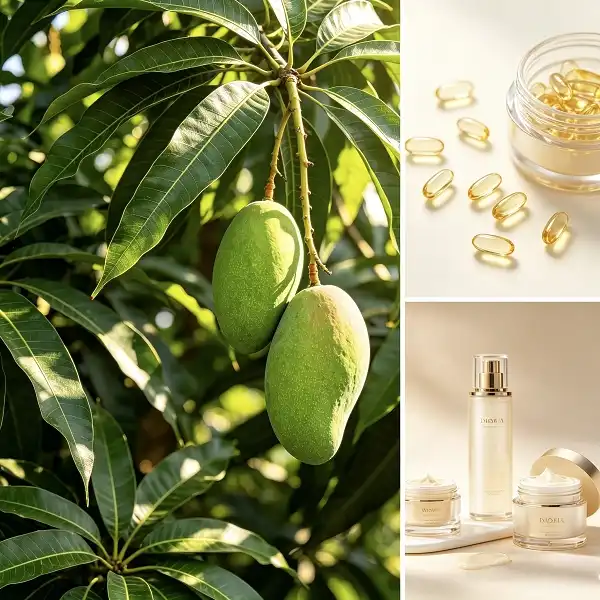
Nutraceutical companies are adding mango leaf extracts to more and more brain boosters and metabolic health goods. Mangiferin's COMT inhibition method increases dopamine activity without putting stress on the heart, which is a major benefit for e-sports nutrition and nootropic stacks. Pharmaceutical companies use standardised extracts in diabetes medicines by taking advantage of the compound's ability to stop alpha-glucosidase from working. Cosmetic makers like it because it protects against UV rays and elastase, especially in high-end anti-ageing serums that need stable, water-soluble antioxidants. The food and drink industry is becoming more interested in functional teas and health shots. Brands like how mildly bitter the ingredient tastes and how easily it dissolves when pure water or edible ethanol is used to remove it. This solvent-safe processing meets the needs of clean-label laws and USDA Organic certification, easing concerns about residual solvents and customer safety in the buying process.
Regional Growth Patterns and Sourcing Dynamics
North American buyers give more weight to providers with FSSC22000 and FDA-registered facilities, which shows that they have higher standards for quality control. European markets need EU Organic certification, along with batch-specific COAs that show the amount of heavy metals and microbes present. The Asia-Pacific region is both a source of raw materials and a new market for consumers. Countries like India and Thailand are building vertically integrated supply chains that include everything from farming to extraction. These days, procurement managers judge supplier partnerships based on how well they can track materials. Leading companies like Kingherbs Limited set themselves apart by forming relationships with planting bases and controlling the soil's composition, harvest timing, and choice of variety. This control from seed to powder gets rid of the quality changes that happen when you buy on the spot market, where seasonal changes and middlemen handling can make active ingredients less consistent.
Emerging Trends and Technological Innovations
Innovation cycles are reshaping how botanical extracts reach market-ready Mango Leaf Extract Powder specifications. Technical advancements address core pain points: extraction efficiency, standardisation precision, and sustainability metrics.
Advanced Extraction Technologies
Modern extraction facilities use supercritical CO2 and pressurised liquid extraction methods to get the right amount of Mangiferin while keeping thermolabile compounds safe. In terms of yield efficiency and environmental impact, these ways are better than traditional ethanol maceration. Suppliers who use HPLC verification at multiple stages of production make sure that consistency between batches is met, which is a must for pharmaceutical-grade uses. Organic makers are increasingly turning to water-based extraction methods. This method completely gets rid of the problem of solvent waste, making extracts that dissolve quickly and are perfect for use in drinks and gummies. The powders that were made have great colour stability and low hygroscopicity, which means they don't absorb water as easily and can be stored at room temperature for longer.
Customized Formulation Capabilities
More and more, contract makers want customised manganese to lysine ratios for certain health claims. A 40% mangiferin specification could be used for blood sugar management supplements that need exact dosing, and 95% concentrates are used for pharmaceutical research. The application laboratory at Kingherbs helps with formulating better pills, capsules, liquid suspensions, and topical emulsions. It also gives information on how stable the formulations are under conditions that speed up ageing. Combination extracts are a new type of product. Formulators mix mango leaf powder with either green tea catechins or turmeric curcuminoids to make blends that work well together and target multiple biochemical pathways. For these custom ratios, sellers need to know how to mix ingredients and do the maths to make sure that the parts work well together by testing for dissolution and bioavailability.
Regulatory Evolution and Certification Priorities
Certification requirements are getting stricter. Buyers from the Middle East and Southeast Asia can get into more markets thanks to KOSHER and HALAL approvals. Both USDA and EU guidelines for organic certification require proof of pesticide-free farming and non-GMO verification. ISO9001 quality management systems and HACCP methods stop being unique and become standard. Risks of adulteration are reduced by third-party testing in independent labs. Buyers are more likely to trust COAs that prove identity through TLC fingerprinting, quantitative HPLC analysis, and heavy metal screening via ICP-MS. Due to lower procurement risk, suppliers who offer blockchain-based tracking systems and access to audits every three months command higher prices.
Procurement Insights for B2B Clients
Effective sourcing strategies balance quality assurance, cost management, and supply continuity. Procurement managers navigate complex decision matrices involving technical specifications, supplier capabilities, and logistical considerations.
Quality Verification Frameworks
There are many things that need to be looked at when evaluating possible suppliers. The source of the raw material has a big effect on its active content. For example, leaves picked when the plant is asleep produce different amounts of mangiferin. Reliable suppliers keep separate growing areas with agronomic oversight, soil testing routines, and records of the harvest window. The extraction method must be clear. Request thorough process flow diagrams that show the types of solvents, the steps for concentration, and the conditions for drying. Spray drying makes particles that are smaller and easier to mix than tray drying, which changes how well the mixture works. Moisture content below 5% stops microbes from growing during storage, and bulk density standards affect how much it costs to package and ship. Chromatographic profiles, not just summary percentages, should be included in analytical documentation. The fact that HPLC chromatograms show that the mangiferin spot is pure and there are no impurities shows that the analysis was done correctly. According to ICH guidelines, stability data collected at 40°C/75% RH for six months shows that the product is suitable for tropical distribution routes and has a longer shelf life.
Pricing Dynamics and Negotiation Strategies
Mangiferin content directly correlates with pricing—95% concentrates command 3-4x premiums over 10% ratio extracts. Bulk purchasing triggers tiered pricing, with 100kg orders typically securing 12-18% discounts versus 25kg minimums. Annual contracts with quarterly deliveries lock in favourable rates while mitigating seasonality impacts on raw material costs. Payment terms significantly affect total landed costs. Net-60 terms may offset slightly higher unit prices through improved cash flow management. Request sample quantities (1-5kg) before committing to commercial MOQs—this investment validates compatibility with existing formulations and quality control protocols. Transportation mode selection balances speed and cost. Air freight delivers 5-7 day lead times suitable for urgent production schedules, while ocean shipping reduces per-kilo costs by 60-70% for planned inventory builds. Suppliers maintaining ready stock inventories enable hybrid approaches—air shipping initial batches while ocean shipments replenish buffer stocks.
Supplier Evaluation Criteria
Beyond certifications and pricing, assess operational maturity Mango Leaf Extract Powder indicators. Production capacity should exceed your projected annual consumption by 30-40%, preventing allocation conflicts during peak seasons. Backup raw material sources and redundant extraction lines demonstrate business continuity planning. Technical support capabilities differentiate commodity suppliers from strategic partners. Can the supplier provide formulation guidance for novel delivery systems? Do they maintain application labs for stability testing under your specific pH and temperature conditions? Kingherbs offers compounding advice spanning beverage matrices, tablet compression parameters, and cosmetic emulsion compatibility—services that accelerate product development cycles and reduce R&D costs. Customer references within your industry vertical provide unfiltered performance insights. Inquire about complaint resolution responsiveness, batch rejection rates, and documentation accuracy. Long-term partnerships hinge on communication quality during supply chain disruptions—suppliers proactively notifying potential delays demonstrate operational transparency valued during capacity planning.
Market Challenges and Risk Mitigation
Despite promising growth trajectories, procurement teams confront obstacles requiring proactive management strategies. Understanding vulnerabilities enables the development of resilient sourcing frameworks.
Raw Material Variability and Quality Consistency
Agricultural inputs inherently carry variability risks. Monsoonal precipitation patterns, soil nutrient depletion, and pest pressures affect leaf phytochemical profiles. A supplier harvesting from multiple smallholder farms without aggregation controls may deliver batches with 15-30% mangiferin variation despite contractual 20% specifications. Mitigation begins with supplier audits examining cultivation partnerships. Preferred suppliers maintain multi-year contracts with dedicated grower cooperatives, providing agricultural inputs and technical training to standardise practices. Post-harvest handling protocols—shade drying versus direct sun exposure, storage humidity controls—critically influence downstream extract quality. Implement incoming raw material testing beyond supplier COAs. Rapid TLC screening identifies obvious substitutions or contamination, while periodic HPLC verification against certified reference standards ensures compliance. Establish acceptance criteria with tolerance bands (e.g., 18-22% mangiferin for a 20% specification) accounting for analytical uncertainty.
Adulteration and Counterfeit Products
Economic adulteration remains prevalent in botanical markets. Lower-cost materials may be spiked with synthetic mangiferin or bulked with maltodextrin to achieve target assay values while reducing production costs. Microscopic examination revealing the absence of characteristic leaf trichomes or cellular structures flags potential substitutions. Trusted certification schemes reduce but don't eliminate risks. Cross-reference supplier certifications through issuing body databases—fraudulent certificates circulate in less-regulated markets. Third-party laboratory testing through independent facilities (not those recommended by the supplier) provides unbiased verification. Retain representative samples from each batch for six months post-consumption, enabling retrospective testing if formulation issues arise.
Supply Chain Disruptions and Inventory Strategy
Geopolitical tensions, port congestion, and climate events introduce supply continuity risks. Single-source dependencies create vulnerabilities—a typhoon affecting a primary cultivation region can halt production for entire quarters. Dual-sourcing strategies with geographically dispersed suppliers provide redundancy, though quality bridging studies may be required to validate material equivalence. Safety stock calculations should account for extended lead times. A 90-day inventory buffer accommodates ocean transit (30 days), customs clearance (7-14 days), and incoming quality testing (5-7 days), plus unexpected delays. Consignment inventory agreements with suppliers transfer holding costs while ensuring immediate availability, though minimum annual purchase commitments typically apply. Flexible formulation strategies reduce dependency on single ingredients. Developing backup formulations using alternative botanical extracts with overlapping health benefits enables production continuity during shortages. Document these contingency plans within quality management systems, including comparative stability and efficacy data supporting substitutions.
Future Outlook and Strategic Recommendations
Market trajectories point toward continued expansion as scientific validation accumulates for Mango Leaf Extract Powder and consumer awareness deepens. Procurement strategies embracing innovation and sustainability will capture competitive advantages.
Research-Driven Market Expansion
Ongoing clinical studies exploring mangiferin's neuroprotective properties and gut microbiome modulation effects will unlock new application territories. Cognitive health supplements targeting ageing populations represent high-growth segments where differentiated ingredients command premium positioning. Early partnerships with suppliers offering research-grade materials and analytical support position brands as category leaders. Pharmaceutical pipeline developments may transition certain standardised extracts from dietary supplements to regulated medicines. Suppliers maintaining GMP facilities compliant with pharmaceutical manufacturing standards enable seamless transitions should regulatory classifications change. This forward-looking infrastructure investment protects against future sourcing disruptions when ingredient classifications evolve.
Sustainability as Competitive Differentiation
ESG requirements are changing the ways that buying is evaluated. Calculations of carbon footprint, water usage, and fair labour certifications are becoming more and more important in choosing a provider. Buyers look for partners that use regenerative agriculture, invest in community development in sourcing regions, and report on their environmental impact in a clear way. Kingherbs' seed-to-powder traceability model is a great example of sustainable practices; controlled cultivation cuts down on the need for pesticides, and long-term relationships with growers ensure fair prices and social stability. Organic certifications that are confirmed by yearly audits show that the company cares about the environment and meets both customer standards and corporate sustainability goals.
Strategic Partnership Development
Transactional relationships with suppliers are giving way to partnerships where both parties work together. When suppliers invest in custom extraction methods or new delivery systems as part of a co-development agreement, both parties benefit. Exclusive supply agreements for unique blends protect suppliers' competitive moats and give them a way to predict demand for capacity planning. Purchasing managers should look for suppliers that offer more than just selling ingredients. Kingherbs lets you buy additional extracts, vitamins, and amino acids all in one place, which makes managing vendors easier. Instead of just selling goods, suppliers become strategic partners by giving advice on how to make formulations better, helping with regulatory paperwork, and coordinating logistics.
Conclusion
The market for mango leaf extract powder offers great chances for procurement professionals who know their way around botanical ingredients. Mangiferin's standardised content, wide range of uses in cosmetics and nutraceuticals, and growing scientific support make it a product that will continue to be in high demand. To be successful, you need to use thorough quality assurance methods to evaluate suppliers, know how prices change over time, and put in place risk mitigation strategies that deal with changing raw materials and weak spots in the supply chain. A market that is becoming more quality-conscious will give procurement teams that prioritise certified suppliers with traceability infrastructure, technical support skills, and sustainability commitments a competitive edge.
FAQ
1. What are the scientifically validated health benefits?
Research confirms mangiferin's hepatoprotective effects through multiple mechanisms—reducing fatty liver markers, lowering inflammatory cytokines, and supporting liver cell regeneration. Clinical studies demonstrate respiratory benefits, particularly reducing chronic bronchitis symptoms via airway inflammation reduction. Antioxidant properties scavenge free radicals, while antiviral activity targets herpes simplex and other pathogens. Metabolic benefits include blood sugar regulation through enzyme inhibition and weight management support via AMPK pathway activation.
2. How can buyers verify product quality and purity?
Request batch-specific Certificates of Analysis documenting HPLC-verified mangiferin content, heavy metal screening, microbial counts, and pesticide residue testing. Examine chromatographic profiles for adulterant absence. Verify supplier certifications through issuing body databases—ISO9001, FSSC22000, Organic certifications should be current and facility-specific. Conduct incoming raw material testing using TLC or HPLC against certified reference standards. Microscopic examination confirms botanical identity through characteristic cellular structures.
3. What are typical lead times and minimum order quantities?
Sample quantities (1-5kg) and trial orders ship within 3-5 business days from suppliers maintaining ready stock. Commercial minimum order quantities typically start at 25kg drums, with bulk discounts applying at 100kg, 500kg, and 1000kg+ thresholds. Ocean freight requires 30-45 days total lead time, including transit and customs clearance, while air shipping delivers within 7-10 days. Establish blanket purchase orders with quarterly releases to secure favourable pricing while managing inventory costs.
Partner with a Trusted Mango Leaf Extract Powder Supplier
KH (Kingherbs Limited) stands ready to support your botanical ingredient, Mango Leaf Extract Powder, with over 25 years of manufacturing expertise and comprehensive quality infrastructure. Our mango leaf extract powder, standardised to your required Mangiferin specifications (10%-95%), ships from ready stock with full analytical documentation and certification packages including ISO9001, FSSC22000, USDA Organic, and EU Organic credentials. We offer flexible order quantities starting with samples for formulation trials, backed by application laboratory support for compounding optimisation across capsules, tablets, beverages, and cosmetic systems. Contact our technical team at info@kingherbs.com to request COAs, discuss custom ratio formulations, or obtain competitive quotations for your bulk purchasing requirements. Discover why leading nutraceutical brands and contract manufacturers rely on KH as their preferred mango leaf extract powder manufacturer for quality consistency and supply reliability.
References
1. Pardo-Andreu GL, et al. "Pharmacological and toxicological effects of mangiferin: A comprehensive review." Phytotherapy Research, 2021, 35(8): 4328-4350.
2. Rodeiro I, Cancino L, González JE, et al. "Evaluation of the genotoxic potential of Mangifera indica L. extract (Vimang), a new antioxidant product with antitumoral activity." Food and Chemical Toxicology, 2006, 44(10): 1707-1713.
3. Saleh MSM, Siddiqui MJ, Mat So'ad SZ, et al. "Correlation of FT-IR fingerprint and α-glucosidase inhibitory activity of salak (Salacca zalacca) fruit extracts utilising orthogonal partial least square." Molecules, 2018, 23(6): 1434.
4. Gold-Smith F, Fernandez A, Bishop K. "Mangiferin and Cancer: Mechanisms of Action." Nutrients, 2016, 8(7): 396.
5. Imran M, Arshad MS, Butt MS, et al. "Mangiferin: a natural miracle bioactive compound against lifestyle-related disorders." Lipids in Health and Disease, 2017, 16(1): 84.
6. Rivera DG, Balmaseda IH, León AA, et al. "Anti-allergic properties of Mangifera indica L. extract (Vimang) and contribution of its glucosylxanthone mangiferin." Journal of Pharmacy and Pharmacology, 2006, 58(3): 385-392.
Send Inquiry
Related Industry Knowledge
- From Stress Relief to Sleep Support: Valerian Root Extract Powder
- What Sets Premium Watermelon Powder Apart?
- Can Couch Grass Rhizome Extract Enhance Water Balance?
- Why Is Macleaya Cordata Extract Popular in Animal Nutrition?
- Can Vine Tea Extract Help Regulate Blood Sugar?
- How Couch Grass Rhizome Extract Boosts Kidney Function?
- Macleaya Cordata Extract: Natural Anti-Inflammatory Ingredient
- Innovative Mango Leaf Extract Powder Applications in Supplements
- Is White Paeony Extract Safe for Daily Use?
- Can Polygonum Cuspidatum Extract Help Reduce Inflammation?