
Is Isatis Root Extract Safe for Skincare Applications?
Nov 10, 2026
If a company considers Isatis root extract an ingredient that has to be validated and not a pre-approved safe option, then it might be appropriate for skincare. Safety is based on the proven source of the plant, the extraction technique, the amount of use, and the irritation and sensitization findings of the completed product. Radix Isatis research mostly focuses on oral and lab-based studies; hence topical safety requires product-level testing. In this tutorial, I explain what the ingredient could be doing, the hazards to watch out for, and how B2B customers should assess a supplier before placing a purchase.
What Does Isatis Root Extract Do in Skincare?
Cosmetic Applications Potential
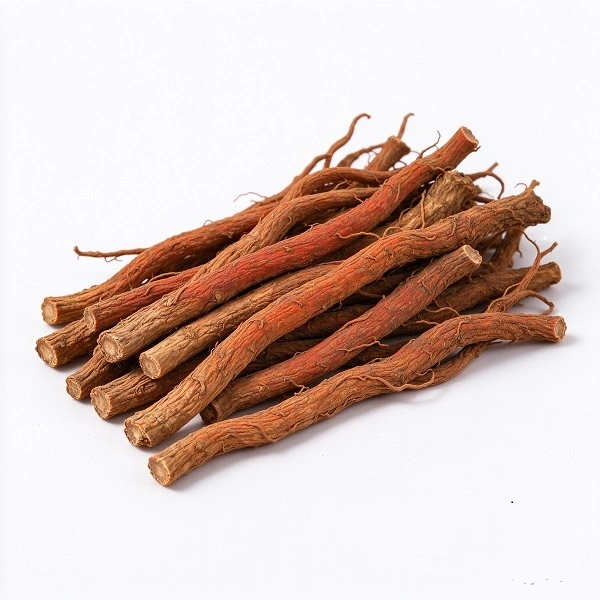
Radix Isatidis is the dried root that is used in traditional Chinese medicine. It is said to contain acids, flavonoids, alkaloids, and organic acids, among other things. Isatis Root Extract may help skin that looks or feels stressed by cooling it down, calming it down, and protecting it from free radicals. These are not proven results but suggestions on how to create things. Buyers will also find a variety of forms including root powder, liquid extract, concentrated extract, and standardized extract, each of which acts differently in a formulation. Traditional usage is a wonderful tale, but it does not in itself establish topical safety or effectiveness. Brands should substantiate any skin benefit claims with their own completed product data.
Factors and Variables Affecting Performance
Isatis species include aspartic acid, flavonoids, phenolic compounds, and indole-related chemicals. Their amounts vary depending on where they are cultivated, harvest time, moisture, temperature, drying period, and storage conditions. That's why two items branded as isatis root extract may perform differently in the same cream. Our ratio extract shows you how much root in raw form went into the powder, but a ratio alone doesn't provide marker presence. Ask which marker chemical applies to the grade, which test technique applies to it, and what the batch result reflects. Then compare those statistics to your own acceptance criteria.
Keeping Claims Cosmetic
There are several papers on how this botanical may fight infections and help the respiratory system, particularly in oral situations. You can't put such claims on a label of a skin care product. A product that says it treats or prevents illness may be regulated as a medication, not a cosmetic, under the Federal Food, Drug, and Cosmetic Act. For a serum or cleanser using isatis root extract, I would recommend language around relaxing the appearance or feel of skin, supported by testing. Do not talk about acne therapy, infection, or inflammatory conditions. Using clear language protects your brand from regulatory risk in the U.S.
Is Isatis Root Extract Safe for Topical Skincare?
Safety Is a Finished-Formula Question
You can't assess the safety of a raw material in isolation. The danger is personal and relies on the quantity, kind, duration, region of usage, user group, storage, packaging, and manufacturing techniques employed. A wash you rinse off is only on your face for a few seconds, while an eye lotion you leave on might linger on delicate skin for hours. In the US, the Modernization of Cosmetics Regulation Act of 2022 requires those responsible to make sure that cosmetics are safe and to provide evidence of safety. That's why I evaluate the isatis root extract in every computation, not only on one data sheet.
Things to watch for
Contact with botanicals may cause rashes, irritation, or allergic responses in some persons. Other concerns are related to the item itself, including remaining solvents, microbial burden, heavy metals, pesticide residues, and impurities. Brown powder may also affect the color, odor, or stability of a product over time. Pay special attention to leave-on goods, eye cosmetics, high-concentration products, sensitive skin, and damaged skin. If I were advising the formulation team, I would say, start low and only go higher if the pain and stability data tell you that you had to. There isn't a number for every product.
Suggested Safety Inspections
Test panel plans before the start. Microbiological limits, heavy metals, pesticide residues, leftover solvents, allergy testing, stability, buffer compatibility, irritation testing, and human patch testing are some of the things that are usually checked. The Scientific Committee on Consumer Safety put out Notes of Guidance that explain how skin irritation and sensitization are judged. This helps companies that sell in more than one market. Ask your supplier for information on isatis root extract as a raw material, and then test the finished product on top of it. You need both ingredient data and product data for a launch because they give you different answers.
How to Evaluate Isatis Root Extract Quality Before Use
Confirm Identity and Origin
The first risk to eliminate is substitution. According to the Chinese Pharmacopeia, Radix Isatidis refers to the dried root of Isatis indigotica Fort., while Isatis tinctoria is a similar species called woad. Confirm in writing the species and the root plant portion, provenance, trade name, and authentication technique. Our isatis root extract comes from the root, and KH partners with planting bases that control variety, soil, and harvest time, which gives you a traceable starting point. An ambiguous label such as "Isatis extract" should be met with a precise query as to leaf vs. root.
Read the Extraction Details and COA
Ask the provider to explain the method of extraction, the ratio of extraction, the standardization process, the drying method, the carriers, and the concentration steps. KH extracts should be made with clean water or ethanol that can be eaten, not dangerous solvents. Identification, marker chemicals, moisture, ash, microbiological limits, heavy metals, pesticides, and residual solvents should all be on a batch-specific COA. Every batch of KH comes with a full HPLC analysis report. That way, you can see the profile of the parts instead of just a number. Check that the report meets your needs, and then save it in your batch records for future reference. If a COA doesn't have a batch number, it needs to be looked at again.
Supporting Standards and Documents
Along with the COA, request the spec sheet, SDS, allergy statement, declaration of origin, and stability data. ISO 22716 is an excellent manufacturing practice for cosmetics, and buyers typically question how the supplier's quality system compares. We have ISO9001, FSSC22000, Kosher, Halal, HACCP, FDA, Organic (EU), and Organic (USDA) certifications for our isatis root extract. KH also provides items according to USP and EP standards. Check the scope and validity dates of each certificate, since a site certificate does not mean approval of a particular product. Keep copies on record.
How to Choose the Right Isatis Root Extract and a Dependable Supplier
Match the Format to Your Formula
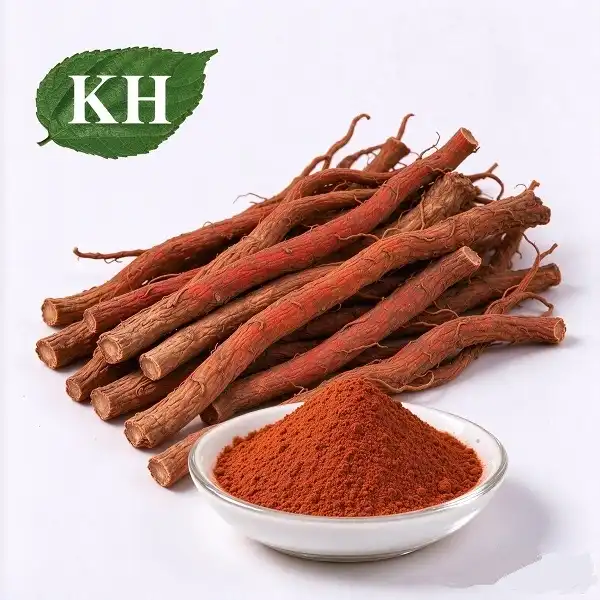
The requirements for solubility, dispersion, pH, color, odor, and stability will change amongst creams, lotions, serums, cleansers, masks, toners, and scalp treatments. Our isatis root extract is a fine brown powder in ratio-extract form, easy to store and send internationally. Liquid extracts may help with mixing in water phases but must be checked for preservation and shipment. Standardized grade may tighten marking control and batch uniformity. Test samples in your real base rather than deciding by price. The choice between organic certification, conventional sourcing, or alternatives such as andrographis or echinacea should be made in light of the stated demands of the application.
Common Risks in Bulk Purchases
Buying in quantity magnifies mistakes. Common problems include employing the wrong species or plant part, dilution, confusion about extraction ratios, unproven promises of standardization, and batch-to-batch variations in marker levels. Such changes may affect color, odor, stability, and user experience. Test large batches of isatis root extract for microbial contamination, heavy metals, pesticide residues, residual solvents, adulterants, and excess carrier content. For new suppliers, particularly for large value orders, independent lab testing is worth the investment. Avoid merchants that say they treat acne, disease, or sickness. Such assertions might bring you into regulatory trouble in your target market.
What a Good Supplier Delivers
KH has been producing botanical and herbal goods since 1996. Look for certified raw materials, batch COAs, clear specifications, traceability, production capabilities, evidence of a quality system, export documentation, and technical support. Isatis root extract is available and may be sent in 25kg/drum packing. Our isatis root extract may be sent via courier, air, or ocean. Regular in-stock items and samples arrive within 3-5 business days. We may provide a modest trial order. 6. Commercial MOQ is 25kg. We can help with compounding advice, formulation adjustments, and stability testing for systems such as skincare in an application laboratory. We may tailor the compounding to a certain ratio or purpose.
Is Isatis Root Extract a Suitable Choice for Your Skincare Product?
Where It May Fit
Isatis root extract may be suitable for botanical skincare, skin-comfort ideas, antioxidant positioning, clean beauty lines, traceable plant-based formulae, and unique OEM projects. Its Radix Isatis background provides marketing teams with a documented botanical tale, and buyers looking for an organic position may inquire about the Organic (EU) and Organic (USDA) certifications available for this product. The narrative has to be truthful. Traditional usage encourages narrative, but it doesn't substitute testing or regulatory approval. The claim, the amount of usage, and the test data are in agreement, and positioning achieves optimal results.
Where to be careful
Be particularly careful with goods on injured or very reactive skin, with leave-on products with high concentrations, with products used near the eyes, and with any product making therapeutic or drug-like claims. In these circumstances, expect more stability work, more rigorous irritant testing, and more regulatory scrutiny before the product can be launched. If your team can't handle those steps, try a lower usage level or a rinse-off format first. A choice based on confirmed authenticity, cosmetic documentation, set requirements, acceptable isatis root extract safety data, and batch consistency is more robust than one based on trends or price.
Qualification Process Before Ordering
I'll suggest five stages. First, specify the application, targeted market, format of extract, level of use, claims, yearly volume, and criteria for approval. Secondly, shortlist providers who exchange documents publicly. Third, evaluate the finalized formulation for dispersion, pH compatibility, preservation, stability, skin feel, and irritation potential on sample lots. 4. Verify the MOQ, price per kg, packing, Incoterms, payment conditions, lead time, shelf life, storage, and complaint processes. Fifth, examine each incoming lot against the authorized specification. Do not skip the fifth stage; acceptance of a sample is no guarantee that every following batch will be like it.
Conclusion
Isatis root extract may fit into skincare projects if safety is determined at the finished-product level rather than being presumed from traditional usage. The cosmetic function is based on comfort and soothing properties, and its efficacy varies by species, plant part, extraction process, and marker content. All assertions made must remain cosmetic. The primary concerns include contamination, substitution, batch drift, and irritation. Identity checks, batch COAs, HPLC reports, and finished-formula testing are used to mitigate such hazards. Sample trials, supplier documentation and frequent batch monitoring are used to ensure repeatability. In practice, isatis root extract should be used only after checking that the product identification, specifications, and safety data are validated.
FAQ
Does isatis root extract irritate skin?
Yes, any botanical may irritate or sensitize some people, particularly when used in leave-on cosmetics at greater usage levels. Finished product irritation and patch testing illustrate what your exact recipe does.
Is isatis root extract the same as Isatis tinctoria extract?
Not always. Names may overlap among species and plant sections, so check the COA on both. We make our Radix Isatidis from the root.
What documentation do I need to ask for from a supplier?
Request a spec sheet, batch COA, SDS, allergy statement, declaration of origin, and certifications. Each batch is accompanied by a KH HPLC report.
Should I go for powder or liquid extract?
Powder facilitates storage and global shipment. Liquid extracts may promote water phase mixing, but preservation has to be reviewed. Try it out on samples at your own base before you decide.
How is support handled for private-label or OEM projects?
The KH application laboratory provides guidance on compounding, formulation correction, and stability testing. Request stability data and safety paperwork for isatis root extract that correspond to your target market.
Contact KH to Request Isatis Root Extract Samples and Technical Documentation
KH has produced botanical and herbal ingredients since 1996 and welcomes inquiries from skincare brands, formulators, and OEM teams. As an isatis root extract supplier, we offer ready stock, small trial orders, and samples shipped in 3-5 business days, plus HPLC reports for every batch. Contact our botanical ingredient team at info@kingherbs.com to discuss a dependable isatis root extract supply solution for your skincare project.
References
1. Hamburger M. Isatis tinctoria – From the Rediscovery of an Ancient Medicinal Plant Towards a Novel Anti-Inflammatory Phytopharmaceutical. Phytochemistry Reviews, 2002.
2. Zhou W, Zhang XY. Research Progress of Chinese Herbal Medicine Radix Isatidis (Banlangen). The American Journal of Chinese Medicine, 2013.
3. Pharmacopoeia of the People's Republic of China (Radix Isatidis monograph), 2020.
4. Scientific Committee on Consumer Safety. SCCS Notes of Guidance for the Testing of Cosmetic Ingredients and Their Safety Evaluation, 2023.
5. International Organization for Standardization. ISO 22716: Cosmetics – Good Manufacturing Practices, 2007.
6. U.S. Congress. Modernization of Cosmetics Regulation Act of 2022, 2022.
Send Inquiry
Related Industry Knowledge
- Valerian Root Extract Powder vs Whole Root: Which Is Better?
- Why Choose OEM Mangosteen Extract Powder for New Products?
- Where to Buy Bulk Scutellaria Baicalensis Extract for Import
- Why Choose Chamomile Extract Powder for Natural Wellness?
- Centella Asiatica Extract Powder vs. Liquid Extract: Which?
- Where to Buy Maca Extract Powder: Supplier and Import Guide
- How to Choose a Cortex Phellodendri Powder Supplier
- How Pure Should Artemisinin Powder Be for Pharma Applications?
- Unlocking the Benefits of Bitter Melon Extract Powder with Essential Specifications and Usage Tips
- White Willow Bark Extract Powder Benefits: Nature’s Time-Tested Remedy for Resilience and Relief