_1762508637542.webp)
Where to Buy High-Quality Melissa Officinalis Extract?
Jul 28, 2026
When searching for a reliable source to purchase premium lemon balm ingredients, procurement managers should prioritize manufacturers offering end-to-end traceability, third-party verified potency, and flexible MOQ structures. High-quality Melissa Officinalis Extract is available through specialized botanical ingredient suppliers who maintain comprehensive certifications including ISO9001, FSSC22000, KOSHER, HALAL, and HACCP compliance. The most dependable suppliers provide standardized rosmarinic acid content ranging from 1% to 10%, verified through HPLC testing methodology, alongside complete batch documentation and sample availability before committing to commercial volumes.
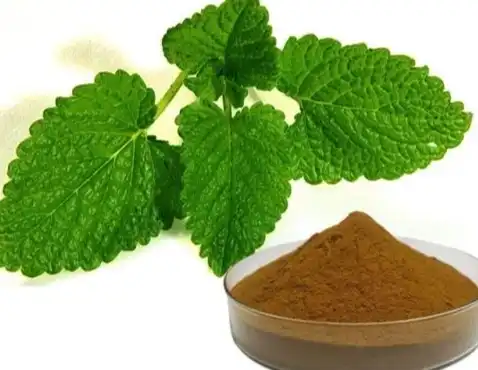
Understanding Melissa Officinalis Extract: Key Benefits and Uses
Therapeutic Properties and Market Applications
Melissa Officinalis Extract is becoming more and more famous because it has been shown to have healing qualities, especially when it comes to mental health and stress management. Our quality extract has many health benefits that have been supported by both traditional use and new studies. Because it is high in rosmarinic acid, it works well as an antioxidant to help protect cells from oxidative stress and absorption in the digestive system.
Standardized lemon balm preparations may help with brain function and mood regulation, according to research. The extract helps keep your mind clear and naturally lowers stress and tension. It's a gentle way to relax without making you sleepy. Additionally, the flavonoid content provides extra antioxidant benefits for overall health support. These substances work together to offer a wide range of health benefits.
Diverse Industry Applications
Because this botanical ingredient can be used in a lot of different formulations, it can meet the needs of a wide range of customers. Knowing about these uses helps buying managers figure out how much to buy and which specifications are most important. Companies that make dietary supplements put the extract in pills, tablets, and powders that are meant to help with stress relief and sleep. The normal amount of rosmarinic acid makes sure that doses are the same from one production batch to the next.
Functional beverage makers are adding more and more Melissa Officinalis Extract preparations to teas, relaxation drinks, and wellness blends to make them easier to drink and to help people relax. The ingredient is used in nutraceutical products to help with mental health and mood issues, and it is often mixed with other plants that work well together. Herbal formula experts mix the extract with other traditional ingredients to make complete health recipes. Companies that make cosmetics use it to soothe and reduce inflammation, and companies that make food use it as a natural flavoring and useful ingredient in health foods.
Available Extract Forms and Specifications
When procurement workers look for plant materials, they come across different types of products, each of which is best for a certain manufacturing process and end use. A fine brown to brownish-yellow powder made from the whole herb or stem-leaf parts of Melissa officinalis L. is the most common form sold in stores. Ratio extracts have concentrated phytochemical profiles, while standardized extracts ensure specific amounts of active compounds that have been tested using approved analytical methods.
High-performance liquid chromatography and UV spectrophotometry are the best ways to check for flavone content between 2% and 5% and rosmarinic acid concentrations between 1% and 10%. These requirements help formulators figure out exact doses and make sure that consistency is maintained from batch to batch. Premium powder has great flowability, controlled particle size (usually between 80 and 100 mesh), and quick dissolution properties that are important for liquid formulation applications. Quality assurance managers can set up the right receiving standards and testing methods for new materials when they understand these technical factors.
Key Factors to Evaluate When Buying Melissa Officinalis Extract
Quality Certifications and Testing Standards
Tough quality control is the most important part of getting Melissa Officinalis Extract ingredients you can trust. When looking at possible lemon balm extract suppliers, certification portfolios give you quick information about quality management systems and manufacturing standards. Look for places that have ISO9001 certification, which shows that they have structured quality management; FSSC22000 compliance, which shows that they follow food safety system standards; and HACCP application, which shows that they follow hazard analysis methods. Having religious food certificates like KOSHER and HALAL helps produced goods reach more customers who are likely to buy them.
In addition to building certifications, batch-level paperwork is needed for legal compliance and tracking. Manufacturers with a good reputation include full Certificates of Analysis with every shipment. These include tests for active ingredients, microbes, heavy metals, and herbicide residues. ICP-MS testing for heavy metals should show that lead levels are below 3.0 ppm, arsenic levels are below 2.0 ppm, mercury levels are below 0.1 ppm, and cadmium levels are below 1.0 ppm, which is in line with USP standards. Pesticide multi-residue screening that looks at more than 400 chemicals makes sure that raw materials for food supplements are safe.
Extraction Methods and Processing Standards
The way the material is extracted has a direct effect on the chemical profile, bioavailability, and suitability for use of the final product. Using clean water or food-grade ethanol for natural extraction keeps the plant's natural qualities and keeps consumers safe. These solvent systems don't use harsh chemicals that might leave behind residues or change the natural properties of the extract. The powder that was made has a pure color, dissolves quickly, and has safety features that make it ideal for use in sensitive areas.
Using chemical fingerprinting and HPTLC to identify plants stops species from being mixed up, making sure that the plants are real and not substituted with lesser or wrongly identified materials. Using gas chromatography to look at solvent residues makes sure that the amounts of ethanol or water stay within USP guidelines. The quality extract powder is physically stable, with a low moisture content (below 5.0%), a bulk density (between 0.40-0.60 g/ml), and stability across pH ranges from 3.0 to 7.0. This makes it ideal for use in acidic functional drinks without losing its bioactivity or precipitation.
Supplier Credibility and Sourcing Transparency
Getting into partnerships with manufacturers that offer insight into the whole supply chain greatly lowers the risks of buying. When suppliers work with controlled planting bases, they have full control over the types of plants used, the makeup of the soil, and the right time to harvest them. This makes sure that the products are real and have the right amount of active ingredients from the source. This vertical integration gets rid of the quality changes that happen when you buy raw materials from a lot of different places.
Standard working procedures, approved analytical methods, and ongoing stability testing programs are all examples of transparent production practices. The most reliable sellers keep goods in stock so they can be shipped quickly. Samples and normal in-stock items are usually delivered within 3–5 business days. This way of managing stockpiles works with just-in-time production plans and lowers the risk of supply chain disruptions. Geographic sourcing balances the need for low costs with high quality standards, since manufacturers in different areas offer different benefits in terms of access to raw materials, processing knowledge, and shipping options.
Comparison of Melissa Officinalis Extract Products: Which One Fits Your Needs?
Standardized Specifications and Potency Levels
Before choosing a product, you should know how the concentration of active compounds in Melissa Officinalis Extract affects the use for which it was made. Standardized extracts with rosmarinic acid levels between 1% and 10% give formulators precise control over how much to use and how to back up claims on the label. Extracts with a lower content of 1% to 3% rosmarinic acid work well in situations where subtle effects or combination recipes mean that fewer of each element is needed. Specifications in the middle range, between 3 and 7 percent, give supplements that help with stress relief and brain function a healthy level of effectiveness.
Higher potency extracts with about 10% rosmarinic acid allow makers to lower the amount of ingredients used in each dose, which supports capsules that are smaller or more concentrated. The flavone content, which is between 2% and 5%, adds to the antioxidant benefits of the rosmarinic acid fraction. Technical formulators compare these requirements to clinical research dosages, the desired shelf life stability, and the cost-per-dose economics to find the best ingredients for each product positioning.
Form Factor Considerations for Manufacturing
The way plant products are made, the tools that are needed, and how well they work all depend on their physical form. It is easier to make direct compression tablets, hard capsules, and suspensions in liquid bases when the mesh sizes are controlled for fine powders. There is a brownish-yellow powder look that blends naturally into finished products and doesn't need a lot of coloring or masking. Excellent flowability properties reduce bridge problems in automatic filling equipment and keep weight variations under control.
Some suppliers offer finished dosage forms, such as soft capsules, for manufacturers who want turnkey solutions. However, powder is still the most common format for B2B purchases. The powder form gives you the most freedom to make your own formulas because you can mix it with other herbs, vitamins, minerals, and useful ingredients that work well together. When it comes to beverages, dissolution speed is especially important because quick and complete dispersion stops sedimentation and makes sure that active compounds are spread evenly throughout the liquid matrix.
Organic Certification and Clean Label Trends
The market is moving in a way that makes foods that meet organic certification standards and clean label branding more appealing. Organic-certified Melissa Officinalis Extract meets the growing demand from customers for goods grown without using manmade fertilizers or pesticides. It commands a higher price because of better farming methods and the costs of maintaining the certification. Organic certification opens up new ways to sell the product, including through natural product stores, specialty supplement brands, and health-conscious customers who are willing to pay more for certified organic status.
Clean label concerns go beyond organic certification and include choosing the right extraction solvent, getting rid of unnecessary processing aids, and giving clear information about the ingredients. The methods of extraction that use water and ethanol are in line with clean label standards because they don't use solvents derived from petroleum or synthetic processing chemicals. If procurement managers want to get a better position in the premium market, they should give more weight to suppliers who have organic certifications and thorough testing records that show there are no synthetic pesticide residues. This will make sure that finished products meet both certification standards and consumer expectations for natural, minimally processed ingredients.
Where to Buy Melissa Officinalis Extract: Supplier Types and Procurement Options
Direct Manufacturer Relationships
Getting in touch directly with companies that make Melissa Officinalis Extract has many strategic benefits for procurement managers who are in charge of large-scale needs. Because there are no middlemen, there are no markups on the price per kilogram. This makes it easier for people to get technical help and work on custom formulations. Manufacturers who focus on botanical ingredients have a lot of experience with developing analytical methods, making the best extraction methods, and testing protocols for stability.
When looking at possible manufacturing partners, you should look at more than just their ability to offer ingredients. Leading manufacturers have well-equipped application laboratories that help with stability testing, formula optimization, and compounding for a wide range of products, such as drinks, gummies, tablets, and skin care products. This way of working together technically is especially helpful for brands that are focused on R&D and want to stand out by using new ingredient mixtures or their own delivery methods.
This all-around way of making things is shown by Kingherbs Limited, which has been making plant and herbal ingredients since 1996. The business has grown into a well-known maker of hundreds of botanical ingredients in both liquid and dry powder forms. Their controlled growing base relationships go all the way through to making finished ingredients. This way, everything can be tracked from the seed to the finished product. When suppliers have skills in manufacturing, analysis, and application support, they become true technical partners instead of just transactional vendors.
Minimum Order Quantities and Trial Orders
Understanding MOQ frameworks is important for making purchases, especially for new names or makers trying out new formulation ideas. Flexible sellers can handle both sample requests and small trial orders of a few kilograms, which lets you fully test the product before committing to large orders. This method lowers the financial risk while still letting quality assurance teams test new materials thoroughly, check for stability, and make sure they work well with existing formulations.
For commercial orders, the minimum order quantity (MOQ) is usually 25 kilograms, and the ingredients are packed in standard drums that keep them stable while they are being stored and transported. This volume level strikes a balance between how efficiently suppliers make things and how efficiently customers handle their inventory. It makes sure that there is enough material for production runs without keeping too much working capital in raw material stock. The 25-kilogram packaging size makes it easier to move materials, take samples for quality control tests, and dispense them according to the needs of a production batch.
Samples that can be sent within three to five business days help with quick product creation timelines and the review of suppliers. Quick shipment of samples shows how responsive the supplier is and how well they can manage their inventory, both of which are important when looking at possible long-term partnerships. To properly evaluate a sample, it should go through an organoleptic test, an analytical test to make sure the claims on the COA are true, and small-scale formulation trials to make sure it works with the target product matrices and manufacturing processes.
Comprehensive Procurement Services
Working with suppliers who offer a wider range of raw materials is much more efficient than working with suppliers who only supply one item. One-stop purchasing services for chemicals, vitamins, amino acids, minerals, botanical extracts, and more make managing vendors easier, shipping logistics easier, and often lower overall prices by combining volume across multiple ingredient categories.
Professional transportation services that are suited to the needs of botanical ingredients make sure that everything is handled correctly along the supply chain. Different types of shipping, like courier services for small trial shipments, air freight for deliveries that need to be made quickly, and ocean shipping for large business orders, give customers the freedom to choose the best method for their needs and budget. Expert sellers know how to deal with foreign shipping rules, the paperwork needed for customs, and temperature control issues while keeping the quality of the ingredients during transport.
When you combine different sources for ingredients, flexible order sizes, and advanced logistics coordination, your relationships with suppliers go from being simple buying and selling to strategic partnerships that help you reach your overall business goals. Less paperwork for procurement managers, a more reliable supply chain, and the ability to get professional help with a wide range of food types instead of just a few specialized areas are all benefits.
Pricing, Shipping, and Sample Requests: Practical Considerations for Procurement
Cost Structure Analysis
Knowing what makes Melissa Officinalis Extract expensive helps you negotiate better and make more accurate budgets for the costs of raw materials. Standardization levels for active ingredients have a big effect on prices. For example, higher amounts of rosmarinic acid command higher prices because they require more processing and produce less from raw plants. Different methods of extraction can have different costs because they need more time and quality control checks to make sure they don't damage heat-sensitive substances or use chemical solvents.
Costs go up noticeably when you get a certification. This is especially true for organic certifications, which need separate production lines, more thorough paperwork, and annual audit fees for certification. These prices are usually 10–30% higher than regular materials, but can change depending on the supply of raw materials and changes in market demand. When you buy in bulk, you save a lot of money because the larger the order, the cheaper it is per unit, the longer the costs of quality control testing last, and the more efficiently the supplier can make the goods.
Transparent pricing discussions should address not just per-kilogram costs but total landed cost including shipping, insurance, customs taxes, and any regulatory compliance fees that apply. Volume commitment agreements that cover multiple shipments throughout the year can often get you better prices and make sure that you can keep up with your production schedules. Long-term relationships with dependable sources are good for both parties because they allow for predictable buying patterns that help both sides plan their production more efficiently.
International Logistics and Lead Time Management
To be a good shipping manager, you need to know how to choose the best delivery means, meet transit time standards, and keep costs as low as possible. Courier services can quickly send samples and small trial orders, and they can usually finish international shipments in 5 to 7 business days. Air freight is a faster and cheaper way to send medium-sized packages that need to get there quickly than transport services for packages over 50 to 100 kilograms.
Ocean shipping is still the most cost-effective way to ship large amounts of goods for business purposes, especially for well-known goods whose demand patterns can be predicted, which lets lead times be longer. Shipping containers need to be planned ahead of time because the whole process takes 4-6 weeks, including clearing borders and delivering the containers within the country. Proper handling in containers that keep out light and moisture keeps the quality of the ingredients even after long shipping times and possible changes in temperature during travel.
Customs rules vary a lot from one target market to the next, so sellers need to know about different types of paperwork, tax classes, and how to get an import permit. Experienced providers take care of these administrative tasks by giving the appropriate certificates of origin, phytosanitary paperwork, and regulatory compliance statements to help with the smooth passing of customs. When planning the lead time, it's important to include buffer periods for things like shipping delays, customs inspection holds, or document clarifications. This way, production schedules can still be kept even if there are problems with the supply chain.
Sample Evaluation Protocols
Asking for samples before making a big purchase is an important way to lower the risk of buying botanical ingredients. Complete sample packages should not only include the actual ingredient sample, but also all the paperwork that goes with it, like a thorough COA, specification sheet, safety data sheet, and any scientific literature that backs up the claimed benefits and recommended dosage levels.
The COA verification method makes sure that the stated specs are correct by checking the product in an independent lab that checks for heavy metals, microbial contamination, active ingredients, and pesticide residues. Comparing the COA data provided by the supplier with the results of independent tests builds trust in the analytical skills and data integrity of the supplier. Organoleptic evaluation, which looks at how something looks, smells, tastes, and dissolves, is a type of qualitative evaluation that goes along with quantitative analytical testing.
Small-scale formulation tests with sample materials make sure that the extract works as expected in real production conditions and that it is compatible with the target product matrices. They also look at how the extract might combine with other ingredients in the formula. Putting the sample into typical recipes and testing its stability under accelerated conditions lets you guess how long the product will last and find any possible degradation paths that need formula changes or special packing considerations. Even though this thorough evaluation process takes a lot of time, it greatly lowers the chance that expensive production delays or quality problems will happen after large-scale purchases have been made.
Conclusion
Finding high-quality Melissa Officinalis Extract means balancing a lot of different factors, such as technical specs, supplier reliability, regulatory compliance, and business terms. Successful procurement strategies put a high priority on manufacturers who offer full certifications, flexible minimum order quantities, and technical support that goes beyond just supplying ingredients. The time and money spent on carefully evaluating suppliers, testing samples, and building relationships pays off in a big way through consistent product quality, a reliable supply chain, and access to formulation expertise that helps with ongoing innovation.
As regulations get stricter, customer standards for openness rise, and the need for natural ingredients backed by science grows, the botanical ingredient landscape continues to change. When purchasing managers form partnerships with forward-thinking suppliers who are ready to handle these changes in the market, they will gain a competitive edge by having reliable access to high-quality materials that meet both current and new standards. This guide gives procurement workers in the dietary supplement, functional food, cosmetic, and pharmaceutical industries a thorough review method that they can use to make confident sourcing choices that are in line with quality standards and business goals.
FAQ
1. What dosage of rosmarinic acid is recommended for supplement formulations?
Doses of 300 to 600 mg of standardized Melissa Officinalis Extract per day are usually used in clinical studies to look at lemon balm's ability to help with stress relief and brain function. This means that each serving has about 10 to 30 mg of rosmarinic acid if the extracts are standardized to 3 to 5 percent rosmarinic acid. When formulating, the full phytochemical profile of the extract, including flavones and other bioactive compounds that contribute to its overall effectiveness, should be taken into account, not just the rosmarinic acid content.
2. How can I verify the authenticity of Melissa Officinalis Extract?
Botanical authentication combines different ways of looking at things to make a full system for verifying identities. Potential species substitution can be found by matching the sample's chemical fingerprint to verified reference standards using HPTLC identification. The correctness of botanical sources is confirmed by a microscopic study that shows typical plant tissue structures. It is possible to be sure of the species for sure with DNA barcoding, but because it is expensive, this method is usually only used to qualify a seller and not for regular batch tests.
3. What safety considerations apply to this botanical ingredient?
Clinical studies have shown that taking the recommended amounts of Melissa Officinalis Extract is very safe. Concerns about quality are mostly about contamination risks, such as microbes that cause disease, heavy metals that build up in the soil, and chemical leftovers from farming. Consumers are protected by thorough testing procedures that cover these possible dangers. Manufacturers should also think about how allergens might get mixed up during processing and make sure that shared equipment has the right cleaning protocols in place.
Partner with KH for Premium Melissa Officinalis Extract Supply
Kingherbs Limited offers a complete solution for procurement managers looking for a dependable Melissa Officinalis Extract manufacturer. This solution includes vertical integration, technical expertise, and service that is focused on the customer. Our partnerships with controlled planting bases make sure that the botanicals are real and that the active ingredient content is just right from planting to harvest. Using clean water or food-grade ethanol for natural extraction makes a safe powder, dissolves quickly, and is the same quality every time.
We know that each formulation project has its own specific needs. Our application laboratory team helps with stability testing, recipe optimization, and compounding for a wide range of product systems. We offer unique formulations with specific rosmarinic acid ratios or synergistic plant mixtures that are made to fit the way you want to market your product. Our dedication to quality systems that meet world standards is shown by our many certifications, such as ISO9001, FSSC22000, KOSHER, HALAL, HACCP, and FDA registration.
Sample orders ship within 3–5 business days from ready stock, so you can test them right away without having to wait for production to start. Our one-stop procurement services for botanical extracts, vitamins, and functional ingredients make managing vendors easier, and our commercial MOQs start at 25 kg, so they can be used by both new brands and well-known manufacturers. Email our team at info@kingherbs.com to talk about your unique needs, ask for samples with full analytical paperwork, and find out how our expert partnership approach can help you reach your formulation success and business growth goals.
References
1. Kennedy, D.O., Scholey, A.B., Tildesley, N.T.J., Perry, E.K., and Wesnes, K.A. (2002). "Modulation of Mood and Cognitive Performance Following Acute Administration of Melissa officinalis (Lemon Balm)." Pharmacology Biochemistry and Behavior, 72(4), 953-964.
2. Shakeri, A., Sahebkar, A., and Javadi, B. (2016). "Melissa officinalis L. – A Review of Its Traditional Uses, Phytochemistry and Pharmacology." Journal of Ethnopharmacology, 188, 204-228.
3. Cases, J., Ibarra, A., Feuillère, N., Roller, M., and Sukkar, S.G. (2011). "Pilot Trial of Melissa officinalis L. Leaf Extract in the Treatment of Volunteers Suffering from Mild-to-Moderate Anxiety Disorders and Sleep Disturbances." Mediterranean Journal of Nutrition and Metabolism, 4(3), 211-218.
4. Petersen, M. and Simmonds, M.S.J. (2003). "Rosmarinic Acid." Phytochemistry, 62(2), 121-125.
5. European Medicines Agency (2013). "Assessment Report on Melissa officinalis L., folium." Committee on Herbal Medicinal Products (HMPC), EMA/HMPC/196746/2012.
6. Awad, R., Muhammad, A., Durst, T., Trudeau, V.L., and Arnason, J.T. (2009). "Bioassay-Guided Fractionation of Lemon Balm (Melissa officinalis L.) Using an In Vitro Measure of GABA Transaminase Activity." Phytotherapy Research, 23(8), 1075-1081.
Send Inquiry
_1779935733082.webp "Lespedeza Capitata Extract")
Related Industry Knowledge
- Is Watermelon Powder Effective in Pre-Workout Blends?
- What Makes Macleaya Cordata Extract a Competitive Ingredient?
- Can Dill Seed Extract Help Relieve Abdominal Cramping?
- Can Rhizoma Coptidis Powder Help with Weight Management?
- What Makes Maca Extract Powder So Popular Worldwide?
- Why Choose High-Quality Couch Grass Rhizome Extract?
- Watermelon Powder for Electrolyte & Hydration Blends
- Is Mulberry Leaf Extract Powder Effective for Insulin Sensitivity?
- What Are the Active Compounds in Mulberry Leaf Extract Powder?
- Can Mulberry Leaf Extract Powder Help Reduce Carb Absorption?