_1762508637542.webp)
What Are the Active Compounds in Mulberry Leaf Extract Powder?
Feb 24, 2026
The therapeutic effects of mulberry leaf extract powder from Morus alba are drawn from several bioactive chemicals that have been scientifically proven. 1-deoxynojirimycin (DNJ) at amounts ranging from 0.3% to 10% is the main active ingredient. Flavonoids, polyphenols, and different alkaloids make up 3–10% of the extract. These chemicals work together to give mulberry extract its antioxidant, anti-inflammatory, and metabolic support qualities. This makes it very useful for use in pharmaceutical, nutraceutical, and functional food products around the world.
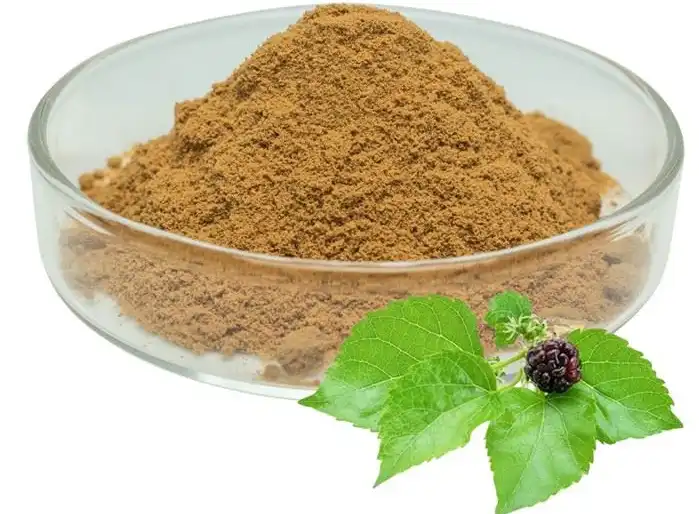
Overview of Mulberry Leaf Extract Powder
Mulberry leaf extract powder is a pure and useful plant ingredient that comes from the leaves of the Morus alba tree and is extracted using advanced techniques. Advanced processing methods are used to turn this standardized extract into a fine brown or brownish-yellow powder with uniform strength. These methods include solvent extraction with pure water or food-grade ethanol and spray drying. In contrast to other mulberry leaf products, this concentrated form has much higher amounts of bioactive chemicals. This makes it ideal for use in pharmaceutical formulations, food supplements, and cosmetics. The extraction method keeps heat-sensitive chemicals intact while getting rid of possible contaminants. This makes a product that meets strict international quality standards. Manufacturing sites that follow the rules for ISO9001, FSSC22000, and organic approval make sure that consistency from batch to batch is important for business use. Because this extract is standardized, procurement professionals can predict the active chemical profiles. This lets them do accurate formulation calculations and follow quality assurance processes that are necessary for global B2B operations.
Advanced Extraction Technologies
Modern extraction facilities use several steps of purification to focus on the good chemicals and get rid of the bad plant materials. The hydro-alcoholic and supercritical CO2 extraction methods keep thermolabile parts that normal processes might break down. Because of these advances in technology, extracts are now more bioavailable and stable on shelves, which are important qualities for companies making market goods that need to be shipped for longer periods of time.
Quality Standardization Protocols
Professional-grade mulberry extracts go through strict HPLC testing to make sure they have the right amount of active compounds and that each batch meets the required DNJ and flavonoid ratios. With this level of analytical accuracy, formulators can make medicines that work consistently well as medicines and meet the rules for different foreign markets.
Key Active Compounds Found in Mulberry Leaf Extract Powder
The healing power of mulberry extract comes from its wide range of phytochemicals. Each type of substance has its own specific biological effects. By understanding these chemical parts, you can make smart decisions about what to buy and how to make products that are good for your health.1-Deoxynojirimycin (DNJ) is the main alkaloid ingredient and the most studied part because it strongly blocks alpha-glucosidase. Clinical studies show that quality products have DNJ concentrations ranging from 0.3% to 10%. Higher concentrations usually command higher prices because they have more healing potential. This iminosugar molecule has a structure that is similar to glucose, which lets it compete with enzymes that break down carbohydrates and change how the body reacts to glucose after a meal. The antioxidant power of the extract is largely due to flavonoid molecules like quercetin, rutin, and isoquercitrin. These polyphenolic structures are very good at getting rid of free radicals. Standardized versions usually have a total flavonoid content of between 3% and 10%. Researchers have found that these chemicals work better when combined with DNJ, which could make the metabolicmulberry leaf extractpowdereven stronger while still protecting the heart.
Polyphenolic Antioxidant Network
In mulberry products, chlorogenic acids, gallic acid derivatives, and proanthocyanidins work together to make a complicated antioxidant matrix. Furthermore, these substances have higher ORAC (Oxygen Radical Absorbance Capacity) values than many common antioxidants. This makes them very useful for anti-aging products and health aids that aim to lower oxidative stress.
Alkaloid Diversity Beyond DNJ
Some secondary alkaloids, like N-methyl-1-deoxynojirimycin and 2-O-alpha-D-galactopyranosyl-1-deoxynojirimycin, make the drug more bioactive. Even though these chemicals are found in smaller amounts, they may improve the total therapeutic profile by working in different ways. This supports the idea of botanical synergy in natural medicine systems.
Mineral and Vitamin Content
The natural vitamins C, E, and B-complex that are in mulberry leaves stay mostly the same after they are extracted. Some essential elements, like calcium, iron, potassium, and zinc, are good for you and may even make the main active substances more bioavailable through interactions with other molecules.
How Active Compounds Drive the Benefits of Mulberry Leaf Extract Powder
The known health benefits of mulberry extract come from the complicated biochemical relationships between the compounds that make it up and the body's processes. DNJ works by blocking intestinal alpha-glucosidase enzymes from competing with each other. This slows down the process of breaking down complex carbs into simple sugars. These changes in enzymes cause less glucose to be absorbed and slower changes in blood sugar levels after eating, which makes it very useful for diabetic control recipes. Flavonoid compounds have many ways they work in the body, such as direct antioxidant effects through electron donation and secondary benefits through increasing the function of natural antioxidant enzyme systems. In clinical studies, quercetin was shown to have anti-inflammatory effects across the body by directly activating cellular defense mechanisms and controlling the production of inflammatory mediators. When DNJ and flavonoids work together, they seem to boost metabolic benefits beyond what each chemical alone can do. According to research, this mix makes insulin work better while also supporting healthy fat metabolism. This makes mulberry extract a great ingredient for metabolic health products that aim to control weight and improve heart health.
Cellular Protection Mechanisms
Mulberry extract has polyphenolic chemicals that turn on Nrf2 pathways. These are in charge of cleaning out cells and responding to stress. This activation increases the production of glutathione, catalase, and superoxide dismutase. This sets up a network of defense for cells that goes beyond the direct benefits of antioxidants.
Skin Health Applications
Flavonoids and polyphenols are very good at protecting cells from damage caused by UV light by absorbing it and stopping collagen breakdown. Because of these qualities, mulberry leaf extract powderis becoming more popular in anti-aging and skin protection cosmetics, especially in Asian markets where plant skincare products are seen as high-end.
Comparing Mulberry Leaf Extract Powder with Other Natural Supplements
When mulberry extract is compared to other plant ingredients, it shows a number of clear benefits that support its growing popularity in the market. Traditional mulberry leaf tea has much smaller amounts of active compounds. It usually has less than 0.1% DNJ, while standardized extracts can have up to 10% quantities. This difference in potency has a direct effect on how much to take and how well the product works. Standardized extracts need smaller dose amounts to have therapeutic benefits. Mulberry products are worth a lot more when they are certified organic, especially in North America and Europe, where people are becoming more concerned about environmentally friendly farming methods. Organic mulberry extracts are priced 20–30% higher than normal ones. This is because they are more expensive to grow and have better market placement for premium products. Comparative study with moringa powder shows placement possibilities that are complementary rather than competitive. Moringa is great for giving a wide range of nutrients because it is high in protein and vitamins. On the other hand, mulberry extract is great for supporting metabolism through specific bioactive chemicals. This difference lets formulators choose ingredients based on specific treatment goals instead of general health benefits.
Bioavailability Considerations
Standardized extracts are more bioavailable than whole leaf products because they contain more concentrated active chemicals and less fiber. Clinical pharmacokinetic studies show that DNJ levels in the blood are 3–5 times higher after extract use compared to the same amounts of whole leaf. This supports the business case for concentrated products.
Market Positioning Advantages
Standardized extracts can be marketed at a higher level because they can ensure a certain level of strength and consistency in their therapeutic effects. This dependability lets companies make promises that are backed up by evidence, and it also builds trust with customers by making sure that the product will work as promised. Both of these are important for breaking into competitive supplement markets.
Procurement Insights: Selecting and Sourcing High-Quality Mulberry Leaf Extract Powder
To successfully buy high-quality mulberry extract, you need to carefully look at the supplier's skills, the product details, and the quality control procedures. An important thing to think about is making sure that the amounts of active compounds are correct through independent HPLC testing, paying special attention to making sure that the DNJ and overall flavonoid percentages match the specs given. When evaluating a supplier, you should look at their manufacturing certificates, such as ISO9001, FSSC22000, and any related organic credentials based on the needs of your target market. Certifications like KOSHER and HALAL make markets easier to get into, which is especially important for global marketing plans that aim to reach a wide range of consumers. Pharmaceutical and nutritional uses can be more sure of their quality when they are registered with the FDA and follow USP/EP standards. Reliability in the supply chain is important for keeping products available all the time, especially since the quality and quantity of raw materials change with the seasons. Established sellers usually keep strategic levels of inventory and a variety of buying networks to keep supply problems to a minimum and make sure that all production batches have the same active compound profiles.
Technical Specification Requirements
For professional buying, you need specific scientific information like the amount of moisture, the maximum amount of heavy metals, the conditions for tests for microbes, and the study of pesticide residues. These requirements should match the intended use, with pharmaceutical-grade requirements usually being higher than those for food supplements. The spread of particle sizes affects how well they dissolve and how well they work with other materials during production. This is especially important for packaging and tableting.
Cost-Benefit Analysis Framework
When setting a price, the total cost of ownership should be taken into account, which includes shipping, storage, and minimum order amounts. The benefits of buying in bulk usually start at 100 kg, and you can save a lot of money on truck and container load orders. Private labeling and custom package services are useful for brands that want to stand out in the market while still controlling the supply chain.
Regulatory Compliance Considerations
For international trade, you need a lot of paperwork, like certificates of analysis, certificates of origin, and statements that you follow the rules. For some uses, European markets need Novel Food compliance, while US markets need GRAS status verification for food apps. Understanding these legal systems prevents delays from being expensive and makes sure that the process of registering a product goes smoothly.
Conclusion
Mulberry Leaf Extract Powder is very useful because it has active ingredients that have been proven to work by science. These include DNJ and flavonoids, which help the metabolism and protect cells from damage. Standardized extracts are better for pharmaceutical and nutraceutical uses because they are more concentrated and have better absorption and stability than traditional preparations. To make sure that the product works well and does well on the market, quality buying includes carefully checking the analytical skills of suppliers and making sure that all the rules are followed.
FAQ
1. What is the optimal dosage of mulberry leaf extract powder for blood sugar management?
According to clinical studies, the best daily doses run from 200 mg to 1000 mg, based on the concentration of DNJ and the person's metabolic needs. Higher amounts of DNJ (5–10%) usually need smaller doses, while ratio extracts might need bigger serving sizes. It is still important to talk to a doctor before using something therapeutically, especially if you are already taking diabetes drugs.
2. Are there potential side effects or drug interactions with mulberry extract?
Although most people can handle mulberry extract without any problems, eating too much of it may cause mild stomach problems like bloating or gut discomfort. Because they both lower blood sugar, diabetes medicines might combine. People who are on prescription drugs should talk to their doctors before starting a nutrition plan.
3. How should mulberry leaf extract powder be stored to maintain potency?
For best keeping, keep the temperature below 25°C and the relative humidity below 60%. Airtight packages keep out moisture and oxidation, and keeping light-sensitive chemicals out of direct sunlight keeps them fresh. Extracts that are kept properly will keep their effectiveness for 24 to 36 months. For long-term storage, it is suggested that they be tested analytically every so often.
4. What analytical methods verify active compound content?
High-Performance Liquid Chromatography (HPLC) is the best way to measure the amount of DNJ and flavonoids in a sample. It gives accurate concentration readings that are easy to repeat. The UV-Visible spectrophotometry method is a cheap way to check for total flavonoid content, and the advanced LC-MS methods let researchers do full phytochemical testing.
Partner with KH for Premium Mulberry Leaf Extract Powder Solutions
KH is your reliable source for mulberry leaf extract powder. They ensure top quality by keeping an eye on the whole process, from growing the leaves to providing the finished product. Our advanced production skills allow us to precisely standardize active substances. The concentrations of DNJ are checked by thorough HPLC analysis, and each shipment comes with a lot of quality paperwork. Samples and standard goods can be delivered quickly within 3–5 business days if they are in stock, and our flexible MOQ policy lets us handle both small orders and big industrial needs starting at 25 kg drums.
Our technical knowledge goes beyond standard supply partnerships, and we offer full application support and formulation consultation services as well. Whether you're making dietary supplements, useful foods, or cosmetics, our experienced team can help you with optimization and stability testing to make sure your product development goes well. KH can make custom formulations that allow for solutions that meet specific ratio needs or functional goals. This makes KH more than just a provider; it becomes your strategy development partner.
Our wide range of certifications, such as ISO9001, FSSC22000, ORGANIC (EU/USDA), KOSHER, mulberry leaf extract powder,and HALAL qualifications, shows that quality security is still very important to us. These certificates make sure that products can be sold all over the world and meet the highest quality standards in the food, drug, and supplement businesses. Please email our buying experts at info@kingherbs.com with specific requirements, reasonable prices, and technical advice to help you reach your mulberry extract sourcing goals.
References
1. Hypoglycemic activity and mechanisms of extracts from mulberry leaves and the cortex of mulberry root.
2. Antioxidant role of mulberry leaves in streptozotocin-diabetic rats.
3. Food-grade mulberry powder enriched with 1-deoxynojirimycin suppresses the elevation of postprandial blood glucose in humans.
4. Inhibitory effects of extractives from leaves of Morus alba on human and rat small intestinal disaccharidase activity.
5. Influence of mulberry leaf extract on the blood glucose and breath hydrogen response to ingestion of 75 g sucrose by type 2 diabetic and control subjects.
6. Antidiabetic and antioxidant effects and phytochemicals of mulberry fruit from Xinjiang.
Send Inquiry
Related Industry Knowledge
- Mulberry Leaf Extract Powder: Traditional Herb, Modern Science
- What Makes Mango Leaf Extract Powder a Top Herbal Ingredient?
- Valerian Root Extract Powder: Nature’s Solution for Insomnia
- How to Choose High-Quality Mango Leaf Extract Powder?
- Lespedeza Capitata Extract for Plant-Based Kidney Care
- Watermelon Powder: Heart Health & Hydration Support
- Why Purple Sweet Potato Extract Leads Natural Color Innovation?
- Can White Paeony Extract Help Balance Hormones Naturally?
- Premium Valerian Root Extract Powder for Natural Relaxation
- Best China Macleaya Cordata Extract for Animal Nutrition Companies