
What Is Purple Sweet Potato Extract and Why Is It Trending?
Nov 4, 2026
Purple sweet potato extract is a water-soluble colorant and polyphenol ingredient made from the tubers of Ipomoea batatas. Its anthocyanins are largely acylated cyanidin and peonidin derivatives, and that structure holds color through heat, light, and low-pH processing better than many fruit-based reds. Formulators in the United States now test purple sweet potato extract in ready-to-drink beverages, gummies, capsules, and skin-care bases. Demand also tracks a clean-label shift: buyers want a recognizable vegetable source instead of a synthetic dye code. The sections below cover chemistry, benefits, production, applications, comparisons, dosage, documentation, and bulk buying, so procurement and R&D teams can judge the ingredient on evidence.
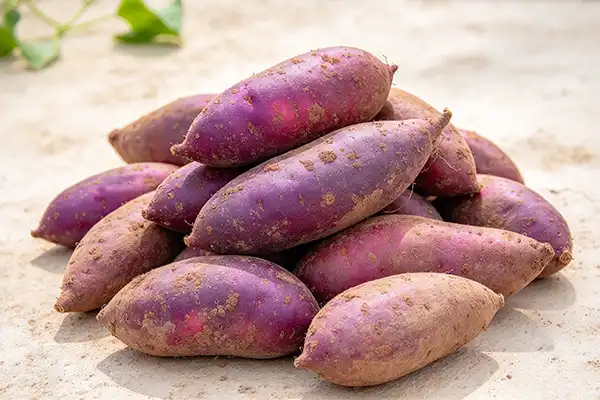
What Is Purple Sweet Potato Extract?
Before someone buys something, they should check the price to see what grade it is. This brand name is used for more than one business item.
Botanical Source and Anthocyanin Chemistry
Some types of morning glory roots that have purple meat can be used to make it. Cyanidin and peonidin 3-sophoroside-5-glucoside give the plant its color. These chemicals have been changed by adding p-coumaric acid, ferulic acid, or caffeine. The molecule can fold back on itself because it is acylated. This protects the chromophore from water attack. In real life, reds that aren't acylated lose their color more quickly when they are processed, run through UHT, or put in a store. Purple sweet potato extract keeps its color for a longer time. Since the chemicals stay liquid in water, they can be added to clear systems without adding anything that would make them emulsify. When the pH is less than 3.0, the color turns purple. When the pH is between 4.0 and 6.0, the color turns blue-green.
Extract Versus Whole Purple Sweet Potato Powder
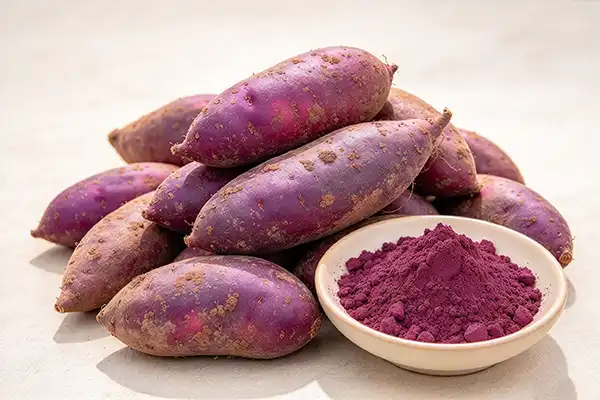
These parts do different things. Whole purple sweet potato powder is what you get when you mill and dry a sweet potato. The carbs, sugars, fiber, and fiber all have the same amount. It looks and tastes like a vegetable. Purple sweet potato extract is a stream that has been cleaned up, slowed down, and the majority of the plant matter removed. Every one of the anthocyanins is the same. It works well in a clear drink when used in small amounts. A baked good that needs to have texture, taste, and a label that says "purple sweet potato" could use powder. People don't really know how much something costs when they compare prices per kilogram because they need more powder to make the same shade.
Specifications, Test Methods, and COA Reading
You can use an HPLC test to check if the amount of anthocyanin in standard grades is between 5 and 10 percent. Total anthocyanins are given as cyanidin-3-glucoside equivalents by the newest pH-differential spectrophotometric method. Cyanidin and peonidin glycosides are split into their own parts by HPLC. Because both are used in business, the method has to be written on the study certificate. There is useful information in the COA for purple sweet potato extract about the color value (E1%1cm at 530 nm), the amount of water, ash, particles, heavy metals, bacteria, liquids, and sulfite that is still there. Sulfite can be present when the tubers are handled. Find the batch number, the date it was made, and the sample name that was saved on the same page.
Benefits and Functional Value
Antioxidant and Anti-Inflammatory Research
It has been written that purple-fleshed sweet potatoes lower oxidation markers and get rid of free radicals in animal and cell models. Anthocyanins and caffeoylquinic acids, which are taken out with the pigments, are thought to be responsible for some of that action. In the lab, stopping the NF-κB pathway and lowering the production of cytokines are usually what are used to treat inflammation. They back up claims about sites, not claims about diseases. It will be difficult to review a brand that only talks about the process because purple sweet potato extract hasn't been tested on people very often. It is fine to say "supports antioxidant status" instead of saying it will cure you.
Eye, Cardiovascular, and Skin Positioning
Carotenoids that are healthy have been linked to anthocyanins for a long time. This is why they are good for your eyes and blood flow. Purple sweet potato extract is often combined with lutein, zeaxanthin, or bilberry to help the eyes, or with citrus flavonoids to help the blood vessels. Adding a base natural violet to skin serums and creams can change their color. Free radicals will be kept away from the skin. Proof "may support" every use, and the language used should match the strength of the proof. If someone wants to buy carriers, they should make sure that the grade they pick can be used for both pill fills and emulsions.
Claim Discipline for U.S. Labels
These are the rules that supplement claims must follow in the United States, as set by DSHEA. The company must also tell the FDA within 30 days of the supplement going on sale. It's not okay to make claims about diseases. People who make food and drinks usually write "vegetable juice (color)" or "purple sweet potato extract (color)" next to the color purple sweet potato extract. Inside the EU, the substance is known as E163. When writing labels, they should follow the market rules, not the provider's license. There is no way to say on a design sheet how labels should be made. Before the art goes to print, quality teams should send the final text to their own regulatory reviewer.
How It Is Made, and Where It Performs
From Harvest to Spray-Dried Powder
What kind of crop and when it is picked affect how much anthocyanin is in it. So that enzymes don't turn the tubers brown, they are quickly washed, sorted, cut, and stabilized. The color is then taken out with water or food-grade ethanol. There are times when enzymes are added to help break up the color that is stuck. And then the juice is cleaned to make it stronger. It moves as a concentrate or turns into powder if you freeze-dry it, spray-dry it on a carrier, or do both. How the stuff is dried affects how it breaks down, the size of the pieces, and how strong the color is. The claims in a book are just as true as the numbers you get from a source. This is because anthocyanins can be lost at every step of the transfer process.
Beverage, Bakery, and Confectionery Applications
Most of the time, people who want to buy these three systems ask to see samples first.
- Acidic ready-to-drink beverages. Fruit juices, energy drinks, and ready-to-drink teas turn red to pink when the pH level is between 2.5 and 3.5. The range of use is set by the grade's color value, which is between 0.05% and 0.2% w/w. A very small number of times does settling or bottle ringing, happen.
- Bakery and confectionery. You need to boil the mixture and add acid to make sticky and pectin matrices. The acylated colors stay bright, unlike juice concentrates, which turn brown. When the dough stays acidic for a short time near 180°C, cookies and cakes keep their color. Layers that are next to each other don't change color much.
- Plant-based meat analogues. The color is meant to look like raw meat, but it turns brown when it's cooked, as ground beef should. It works even after it freezes, and the dose is very small.
People want to buy big purple sweet potato extract for more than just its color. It's also important to be stable.
Supplements, Cosmetics, and Animal Nutrition
Purple sweet potato extract can be found in supplements in the form of pills, tablets, chews, packs, and useful powders. It is often mixed with other vitamins. You need a fine powder that doesn't have a lot of water in it to fill softgels or two-piece pills. It's tested in serums, masks, and creams for cosmetics, where it gives them a natural tint and antioxidants. It can't be used in certain ways because of the INCI list and rules about cosmetics in your area. People who buy feed and animal health see it as a way to get plant colors and polyphenols for premixes. They want the same level of proof that people who buy food do. Before making the first test batch, the private-label project and the OEM project should agree on the terms for specs, packaging, and intellectual property.
Comparisons, Stability, and Dosage
Against Blueberry, Black Rice, Black Carrot, and Grape Seed
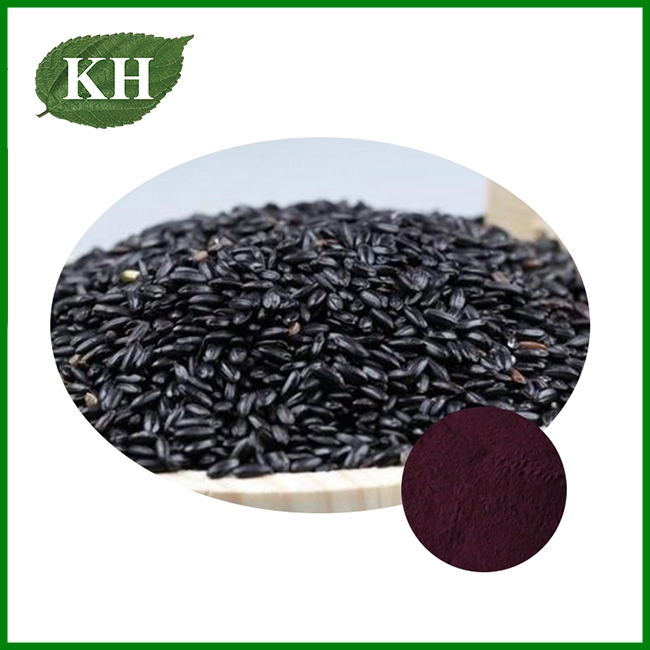
The blueberry extract doesn't have a lot of acylation, but it tastes good. It breaks down faster in heat and light. Black rice has less color per gram, even though it has many antioxidants and different types of anthocyanins. That's right, black carrot is just as acylated as white carrot, and it does well in low pH. The color is just warmer, though. Grape seed extract was picked because it has a lot of tannins, not because it is a pretty color. When it comes to stability, purple sweet potato extract is most similar to black carrot, while blueberry is more similar to black carrot in tone. Which one to use will depend on the pH range, process temperature, taste level, and cost per unit of color.
pH, Heat, Light, and Matrix Effects
Anthocyanins give things their color and then show what the pH level is. To keep the batter from rising too much, some recipe writers add purple sweet potato flavor to batter that already has baking soda in it. After that, the batter will get gray or blue. To fix this, something needs to be added to keep the pH below 4.0. You can lose weight more quickly if you drink acidic drinks. This is why it's important to use mineral premixes and touch materials. The color looks dull because of iron and copper ions. Fiber and sugar can hold color together and dull it down. You need a test batch for retort and UHT runs. The UV light shouldn't be able to get through the tape. The thing is still possible as long as these things are true. All of them are part of the study process.
Usage Levels and Trial Design
Each grade and category has a different level of tolerance, so there isn't just one dose. A lot of the time, work on drinks starts at 0.1% w/w and is changed based on a color value goal. Any supplement you take should have at least 1 mg of anthocyanins in it. It depends on the color you want and the cost. Setting up a pH scale, heating and cooling samples, and keeping them at 4°C, 25°C, and 40°C are all parts of a good test. After that, it checks how they settle, taste, and freeze and thaw. When the two are the same weight, it's easier to see how they compare than when they are the same strength.
How to Choose a Supplier and Buy in Bulk
Documents That Matter
This is the first thing a good seller should send someone who wants to buy purple sweet potato extract.
- Batch-specific certificate of analysis. What you get should match the COA. It should also say how the test was done and list any germs, heavy metals, moisture, or chemicals that are still there. You can't learn much about the drum from a general COA that doesn't have a batch number. As a guide, find out how long the seller will keep the sample.
- Specification sheet, SDS, and allergen statement. These explain the agreed-upon grade, how to keep it safe, and how to use it. If someone makes a case about a package after the fact, these will be used as proof. Don't put them somewhere else; put them on the buy order.
- Certificates and audit evidence. This system is made up of ISO 9001, FSSC 22000, and HACCP. Papers that are KOSHER, HALAL, USDA organic, and EU organic all talk about getting into the market. You should know what the website is for and when it ends before you put logos on it.
Traceability, Solvent Policy, and Batch Consistency
Things are checked out before they get to the factory. When a business hires planting grounds, they can choose the plants, the soil, and the date of the harvest. So, the amount of anthocyanin stays the same. How do they connect a lot of finished goods to a lot of raw materials? Do they hold on to samples? How long, if at all? Also, rules about chemicals are very important. The waste that hexane leaves behind can be cleaned up with water or ethanol, which can also be drunk. This claim should be backed up by the COA. The color value and test range will be the same in at least three lots from the same batch. Find out about a plant's past before you give it a year of work.
MOQ, Packaging, Logistics, and Total Cost
Most of the time, purple sweet potato extract is shipped in 25 kg fiber drums with two inner bags. Depending on how much and how quickly they need to get there, goods that are in stock are sent by truck, ship, or boat. The formulator can try out samples and small orders of a few kilograms to see how things work in real life before they place an order for the whole thing. Most sales start at 25 kg for business use. Look at the total cost, not just the price per item. Divide the price by the assay or color value to get the cost per use. If more people use it, it will cost more to ship, have someone else test it, and hire people to do the work. As soon as there is stock, it takes less time to sell the first batch after getting approval on a sample.
Why Purple Sweet Potato Extract Is Trending
Clean Label and Synthetic Dye Replacement
Because the government is putting more pressure on fake color, briefs on makeup have changed. On January 15, 2025, the FDA said that FD&C Red No. 3 could no longer be used in food. Up until January 20, 2027, it could still be used in food. Those who live and work in places where it is still legal have also paid close attention to Red No. 40. That's why people want to buy vegetable-based paints that come in boxes with well-known names. Purple sweet potato extract works because it only comes from one source and is a shade of purple. It also stays strong in acidic places where other colors fade. People don't just want to follow the rules; they also want simpler lists of ingredients.
Functional Beverages and the "Purple Food" Trend
Foods for your skin, your body, and your beauty from the inside out keep adding plant-based colorants that have polyphenols in them. Tones of purple and violet look good in pictures, which is important for categories that put social first. They also show that most of the food is natural, colored fruits and vegetables. People can see why a candy, yogurt, or ice cream with a natural violet color would stand out on the shelf. Private label programs make it possible for more small brands to order test amounts of purple sweet potato extract. This means that when you buy something, stock grades and fast samples are now just as important as price.
What Comes Next for Buyers
Things that aren't words will be used in the next round of the competition. For soft drinks, people are likely to ask for grades that are deodorized, organic, and non-GMO choices, and stable packages that cover certain pH and heat levels. For brands to use dual sourcing, they need two plants that have been approved and have color values that are close to each other. In other words, being able to carry around papers is a real issue. People didn't talk as much about sustainability reports and help from OEMs five years ago as they do now. Now is the time for the customer to set requirements, a test method, and a sampling plan. This will make it easier to settle disagreements later.
Conclusion
Purple sweet potato extract is used in current drugs because of the chemicals that make it up. Different forms of arylated cyanidin and peonidin keep their color even when they are hot, have an acidic pH, or are in direct sunlight. Because of this, the ingredient can be used in skin care items, vitamins, drinks, and sweets instead of artificial reds. While following the rules for structure/function, the fact that it has polyphenols backs up its claim to be an antioxidant. If you want to know how good something is, you should look at the test method, color value, wetness, germs, chemicals that are still left over, and papers for each batch. When you compare blueberry, black rice, black carrot, and grape seed, you should look at the cost per useful unit, the taste tolerance, the goal shade, and the process temperature. It is possible to keep track of trading desks; they have a liquid policy, and they make sure that samples are the same as stock.
FAQ
Which grade should I request, extract or whole powder?
Choose extract if you want drinks and capsules that are clear, a low rate of use, and a profile that doesn't smell. When the sign says "whole powder," it means that the veggie is in the powder. This makes the food taste and feel better. It's not fair to compare them if they can see the same thing clearly.
Why did my batch shift from red to blue?
The anthocyanins change color when the pH level is above 6.5 or when high-pH things like baking soda are added. They get darker and bluer. Adding citric or malic acid will help keep the pH below 4.0. When you're done, check the color one more time.
What should accompany a bulk order?
An SDS, an allergy statement, a COA for each batch, and up-to-date quality system certificates should all be present. There should also be claims that the item is organic, KOSHER, or HALAL. Make sure you have written proof of the format, how to store it, and how long you need to wait before you throw away the 25-kilogram drum.
Request a Purple Sweet Potato Extract Sample and Bulk Quote from KH
What would you like to do with the purple sweet potato extract? Tell KH where you want to sell your stuff and how much you want to make each year. In our application lab, we can match grades, send batch-specific HPLC data, and check how stable the extract is. We also offer purple sweet potato extract for sale from controlled planting bases. Items that are in stock can be shipped in three to five business days. You can buy 25 kg drums of Ipomoea batatas root extract with 5% and 10% anthocyanins right now. Email info@kingherbs.com to start a technical review.
References
1. Li, A. et al., Molecules — review of research advances on purple sweet potato anthocyanins, 2019.
2. Cevallos-Casals, B.A. & Cisneros-Zevallos, L., Food Chemistry — stability of anthocyanin-based aqueous extracts compared with synthetic and natural colorants, 2004.
3. Truong, V.D. et al., Journal of Agricultural and Food Chemistry — characterization of anthocyanins in purple-fleshed sweet potatoes by HPLC-DAD/ESI-MS/MS, 2010.
4. Oki, T. et al., Journal of Food Science — radical-scavenging activity of anthocyanins and phenolics in purple-fleshed sweet potato cultivars, 2002.
5. Fan, G. et al., LWT – Food Science and Technology — composition and color stability of anthocyanins extracted from fermented purple sweet potato, 2008.
6. U.S. Food and Drug Administration — order revoking authorization of FD&C Red No. 3 in food and ingested drugs, 2025.
Send Inquiry
Related Industry Knowledge
- Can aloe vera gel powder Improve Formulation Stability?
- Can Freeze Dried Sweet Potato Powder Improve Product Appeal?
- Best Tilia Extract Supplier for Bulk Cosmetic Ingredients
- Is Maral Root Extract the Next Breakthrough in Herbal Wellness?
- About Astaxanthin for Skin Health and Revitalization
- What Is Bacopa Monnieri Extract Powder Used For?
- Macleaya Cordata Extract for Antimicrobial Support
- High-Potency Mulberry Leaf Extract Powder for Supplements
- Mulberry Leaf Extract Powder: A Key Ingredient in Metabolic Health
- Custom Functional Plant Extracts: From Sample Development to Bespoke Solutions