
What Is Organic Sea Buckthorn Seed Oil? A Buyer’s Guide
Nov 12, 2026
Organic sea buckthorn seed oil is a botanical oil taken from the seeds of Hippophae rhamnoides L. shrubs grown under certified organic practices. Unlike the thick, deep-red oil from the berry pulp, seed oil is lighter and is known for its balance of omega-3 and omega-6 fatty acids. Buyers use it in skincare, softgels, hair care, and wound-care development. This guide explains how the oil is defined, tested, extracted, and bought in bulk. As a manufacturer working with botanical ingredients since 1996, I also show you which documents and specifications to check before you order.
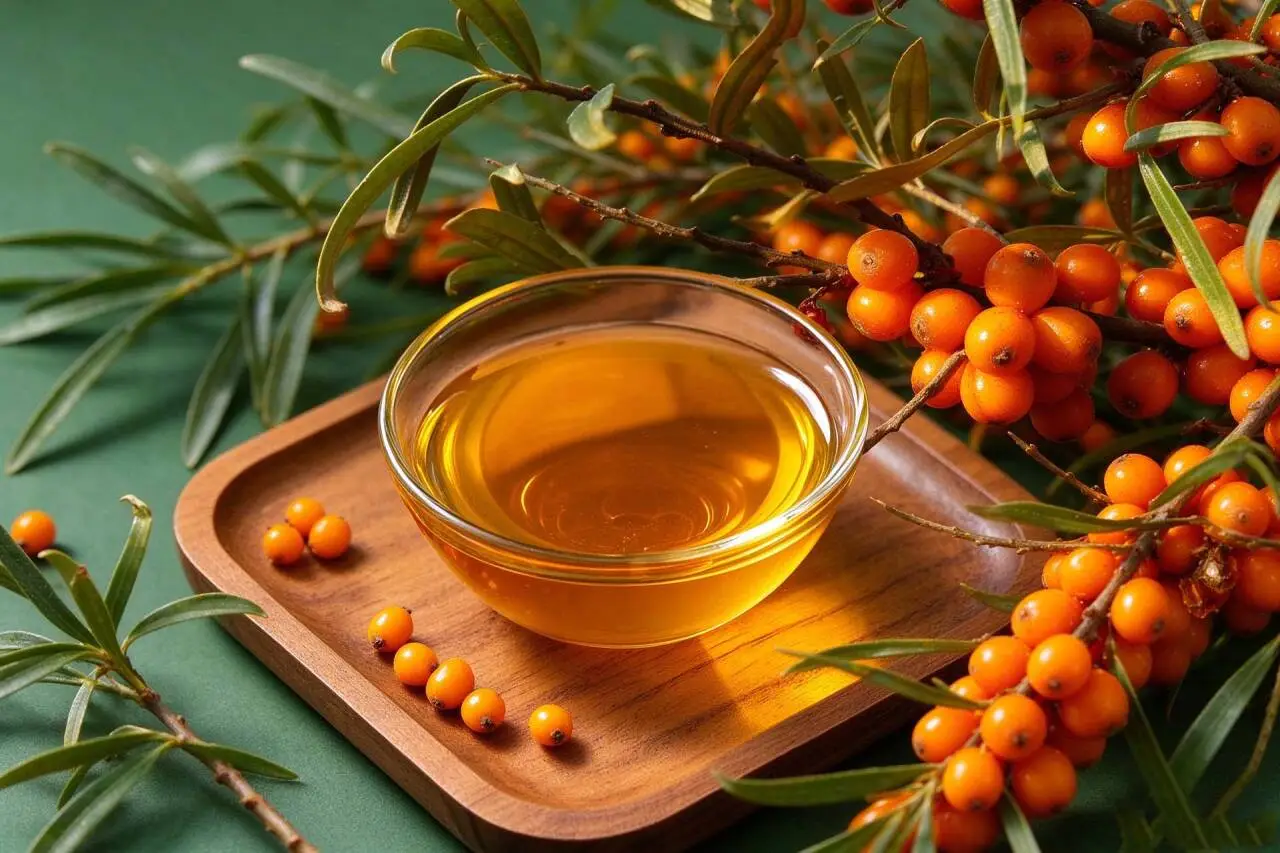
What Is Organic Sea Buckthorn Seed Oil?
Botanical Source and Definition
One last question for the first two. Hippophae rhamnoides L. It grows in cold places in Asia and Europe and is very tough. The seeds of this plant are what make the oil. Before they are taken out of the berries whole, the seeds are washed and dried. The seed is all that goes into our organic sea buckthorn seed oil. This is important to know because the color, smell, and make-up of fatty acids depend on the part of the plant that makes them. When it's done, the oil will be a clear mixture of yellow and dark brown. It will smell like nuts. Before I start a new question, I always make sure I have the right plant part and scientific name. "Sea buckthorn oil" could mean either seed oil or pulp oil, or a mix of the two.
Seed Oil Versus Fruit Oil
There is a simple way for people who aren't sure which oil to buy to choose. People like the omega-7 acid that is mostly found in thick, dark red fruit oil or pulp. A lot of omega-3 and omega-6 fatty acids are in seed oil, which is lighter in color. It has almost the same amount of omega-3s and omega-6s. Seed oil is more often used to protect the skin, while pulp oil is more often used to smooth and support the lips. There are a lot of papers, like one in Trends in Food Science & Technology (2002), that talk about this difference. You are welcome to read it. Always check the price to see what kind of oil it is for.
What "Organic" Means on a Specification Sheet
The way the plant is grown, picked, and handled is what "organic" means. It doesn't say how the oil was made or that it's new. It is against the rules for an organic farm to keep records or use pesticides. A third party checks these rules. If someone wants to buy something, they should ask to see an organic certificate that links the item to a farm. The organic fields where our organic sea buckthorn seed oil comes from are marked as such, so we know for sure where it comes from. Even so, I think you should get the most recent license and compare the batch number to the number on your report. It's more important to write for business than to sell.
Nutritional and Technical Profile of Organic Sea Buckthorn Seed Oil
Fatty Acid Composition
Fatty acids tell an oil what to do in a recipe. About 90% of the fat in seed oil is this type of fat. About 20% of the body should have oleic acid, 34% to 41% should have linoleic acid, and 25% to 35% should have alpha-linolenic acid. Remember that these numbers don't mean anything and are just ideas. Values change based on type, area, age at harvest, and time stored. They made the organic sea buckthorn seed oil because it has a lot of linoleic acid, which they think might help skin that is oily or quick to break out. Linoleic acid is always present in the skin. For each lot, ask for a gas chromatography (GC) test. It's also helpful to find cheaper carrier oils that are already mixed in.
Antioxidants and Oxidation Indicators
If you are rough with the oil, it might not soak in all the way, which can cause rust. There are 100 to 200 mg of natural tocopherols (vitamin E) and carotenoids in every 100 grams of a lot of foods. These keep the body safe. The acid and peroxide values of a lot show how new it is. A lot of people who buy oil look for an acid value of less than 4 mg KOH/g and a peroxide value of less than 10 meq/kg. If you ask for Rancimat or OSI data, which don't need to be changed, you can store data for longer. The color of the oil comes from carotenoids. People with bare skin often get a tint that goes away quickly. Emulsions, on the other hand, don't show the tint as much when used at normal rates of 1-10%.
Documents to Request
The quality team and the buying team can both judge each lot on the same level when the papers are clear. Before you say yes, I think you should ask for these records:
- Certificate of analysis (COA): You need a certificate of analysis (COA) that is specific to the batch and tells you about the microbiological results, acid value, peroxide value, moisture, and how the food looks. The number of lots on each report should match the number on the drum. This way, your team can connect test results to the exact items that come with each sale.
- Organic and quality certificates: Please ask for both the quality and organic farming certificates that are already on file. KH has been approved by the FDA, ISO9001, FSSC22000, KOSHER, HALAL, and FDA certifications. The certificate should cover the item you want to buy, and it should have an end date. If the certificate is for something else, it won't work with your approval file.
- Safety and compliance files: Get the technical data sheet, the allergen statement, the origin statement, the extra liquid statement, and the safety data sheet. This is for legal and safety purposes. Reports on heavy metals and pesticides should also be in the file. Since CO2 is used instead of hexane, it is easy and quick to read the solvent statement for SFE-CO2 oil.
When these records are put together, your QA manager will be able to compare providers based on facts instead of what they say. The team in charge of rules has a full file.
How Organic Sea Buckthorn Seed Oil Is Extracted
Traceability from Seed to Drum
You can start with quality before you take it out. The first thing that needs to be done is to get trained to farm and harvest. The next steps are to separate the berries, clean the seeds, dry the materials in a controlled way, inspect the raw materials, remove, filter, and pack them. Stopping pollution early on and making sure the seeds don't get too wet or dirty can help protect the organic sea buckthorn seed oil and keep it from going bad. When we work with them, we can pick the type of planting base, the dirt, and the time of the round. This means that the active content doesn't change from one lot to the next. There is code in each batch that tells the drum how to get back to its farm source. With that link, you can quickly answer audit questions.
SFE-CO2 Versus Cold Pressing
Supercritical carbon dioxide and a warm temperature are used by SFE-CO2 to get things done in places with little air. You can keep polyunsaturated fatty acids that are sensitive to heat safe, and this method doesn't leave any liquid behind as hexane extraction does. There are no solvents used when you press something cold, so the color and smell stay the same. There is less of a yield, though. As the process goes on, it may get rid of some small compounds and make the color and smell more even. Our organic sea buckthorn seed oil is made with SFE-CO2. It is a clear liquid that turns brown on its own and smells like nuts. There are no dangerous solvents in it. Pick the way that says it works best for you.
Packaging, Storage, and Shelf Life
The oil safe inside this package changes when it comes in contact with air, light, and heat. We send the items by messenger, air, or water, based on what you need and how many you want. Organic sea buckthorn seed oil should be kept below 20°C and out of the light. The lid should also be tight on the bottle. A lot of people who use it clean the air with nitrogen and then slowly let oxygen in through the door. If you want to be sure, look at the COA and data sheet that came with your lot. This oil should last for 24 months. Try out the work ahead of time and make sure your machine can handle it.
Organic Sea Buckthorn Seed Oil Benefits and Applications
Skincare and Barrier Repair
Soaps, healing creams, serums, and face oils are all made with organic sea buckthorn seed oil. Phytosterols, vitamin E, linoleic acid, and alpha-linolenic acid are all found in this oil and help skin that is dry or damaged. Like, it can be used to take care of skin that has been in the sun or has had surgery. Some parts of sea buckthorn can help cuts heal and keep cells from getting hurt, according to a review paper from 2011 in the Journal of Ethnopharmacology. Still, the whole recipe, how concentrated it is, and how it is given determine how well the finished product works. In the test batches, pay attention to how the emulsion looks, smells, and feels on the skin. Also, make sure it stays mixed. Most balms and creams are between 1% and 5% when they are first used, which makes them pale yellow.
Softgels and Dietary Supplements
To protect it from air and light, supplement companies put organic sea buckthorn seed oil in softgels. There is a study that says chemicals in sea buckthorn can hurt your heart. One such review was published in 2016 in Food and Chemical Toxicology. If a brand in the US wants to sell food, they should only make claims that are allowed by the FDA. They shouldn't say anything about diseases. You can mix the oil with other plant-based oils or oils when it's liquid. Get a lot of paperwork for your capsule maker and ask your service how stable your fill grid is. We only sell smooth pills that have already been made.
Hair, Lip, Body, and Wound-Care Products
The oil isn't just for your face and pills. It is also put into hair serums, conditioners, lip balms, and body lotions to make the skin feel soft and smooth. Burns and tissue repair have both been shown to get better with sea buckthorn. In fact, this is why people who make medical skin care products also use it in creams and patches. Think of these places as places where you can grow and where you need to learn more about the law and safety. It can also help to mix organic sea buckthorn seed oil with other things in a certain way. The application laboratory at our company helps people make things like candy, tablets, drinks, and skin care products. It also checks to see how stable these things are.
How to Choose and Buy Organic Sea Buckthorn Seed Oil in Bulk
Choosing by Scenario and Checklist
First, describe what you want to do. There are different types, amounts, and grades of paper that people who make makeup, sell vitamins, and work in labs need. There is a list with the botanical name, plant part, organic status, extraction method, origin, fatty acid profile, peroxide value, contaminant tests, shelf life, and ability to be tracked. You should compare each quote to that list. You can choose either pure organic sea buckthorn seed oil or a mix that you can see. You should check out the example, the records, and the supplier's quality control system all at the same time. The price of a batch doesn't always tell you how regular it will be. An analysis report is sent with every lot of our organic sea buckthorn seed oil. This report tells your team about the different parts that make up that lot.
Common Buying Mistakes
A lot of the mistakes are the same. When oils say they are "organic," that doesn't mean they are fresh, made from plants, or have a low peroxide value. Some people buy them anyway. Some people compare specs that don't match, mix up fruit oil and seed oil, don't look at the risk of oxidation, or choose a source without first testing it. Do one thing at a time. Review the papers, test a sample, try out a new recipe, place a pilot order, get the business's OK, and stay in touch with the provider. A new problem is found at each step, so it doesn't mess up your output plan.
Wholesale Cost, MOQ, and Supplier Evaluation
When you look at the landed cost, not just the price per kilogram, you should be careful. In this case, testing, packing, freight, and where the goods are located are all included. In order to do business, you need to get at least 25 kg of this item. You can get samples and sell a few things to see how they go. Right now, in-stock items and samples are both ready to ship in three to five business days. You can find an organic sea buckthorn seed oil maker by comparing them to companies that sell and buy in bulk. Find out where their seeds come from, how they get them out, how they test each batch, and how they handle export papers. Since 1996, KH has sold plant products. On top of that, they offer professional logistics and shopping in one place. Write down the Terms of Service, payment terms, and wait times that you agree to.
Conclusion
These are the seeds of Hippophae rhamnoides L. Organic sea buckthorn seed oil is made from these. It's not the same as pulp oil in terms of color, how it's usually used, or the balance of fatty acids. Because it has almost equal amounts of omega-3 and omega-6, tocopherols, and carotenoids, it has been used to make softgels, skin care products, hair care products, and wound care products. An important thing to keep in mind is that oxidation has a lot of unsaturated parts. You need to know what kind of plant it is, have the right paperwork, know how it was removed, know how much acid and peroxide it has, store it correctly, and be able to keep track of it. It is not safer to use solvents for SFE-CO2 extraction, and the risk is lowered by looking over paperwork, testing samples, and placing test orders. This way, people can be more certain about the source they pick and be sure that every batch is the same. The total cost and checked papers can help people do this.
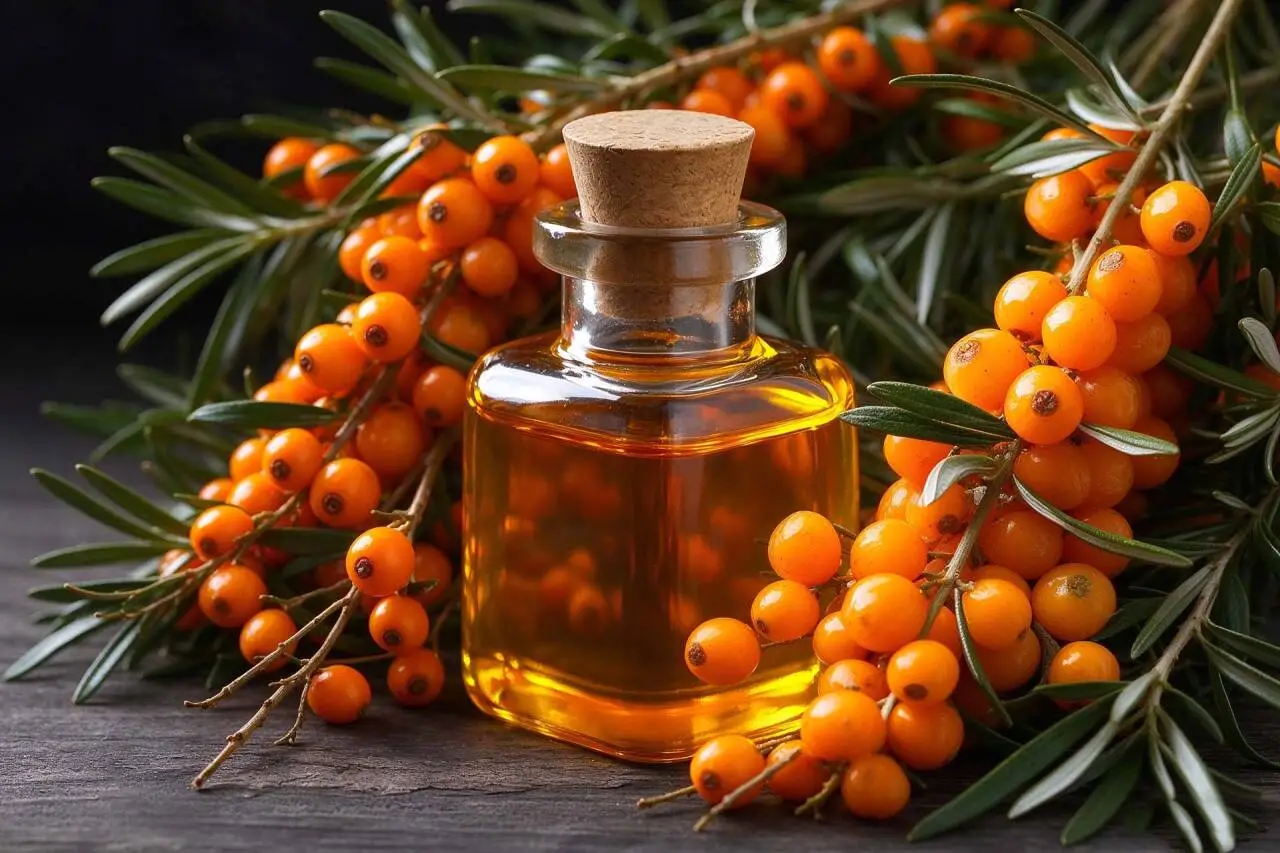
FAQ
What is the difference between organic sea buckthorn seed oil and fruit oil?
Seed oil is lighter because it has a lot of omega-3 and omega-6 fatty acids. Fruit oil is thick, dark red, and full of omega-7. Things that keep the skin safe often contain seed oil.
Why choose SFE-CO2 for organic sea buckthorn seed oil?
Nothing but SFE-CO2 is needed for it to work. It can be used at room temperature in a place with little oxygen. Natural small chemicals and weak unsaturated fatty acids are kept safe in this way.
What MOQ and packing does KH offer?
Some things are free, and you can also place a small test order. It comes in 25 kg drums and is usually enough for business. Air, sea, or water can get you a lot of it quickly.
Which certifications does KH hold?
KH holds ISO9001, FSSC22000, KOSHER, HALAL, HACCP, and FDA certifications. We can also make things that follow USP and EP rules; just let us know what you need.
How should I store the oil?
Don't let it get above 20°C. Keep light away from it. Seal it up and store it somewhere safe. Look at the COA to find out how long you can use your lot before it goes bad. The number 24 months is used a lot.
Request a Sample or Quote for Organic Sea Buckthorn Seed Oil from KH
Would you like to buy organic sea buckthorn seed oil for sale from the business that makes it? KH has a lot of things that are ready to ship, as well as 25-kg drums and orders for samples and runs. Send your order to info@kingherbs.com along with your address and how many herbs you think you will need. We'll let you know the cost, the COA, and more things. Our tech team can also help you figure out the right amounts for your recipe.
References
1. Trends in Food Science & Technology, 2002. "Composition and physiological effects of sea buckthorn (Hippophae) lipids."
2. Journal of Agricultural and Food Chemistry, 2001. "Fatty acid composition of lipids in sea buckthorn (Hippophaë rhamnoides L.) berries of different origins."
3. Journal of Ethnopharmacology, 2011. "Medicinal and therapeutic potential of Sea buckthorn (Hippophae rhamnoides L.)."
4. Food and Chemical Toxicology, 2016. "Sea buckthorn as a source of important bioactive compounds in cardiovascular diseases."
5. International Journal of Environmental Research and Public Health, 2021. "Sea Buckthorn in Plant-Based Diets. An Analytical Approach of Sea Buckthorn Fruits Composition: Nutritional Value, Applications, and Health Benefits."
6. Kvasny Prumysl, 2020. "Sea buckthorn (Hippophae rhamnoides L.) as a potential source of nutraceuticals and its therapeutic possibilities – a review."
Send Inquiry
Related Industry Knowledge
- Best Tilia Extract Supplier for Bulk Cosmetic Ingredients
- Why Is Avocado Refined Oil Popular With Professional Chefs?
- Where to buy organic nettle extract powder?
- Can Rose Hip Extract Powder Support Natural Skin Radiance?
- Does Astaxanthin Powder And Oil Help Protect Heart Health?
- Blueberry Extract Powder: Unlock the Power of Wild Blueberries
- Why Vine Tea Extract Is the Next Big Functional Ingredient?
- Macleaya Cordata Extract: Natural Anti-Inflammatory Ingredient
- Vine Tea Extract in Weight Management Products — A Deep Dive
- Why US Buyers Choose China for Mango Leaf Extract?