
What Is Echinacea Purpurea Extract? A Buyer’s Guide
Oct 26, 2026
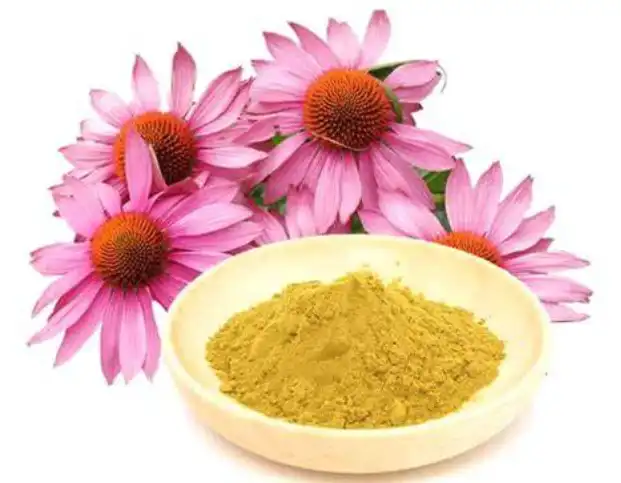
If you take a concentrated product from the purple coneflower plant (Echinacea purpurea L.) Moench, you get echinacea purpurea extract. People in North America have used this plant as medicine for a very long time. It now looks like a fine, yellowish-green powder that has been tested using UV/HPLC methods for important bioactives like chlorogenic acid, echinacosides, and polyphenols. If buying managers, R&D directors, and formulators want to find immune-boosting ingredients, they need to know about the science behind them, as well as the standards for where the ingredients come from and the different ways they can be used. Only then can they make an informed purchase decision.

Understanding Echinacea Purpurea Extract
Botanical Origin and Plant Chemistry
It is in the same family as Asteraceae, which is another name for it. The stem, leaf, and flower are the main parts that are used to make extracts for sale. Three chemicals—cichoric acid (a byproduct of caffeic acid), echinacosides (phenylpropanoid glycosides), and polyphenols—determine the bioactivity profile. Each chemical has its own effect on living things. In extracts from the aerial parts, caffeic acid is the main immunostimulant. In root fractions, on the other hand, echinacosides are more concentrated. Polyphenols are vitamins that can be found in both forms.
Extraction Methods and Specifications
How the product was extracted has a direct effect on how safe and pure it is. Solvents for high-quality Echinacea purpurea extract can only be pure water or ethanol that is safe for food. There is never any use of petrochemicals. This method keeps the biological parts whole, and the amount of liquid left over is well below the limits set by authorities. You can get the extract in different weights (4:1 or 10:1) and standard grades, such as 0.2% to 4% cichoric acid, 1% to 12% echinacosides, and 4% to 6% polyphenols. UV or HPLC tests have been used to check all of these levels. It's easy to mix and fill capsules with the fine, yellowish-green powder form.
Key Benefits Supported by Research
Echinacea purpurea powder has been shown to activate macrophages and natural killer cells. This helps the immune system fight off diseases in a general way. The number of colds dropped by about 10–20%, according to a review that came out in 2015 in JAMA. Along with making the immune system stronger, the polyphenols in it fight free radicals and lower signs of inflammation. Putting it on your face in makeup calms it down and helps the barrier heal. It's a good choice for people who make supplements, drinks, and skin care products because of these well-known benefits.
Comparing Echinacea Purpurea Extract With Alternatives
Echinacea Purpurea vs. Echinacea Angustifolia
There are different chemicals in each type, but they are both used in defense treatments. The aerial extract of Echinacea purpurea is standardized to cichoric acid, which is easy to mix with water and use in liquid forms. There are more alkamides in the root extract of Echinacea angustifolia. These alkamides dissolve in fats and work best when they are made into softgels. Companies that make drinks and healthy foods should use Echinacea purpurea powder because it dissolves better and tastes better. People who make medicines or gels that dissolve in fat often use angustifolia.
Natural Extract vs. Synthetic Vitamin C for Immune Support
Vitamin C is a standard way to improve your health. Echinacea purpurea powder, on the other hand, does not work the same way. Some of its functions are to protect cells from damage and change the way natural immunity cells work. It's complementary because it doesn't go against anything else. So that it can meet the wants of more people, both are often mixed into the same SKU. The high polyphenol content of the extract helps the immune system and is an antioxidant. This gives formulators something that man-made ascorbic acid can't do on its own: two benefits in one.
Liquid Extract vs. Dry Powder Forms
Liquid echinacea products are good for making medicines and shots that are ready to drink, but they don't last long and aren't stable. Dry standardized powder, like the fine yellowish-green powder form that KH gives, makes it easier to make pills, capsules, and sachets, and it also makes each batch more consistent. If a company needs to quickly compress or capsule a lot of product, they should use a well-defined dry echinacea purpurea extract with controlled bulk density.
How to Source Quality Echinacea Purpurea Extract
Certifications and Quality Documentation
Different places that sell Echinacea purpurea powder give you different amounts of paperwork. Some of the most important rules for business-to-business purchases are ISO9001, FSSC22000, HACCP, and FDA approval. Many people can buy from you if the food has the KOSHER and HALAL codes on it. Things that are bought should come with papers and HPLC data that show how much cichoric acid and echinacoside are in each batch. After the first check, you shouldn't do business with someone who can't give you a per-lot certificate of analysis (CoA) with method references. For controlled markets, the product must be able to be tracked all the way from the roots of the plant to the finished extract.
Evaluating Suppliers and MOQ Structures
To choose an echinacea purpurea extract company, check how long they've been in business, how well they work with growing bases, and how transparent their solvent disclosure records are. Suppliers who are vertically integrated pick the varieties, manage the soil, and choose when to harvest, which leads to more consistent active ingredient content. If you're in business, you should look for suppliers who will let you place small test orders before you agree to huge MOQs. Take KH's echinacea purpurea extract as an example. It comes in sample sizes and small trial batch sizes. To use it for business, you need to order at least 25 kg, and each drum can hold that much. It's easy to get the stock.
OEM, Private Label, and Custom Formulation Options
It's no longer just about having enough raw products. If you want to stand out, you might need standardization ratios that are made just for you, carrier systems that work with the drink, or mixed immune formulations. It can be faster to make new goods if you choose a provider that offers R&D help, such as stability testing, recipe advice, and application lab services. KH works with other companies to help customers make candies, tablets, drinks, and skin care systems. People can work with just one supplier from the time they have an idea for a raw material until the finished product is made.
Practical Guidelines for Using Echinacea Purpurea Extract
Recommended Dosage Ranges by Application
Most supplements with Echinacea purpurea extract have between 300 mg and 500 mg of it per day. These supplements come in pill or capsule form. A lot of what determines the inclusion rates for healthy drinks is how stable and standardized they are. Formulators of cosmetics often use 0.5% to 2.0% w/w in the final skin mix. Please make sure that the dose is correct for the cichoric acid or echinacoside level that needs to be stable. So, an extract with a 4:1 ratio and one with a 4% cichoric acid standard extract have very different amounts of active chemicals per gram.
Safety Profile and Known Considerations
Most adults can safely take echinacea purpurea extract as long as they don't take too much of it. If you are allergic to plants in the Asteraceae family, you should be careful around these plants. FDA rules say that supplements sold in the U.S. must have labels that follow 21 CFR Part 111. When it comes to botanicals, European formulators have to follow the rules set by EFSA. In either group, finished products cannot make therapeutic disease claims. You should always make sure that the company you buy from follows the USP or EP standard for heavy metal limits and plant identification.
Import, Packaging, and Labeling Requirements
When people bring "Echinacea purpurea" extracts into the U.S., they need to bring full COAs, proof of where they came from, and allergy declarations. Most business packs come in drums that weigh 25 kg and are lined on both sides with food-safe plastic. To ship it to other countries, it also follows the rules. The plant name, the amount of plant, the level of standardization, the lot number, and the date it goes bad should all be written on the label. It helps customs lines move quickly by putting HS codes and phytosanitary papers in the right categories for samples being sent by air freight or express postal service. Fast shipping and paperwork packages made to fit the needs of the target market are what KH has to offer.
Why Choose KH's Echinacea Purpurea Extract?
Since 1996, KH (Kingherbs Limited) has been a company that makes botanical ingredients. For the food, skincare, drug, animal nutrition, and nutritional supplement businesses, they make a huge number of plant products. The company works directly with good growing sites to make sure there is a steady supply of raw materials. They decide what kinds of plants to grow, how good the land is, and when to gather them. Pure water or food-grade ethanol is the only thing that can be used to get a clean, fine, yellowish-green powder that is easy to dissolve.
Here are the main reasons why KH's Echinacea purpurea extract is a better source than other common ones:
- We checked the consistency of each batch by using both UV and HPLC to look for cichoric acid (0.2%–4%), echinacosides (1%–12%), and flavonoids (4%–6%). The report comes with a full HPLC method.
- Certified by ISO9001, FSSC22000, KOSHER, HALAL, HACCP, and the FDA, as well as registered with the FDA, to meet the needs of all areas around the world.
- For help with lab work, use these tools: We can help you come up with recipes for drinks, gummies, tablets, and skin care systems. We can also make solutions with specific ratios or functions and test them to make sure they are stable.
- Order organization can be changed. You can send a sample or a small amount to try out before someone places an order. The minimum order quantity for business is 25 kg. It is in stock and can be sent out in three to five business days.
These benefits directly address the issues that procurement managers and product creators have when looking for a new plant ingredient provider. For example, unpredictable batches, missing paperwork, and not being able to get expert help beyond basic ingredient delivery are some of the issues that they have.
Conclusion
Echinacea purpurea extract from the plant Echinacea purpurea has been shown to help the immune system more than most other plants. People use it in the food, beauty, vitamin, and animal feed industries. This will depend on who it's for, how it's used, and how it's sent out. It doesn't matter if you choose a 4:1 extract, a measured powder with 4% cichoric acid, or a strong echinacoside extract. If you buy something from a source that has proven tracking, batch-level documents, and application support, it can become a real tool for product development. If a business-to-business customer wants quality and consistency, they should do a study on sources before picking one. This will save them time and money throughout the whole process.
FAQ
1. What are the primary bioactive compounds in echinacea purpurea extract?
The three main marker compounds are cichoric acid, echinacosides, and polyphenols. Cichoric acid is the dominant immunostimulant in aerial-part extracts and is quantified by HPLC. Echinacosides function as phenylpropanoid glycosides with antioxidant and anti-inflammatory activity. Polyphenols provide broad antioxidant coverage. Buyers should request lot-specific CoAs confirming all three markers against the declared specification.
2. How do I verify that an Echinacea purpurea extract supplier is legitimate?
Request ISO9001 and FSSC22000 certificates with valid dates, FDA registration documentation, and batch-level HPLC reports. Ask for the botanical source declaration, plant part specification, and solvent disclosure. Suppliers who partner with traceable planting bases and provide application laboratory support demonstrate a higher level of operational transparency than those who only offer commodity pricing without documentation depth.
3. Is echinacea purpurea extract safe for use in skincare formulations?
At typical cosmetic inclusion rates of 0.5%–2.0% w/w, echinacea purpurea extract is well-tolerated in topical products. It supports skin barrier recovery and reduces visible inflammation. Formulators should confirm that the extract grade selected is water-dispersible or compatible with the intended emulsion system. Individuals with Asteraceae family sensitivities may react, so labeling should reflect standard botanical allergen disclosures per applicable regional regulations.
4. What is the standard pack size and lead time for commercial orders?
The commercial pack size is 25 kg per drum. KH maintains ready stock with prompt shipment, and samples or small trial quantities ship within 3–5 business days via courier or air freight.
Partner With KH — Your Trusted Echinacea Purpurea Extract Supplier
KH supplies echinacea purpurea extract with full certification, batch-level HPLC documentation, and direct technical support for your formulation needs. Sample orders are welcome. Commercial orders start at 25 kg with ready stock available. Whether you need a standard ratio extract or a custom-standardized specification, our team is ready to support your product development process. Contact us at info@kingherbs.comto request a sample or discuss bulk pricing today.
References
1. Shah, S. A., Sander, S., White, C. M., Rinaldi, M., & Coleman, C. I. — The Lancet Infectious Diseases, 2007.
2. Karsch-Völk, M., Barrett, B., Kiefer, D., Bauer, R., Ardjomand-Woelkart, K., & Linde, K. — Cochrane Database of Systematic Reviews, 2015.
3. Bauer, R. — Planta Medica, 1996.
4. Percival, S. S. — Journal of Nutrition, 2000.
5. United States Pharmacopeia — USP Monograph: Echinacea Purpurea, 2022.
6. Barnes, J., Anderson, L. A., Gibbons, S., & Phillipson, J. D. — Journal of Pharmacy and Pharmacology, 2005.
Send Inquiry
Related Industry Knowledge
- How Does Eucalyptus Leaf Extract Boost Natural Wellness?
- Best Centella Asiatica Extract Powder for OEM Skincare
- How to Import Mimosa Pudica Powder: Documents, MOQ, and Quality
- Tilia Extract Uses in Cosmetics, Supplements, and Personal Care
- Why Source Premium Mangosteen Extract Powder for Your Brand?
- Can White Willow Bark Extract Powder Support Natural Pain Relief?
- How Does Rose Hip Extract Powder Boost Collagen Production?
- Cold-Pressed Organic Sea Buckthorn Seed Oil Guide
- What Makes Mango Leaf Extract Powder a Top Herbal Ingredient?
- Lespedeza Capitata Extract for Plant-Based Kidney Care