_1762508637542.webp)
What Is Angelica Officinalis Extract Used for in Supplements?
May 12, 2026
Angelica Officinalis Extract is a concentrated plant-based ingredient used in food products for women that aim to improve their hormonal health, gut health, circulatory support, and stress management. This yellowish-brown powder comes from the roots of Angelica archangelica L. It has bioactive chemicals like ferulic acid, coumarins, and polysaccharides that help with health issues in pills, tablets, and functional drinks. The standard ratios of 4:1 and 10:1 for the extract make sure that the potency is the same in all formulas. This makes it useful for brands looking for natural options that they can trust in the competitive nutraceutical market. Manufacturers like this ingredient because it can be used in both supplements and cosmetics. It is good for your skin and helps protect against free radicals, which are important for modern health products.
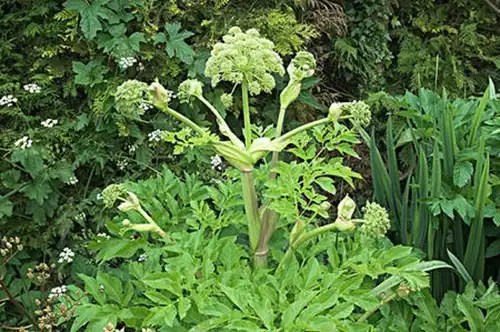
Understanding Angelica Officinalis Extract and Its Herbal Properties
Botanical Origin and Extraction Methods
Angelica archangelica L. grows in northern Europe and Asia. The roots store healing substances for two growth seasons before they are picked. The extraction process turns raw rhizomes into a fine powder using either water or food-grade ethanol. This keeps the heat-sensitive parts of the roots intact while getting rid of the microbes that usually live on untreated roots. This controlled method solves the main problem with buying things: different raw materials can cause different active ingredient ratios in each batch. Low-temperature processing is used in modern extraction technology at places like KH's production plants to keep toxic chemicals from breaking down. This made Angelica Officinalis Extract keep its earthy smell and yellowish-brown color while dissolving better in a number of different carrier systems. Good makers offer HPLC chromatograms that show the presence of marker compounds. This gives R&D teams the analytical trust they need for product claims and regulatory reports.
Product Formats and Delivery Systems
Buyers have to match the details of the copy with the forms that will be used for delivery. Standardized ratio extracts work really well in hard-shell pills and tablet compression, where the ability to flow and be compressed is important. The 4:1 ratio gives a moderate concentration that works well for higher dose protocols. The 10:1 ratio, on the other hand, lets you make small recipes that need few extra ingredients. Grades that dissolve in water are needed for beverage uses, but the natural flavor of angelica root may need to be hidden in ready-to-drink forms. Kingherbs Limited sells both ratios in 25kg drums, so they can be used for production runs ranging from small tests to large-scale production. Because small amounts are available, formulators can try the stability of their products before buying large amounts. This lowers the financial risk that comes with making a new product. This freedom is especially helpful for new brands that don't have a lot of money or a good idea of how much demand there will be.
Comparing Angelica Officinalis Extract with Alternative Supplements
Angelica vs. Dong Quai: Clarifying Botanical Confusion
There is a lot of misunderstanding in the market about Angelica Root Extract, the difference between Angelica archangelica (European angelica) and Angelica sinensis (dong quai or Chinese angelica). Both plants are in the Apiaceae family, but their chemical makeup is very different. Dong quai has bigger amounts of ligustilide and Z-ligustilide, which are chemicals that affect the smooth muscles of the uterus. European angelica has more furocoumarin, which changes how sensitive it is to light and how it might mix with drugs. To stay in line with regulations and keep customers' trust, supplement companies must make it clear on packages which plants they are using. The Latin binomial—Angelica archangelica L.—should be used in purchasing specs instead of just popular names. KH's source-to-shelf tracking system uses DNA barcoding at contracted growing sites to prove the identity of plants. This gets rid of the risk of species substitution that is common in product supply chains.
Dosage Form Considerations for B2B Buyers
When it comes to formulation, powder extracts give you the most options because they mix easily with other plant ingredients, vitamins, and minerals in pill matrices. This format works well for contract makers who use high-speed encapsulation lines. Even particle size makes doses accurate and stops powder mixes from separating. The 25 kg drum package lowers the cost per dose while keeping stocking levels low enough for mid-sized production facilities to handle. There are different needs in the market for liquid extracts and tinctures. This is especially true in the practitioner channel, where customizable doses and quick absorption are important. For these forms, you need to meet different buying requirements, such as those for alcohol percentage, extraction strength, and preservation systems. Knowing what you want the final product to be before you ask for quotes makes communicating with vendors easier and speeds up the time it takes to approve samples.

Practical Guidance on Using and Dosage of Angelica Officinalis Extract in Supplements
Recommended Dosage Ranges and Safety Margins
The amount of root extract that works best is between 400mg and 1200mg per day, according to clinical literature. Standardized preparations, on the other hand, let you be more exact with dosing based on marker chemical content. Women's health formulas usually have 500-750mg per dose, which is a balance between therapeutic potential, taste, and pill size limitations. Lower amounts (300-500mg) may be used for digestive health when mixed with plants that help the body digest food, like ginger and peppermint. According to safety profiles based on typical use habits, most people can handle these levels without any problems. Due to the presence of furocoumarins, product labels must include sun exposure alerts, especially for light-skinned people who are more likely to be sensitive to sunlight. Due to a lack of safety data, pregnancy and lactation are clear reasons not to use this product. The FDA requires clear warning words on the label to meet its rules and protect the brand from harm.
Regulatory Compliance and Label Claims
Structure-function claims about the extract's role in supporting normal bodily processes can be made without first getting FDA approval under the dietary supplement regulatory framework. The standard disclaimer must be included with these claims: "supports healthy circulation," "promotes digestive comfort," and "helps maintain menstrual cycle regularity." This means that the FDA has not reviewed the claim, and the product is not meant to diagnose, treat, cure, or prevent disease. Disease claims are still not allowed at all without new ways to report food ingredients or get pharmaceutical permission. Procurement managers should ask vendors for help with proof files that back up planned marketing claims, making sure that the scientific literature supports the intended positioning well. KH's technical support team helps clients understand these legal details by drawing on decades of experience providing ingredients to brands that are safe and competing in the US market.
Sourcing and Procurement Insights for Angelica Officinalis Extract
Vendor Evaluation and Certification Requirements
To find a trusted botanical provider, you need to look at a lot of things, such as Angelica Root Extract, not just the unit price. GMP certification means that strict production rules are being followed to avoid contamination, mix-ups, and deviations. The FSSC22000 certification adds standards for food safety management systems that are especially important for items that will be used in functional foods and drinks. The KOSHER and HALAL approvals make it easier for religious groups with special dietary needs to buy food. Traceability paperwork links the finished extract to the agricultural plots from which it came, so if quality problems arise after distribution, they can be fixed quickly. KH's relationship approach with farms that grow crops makes this connection possible, from choosing the seeds to when to harvest and how to handle the crops afterward. This level of supply chain openness goes beyond what commodity brokers can do. It protects brands in a way that makes small price increases worth it for risk-averse businesses.
Direct Wholesale vs. Marketplace Sourcing
Online business-to-business (B2B) platforms connect buyers with many suppliers, but they don't always have the technical help that's needed for product development to go smoothly. When you work directly with makers, you can get unique ratio requirements, testing that goes beyond standard COAs, and application laboratory services that make formulation stability better. KH's readiness to do solubility tests, compatibility tests with other ingredients, and accelerated stability studies sets full-service sellers apart from commodity traders whose only goal is to make transactions as quick and easy as possible. When it comes to lead time, direct maker ties are also better. KH keeps a ready supply of core extracts, such as Angelica Officinalis, so that pressing sample requests can be sent out within three to five business days by fast courier. Priority is given to scheduling production orders, and the wait time from buy order to freight-on-board is usually two to three weeks. This flexibility helps keep product development timelines flexible and lets companies get into new markets quickly when opportunities arise.

Maximizing the Value of Angelica Officinalis Extract in Your Product Line
Market Trends Driving Botanical Ingredient Demand
People's interest in plants has grown a lot, and the herbal product market will grow at rates higher than 8% per year until 2025. As the population ages, women's health is one of the most changing areas, as people look for natural ways to support hormones instead of pharmaceutical treatments. Because angelica root has a long history, it fits well with this trend because it gives brands a real heritage story that connects with smart shoppers who are studying the benefits of ingredients before they buy them. In both supplement and cosmetic uses, people who like clean labels prefer plant products to manufactured actives. Customers want to see "Angelica archangelica root extract" on ingredient panels, and this lets formulators get the useful benefits they need while also meeting customer needs for recognizable plant ingredients. Brands that stress openness and sustainability make this stance even stronger by keeping supply chain records that show they use responsible buying practices.
Integration Strategies for Product Developers
Strategically choosing which ingredients to use is key to making recipes that work, taste good, and don't break the bank. Angelica Officinalis Extract naturally works well with other plants that treat similar health problems. It is mixed with vitex, black cohosh, and evening primrose oil in women's health mixes to make complete hormone support products. It is used in digestive health products with bacteria, ginger, Angelica Officinalis Extract, and fennel to help with several digestive issues. The color and taste of the extract must be taken into account when designing the end product. The yellowish-brown powder doesn't show up because the capsules have opaque shells, and enteric coats can delay breakdown for ingredients that might make your stomach sensitive. For tablet making, you need flow agents and binders that work with the extract's particle size and moisture content. KH's application laboratory helps with these formulation problems by doing binding studies and dissolving tests that show how the product will work when it is made on a large scale.
Positioning for Competitive Advantage
To stand out in supplement categories that are already full, you need to make sure that both professional buyers and end users understand the quality traits that count. The 4:1 and 10:1 concentration levels show how strong they are compared to regular ground root powders. Citing GMP and ISO licenses increases trust in the quality of the manufacturing. Clean-label supporters who are worried about chemical contamination will like it when solvent-free extraction methods are made public. When a new product comes out, educational material should support it by combining traditional herbal knowledge with modern scientific knowledge. This will build trust through a fair, evidence-based message. Brands that work with providers that offer scientific documentation, such as KH's thorough HPLC chromatograms and batch-specific testing, can give customers more information that makes them trust the brand and be willing to pay more for confirmed quality.
Conclusion
Angelica Officinalis Extract is a flexible plant ingredient that can be used in a number of health-related ways in the growing natural goods market. Its traditional use, along with new scientific research, makes it a good choice for products that support women's health, circulatory health, and gut health. To make a good purchase, you need to carefully choose your vendors, paying special attention to quality certifications, traceability paperwork, and technical help that goes beyond just providing ingredients. The fact that the extract is available in standard ratios makes it possible for formulations to work consistently, and the fact that order quantities can be changed to fit names at different stages of growth. As the demand for real botanical ingredients keeps going up, supplement companies can use strategic integration of this extract to set their products apart in useful ways. This is supported by both past examples and current study paths.
FAQ
1. What dosage of angelica root extract is recommended for supplements?
Doses that work usually fall between 400 mg and 1200 mg per day, but this depends on the health problem and the concentration ratio. A 4:1 or 10:1 extract of 500 to 750 mg is often used in women's health products. When mixed with other herbs that help the digestive system, 300–500 mg may be added to digestive support items. When giving dosage advice, it's important to always think about the standardized extract and the treatment goal, while also following the safety rules that have been set by years of use.
2. What's the difference between dong quai and European angelica?
Angelica archangelica, or European angelica, and dong quai, or Angelica sinensis, are two different species with very different chemical profiles. The furocoumarin levels in European types are higher, while the ligustilide levels in Chinese dong quai are higher. The therapeutic uses and safety concerns are affected by these changes in makeup. Latin binomials must be used to clearly identify the botanical source in procurement specifications to make sure they comply with regulations and give consistent product performance that matches the formulation objectives.
3. Where can I get good angelica extract in bulk?
Reliable sellers show GMP licensing, full tracking, and analytical documents, such as HPLC chromatograms. Angelica Officinalis Extract, which is pharmaceutical-grade and has been certified by ISO9001, FSSC22000, KOSHER, and HALAL, is available from Kingherbs Limited. Samples are available, and industrial amounts start at 25 kg. Their ready stock and application lab help meet the technical and logistical needs of skilled formulators making natural goods that are competitive in the US wellness market.
Partner with KH for Premium Angelica Officinalis Extract Supply
Kingherbs Limited delivers pharmaceutical-grade Angelica Officinalis Extract backed by nearly three decades of botanical manufacturing expertise. Our source-to-shelf traceability eliminates raw material variability concerns while ISO9001 and FSSC22000 certifications ensure consistent quality meeting the most stringent regulatory requirements. We accommodate both sample requests for formulation development and commercial orders with competitive MOQs starting at 25kg. Our technical team provides HPLC documentation, stability testing support, and custom ratio specifications that optimize your product performance. Ready stock enables 3-5 day express shipping, accelerating your development timelines. Connect with our ingredient specialists at info@kingherbs.com to discuss your specific requirements and receive a customized quotation from a trusted Angelica Officinalis Extract supplier committed to your formulation success.
References
1. Sigurdsson S, Gudbjarnason S. "Pharmacological Properties of Coumarins from Angelica archangelica." Journal of Ethnopharmacology, vol. 47, no. 3, 1995, pp. 135-141.
2. Bhat ZA, Kumar D, Shah MY. "Angelica archangelica Linn. is an Angel on Earth for the Treatment of Diseases." International Journal of Nutrition, Pharmacology, Neurological Diseases, vol. 1, no. 1, 2011, pp. 36-50.
3. Nivinskiene O, Butkiene R, Mockute D. "Chemical Composition of Seed Essential Oils of Angelica archangelica Growing Wild in Lithuania." Journal of Essential Oil Research, vol. 17, no. 4, 2005, pp. 373-377.
4. European Medicines Agency. "Assessment Report on Angelica archangelica L., Radix." Committee on Herbal Medicinal Products, 2013.
5. Sarker SD, Nahar L. "Natural Medicine: The Genus Angelica." Current Medicinal Chemistry, vol. 11, no. 11, 2004, pp. 1479-1500.
6. Fraternale D, Flamini G, Ricci D. "Essential Oil Composition and Antimicrobial Activity of Angelica archangelica L. from Central Italy." Journal of Medicinal Food, vol. 17, no. 9, 2014, pp. 1043-1050.
Send Inquiry
_1779935700347.webp "Onion Extract")
Related Industry Knowledge
- Wild Yam Extract Powder: Top Uses in Nutritional Products
- How to Identify Premium Bacopa Monnieri Extract Powder?
- What Makes Maca Extract Powder So Popular Worldwide?
- Onion Extract Benefits You Can’t Ignore in 2026
- From Stress Relief to Sleep Support: Valerian Root Extract Powder
- What Sets Premium Watermelon Powder Apart?
- Dill Seed Extract: Natural Support for Digestive Comfort
- Does Lespedeza Capitata Extract Support Toxin Clearance?
- Why Is Macleaya Cordata Extract Popular in Animal Nutrition?
- Premium Valerian Root Extract Powder for Natural Relaxation