_1762508637542.webp)
What does Rose Hip Extract Powder do for Your Skin?
Jun 29, 2026
Rose Hip Extract Powder delivers exceptional benefits for skin health through its concentrated vitamin C, polyphenols, and galactolipids. This botanical ingredient enhances collagen synthesis, reduces hyperpigmentation, and protects against oxidative stress, making it a valuable component in anti-aging formulations. Derived from Rosa rugosa fruit, the powder maintains thermal stability during processing, preserving bioactive compounds essential for visible improvements in skin texture, tone, and elasticity. When incorporated into skincare products at optimal concentrations, it provides formulators with a natural alternative to synthetic actives while meeting clean-label consumer demands.

Understanding Rose Hip Extract Powder and Its Skincare Benefits
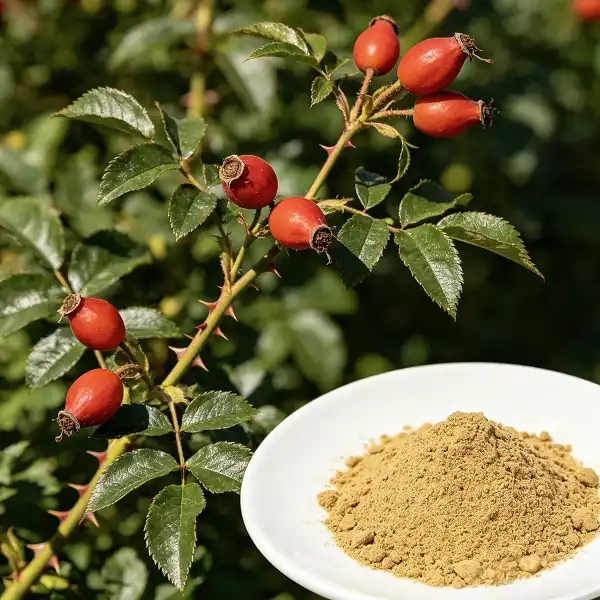
The botanical description of this item starts with picking the Rosa rugosa fruit that is just about ready to be picked. Low-temperature spray drying and freeze-drying are processing methods that keep heat-sensitive chemicals safe. This makes sure that the final yellowish-brown Rose Hip Extract Powder keeps all of its strength. Standardized markers are produced by the extraction. These include polyphenols measured between 5% and 25% using UV spectrophotometry, and vitamin C levels range from 5% to 70% as confirmed by HPLC testing.
Chemical Composition and Bioactivity
When vitamin C is combined with bioflavonoids, it is better absorbed than when it is just ascorbic acid. This natural balance improves the uptake of cells, directly supporting the activity of fibroblasts, which are in charge of making collagen. Polyphenolic substances, especially galactolipids, have been shown to reduce inflammation and soothe inflamed skin while also making it less red. Essential fatty acids, like linoleic and α-linolenic acid, make the skin layer stronger, which stops water loss through the epidermis.
Antioxidant Protection Mechanisms
Because it can get rid of free radicals, this product is a first line of defense against environmental threats. Laboratory tests show that metalloproteinase-1 (MMP-1), the enzyme that breaks down collagen, is significantly blocked. When mixed with other ingredients and put on the skin, these antioxidants balance out the reactive oxygen species that are made by smog and UV light. This slows down the photoaging process that causes fine lines and loss of stiffness.
Hydration and Barrier Function
Natural sugars and organic acids, like malic and citric acid, are humectants,Rose Hip Extract Powder which means they draw water to the stratum corneum. This effect of hydrating works together with fatty acids to fix walls that have been damaged, which is common in sensitive or older skin. Formulations that contain this plant ingredient show long-lasting moisture retention, which helps with dryness without making the skin feel heavy.
How to Use Rose Hip Extract Powder for Optimal Skin Results
To make a good mixture, you need to know the concentration limits and compatibility factors. Usually, between 2% and 10% of the Rose Hip Extract Powder is used in topical skin care products to get healing benefits without any unpleasant sensations. Because they can be rinsed off, serums and treatment creams can use higher amounts, while cleansers and masks can use smaller numbers.
Formulation Concentration Guidelines
Concentrations in the upper range are best for cosmetic uses that aim to reduce the signs of aging because this is where antioxidant activity hits levels that are clinically important. Grades that are fully dissolved in water-based bases can be used to make light creams and essences. Different types that dissolve in ethanol work well in systems that don't need water, like face oils and balms. Controlling the particle size so that 95% of them pass through an 80-mesh screen gives all product arrays a smooth appearance and even distribution.
Delivery Format Considerations
To keep an emulsion stable, you need to pay attention to pH factors. The extract works best in neutral to slightly acidic conditions (pH 3.5 to 6.5), since vitamin C stays stable at these pH levels. Liposome encapsulation technology improves skin entry, sending active ingredients to deeper layers where collagen production takes place. Powder-in-oil solutions are shelf-stable options for companies that want to use natural ways to keep their products fresh.
Safety Precautions and Compatibility
Protocols for patch testing find possible sensitivities, but bad reactions are still uncommon with plant materials that have been properly handled. When this substance is mixed with retinoids or alpha hydroxy acids, the pH needs to be carefully balanced to keep the skin from getting irritated. Mixing copper peptides with other ingredients is not recommended because metal ions can break down vitamin C, making it less effective. Stability testing under accelerated settings shows that goods that are properly made stay effective for the normal 24-month shelf life.
Rose Hip Extract Powder vs. Alternatives: Making the Right Choice
Comparative research against similar botanical ingredients can help with buying choices. Knowing the differences between Rose Hip Extract Powder and oil types of vitamin C and how they fit in comparison to synthetic vitamin C helps you make strategic formulation decisions that are in line with your brand's marketing and performance goals.
Powder Versus Oil: Extraction and Application Differences
Because it was extracted using lipophilic ways, rose hip seed oil is mostly Rose Hip Extract Powdermade up of fatty acids and very little vitamin C. The oil works great in barrier repair formulas, but fruit-derived powder has more antioxidant power. Powders are extracted using water-based or alcohol-based solvents that catch phytonutrients that dissolve in water. This gives consistent amounts of vitamin C and polyphenols that can be checked through analytical testing. Powder types work better for brands that want active ingredients that can do more than one thing, like hydrating and boosting.
Antioxidant Stability Compared to Synthetic Vitamin C
Ascorbic acid formulations are notoriously unstable, breaking down quickly in light, air, and high pH. The bioflavonoid-vitamin C complex in natural rose hip powder makes it more stable through molecular co-protection mechanisms. This means that the product will last longer on store shelves and keep working well after being used by a customer. This means that the product won't need special packing or cooling, which would add to the costs of the supply chain.
Organic Versus Conventional Sourcing
Certified organic ingredients cost more, but they fit with the "clean beauty" trend that appeals to people who care about their health. Standards for organic approval don't allow synthetic pesticides and require proof of tracking from planting to handling. Most conventional sources meet strict heavy metal limits (lead < 3.0 mg/kg) and bacterial safety norms, and they may also be cheaper. When deciding between these choices, procurement managers should weigh the interests of the target market against the need to meet margin requirements and make sure the authenticity of the certification.
Procurement Guide: Sourcing Quality Rose Hip Extract Powder for B2B Needs
To find trustworthy providers, you need to carefully look at more than just unit price. Total cost of ownership and supply chain resiliency are both affected by quality assurance standards, the authenticity of certifications, and the ability to handle logistics for Rose Hip Extract Powder.
Supplier Evaluation Criteria
Real companies that make goods give full records like Certificates of Analysis (COA) with test results specific to each batch, MSDS safety information, and proof of third-party approval. Along with food safety certifications like FSSC22000 and HACCP, production sites should keep up with ISO9001 quality control systems. Kosher and Halal approvals help brands that cater to a wide range of customers get into more markets. Risks of fake documents can be avoided by checking these qualifications through independent audits or certification body records.
Leading Manufacturers and Market Reputation
Botanical extract providers that have been in business for decades show that they can reliably offer goods and have the right technical knowledge. Kingherbs Limited, which has been in business since 1996, is a good example of this type of company. They have managed farming partnerships that make sure they can track their raw materials from choosing the seeds to when they are harvested. This kind of end-to-end oversight gets rid of the quality changes that happen a lot when you buy commodities on the spot market. Suppliers who offer application laboratory support help with formulation, stability testing, and compounding, which cuts down on the time it takes to make new products.
Ordering and Storage Best Practices
The requirements for the purchase should include the amount of vitamin C and polyphenols that must be present, the way the product should look, and any compliance standards, such as USP or EP paper requirements. For stock items, delivery times are between 3 and 5 business days. For special items, production and quality release may take 2 to 4 weeks. For storage, powder must be kept in cool, dry places away from direct light, with controlled temperature to keep powder from absorbing wetness that would make it less fluid and extend its 24-month shelf life.
Future Trends and Opportunities in Rose Hip Extract Powder for Skincare
New directions in processing botanical extracts offer better usefulness and environmental benefits. Purchasing teams that keep up with these changes get a leg up on the competition by using new Rose Hip Extract Powder items early on.
Advanced Extraction Technologies
Enzyme-assisted extraction methods use certain hydrolases to Rose Hip Extract Powderbreak down cell walls. This increases the amount of bioactive chemicals while decreasing the need for solvents and processing time. Supercritical CO2 extraction makes parts that are very pure and don't contain any solvents. This makes them appealing to high-end brands that talk about purity. These technologies are more expensive, but they give standardized activities at higher ratios, which lets formulators get the same level of effectiveness with lower inclusion rates.
Sustainability and Certification Demands
Demand for organic certification, fair trade verification, and carbon footprint exposure is driven by consumers' desire for clear and moral sources. When suppliers work directly with crop groups, they make sure that farmers get fair prices and keep records of sustainable farming practices like managing soil health and saving water. These qualifications are becoming more and more important when brands are fighting in the natural and prestige markets, where customers are very careful about the ethics of the supply chain.
Market Growth Projections
The world markets for natural beauty ingredients are growing at rates of more than 8% per year, with vitamin C derivatives and plant antioxidants leading the way. As rules about clean beauty change and people learn more about ingredients, demand especially rises in North America. Because of this growth, contract makers and brands can set themselves apart by using unique plant blends and co-developed formulations that use advanced extraction methods.
Conclusion
The many skin benefits of Rose Hip Extract Powder come from the fact that it is full of vitamin C, polyphenols, and important fatty acids. These all work together to fight aging, oxidation, and barrier failure. When looking at this element, people who work in procurement should give more weight to sellers who can show traceability, analytical thoroughness, and application support. As extraction technologies improve and environmental ethics become more important, brands that form early relationships with new suppliers will be able to take advantage of rising customer demand for natural skincare actives that work and show results in the lab.
FAQ
1. What concentration produces visible skin improvements?
Within 4 to 6 weeks of regular use, formulas with 2 to 5 percent Rose Hip Extract Powder show measurable improvements in skin hydration and glow. Higher amounts (5–10%) focus on specific issues like hyperpigmentation and wrinkle depth. After 8–12 weeks, the best effects can be seen. According to clinical standards, goods should be put on clean skin twice a day for enough time for them to be absorbed.
2. Can this ingredient combine with retinol or acids?
When formulations carefully control pH levels and application times, there is compatibility. By using rose hip products in the morning and retinoids at night, you can avoid soreness while getting the most out of their benefits. Soothing agents added to buffering systems help sensitive skin types handle mixed actives.
3. How should formulators keep their powder stock?
For the full 24-month period, sealed containers kept at temperatures below 25°C and out of direct sunlight will keep their effectiveness. When the moisture level is below 5%, clumps and bacterial growth are stopped. Nitrogen flushing before closing increases security for long-term storage of goods.
Partner with KH for Premium Rose Hip Extract Powder Supply
You can trust Kingherbs Limited to provide you with high-quality Rose Hip Extract Powder. They offer pharmaceutical-grade plant ingredients and offer prompt technical support. Based on HPLC and UV analysis, our Rosa rugosa fruit powder has confirmed vitamin C amounts ranging from 5% to 70% and polyphenol values ranging from 5% to 25%. We meet the best world standards because we are certified by ISO9001, FSSC22000, Kosher, Halal, HACCP, and the FDA. Procurement teams can order sample sizes and trial orders to see for themselves how good our products are. For larger orders, business minimums starting at 25 kg can be met. When you have ready-to-ship goods, you can use your chosen shipping method right away. Contact our formulation experts at info@kingherbs.com to talk about your unique needs and get application laboratory help for your next skin care product idea.
References
1. Chrubasik C, Roufogalis BD, Müller-Ladner U, Chrubasik S. "A systematic review on the Rosa canina effect and efficacy profiles." Phytotherapy Research, 2008, 22(6): 725-733.
2. Phetcharat L, Wongsuphasawat K, Winther K. "The effectiveness of a standardized rose hip powder on facial wrinkles and aging: a double-blind placebo-controlled clinical trial." Journal of Medicinal Food, 2015, 18(6): 655-662.
3. Andersson SC, Olsson ME, Johansson E, Rumpunen K. "Carotenoids in sea buckthorn and rose hip berries." Journal of Agricultural and Food Chemistry, 2009, 57(23): 10739-10744.
4. Telang PS. "Vitamin C in dermatology." Indian Dermatology Online Journal, 2013, 4(2): 143-146.
5. Winther K, Apel K, Thamsborg G. "A powder made from seeds and shells of a rose-hip subspecies reduces symptoms of knee and hip osteoarthritis." Scandinavian Journal of Rheumatology, 2005, 34(4): 302-308.
6. Pullar JM, Carr AC, Vissers MCM. "The roles of vitamin C in skin health." Nutrients, 2017, 9(8): 866-885.
Send Inquiry
Related Industry Knowledge
- Blueberry Extract Powder: Unlock the Power of Wild Blueberries
- The Anti-Aging Power of Rosehip Botanical Extract
- Olive Extract Powder vs Olive Oil: What’s the Difference?
- What Makes Cortex Phellodendri Powder a Premium Ingredient?
- How Does Onion Extract Boost Scalp and Hair Strength?
- Isatis Root Extract Active Compounds Explained
- How to Formulate Supplements With Macleaya Cordata Extract?
- Macleaya Cordata Extract in Modern Phytogenic Feed Additives
- Is Olive Extract Powder Effective for Inflammation Control?
- Polygonum Cuspidatum Extract for Enhanced Cellular Defense