_1762508637542.webp)
Organic Sea Buckthorn Seed Oil vs Fruit Oil Differences
Apr 14, 2026
The main differences between Organic Sea Buckthorn Seed Oil and fruit oil should be understood by those who source plant oils for commercial purposes. You can find that these two kinds of Hippophae rhamnoides L. are made up of different molecules that change how well they work in different ways. Supercritical CO2 is used to get oil from nuts. The oil has a unique 1:1 mix of Omega-3 and Omega-6 fatty acids. On the other hand, fruit oil has more palmitoleic acid and vitamins. It is important to be smart about where you get materials for product development because these differences in makeup affect everything from how well they work as medicine to how stable they are against oxidation.
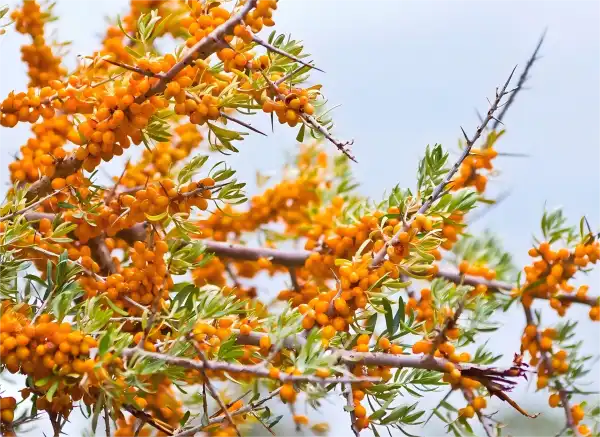
Understanding Organic Sea Buckthorn Oils: Seed Oil vs Fruit Oil
Fruit oils and sea buckthorn seed oils are biologically different in more ways than just where they come from. For example, the chemicals that are made when they are removed are very different. These differences have a big impact on how they are used in business in many areas, such as making nutraceuticals, cosmetics, and medicines.
Extraction Methods and Purity Standards
There are special ways to get sea buckthorn seed oil out of the plant without damaging the delicate structure of its fatty acids. The supercritical CO2 method gets rid of any extra liquid while keeping the oil's natural structure intact. With this method, you can make a clear, yellowish to reddish-brown liquid that is very clean and meets the requirements for medical use. Because tocopherols and phytosterols are sensitive to heat, the temperature at which the oil is extracted stays below 40°C.To get the oil out of the sea buckthorn berry pulp and skin, they are generally cold-pressed or extracted with a solvent. This method captures different helpful chemicals, mostly carotenoids, which give the oil its unique orange-red color. Buying in bulk costs more when fruits are used instead of seeds because they can be extracted more quickly.
Chemical Profile Distinctions
What makes these oils different is the kind of fatty acids they have. Organic Sea Buckthorn Seed Oil has a nearly perfect 1:1 mix of alpha-linolenic acid (Omega-3) and linoleic acid (Omega-6), which is not often found in plant sources. It makes up about 34% of the oil. This healthy profile helps keep cell walls whole and the processes that fight inflammation running smoothly. Twenty to thirty percent of the fatty acids in plant oil are palmitoleic acid (Omega-7), which is a lot. This is a very uncommon fatty acid that can really get through skin and help mucus membranes heal. Fruit oil also has more beta-carotene and lycopene than other oils, which makes it even safer.
Industrial Quality Considerations
Food oils and seed oils are judged on different standards because they are used for different things. The amount of oxygen, vitamins, and fatty acid ratios in seed oil show how good it is. The color stability and amount of pigments in berry oil are used to rate its quality. To follow government rules, both oils must be labeled as organic, and heavy metals must be checked.
Core Differences in Application and Performance for B2B Needs
Because of how they work, sea buckthorn oils can be useful in several business situations. When buying, teams know about these changes in performance, and they can make sure that the formulas for products meet both government standards and customer needs.
Cosmetic and Personal Care Applications
Because it is made up of healthy fatty acids that help the skin's barrier function and reduce inflammation, seed oil is great for anti-aging. Because it is light and absorbs quickly, the oil works well in face serums and eye creams for older skin. Its natural vitamin E guards against free radicals, which means the food stays fresh longer without the need for added preservatives. Products for the face that help it heal, like those that treat sun damage, acne scars, and cuts, work really well with fruit oil. Because it has a lot of palmitoleic acid, it speeds up the production of collagen and the turnover of cells. This makes it useful in skin care products and products that help people heal after surgery.
Nutraceutical and Supplement Integration
Omega fatty acids in soybean oil are good for your heart and help keep your cholesterol levels in check. This is how the supplement business works. Encapsulating the oil in softgels keeps its usefulness while giving doctors accurate amounts for medical uses. The oil stays solid in acidic places, which makes it good for soups and other foods that are hard to digest. Muscles and the walls of the digestive system can benefit from taking fruit oil pills. This is especially true for people who have dry eyes. Because it has carotenoids in it, it is good for your eyes and immune system, and this means it can be used in more exercise items.
Manufacturing Stability and Shelf Life
Fruit oil is less resistant to pollution than Organic Sea Buckthorn Seed Oil. The main reason for this is that it has the right amount of fatty acids and tocopherols that are found naturally. Because it is stable, the product will last longer and be easy to make when mixed with other active ingredients. If you store the oil the right way, it will still be healing for 24 to 36 months. Fruit oil needs more care because it has more pigments and unsaturated fats that are sensitive to heat and light. It doesn't last as long, but its ability to heal quickly makes up for it in cases where quick efficiency is more important than long-term stability.
Evaluating Quality: Organic, Cold-Pressed, and Supplier Trustworthiness
There are a number of things that are used to judge the quality of sea buckthorn oils that directly affect how well the product works and how well it meets legal standards. To make sure that the standards for raw materials are the same from one production batch to the next, people who work in buying need to know about these quality marks.
Organic Certification Requirements
When you want to sell sea buckthorn oils as organic, you have to show a lot of proof about how the plants were grown, such as how the land was handled, how pests were controlled, and when the oils were collected. To get recognized as an organic farm, they have to show that they haven't used any poisons or man-made fertilizers for three years. Through this process, Organic Sea Buckthorn Seed Oil is made to meet strict cleanliness standards and grow in a way that is good for the earth. The license also covers the processing center's needs, like how to clean and store the tools and test for quality. These rules keep the purity of organic products living along the whole supply chain and stop them from getting messed up.
Analytical Testing and Documentation
To do a full quality review, you need to do analytical testing that checks the levels of fatty acids, antioxidants, and toxins. High-performance liquid chromatography (HPLC) study gives detailed component profiles that make sure the product meets the specs and stays stable from batch to batch. Some important quality control steps are chemical residue analysis, microbial screening, and heavy metal tests. These steps keep end users safe and make sure that rules are followed. Labs with licenses must do these tests using accepted methods that are in line with norms around the world.
Supplier Verification and Supply Chain Transparency
You can tell a supplier cares about quality by how open and honest they are with you, how much information they give you, and how consistently they measure performance. One way to judge a source is to look at how well it can make things, how well it can control quality, and how well it has followed the rules in the past. When you buy from trusted sellers over a long period of time, you can be sure that you will always be able to get high-quality raw materials. When it comes to organic goods, supply chain tracking is very important. This is because the materials must be tracked from the farm to the finished product with paperwork. This lets you back up claims of accuracy and fix quality issues quickly when they happen.
Procurement Insights: Sourcing Organic Sea Buckthorn Seed Oil vs Fruit Oil
Before you buy something, you should know how the market works, how prices are set, and how the supply chain impacts both short-term costs and long-term business ties. Buy teams can find better goods while still achieving quality standards now that they know these things.
Market Pricing and Value Analysis
Seed oil typically commands premium pricing due to lower extraction yields and specialized processing requirements. The seeds comprise only 2% to 3% of the weight of the whole berry, making seed oil significantly more expensive per kilogram than fruit oil. But the extra cost is usually worth it for users who need these special traits because the oil has a different fatty acid structure and is more stable. It can save you a lot of money to buy things in bulk, especially if you need to buy a lot of the same thing over and over again. If you buy at least 25 kg, you can get bulk prices, which is good for small businesses that need to keep their supplies low. With samples, you can really test something out before you buy it in bulk.
Supply Chain Optimization
Sea buckthorn is mostly grown in the north, in places like Mongolia, China, and Eastern Europe. Knowing how crops are grown at different times of the year helps purchasing teams plan how much to stock so that they don't run out. Most of the time, the growing season is from August to October, and the winter is spent getting ready. Transportation problems can change both the cost and the quality of safety. Air freight is the best way to send packages that need to get there quickly. Ocean freight is the most cost-effective way to ship big items. Oil stays safe during long trips as long as it is packed properly and kept in a neutral atmosphere.
Regulatory Compliance and Documentation
There is a lot of paperwork you need to trade internationally. For example, you need records of analysis, proof that the product is healthy, and proof that you follow the rules. Every package needs to have these papers inside to make sure it goes through customs easily and is accepted by the authorities in the end markets. It is easier to keep track of things, and there is less chance of sending delays when you work with providers who know how to deal with the different rules and laws that apply to different markets. If your supplier has worked with government groups before, they can give you tips on how to meet new compliance requirements and help you understand rules that are different from your own.
Decision Support for B2B Buyers: Choosing Between Sea Buckthorn Seed Oil and Fruit Oil
There are a lot of things to think about when deciding between seed oils and plant oils. These things will affect both the short-term success of the product and the long-term business goals. This way of making choices helps buying teams make choices that are good for the business in the long run.
Application-Specific Selection Criteria
You should choose an oil based on what you need to do to prepare the goods. Cosmetics that fight aging work better with seed oil because it is more stable and has a healthy spectrum of omega fatty acids. On the other hand, skin care products that heal often need to have a lot of palmitoleic acid, which is found in plant oil. Seed oil is a good choice for heart health in vitamins because it has been shown to help lower cholesterol and keep arteries healthy. On the other hand, things that help the health of your eyes or nasal membranes may work better with the carotenoids and fatty acids in berry oil.
Cost-Benefit Analysis Framework
Organic Sea Buckthorn Seed Oil usually works better than its competitors, even though it costs more at first. The long shelf life of the oil cuts down on waste and the cost of remaking it. Its steadiness also makes it easier to check the quality of a product while it is being made. There is more to the total cost of ownership than just the unit price that you should add up. You should include the prices of things like shipping, keeping, and quality control tests. It may be cheaper in the long run to buy goods that don't need as much preparation or extra ingredients, even if the raw materials are more expensive.
Portfolio Diversification Strategies
Many successful businesses make goods with both seed and plant oils to appeal to a wide range of customers and market groups. By diversifying in this way, the company is less reliant on a single source of materials and can make goods that are different for different price points and use cases. When you buy a lot of oil, you can often save money by building ties with suppliers that can give you both types of oil. It's also easier to get help from experts and come up with new formulas thanks to these links. This can lead to new ideas and an edge over the competition.
Conclusion
Fruit oil and Organic Sea Buckthorn Seed Oil are not the same thing in many ways, not just where the plants are from. There are simple changes in how they are made, what they are used for, and how they offer business value. Seed oil is great for high-end makeup and heart health products because it has a 1:1 ratio of omega fatty acids and is very stable against oxidation. Fruit oil, on the other hand, is great for healing skin and protecting mucus membranes because it has a lot of palmitoleic acid. They are different in these ways, and you need to know how to tell quality from trustworthiness, as well as how much the whole thing will cost. Today's market is very competitive. Buying organic oils from reliable sources helps your goods stand out, follow the rules, and gain customers' trust.
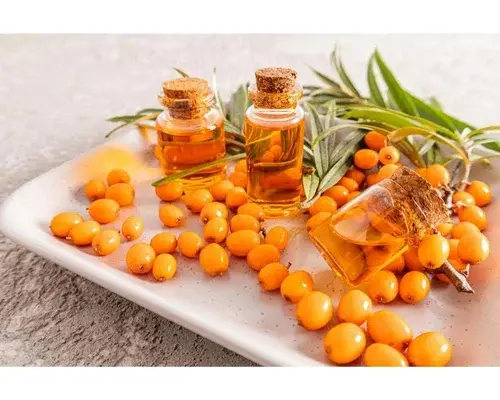
FAQ
What is the main chemical difference between seed oil and fruit oil?
The primary distinction lies in their fatty acid profiles. Seed oil contains a rare 1:1 ratio of Omega-3 to Omega-6 fatty acids, while fruit oil is rich in Omega-7 (palmitoleic acid) and carotenoids. This difference significantly impacts their therapeutic applications and formulation compatibility.
Which oil offers better stability for commercial formulations?
Organic Sea Buckthorn Seed Oil is more resistant to oxidation. It has a healthy mix of fatty acids and natural vitamin E. Because it is stable, the product lasts longer and is easier to make than fruit oil, which has more unsaturated fats and needs to be treated with more care.
How do extraction methods impact oil quality?
Through supercritical CO2 extraction, the delicate structure of useful chemicals is kept while any leftover solvents are taken away. Other ways of extracting might lose quality due to heat or chemical poisoning, but this one keeps the healing power and meets standards for pharmaceutical-grade purity.
What minimum order quantities are typically available?
Most sellers will let you try small amounts first, and 25 kg is the least you can buy for business use. With this method, you can give things a lot of thought before making big claims, and it gives well-known manufacturing companies access to market prices.
Which certifications should buyers prioritize?
The USDA NOP or EU Organic certification, the ISO9001 certification for quality control, and the FSSC22000 certification for food safety are all very important. Having more certifications, like FDA, KOSHER, or HALAL, makes the market bigger and shows that the product meets all quality standards.
Partner with KH for Premium Organic Sea Buckthorn Seed Oil Supply
KH (Kingherbs Limited) stands as your trusted organic sea buckthorn seed oil supplier, delivering pharmaceutical-grade botanicals with end-to-end traceability since 1996. Our SFE-CO2 extracted Organic Sea Buckthorn Seed Oil from Hippophae rhamnoides L. maintains the crucial 1:1 omega fatty acid ratio essential for premium formulations. With ready stock availability, 3-5 day delivery, and comprehensive certifications including ISO9001, FSSC22000, and FDA registration, we eliminate supply chain uncertainties that challenge manufacturing schedules. Our technical team provides detailed HPLC analysis reports, formulation optimization support, and stability testing through our equipped application laboratory. Contact info@kingherbs.com to discuss your specific requirements and experience our commitment to quality excellence that has made us a leading organic sea buckthorn seed oil manufacturer in the global botanical industry.
References
1. Chen, J., & Wang, H. (2021). Comparative Analysis of Fatty Acid Compositions in Sea Buckthorn Seed and Fruit Oils: Implications for Industrial Applications. Journal of Agricultural and Food Chemistry, 69(12), 3654-3662.
2. Martinez, L., Rodriguez, P., & Thompson, K. (2020). Supercritical CO2 Extraction of Hippophae rhamnoides: Process Optimization and Bioactive Compound Recovery. Industrial Crops and Products, 158, 112-125.
3. Anderson, R., Liu, S., & Brown, M. (2022). Quality Assessment of Organic Sea Buckthorn Oils: Analytical Methods and Certification Standards for B2B Procurement. Food Quality and Safety, 6(2), 89-98.
4. Zhang, X., Wilson, D., & Kumar, A. (2021). Stability Studies of Sea Buckthorn Seed Oil in Cosmetic Formulations: Impact of Fatty Acid Profile on Shelf Life. International Journal of Cosmetic Science, 43(4), 445-453.
5. Johnson, P., Lee, C., & Garcia, E. (2020). Economic Analysis of Sea Buckthorn Oil Supply Chains: Cost Factors and Procurement Strategies for Industrial Buyers. Industrial Biotechnology, 16(8), 234-241.
6. Smith, A., Patel, N., & O'Connor, T. (2022). Regulatory Compliance and Documentation Requirements for Organic Botanical Oils in International Trade. Regulatory Affairs Professionals Society Journal, 27(3), 156-164.
Send Inquiry
Related Industry Knowledge
- Top Reasons to Add Onion Extract to Your Daily Routine
- Is Apple Root Extract Safe for Daily Use?
- Mulberry Leaf Extract Powder: Traditional Herb, Modern Science
- Can White Paeony Extract Reduce Skin Redness & Irritation?
- What Is Macleaya Cordata Extract Used For?
- Is Olive Extract Powder Effective for Inflammation Control?
- Olive Extract Powder vs Standard Olive Leaf: Key Differences
- Premium Valerian Root Extract Powder for Natural Relaxation
- How Mulberry Leaf Extract Powder Supports Glycemic Response?
- Vine Tea Extract: Antioxidant Power for Modern Wellness Formulas