_1762508637542.webp)
How to Choose High-Quality Echinacea Purpurea Extract?
Aug 31, 2026
Choosing a high-quality Echinacea Purpurea Extract (purple coneflower extract) requires evaluating botanical authenticity, standardized active markers (cichoric acid, echinacosides, polyphenols), extraction purity, third-party certifications (USP, EP), and supplier transparency. Prioritize partners with proven traceability, HPLC-verified batch documentation, natural solvent processes, flexible MOQs, technical R&D support, and prompt sample delivery to meet your formulation and compliance requirements.

Core Criteria for Evaluating Echinacea Purpurea Extract Quality
There are a lot of suppliers, specifications, and quality claims that procurement professionals have to deal with. Setting clear evaluation criteria protects the image of your business, makes sure you follow the rules, and improves the performance of your formulation. The following standards help people make smart decisions about what to buy, including Echinacea Purpurea Extract.
Botanical Authenticity and Purity Verification
Misidentifying species and tampering with raw materials are very bad things that can happen when buying plants. E. purpurea is very different from E. pallida in both as an active marker and for medicinal purposes. Each batch from a reliable source comes with an identification certificate based on DNA barcoding or morphology. We work with confirmed planting sites to choose the varieties, manage the soil, and decide when to collect. This way, we can make sure that the genetics are consistent and stop species substitution at the source.
Extraction Methods and Their Impact on Quality
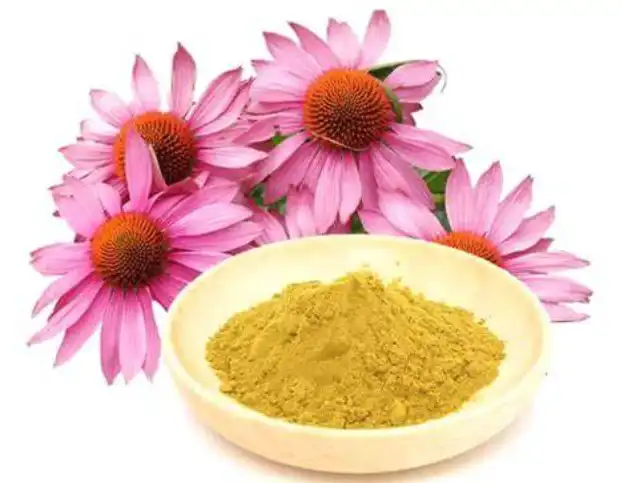
The extraction solvents have a direct effect on the safety of the end product, the retention of active markers, and the profiles of residues. Using only water for extraction makes mixtures that are high in polysaccharides, while food-grade ethanol catches both cichoric acid and alkamides that bind to fat. It costs more, but CO2 supercritical extraction is purer because it doesn't use any solvents. We only use pure water or edible ethanol, which keeps the bioactive structure and doesn't leave behind any harmful leftovers. This natural method makes a fine, yellowish-green powder that dissolves quickly and has a clean taste that can be used in drinks, pills, and on the skin.
Standardization Metrics and Active Marker Concentrations
For products to be consistent, they need to be standardized exactly. Premium extracts list the amount of cichoric acid (0.2% to 4% by HPLC), echinacosides (1% to 12%), and total polyphenols (4% to 6% by UV spectroscopy). Ratio extracts (4:1, 10:1) show concentration levels but don't promise an active marker. We give you full HPLC analysis results for every batch, so you can be sure that the active ingredients match what the label says they are and that your finished products will stay stable. This clarity gets rid of the need to guess when figuring out dosages and helps make sure that the effectiveness is maintained across production runs.
Quality Control Protocols and Compliance Standards
Strong quality management systems separate trustworthy suppliers from traders who are only looking to make money. Certifications like ISO9001, FSSC22000, HACCP, and GMP show that the business is run with strict rules and has a system for keeping track of things. Products that follow the rules in the USP and EP standards are very pure and don't have any heavy metals, pesticide residues, microbial contamination, or fluid residues. We keep all of our certifications up to date, including ISO9001, FSSC22000, KOSHER, HALAL, and HACCP. We also have third-party testing done by recognized labs, which gives us Certificates of Analysis (CoA) that are accepted by government audits in North American and European markets.
Comparative Analysis of Echinacea Purpurea Extract Products
Knowing what makes a product different helps you make smart buying choices that are in line with your goal applications and market positioning. These similarities show important things to think about when making a choice.
Species and Botanical Part Considerations
E. purpurea aerial parts have more cichoric acid, which makes Echinacea Purpurea Extract perfect for immune-boosting supplements and functional drinks. E. angustifolia root extracts focus on the echinacoside content, which is usually chosen for long-term immune problems. Purple coneflower products work well with elderberry's antiviral properties and zinc's ability to help cells, giving formulators a lot of options for how to combine the two. When choosing botanical parts, aerial extracts are better for sustainable gathering because roots need to be cut down, but collecting leaves and flowers lets the plant grow back.
Powder Versus Liquid Extract Formats
Powder extracts are most often bought by businesses because they last longer on shelves, cost less to ship, and can be used in pills, capsules, powders, and topical bases. Bulk density (0.45–0.65 g/ml) and particle size (95% through 80 mesh) are the best ways to make capsules and tablets that are compressed. Liquid extracts work well for tinctures that can be used right away, but they need to be preserved and shipped in a cold chain. Our fine yellowish-green powder format stays stable for 24 months or more when stored properly, which lowers the risk of running out of stock and lets you set your own production schedule.
Organic Certification Trade-offs
Organic approval comes with higher prices (15–30% more than normal), but it opens up new markets for people who care about pesticide-free farming and stories about regenerative agriculture. Active markers, microbial purity, and extraction efficiency are all quality factors that are similar between organic and conventional types when they come from trustworthy sources. The type of customers you want to reach, how you position your business in the market, and the way your margins are set will affect your choice. We have both certified organic and conventional specifications, so you can choose how to buy from us without having to worry about technical performance.
Practical Steps to Source High-Quality Echinacea Purpurea Extract for Your Business
Systematic evaluation of suppliers lowers the risks of buying things and builds partnerships that can grow with your business. This step-by-step plan makes it easier to make choices about where to source things.
Identifying Credible Suppliers with Manufacturing Capacity
First, check the supplier's qualifications, such as their manufacturing licenses, export registrations, and building certifications. Ask for site audit reports or GMP checks by a third party. Check the production capacity to make sure it can be expanded. Small suppliers may have trouble with sudden increases in demand, but large manufacturers can always provide the goods. Since 1996, our company has grown into one of the biggest makers of botanical ingredients in China. We now have production lines that can handle hundreds of botanical extracts every year while still following strict quality standards. Supply lines are reliable even during busy times of the year because the industry has reached a certain level of maturity.
Evaluating Pricing Structures and MOQ Flexibility
Clear pricing keeps secret costs and budget overruns from happening. Ask for full quotes that include savings for buying in bulk, payment terms, and Incoterms (FOB, CIF, DDP). Minimum order amounts (MOQs) have a big effect on inventory control and cash flow. We can handle both sample orders and small trial batches before scaling up to commercial MOQs of 25 kg. This lets you work on formulating products without having to make big financial commitments. This flexibility is especially helpful for small businesses and brands that test market ideas before going into full-scale production.
Sample Testing and Third-Party Verification
Before choosing a supplier, you should always test representative samples in your real formulation system. Do solubility tests, stability tests (heat, light, pH), and taste tests in-house. Send samples of Echinacea Purpurea Extract to separate labs at the same time for HPLC confirmation of active markers, heavy metal analysis, pesticide screening, and microbe tests. Compare test results to source COAs to make sure they are correct. We can send you sample amounts in 3–5 business days, which shortens the time it takes to evaluate and helps with fast product development processes.
Contractual Safeguards and Transparency Measures
Formal supply agreements should spell out quality standards (like active marker ranges and acceptable tolerances), inspection rights, how to reject a batch, and how to settle a dispute. Include terms that cover things like "force majeure," "lead time guarantees," and "price adjustment triggers." Transparency goes beyond contracts; trustworthy providers are happy to share group production records, documents on where they get their raw materials, and information on the extraction process. This level of openness helps build trust and makes it possible for regulatory bodies and big retail partners to do the tracking checks they need.
Risk Management and Best Practices for Long-Term Procurement Success
Actively reducing risks protects the reputation of a brand and builds long-lasting supply relationships that can withstand changes in the market and in regulations.
Detecting and Preventing Adulteration
Botanical adulteration, which includes adding cheaper fillers to dilute the botanicals, switching species, or adding synthetic spikes, is still common in the global ingredient markets. Use multiple levels of verification: ask for thin-layer chromatography (TLC) fingerprints, DNA identification, and microscopic analysis in addition to the usual HPLC tests. If you see prices that aren't what they should be, that means the quality might not be as good as it should be. Our full-circle tracking system keeps track of raw materials from partner planting sites all the way through extraction and packing. This gives full proof of ownership and eliminates the risk of fraud.
Implementing Traceability and Batch Tracking
Effective traceability systems allow for quick responses to recalls and meet the needs of regulatory audits. There should be unique labels on each batch that connect the finished extract to the lots of raw materials used, the times of extraction, the results of quality tests, and records of distribution. We give batch numbers that are linked to detailed HPLC spectra and microbial testing data. This lets you track ingredients all the way through SKUs for finished products. This detailed tracking helps meet the labeling needs of each lot and shows that you did your part during third-party checks or regulatory inspections.
Sustainability and Regulatory Compliance Strategies
As corporate sustainability reporting grows in popularity, ethical sourcing has a bigger impact on buying decisions. Work with suppliers who show they care about fair work methods, responsible farming, and the environment. Regulations are always changing, such as FDA import alerts, EU new food limits, and CITES botanical protections. This means that sellers need to keep an eye on changes in compliance and make changes to paperwork before they happen. Our certificates cover quality management (ISO9001), religious dietary standards (KOSHER, HALAL), and food safety (FSSC22000). This makes sure that we are ready for regulations in a wide range of markets and supports your ESG goals.
Conclusion
If you want to choose the best Echinacea Purpurea Extract, you need to look at how natural the extraction process is, whether it uses harmful solvents, whether the botanicals are real, and whether the suppliers offer full certifications and clear traceability systems. Give more weight to partners who can show that their manufacturing can be scaled up, that their MOQ structures are flexible enough to allow for sample testing, and that they have technical R&D capabilities that go beyond just providing ingredients. By using strict screening procedures for suppliers, contractual protections, and regular quality checks, procurement professionals are able to get consistent raw materials that protect brand reputation, meet regulatory requirements, and allow new products to stand out in the wellness market, which is very competitive.
FAQ
What distinguishes high-quality purple coneflower extract from inferior grades?
High-quality extracts have active marker amounts that have been checked using HPLC (cichoric acid ≥2%, polyphenols ≥4%), full third-party testing for heavy metals and pesticide residues, and proper botanical identification that sets E. purpurea from species that are related, as well as certifications that the manufacturing conditions are GMP. Bad goods usually don't have standardization paperwork, use fillers that aren't revealed, or have species substitutes that have different phytochemical profiles. Before placing a scaling order, you should always ask for batch-specific COAs and have them checked by a separate lab.
Can I request custom formulation ratios to meet specific health claims?
Suppliers with a good reputation and research and development (R&D) skills can provide custom combining services that are tailored to your recipe needs. This includes changing the amounts of cichoric acid and polyphenol, making plant mixes that work well together, or coming up with the best ways to give the medicine for your use, whether it's in drinks, gummies, tablets, or on the skin. We keep fully stocked application laboratories that offer recipe optimization, stability testing, and compounding advice that cuts down on the time it takes to make a new product while still meeting all legal requirements.
How stable is cichoric acid during product storage and manufacturing?
Over time, oxidation, moisture, and heat can damage cholinergic acid. When extracts are kept in cool, dry places below 25°C and properly packed in double-lined polyethylene bags inside sealed drums, they keep at least 95% of their active marker content for 24 months. High temperatures (>85°C) used in manufacturing or long periods of contact with air and light speed up decline. Microencapsulation technologies keep cichoric acid safe while it is being processed, and nitrogen flushing and moisture shields make final products last longer. Ask for safety data that is specific to how you will be handling it.
Partner with KH for Consistent, High-Quality Echinacea Purpurea Extract Supply
We at KH (Kingherbs Limited) provide pharmaceutical-grade purple coneflower extract and have been working with plant ingredients for 28 years, helping companies around the world make food supplements, nutraceuticals, and cosmetics. Our supply chain is vertically linked, starting with controlled-origin planting bases and ending with testing and extraction. This makes sure that every 25 kg drum of botanicals is real and has the same amount of active markers, which can be checked using HPLC. As a dependable Echinacea Purpurea Extract supplier, we offer low minimum order quantities (MOQs) that allow for samples and test batches, fast shipping from in-stock items within 3–5 business days, and full technical support that includes HPLC component spectra, formulation optimization, and stability testing advice. Our full standards (ISO9001, FSSC22000, KOSHER, HALAL, HACCP) and USP/EP-compliant goods meet the strict rules of the North American and European markets. You can email our technical procurement team at info@kingherbs.com to ask for samples, talk about custom formulation needs, or set up facility audits that show how committed we are to traceability, transparency, and service that is focused on partnerships.
References
1. Barrett, B. (2003). Medicinal properties of Echinacea: A critical review. Phytomedicine, 10(1), 66-86.
2. Manayi, A., Vazirian, M., & Saeidnia, S. (2015). Echinacea purpurea: Pharmacology, phytochemistry, and analysis methods. Pharmacognosy Reviews, 9(17), 63-72.
3. Speroni, E., Govoni, P., Guizzardi, S., Renzulli, C., & Guerra, M. C. (2002). Anti-inflammatory and cicatrizing activity of Echinacea pallida Nutt. root extract. Journal of Ethnopharmacology, 79(2), 265-272.
4. Woelkart, K., & Bauer, R. (2007). The role of alkamides as an active principle of echinacea. Planta Medica, 73(7), 615-623.
5. Chicca, A., Raduner, S., Pellati, F., Strompen, T., & Altmann, K. H. (2009). Synergistic immunopharmacological effects of N-alkylamides in Echinacea purpurea herbal extracts. International Immunopharmacology, 9(7-8), 850-858.
6. Barnes, J., Anderson, L. A., Gibbons, S., & Phillipson, J. D. (2005). Echinacea species (Echinacea angustifolia, E. pallida, E. purpurea): A review of their chemistry, pharmacology and clinical properties. Journal of Pharmacy and Pharmacology, 57(8), 929-954.
Send Inquiry
Related Industry Knowledge
- How to Select Artemisinin Powder for Custom Formulations?
- Finding quality Tongkat Ali Extract Powder: Six golden rules to follow.
- Why Is Angelica Officinalis Extract a Premium Herbal Ingredient?
- How Does Bamboo Leaf Extract Support Skin Health and Vitality?
- Can Bitter Melon Extract Powder improve blood sugar?
- Can Valerian Root Extract Powder Help With Stress?
- How Cortex Phellodendri Powder Supports Immune Balance
- Is Organic Sea Buckthorn Seed Oil Good for Sensitive Skin?
- How Wild Yam Extract Powder Helps Maintain Body Balance
- Cortex Phellodendri Powder: Benefits, Uses, and Dosage