
How Is Polygonum cuspidatum extract Used in Functional Foods?
Nov 4, 2026
Polyphenols are the major constituents of functional foods containing Polygonum cuspidatum extract. Formulators use it in powdered drink mixes, ready-to-drink drinks, wellness shots, candies, nutrition bars, pills, and capsules. They pick it for its trans-resveratrol, polydatin, and related plant chemicals, which have been associated with antioxidant action. The appropriate grade depends on the product matrix. Beverages need effective color dispersion and control. Dry items require moisture and oxidation control. At KH, we provide this component with an HPLC analysis for each batch, so your team can match the grade to the application and the label.
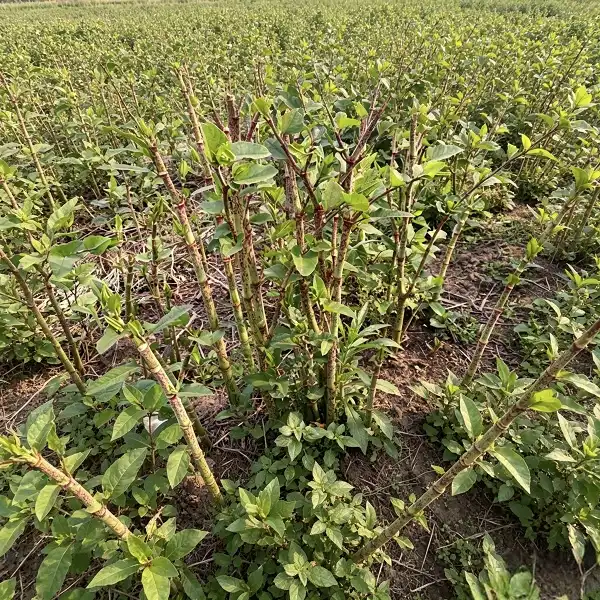
What Is Polygonum cuspidatum Root Extract?
Botanical Source and Part Utilized
Japanese knotweed is a perennial plant, indigenous to China and Japan. Polygonum cuspidatum extract is made from the root of this plant. Many sources now call the plant Reynoutria japonica, thus you may encounter both names on a spec sheet. In Traditional Chinese Medicine, the root is known as Huzhang. Away from its native location, Japanese knotweed is hazardous to remove. The IUCN thinks it is among the 100 worst alien species that have invaded the earth. So you need to inquire how they obtain their ideas. If you work for KH, you may control the kind, the soil, and the time of harvest. So, the active ingredient is the same from one batch to the next.
Key Components: Polydatin, Emodin and Resveratrol
There are 3 methods to put this root together. What people search for in meals and plants is mostly trans-resveratrol. Polydatin is the glucoside of resveratrol. Polydatin mixes with water; free resveratrol doesn't. The same root also contains the anthraquinone emodin. Our Polygonum cuspidatum extract contains from 20% up to 98% polydatin. You may also find anything from 10% to 99% resveratrol and 95% emodin. All these results have been obtained via HPLC testing. You may also obtain 4:1 and 10:1 ratios from us. The powder transforms from brown to brownish yellow powder to fine white powder as the purity level goes up. This is because the plant's oils are stripped out in processing. Food teams need to know the guidelines before they may utilize emodin in food.
What Buyers Are Watching
Antioxidant manufacturers are searching for plant polyphenols that include compounds that make them easier to identify. What you need is a Polygonum cuspidatum extract. The removal of the root could improve the concentration of resveratrol or polydatin in it to a certain degree. A 2013 article in the Journal of Ethnopharmacology goes into great length regarding the science of the plant and its usage in traditional medicine. But a high test score doesn't always imply an ingredient is excellent. To have a successful launch, you need to be active, maintain records, be able to keep track of things, and have a continuous supply.
How Is Polygonum cuspidatum extract Used in Functional Foods?
Beverages and Wellness Shots
In a clear sense, it may be utilized to produce ready-to-drink drinks, health shots, and powdered drink mixes. Resveratrol does not mix well with water at roughly 0.03 mg/mL, according to a 2012 assessment in the Journal of Controlled Release. Therefore, teams using Polygonum cuspidatum extract in liquids should be aware of the fact that it will settle and therefore be dosed differently. The extensive testing of polydatin grades and dispersion systems might be beneficial. Also verify the color, taste, and acidity level of the extract. See how it changes with the vitamins, the sweets, and the flavors. If the appearance of your drink is important, a whiter grade may be preferable to a brownish yellow grade. I think you should test it in the actual liquid, not simply in water.
Dry Forms: Powders, Bars, Gummies, Capsules
Dry and semi-solid types provide formulators additional flexibility. Generally, the powders in capsules, tablets, or stick packs should be highly pure since the matrix is simple and the quantity is manageable. You want to make sure the active components are still in the candies or energy bars before you prepare or store them. They are manufactured using heat, water, sugar, and protein. Ultraviolet radiation may transform trans-resveratrol to cis form, according to research published in the Journal of Agricultural and Food Chemistry in 1996. The active is kept secure using low oxygen, low moisture, and packaging that is difficult to look inside. Make sure it is simple to blend meal replacement and beneficial powders and that the powder flows smoothly before going on to the next step.
Regulatory Position of the United States
The guidelines say where the substance may go. That's what DSHEA recommends for pills and powders in the US. Structure/function claims must be accompanied by a disclaimer and notification to the FDA. Food and drink—ordinary food and drink—operate differently. What's OK in a supplement may not be fine in a beverage or a snack bar. Most of the time, it has to be GRAS certified or acknowledged as a food additive. This implies that Polygonum cuspidatum extract may be added to any regular meal depending on what it is used for. We have certificates from ISO9001, FSSC22000, HACCP, KOSHER, HALAL, and the FDA. Our goods also conform to USP and EP standards. But your regulatory staff has to verify that every intended use is accurate.
How Can Manufacturers Develop Polygonum Cuspidatum Extract for Functional Foods?
The Functional Characteristics That Matter
So discuss first what the ingredient does in the lab and in the process. Resveratrol, polydatin, and other polyphenols like them have been found to be antioxidants in test tubes. The claim is true. That does not imply the ultimate product is excellent, or that the claim is genuine. More research has to be done on resveratrol, says a 2021 review in Biomedicine & Pharmacotherapy. The formulator is particularly concerned with what the marker is made of, how effectively it disperses, the color, the taste, and how well it remains active in heat, light, oxygen, pH, and humidity. A 2004 study published in the journal Drug Metabolism and Disposition found that resveratrol administered orally is highly absorbed but not extremely bioavailable. Another reason not to give out too much.
Picking a format and dose path
Before assigning a grade, you should discuss the kind of product, serving size, market, and claims. "Good for capsules and tablets. Very pure powder." Sometimes cost is more essential than color, and a less pure brown powder may be employed. Do not use one pricing list for Polygonum cuspidatum extract. Match each ingredient with the extract grade. We think of creative methods to mix items with well-defined roles or ratios. We also assist clients manufacture beverages and gummies and pills and skin care systems and assess how stable they are in our application laboratory. To make sure the quantity is safe, you should consult the authorities, obtain standardization data, and do testing. There isn't a universally applicable number.
Compatibility Testing Prior to Scale Up
Before signing off on a pilot size, make sure all the pieces fit. Look at the color, flavor, how it settles, clumps, and retains water. Watch what happens when you combine it with acids, proteins, carbohydrates, minerals, and bacteria. A water test may not give the complete picture if you consume acidic beverages, protein shakes, or fiber blends. This is why pH must be included in the test strategy. Resveratrol is stable in acidic conditions but degraded in alkaline conditions. Save some samples for later and perform HPLC on the entire thing at defined times. Then compare your outcome with the label. It takes time, but it avoids the need for costly reformulations after introduction.
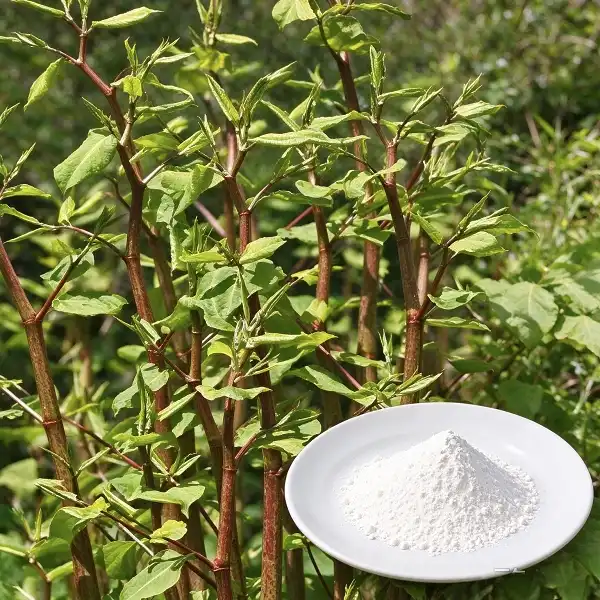
Polygonum cuspidatum Extract Comparison: Which Format and Standardization Is Best?
Versus Grape Seed Extract
The extract of Polygonum cuspidatum is linked to resveratrol and polydatin, while the extract of grape seeds is usually standardized to proanthocyanidins. You can't switch the two. Grape seed won't help you get your point across if your label's story is about resveratrol. If you want to get proanthocyanidins, don't use knotweed root. Some brands mix them into a single polyphenol mix, but that choice should be tried out to see how stable it is and how it tastes. To buy something, make sure the label has the Latin name, the part of the plant that it comes from, the marker chemicals, and the way it was extracted.
Versus Isolated Resveratrol
Since resveratrol is a single chemical, it is easy to reach the goal. A botanical extract comes from plants and may contain polydatin and other phenolics. Natural resveratrol and man-made resveratrol are chemically the same at 98% purity. Their molecular structure is the only thing that is different, not where they come from or how they are labeled. Polygonum cuspidatum extract comes in grades with between 10% and 99% resveratrol. A low grade will give you a fuller root profile, while a high purity grade will give you a set amount. Check both the price per kilogram and the price per milligram. This is because a 99% grade is not the same as a 10% grade.
Polydatin Grades, Powder, and Liquid Formats
Polydatin comes in grades that range from 20% to 98%. They're good for teams that want the glucoside form of resveratrol because it mixes better with water than free resveratrol. Things are still mostly stored and sent in powder, which can be sent by courier, air, or ocean and fits into 25-kilogram drums. If your provider has liquid forms, it may be easier to take doses in drinks, but they raise concerns about how stable they are, how to store them, and how to handle them. First, compare the strengths, shelf lives, and ability to work with different lines. Next, do a quick test. Our 4:1 and 10:1 ratio extracts give you another choice when a whole-root profile is best for the product.
How Can B2B Buyers Evaluate a Polygonum cuspidatum Extract Supplier?
Specification Checklist and Documents
Ask for a full list of requirements before you place your order. Write down the Latin name, the part of the plant that was used, where it came from, how much was removed, the liquid, and the test method. HPLC should show trans-resveratrol, polydatin, or emodin in the active data, along with the batch number and the date it was made. The actual facts should include the look, the amount of water, the particle size, and how well it spreads. Some of the things that should be in the safety data are microbes, heavy metals, pesticides, allergens, residual solvents, and GMO status. Make sure you know how to control changes and recall products, and ask for COAs, SDS files, and certificates. There is an HPLC measurement record for every batch, and we only use pure water and food-grade ethanol for this process.
Common Mistakes to Avoid
People who want to buy often look for the highest assay. Even if the trans-resveratrol level is high, that doesn't mean the product will be cheap, easy to spread, taste good, or stay stable. People also make the mistake of thinking that solubility and water dispersibility are the same thing. This could lead to sediment, uneven doses, and issues with the line that fills the tank. Teams also test only in water and then find surprises in gummies, protein drinks, and drinks that are acidic. Some things that can help you stay away from these mistakes are final matrix tests, COA comparisons between different batches, and a look over retention samples. What do they do when the method or raw products change? Tell your partner about the change before the package comes, never after.
What KH Offers: Samples, MOQ, and Support
Herbal and plant-based ingredients have been made by KH since 1996. These are used in medicines, food, cosmetics, feed, and farming. You can get samples or place a small test order. The first business order is 25 kg. It takes us three to five business days to ship samples and regular items that are in stock. You can send things by courier, air, or sea. Our team is your expert partner. We can make unique ratios, provide HPLC results, and help you with applications. The only way to get finished goods is in the form of soft capsules. We can also get you minerals, drugs, and products all in one place.
Conclusion
Polygonum cuspidatum extract is obtained from the root of the Japanese knotweed plant. It contains it in different forms: trans-resveratrol, polydatin, and emodin. It's in healthy beverages, flour mixes, desserts, bars, tablets, and capsules. Each form of food needs a different grade. pH, light sensitivity, and the inability to dissolve in water might modify the mix. The final matrix test is more significant than a top analysis. By using the marker chemical, the source, and the label location, you may identify the best match. Isolated resveratrol or grape seed extract. The US teams also have to inspect each way before they can use it. A constant supply, precise specifications, and batch-level HPLC data are a few of the elements that might help you pick a provider. Standardization, efficiency, compliance, and cost-in-use must all be considered when providing a score.
FAQ
Is Japanese knotweed extract the same as Polygonum cuspidatum extract?
Most of the time, sure. Now, the root of the same plant is widely recognized as Reynoutria japonica. But please check the specifications for the Latin name, plant section, and marker chemicals again.
What makes the extract different from isolated resveratrol?
Being plant-derived, it may include polydatin and other phenolics. You isolate resveratrol, and you obtain one compound. Our highest grade of resveratrol is 99%.
Do drinks need particular grades?
Most of the time, yes. If you want to give the drink a score, look at its color, sedimentation, and ability to combine before you determine how to rate it.
How is the dosage determined?
Your area's legislation, a safety evaluation, the size of the serving, and standardization dictate how much you should take. Tests and discussions with your regulatory team will take you to the best number for all.
What questions do I need to ask before approving a supplier?
Get the details, an HPLC-based COA, an SDS, licenses, and statistics on how stable the product is. We deliver an HPLC report with every batch.
Request a Polygonum Cuspidatum Extract Sample or Bulk Quotation from KH
Are you looking for a business that sells Polygonum cuspidatum extract for sale and has ready-to-ship items that are USP and EP-compliant and come with HPLC data? In three to five business days, KH can send out samples. Please send an email to info@kingherbs.com with your request, the grade you want, how much you want to buy each year, and the market you want to sell to. Our team will then suggest a grade that will work.
References
1.Nature Reviews Drug Discovery, 2006 – Therapeutic potential of resveratrol: the in vivo evidence.
2.Drug Metabolism and Disposition, 2004 – High absorption but very low bioavailability of oral resveratrol in humans.
3.Journal of Controlled Release, 2012 – Administration of resveratrol: What formulation solutions to bioavailability limitations?
4.Journal of Ethnopharmacology, 2013 – Botany, phytochemistry, pharmacology, and potential application of Polygonum cuspidatum Sieb. et Zucc.: a review.
5.Journal of Agricultural and Food Chemistry, 1996 – Resveratrol: isomeric molar absorptivities and stability.
6.Biomedicine & Pharmacotherapy, 2021 – Resveratrol (RV): A pharmacological review and call for further research.
Send Inquiry
Related Industry Knowledge
- Why Choose White Paeony Extract for OEM Skincare?
- Where to Buy Scutellaria Baicalensis Extract in Bulk
- Bamboo Leaf Extract Benefits: Everything You Need to Know
- Can Blueberry Extract Powder Promote Cardiovascular Wellness?
- Can Astaxanthin Powder And Oil Improve Eye and Vision Health?
- How Bamboo Leaf Extract Is Made: Harvest to Extraction
- Can Dill Seed Extract Help Relieve Abdominal Cramping?
- What Sets Premium Watermelon Powder Apart?
- Is Mulberry Leaf Extract Powder Effective for Insulin Sensitivity?
- Can Purple Sweet Potato Extract Support Cellular Protection?