
Can Rice Bran Extract Improve Functional Food Formulas?
Oct 29, 2026
“Yes, rice bran extract can really make a difference to the functional food recipes.” This fine, light yellow powder is generated from the bran layer of Oryza sativa L., which is abundant in bioactive compounds such as gamma-oryzanol, tocotrienols, ferulic acid, and ceramides that cannot be replicated with synthetic additives. Studies have indicated that gamma-oryzanol (97%-102% pure) helps control cholesterol. Ferulic acid (purity 98%) is a potent natural antioxidant. Rice bran extract provides functional performance and regulatory assurance to procurement managers and R&D directors seeking clean label credentials and batch-level verification for their products.
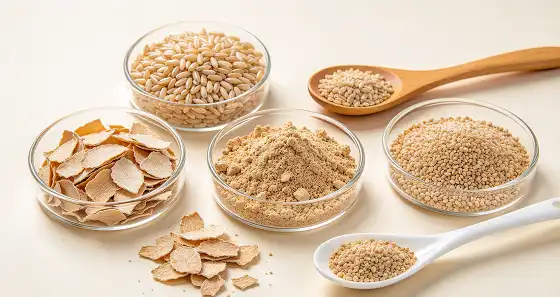
Understanding Rice Bran Extract and Its Role in Functional Foods
What Is Rice Bran Extract?
Rice bran extract is a concentrated phytonutrient powder from the aleurone layer and germ of brown rice. This extract is standardized to certain active fractions, unlike a bulk commodity such as rice bran oil. KH’s formulation also provides parameters for ratio extracts (4:1, 10:1), ceramides at 1%, 3%, or 10%, gamma-oryzanol at 97%-102%, and ferulic acid at 98%, all validated by UV/HPLC testing. The outcome is an element that can be traced, is very potent, and can be counted on to be consistent no matter what formulation it is used in.
How It Differs from Rice Bran Oil and Rice Germ Extract
Rice bran oil contains lipids and some phytosterols but not large amounts of the concentrated oryzanol and ceramide fractions present in the extract form. Rice germ extract, in contrast, is rich in B vitamins and vitamin E tocopherols. Rice bran extract is at the crossroads – delivering tocotrienols (a better form of vitamin E), ferulic acid esters, and sphingolipid ceramides at therapeutically meaningful quantities that oil cannot give without prohibitive dose amounts.
Key Bioactive Compounds and Their Functions
The functional usefulness of this substance is mainly due to its three main active ingredients:
- Gamma-Oryzanol (97%–102%): A combination of ferulic acid esters that limits cholesterol absorption from the stomach, helps lower LDL, and has been shown to be hepatoprotective in a published study.
- Ferulic Acid (98%): Hydroxycinnamic acid that neutralizes free radicals and stabilizes co-formulated vitamins C and E against UV-induced oxidation, hence increasing shelf life in complex matrices.
- Rice Ceramides (1%, 3%, 10%): Plant-based sphingolipids, the barrier of the stratum corneum, and reduce trans-epidermal water loss, i.e., suitable for beauty-from-inside supplement lines.
Why Incorporate Rice Bran Extract in Functional Food Formulas?
The clean-label revolution isn’t stopping. A 2022 poll by FMCG Gurus revealed that 68% of U.S. customers regularly scrutinize ingredient labels and choose familiar, plant-based ingredients. As consumers continue to shun synthetic antioxidants like BHA and BHT, formulators are faced with a genuine void to fill. That missing piece is rice bran extract.
Natural Antioxidant Replacement for Synthetic Additives
Rice bran extract containing ferulic acid and tocotrienols is an excellent inhibitor of lipid peroxidation in high-fat matrices such as frying oils and snack coatings. In high-temperature processing conditions, oryzanol better avoids off-taste formation (reversion flavor) than typical mixed tocopherols because of its heat-resistant characteristics. That makes the chemical an easy, clean-label substitute for BHT/BHA in commercial food manufacturing.
Shelf Life and Product Stability Benefits
Oxidative rancidity reduces the shelf life of the product and impairs the consumer’s confidence. Incorporating rice bran extract into lipid-rich functional foods—protein bars, nut-based spreads, omega-3 capsules—produces an internal antioxidant buffer. The ferulic acid component also stabilizes co-ingredients. A stable formula decreases the need for reformulation and lowers long-term manufacturing costs, a direct pain area for procurement managers handling ingredient budgets.
Nutritional Differentiation in Competitive Markets
Category rivalry is hot for functional food buyers and brand owners. Rice bran extract has peer-reviewed research to back up its health claims, which include cardiovascular support, metabolic health, and antioxidant protection. This raises a product above commodity rivals. The extract is non-GMO, gluten-free (where certified), vegan, and KOSHER/HALAL certified, so it may be distributed in health-conscious retail channels without reformulation.
Comparison with Alternative Ingredients
Rice Bran Extract vs. Rice Bran Oil in Supplement Applications
Oryzanol levels in a softgel or tablet are only noteworthy when rice bran oil is added at gram-level inclusion rates. The extract provides the same activity at milligram dosages. The extract is a more cost-effective option per active milligram and simpler to combine into dry powder matrices for dietary supplement firms that monitor capsule fill weight and manufacturing costs closely.
Organic vs. Conventional: Certification and Traceability Considerations
In the U.S. market, organic-certified rice bran extract sells for a premium of around 20%–40% over conventional grades. The option is dependent on the desired retail channel. Natural and niche grocery customers care about organic certification. For pharmaceutical or OTC supplement uses, GMP compliance, ISO9001, FSSC22000, HACCP, and FDA registration are more important than organic certification. ISO9001, FSSC22000, KOSHER, HALAL, HACCP, and FDA certifications for KH rice bran extract – the widest channel coverage.
Powder vs. Liquid Form for Manufacturing Efficiency
The powder form (fine, pale yellow) blends well into dry blend operations, compressed tablets, and encapsulation lines. Liquid extract forms are suitable for beverage and tincture applications but have stability difficulties – native oryzanol is lipophilic and may phase-separate in aqueous environments. Rice bran extract (microencapsulated or cyclodextrin-encapsulated grades) for clear functional drinks. Physical form matches the manufacturing process, circumventing expensive stability breakdowns at scale-up.
Procurement Insights for B2B Functional Food Manufacturers
Evaluating Supplier Credentials and Batch Documentation
Quality assurance managers require more than a Certificate of Analysis. They want batch-level HPLC results showing active content versus specification – not simply a range. To ensure lot-to-lot uniformity before production starts, KH provides extensive HPLC analytical results for each batch of rice bran extract, including gamma-oryzanol, ferulic acid, and ceramide content, for R&D and QA teams to check. This takes the guessing out of the end product performance.
MOQ Flexibility and Sample Availability
Contract manufacturers and SMES frequently cannot commit to full commercial quantities unless they validate an ingredient in their recipe. KH is open to modest trial orders and sample orders. Minimum order quantity for commercial orders is 25kg per drum. Prompt shipping and ready stock mean trial orders ship within 3–5 business days, greatly reducing the validation time frame compared with suppliers with extended lead periods.
Regulatory Compliance and Documentation Support
U.S. brands of dietary supplements must conform to FDA 21 CFR Part 111 (GMP for dietary supplements). Rice bran extract obtained without sufficient documentation poses regulatory vulnerability. KH’s rice bran extract is manufactured under ISO9001 and FSSC22000 systems and supported by HACCP and FDA registrations. The firm also manufactures USP and EP grade items, offering QA managers the documentation package required for local and export regulatory filings.
Maximizing the Impact of Rice Bran Extract in Your Products
Dosage Optimization by Application Category
Dose varies by application. Gamma-oryzanol is used in cardiovascular support supplements at a dose of 300-500mg/day. Levels of 0.1–0.5% by weight are frequently sufficient for antioxidant stability in functional food matrices such as fortified cereals and protein bars. KH’s application lab provides formulation optimization and compounding support for beverages, gummies, tablets, and skincare treatments, allowing customers to save the costs of trial-and-error in development.
Preserving Bioactives During Processing
The bioactives are fragile and may be destroyed by heat and oxidation during production. KH’s extraction technique is an edible ethanol or water procedure, not a harsh chemical solvent, and maintains the natural character of the substances. In downstream processing, the integrity of ferulic acid and tocotrienol is further preserved by keeping the temperature below 60°C and nitrogen blanketing in lipid-rich systems. These processes ensure that the specification on the COA is maintained during the manufacturing process.
Marketing and Claim Strategy for Functional Food Brands
And brands that specify the standardized actives, such as “contains 98% ferulic acid from rice bran,” or “standardized gamma-oryzanol,” do a better job of conveying product integrity than generic “natural antioxidant” terminology. KOSHER and HALAL certifications open to new market segments. Clean-label selling point traceability documentation boosts retail buyer presentations and DTC eCommerce conversion, particularly in the U.S. health supplement industry where ingredient transparency influences purchase decision-making.
Conclusion
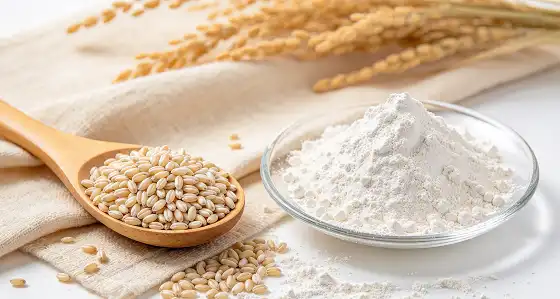
Rice bran extract is a proven clean label ingredient that solves true formulation issues: oxidative instability, replacement of synthetic chemicals, and consumer need for traceable natural bioactives. Nutritional supplements, functional food, and cosmetic applications gain tremendous functional value from standardized fractions of gamma-oryzanol, ferulic acid, and ceramides. The practical method to boost the performance of your product is to get a verified rice bran extract from a certified manufacturer. B2B clients need consistent quality, batch-level documentation, and fast technical support.
FAQ
1. Does Rice Bran Extract Contain Gluten?
Rice is inherently gluten-free, but cross-contamination can occur in shared milling facilities. If your product targets celiac consumers, request a Certified Gluten-Free COA with ELISA testing confirming below 20 ppm gluten. Always verify with your supplier before making label claims.
2. Is Rice Bran Extract Stable in Acidic Functional Foods Like Yogurt?
Yes — the extract performs well in acidic pH ranges of 3.0–5.0. However, in dairy systems, microencapsulated grades are worth considering to prevent interaction with milk proteins that could cause taste changes or sedimentation in the finished product.
3. What Is the Difference Between 4:1 and 10:1 Ratio Extracts?
A 10:1 ratio extract means 10 kg of raw rice bran was concentrated into 1 kg of powder, delivering higher active compound density per gram. The 4:1 grade suits applications where moderate potency and cost efficiency are priorities. Your formulation target determines which ratio is appropriate.
4. How Should Rice Bran Extract Be Stored?
Store in a cool, dry location away from direct light, sealed in the original 25 kg drum. Proper storage maintains the stability of gamma-oryzanol and ferulic acid through the labeled shelf life without degradation.
Partner with KH for Verified Rice Bran Extract Supply
KH has supplied botanical ingredients since 1996, and our rice bran extract is produced under ISO9001, FSSC22000, HACCP, KOSHER, HALAL, and FDA-registered conditions. Every batch ships with a detailed HPLC report. Sample and trial orders are welcome — commercial MOQ starts at 25 kg with prompt shipment. As a trusted rice bran extract manufacturer, we also offer formulation support for your specific application. Contact us at info@kingherbs.com to request a sample today.
References
1. Cicero, A. F. G., & Gaddi, A. (2001). Rice bran oil and gamma-oryzanol in the treatment of hyperlipoproteinaemias and other conditions. Phytotherapy Research.
2. Xu, Z., & Godber, J. S. (1999). Purification and identification of components of gamma-oryzanol in rice bran oil. Journal of Agricultural and Food Chemistry.
3. Juliano, C., Cossu, M., Alamanni, M. C., & Piu, L. (2005). Antioxidant activity of gamma-oryzanol: Mechanism of action and its effect on oxidative stability of pharmaceutical oils. International Journal of Pharmaceutics.
4. Nagasaka, R., Chotimarkorn, C., Shafiqul, I. M., Hori, M., Ozaki, H., & Ushio, H. (2007). Anti-inflammatory effects of hydroxycinnamic acid derivatives. Biochemical and Biophysical Research Communications.
5. Friedman, M. (2013). Rice brans, rice bran oils, and rice hulls: Composition, food and industrial uses, and bioactivities in humans, animals, and cells. Journal of Agricultural and Food Chemistry.
6. FMCG Gurus. (2022). Clean Label Trends: Consumer Attitudes Toward Natural Ingredients in Functional Foods. FMCG Gurus Market Research Report.
Send Inquiry
_1779935763194.webp "Purple Sweet Potato Extract")
Related Industry Knowledge
- Pharmacological Profile and Dose-Response Mechanisms of Oral Artocarpin in Animal Models
- Mangosteen Extract Powder vs Juice Powder: Which Is Better?
- How Does Eucalyptus Leaf Extract Boost Natural Wellness?
- Could Watercress Extract Support Clearer, Healthier Skin?
- How to Choose the Best Avocado Refined Oil for Cooking
- Top Tart Cherry Extract Benefits, Uses, and Applications
- Isatis Root Extract for Antiviral and Detox Support
- Can Couch Grass Rhizome Extract Help UTI Symptoms?
- What Are the Active Compounds in Mulberry Leaf Extract Powder?
- Can Lespedeza Capitata Extract Promote Healthy Fluid Balance?