_1762508637542.webp)
Can pyrethrum extract Improve Natural Pest Control?
Oct 14, 2026
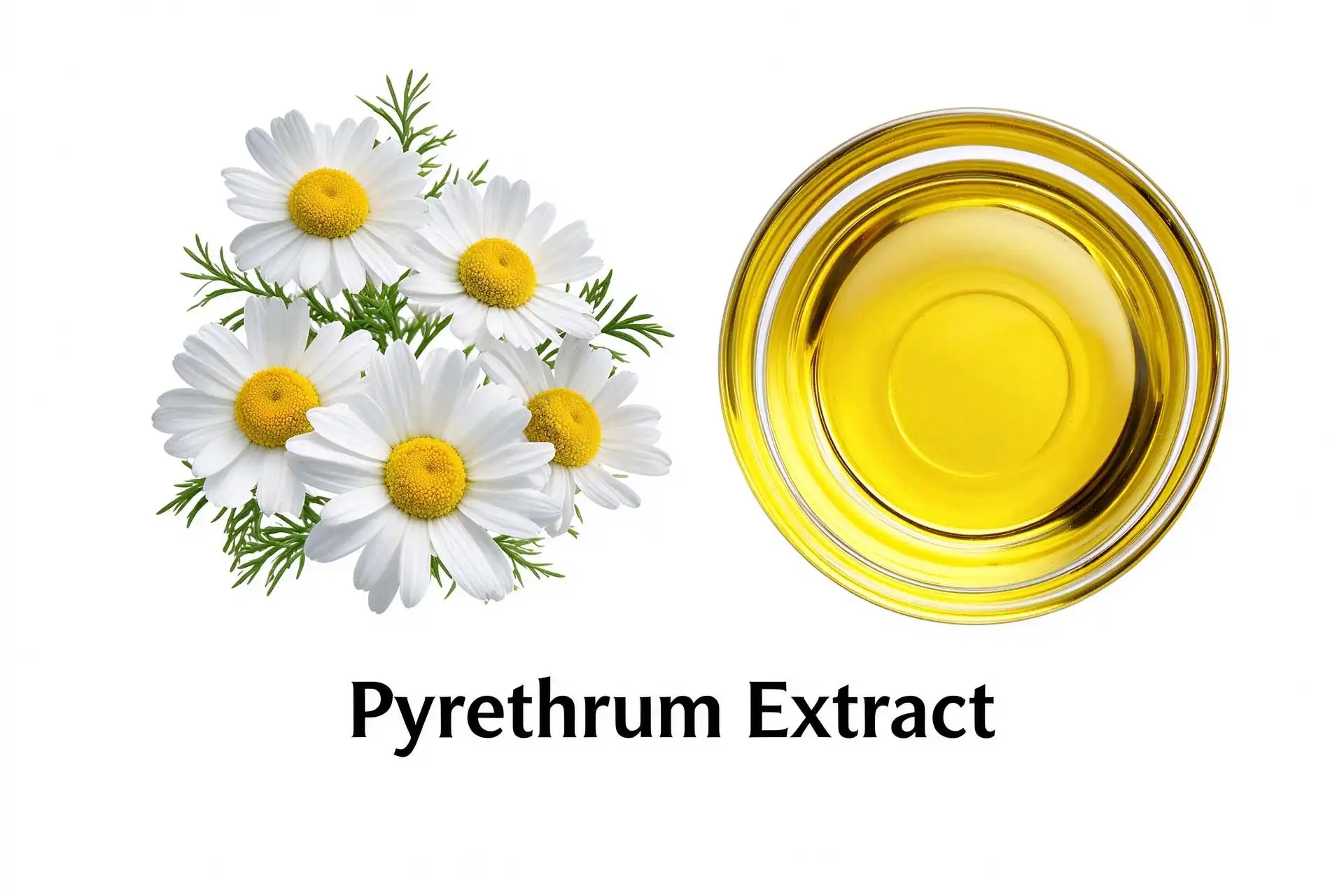
Pyrethrum extract genuinely improves natural pest control, and the evidence supports this across agriculture, public health, and food storage. Derived from the flowers of Pyrethrum cinerariifolium Trev., this buff-to-brown viscous liquid contains six active pyrethrin esters standardized at 50% concentration via HPLC. These compounds attack insect sodium channels, producing rapid knockdown within minutes of contact. Unlike synthetic options, pyrethrum extract breaks down within days under UV exposure, leaving no persistent residue. For procurement managers and formulators sourcing botanical insecticide ingredients, this specific natural compound delivers measurable performance with a cleaner regulatory profile.
Understanding Pyrethrum Extract and Its Role in Natural Pest Control
What Pyrethrum Extract Actually Is?
Pyrethrum extract is a strong plant-based insecticide that is made from the dried flower heads of Pyrethrum cinerariifolium Trev. The active part, called pyrethrins, is made up of six ester compounds, which are Pyrethrin I and II, Cinerin I and II, and Jasmolin I and II. This extract is made by Kingherbs as a buff-to-brown, thick liquid that is measured at 50% total pyrethrin, which has been proven by HPLC testing. The plant source determines how strong it is, and the quality of the flowers grown in controlled environments has a direct effect on the amount of active ingredients in the final product and how consistent the batch is.
How It Disrupts Insect Nervous Systems?
Insect nerve membranes have voltage-gated sodium channels that pyrethrin compounds bind to. This stops the channels from closing, which keeps the nerves firing. This makes you paralysed and kills you quickly. A study in the journal Pest Management Science shows that pyrethrins kill insects much faster than most natural options. The low safety profile of this product for mammals means it can be used in food-contact and public health settings. This is because mammals have higher body temperatures and more active liver enzymes that break down pyrethrins quickly.
Ecological Advantages Over Synthetic Pesticides
Under natural sunshine, pyrethrum extract photodegrades in one to five days, leaving no lingering contamination of the land or water. Because of this, it has a zero-day or nearly zero pre-harvest interval (PHI) on many crops, which is critical for exporters of berries, leafy greens, and cannabis who have to follow strict Maximum Residue Limit (MRL) rules in the EU and US. It can also be used in OMRI-listed formulations for certified organic production, which synthetic pyrethroids like permethrin cannot.
Pyrethrum Extract vs. Synthetic and Natural Alternatives
Comparing Performance With Permethrin
The synthetic pyrethroid permethrin was made to be stable in UV light, which means it keeps working for a few weeks after it is applied. That durability makes it more likely that aquatic organisms and cats will be poisoned, and it makes it difficult for food crops to meet residue compliance standards. Pyrethrum extract does not have the same level of leftover persistence, but its shorter lifespan can be a benefit in situations where residue-free harvest dates and organic certification are more important than long protection periods.
Pyrethrum Extract Against Neem Oil
Neem oil mostly stops insects from eating and growing, and it takes a few days before you can see a decrease in pests. When rapid action is required, such as during severe aphid or whitefly outbreaks in greenhouse operations, pyrethrum extract provides touch knockdown within minutes. An important part of many integrated pest management (IPM) systems is using both neem oil and pyrethrin-based products to get rid of pests quickly.
Regulatory Position in the US and EU Markets
The US EPA says that pyrethroids are a low-risk pesticide. The EU Regulation (EC) No 1107/2009 allows the use of pyrethrin under certain circumstances, and high-purity versions based on pyrethrum can be found on the OMRI (Organic Materials Review Institute) list. Formulators who use naturally occurring pyrethrum instead of synthetic chemicals get a big regulatory edge when they make goods for organic farming, food processing facilities, or public vector control programmes.
Procurement Insights: How to Source High-Quality Pyrethrum Extract?
Key Quality Specifications to Evaluate
Officers in charge of buying things should demand batch-level HPLC records that show the total amount of pyrethrins is at least 50% ± 1%. It's also important to ensure that the acid value is below 5%, which means that the ester isn't being broken down too much, that the solvent residue levels are within the ICH limits, and that the dewaxing performance for ULV and aerosol applications is cold-tested. Suppliers should provide not just general product standards but also certificates of analysis (COA) for each batch. Without being able to track down to the batch level, quality can't be guaranteed to be the same across production runs.
Certifications That Reduce Supplier Risk
When looking at pyrethrum extract suppliers, certification coverage shows that the products are safe and that the business is responsible. KOSHER, HALAL, HACCP, ISO9001, and FDA approvals are all on file for Kingherbs' pyrethrum extract. These certificates show that our quality management system, rules for food safety, and controls for processing all meet standards that are known around the world. If you are a procurement manager selling goods in the US or the EU, these certifications lower the risk of an audit and speed up the paperwork you need to file with the government.
Practical Sourcing Terms and Lead Times
Kingherbs sells pyrethrum extract in 1 kg and 5 kg bottles for small trial orders and samples. The minimum order quantity (MOQ) for commercial orders is 25 kg. Most orders ship within 3–5 business days if the items are in stock and ready to go. Buyers have choices for shipping methods like messenger, air freight, and ocean shipping, depending on how quickly they need the goods and how many they need. The low sample order threshold lowers the financial risk for R&D teams testing new formulations before they move on to full production runs.
Application Best Practices and Safety Guidelines
Integrating Pyrethrum Into IPM Programs
Instead of being used as a stand-alone option, pyrethrum extract works best when integrated into a structured IPM rotation. Rotating it with modes of action that don't involve pyrethrin stops pest populations from becoming resistant to it. In real life, this means using biological controls or bug growth factors every other cycle. Time of day is also important for effective IPM application; doses in the early morning or late evening limit the exposure of helpful pollinators because pyrethrins break down quickly before peak pollinator activity.
Dosage, Handling, and Environmental Precautions
In the field, standard amounts of pyrethrum-based mixes are usually between 0.1% and 0.5% pyrethrins in the total spray volume. People who handle the concentrated extract should wear the right PPE, like gloves and eye protection, because it can irritate the skin and mucous membranes. Most places need buffer zones around bodies of water because pyrethrins are very dangerous to fish and marine animals, even though they break down quickly on land. To keep things safe, they need to be kept in dark, covered cases below 25°C with antioxidants like BHT to stop oxidative damage.
Regulatory Compliance for B2B Labelling
In the US, products with pyrethrum extract must have an EPA registration number and labelling that follows the Federal Insecticide, Fungicide, and Rodenticide Act (FIFRA). Formulations going to the EU need SDS paperwork that is in line with REACH rules. Kingherbs gives you full technical information for each batch, which includes HPLC analysis results and application advice. This helps your compliance team with the labelling and registration processes without having to pay for new independent tests.
Future Trends in Natural Pest Control Using Pyrethrum Extract
Advances in Extraction Technology
As an alternative to light petroleum-based methods for processing pyrethrum, supercritical CO₂ extraction is becoming more popular. This method makes extracts that are cleaner and leave behind less solvent residue, which is useful for pharmaceutical-grade uses like treating head lice. Currently, Kingherbs only uses pure water for extraction, not any dangerous solvents. This keeps the natural purity of the active compounds and meets safety standards for uses in food and personal care.
Growing Market Demand for Organic Pest Solutions
Grand View Research says that the global biopesticide market will grow at a rate of over 15% CAGR until 2030. In 2022, it was worth about USD 5.1 billion. Tougher rules on MRL are driving this growth, as people want more organic food, and food and farm companies make more promises to be environmentally friendly. Products with pyrethrum work well with this change, especially for people who are making OMRI-compliant agricultural inputs or eco-certified public health products.
Expanding Roles in Stored Product and Food Facility Protection
One place where pyrethrum extract isn't used enough is in places that store grains and make food. It is one of the few herbicides that can be used directly on stored grains and in food facilities that are still running, so pests can be controlled without having to close for long periods of time. Manufacturers are under more pressure to keep production going when there are problems in the food supply chain. This application profile makes pyrethrum extract a smart ingredient for people who make agricultural inputs for the food processing and grain industries.
Conclusion
Pyrethrum extract is a natural way to get rid of pests that works quickly, breaks down naturally, isn't harmful to mammals, and is approved by regulators in both the US and EU. It works well with IPM systems and organic certification paths that manufactured options can't get to. It's just as important for procurement managers, R&D directors, and product formulators who are making eco-friendly pest control products to find a high-purity, certified botanical insecticide as it is to have data on how well it works. The ingredient is more than just a raw material when it comes with quality documentation, traceability, and technical support from the supplier. It becomes an asset in the formulation.
FAQ
What is the difference between pyrethrum extract and pyrethrins?
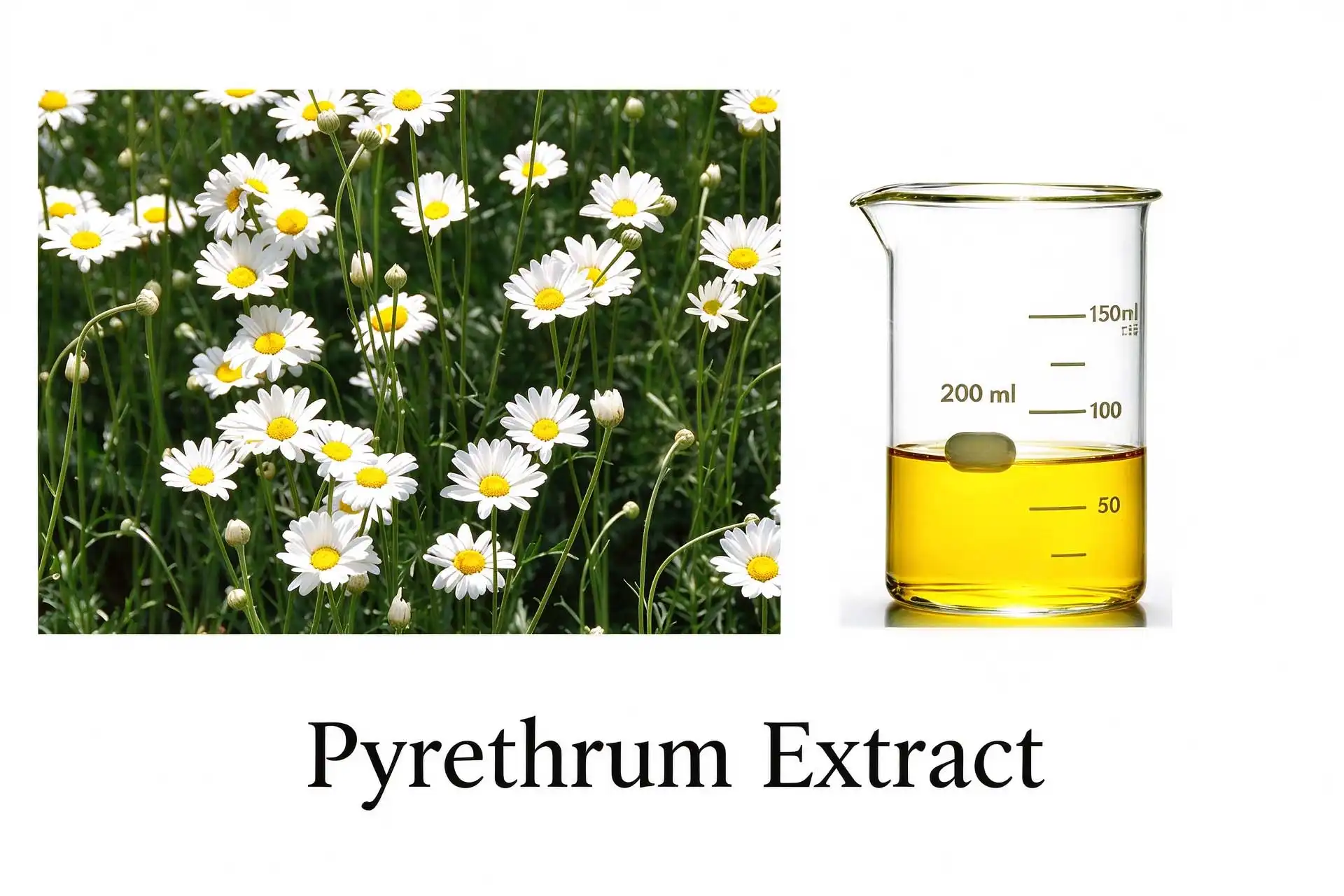
Pyrethrum extract is the full botanical oleoresin obtained from the flowers of Pyrethrum cinerariifolium. Pyrethrins refer specifically to the six active ester compounds within that extract. A standardized pyrethrum extract at 50% pyrethrins contains precisely measured quantities of these active esters, confirmed by HPLC. Raw extract without standardisation may vary significantly in potency between batches.
Does pyrethrum extract work against all insects?
It delivers broad-spectrum knockdown against flying and crawling insects, including aphids, whiteflies, mosquitoes, beetles, and stored product pests. However, effectiveness varies by species, application concentration, and whether a synergist like piperonyl butoxide (PBO) is included in the formulation.
Is pyrethrum extract safe for use in food environments?
Yes, under applicable regulatory guidelines. It is approved for use in food processing facilities and on stored grains in the US when applied per label directions. Always verify current EPA registration requirements for your specific product formulation.
How should pyrethrum extract be stored?
Store in dark, sealed containers below 25°C, away from UV light and moisture. Under these conditions, shelf life is typically two years. Antioxidants help slow oxidative degradation after opening.
What is the minimum order quantity for samples?
Kingherbs accepts sample and small-kilogram trial orders with no high MOQ barrier. Commercial orders start at 25kg.
Request a Sample of KH's Pyrethrum Extract Today
Since 1996, Kingherbs has been a supplier of plant ingredients. As a pyrethrum extract producer, we can provide batch-level HPLC paperwork, ISO9001/FSSC22000/HACCP/FDA certifications, and pure solvent-free extraction. In 1kg or 5kg bottles, ready stock ships in 3–5 business days. Our expert team is here to help you with your formulation from the first question to production, whether you need a trial sample or a business supply deal. To get your sample today, email us at info@kingherbs.com.
References
1. Casida, J. E., & Quistad, G. B. (1995). Pyrethrum Flowers: Production, Chemistry, Toxicology, and Uses. Oxford University Press.
2. Wainaina, J. M., Onyango, C. O., & Mueke, J. M. (2010). Pyrethrin content variation in Chrysanthemum cinerariifolium accessions. Journal of Agricultural and Food Chemistry, 58(6).
3. Isman, M. B. (2006). Botanical insecticides, deterrents, and repellents in modern agriculture and an increasingly regulated world. Annual Review of Entomology, 51.
4. Pest Management Science (2018). Rapid knockdown activity of pyrethrin-based formulations in comparison with synthetic pyrethroids. Pest Management Science, 74(3).
5. Grand View Research (2023). Biopesticides Market Size, Share & Trends Analysis Report. Grand View Research.
6. US Environmental Protection Agency (2021). Pyrethins and Pyrethroids: Reregistration Eligibility Decision Fact Sheet. US EPA Office of Pesticide Programs.
Send Inquiry
Related Industry Knowledge
- How to Choose the Best Ginger Extract Powder Supplier
- Why Choose OEM Saw Palmetto Extract Powder for Supplements?
- Gentle Power: Why Willow Bark Beats Salicylic Acid for Glow
- Exploring the Health Benefits of Bitter Melon Extract Powder
- How Effective Is Bitter Melon Extract Powder for Glucose Balance?
- Is Macleaya Cordata Extract Effective for Swine Production?
- What Makes Valerian Root Extract Powder So Effective?
- Does Couch Grass Rhizome Extract Help With UTIs?
- How Lespedeza Capitata Extract Supports Renal Filtration?
- Custom Functional Plant Extracts: From Sample Development to Bespoke Solutions