_1762508637542.webp)
Where to Buy Tilia Extract in Bulk for Manufacturing?
Sep 24, 2026
When sourcing Tilia Extract in bulk quantities for manufacturing, partnering with experienced botanical ingredient specialists makes all the difference. We suggest getting in touch with well-known companies like Kingherbs Limited, which has been making standardised plant products since 1996. They are in charge of the whole process, from growing the plants to extracting the active ingredients. This makes sure that the active ingredient profiles are always the same, that batch data is kept, and that they follow USP/EP standards. These are important things for food supplements, cosmetics, and pharmaceuticals that need reliable linden tree products.

Understanding Tilia Extract and Its Industrial Relevance
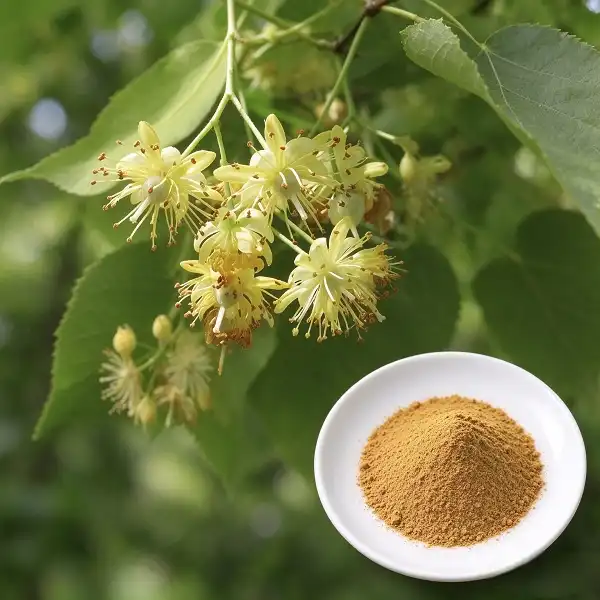
Tilia Extract is well known in many industrial fields for its high level of phytochemicals. It comes from different species of the linden tree (genus Tilia). Some of the mucilage polysaccharides, volatile essential oils, phenolic acids, and flavonoids like quercetin and kaempferol that are good for you can be found in the juice. Companies use these ingredients to make stress-relieving pills, creams that soothe the skin, and plant products that are good for you.
Botanical Composition and Active Ingredients
Flavonoids, which help fight free radicals and inflammation, are found in small amounts in the flowers and stems of some Tilia species. The mucilage content, which is between 3 and 10%, makes things feel better and can be used to treat coughs and skin problems. Essential oils are found in linden extract, but in small amounts (about 0.02-0.05%). They give it its scent and may help with anxiety, which makes it useful in products that are meant to help people relax.
Core Industrial Applications
Pharmaceutical companies use linden flower extract in products that help with mild anxiety, sleep problems, and breathing problems. Its ability to soothe and moisturize the skin makes it a good ingredient for cosmetics for sensitive skin, anti-aging serums, and soothing lotions. Nutraceutical brands market linden-based supplements as natural ways to deal with stress, which appeals to people who want botanical alternatives to synthetic ingredients.
Why Bulk Sourcing Matters
BuyingTilia Extractin large amounts has a direct effect on your production costs and the quality of your products. When you buy in bulk instead of small amounts, the cost per unit is much lower, which increases your profit margins on finished goods. More importantly, working with sellers who keep a lot of stock will make sure you get materials from regular production batches, which will reduce formulation changes that could affect how well the product works. Reliable bulk supply stops production delays, guards against changes in market prices, and lets you expand your manufacturing operations as your product lines do too.
Evaluating Bulk Tilia Extract Suppliers: What B2B Purchasers Should Know
To find the best source for bulk linden extract, you need to carefully consider a number of factors. Professional botanical ingredient manufacturers are different from basic commodity traders because they have quality control systems, are open about how they get their ingredients, and can offer technical support.
Quality Assurance and Certification Standards
Premium providers use full quality management systems that are approved by GMP (Good Manufacturing Practice) rules. Look for partners who can give you Certificates of Analysis that are special to each batch and list the amounts of active ingredients, microbial limits, heavy metals, and chemical residues. Following the rules set by the USP (United States Pharmacopeia) and EP (European Pharmacopoeia) makes sure that your raw materials meet pharmaceutical-grade standards, even if your finished products are meant for the supplement or cosmetic market. High-Performance Thin-Layer Chromatography (HPTLC) fingerprinting checks the identity of plants and finds possible adulterants. This is an important safety measure because herbal ingredient markets are full of people who try to sell plants that aren't actually plants.
Traceability from Harvest to Delivery
Full tracking from beginning to end is a must for responsible producers. Your seller should keep track of where the raw materials come from, what kind of farming was done (standard or organic), when they were harvested, and how they were processed. During regulatory audits, customer questions about where ingredients come from, and possible product recalls, this chain of documentation is very important. Traceability is better for suppliers who have controlled planting bases or long-term ties with approved harvesters than for suppliers who get their goods through a lot of different middlemen.
Organic versus Conventional Material
Choosing between conventional linden extract and organic-certified linden extract changes both how the product is positioned and how much it costs. Organic certification (USDA Organic, EU Organic) means higher prices—usually 30–50% more—but it lets companies make health-conscious claims on the label. When bought from companies that follow strict rules for checking for pesticides, conventional extracts are of higher quality and cost less. Your choice should be in line with how you want to position your brand, what your target customers want, and the specific rules that apply to each of your market segments.
Supplier Reputation and Transparency
Check out possible providers by calling industry contacts, reading customer reviews, and seeing if they are members of trade groups. Manufacturers that have been in business for decades show that they are stable and have a lot of experience. Professional business practices include clear minimum order amounts (MOQs), clear price structures, and simple contract terms. If a supplier won't give you facility documentation, is vague about where their products come from, or offers prices that are much lower than the market average, be wary. These are often signs of lower quality or hidden middlemen.
Comparing Product Forms and Quality for Manufacturing Needs
There are different kinds of bulk linden extract, and each has its own benefits that depend on how you make the product and what form it takes.
Powder versus Liquid Extracts
Powdered extracts likeTilia Extractare the most popular type of bulk plant ingredient because they are stable and can be used in many ways. Spray-dried or vacuum-dried powders generally have standardized amounts of active flavonoids (between 2% and 10%, depending on the specification) and have a long shelf life—usually 24 to 36 months if they are kept properly. The fine mesh size (usually between 80 and 100 mesh) makes it easy to mix into pills, tablets, powdered drinks, and makeup bases. Even tho liquid extracts aren't used as much in bulk sales, they are better for making drinks and supplements because they dissolve directly, so there are fewer steps needed to process them. But they need to be handled carefully to keep microbes from getting into them, and they usually don't last as long.
Standardized Extracts versus Raw Materials
Standardized extracts are tested and tweaked by scientists to make sure that every batch has the same concentration of marker compounds. A measured extract of 5% flavonoids ensures that every kilogram has 50 grams of flavonoid content. This lets you make exact dosages and make sure that the product always works. This regulation gets rid of the natural differences that can be found in raw plant materials, where the amount of flavonoids can be anywhere from 1% to 3% based on how they were harvested. Standardized extracts are more expensive than just ground plant material, but they make it easier to make sure that the recipe will work for regulated goods and brands that make specific claims about how well they work.
Safety and Efficacy Benchmarks
Manufacturers who are responsible set their own standards that go beyond what the government requires. The following heavy metal guidelines should be followed: lead should be less than 10 parts per million (ppm), arsenic should be less than 3 ppm, cadmium should be less than 1 ppm, and mercury should be less than 3 ppm. Microbial specifications usually aim for a total plate count of less than 10,000 CFU/g, yeast and mold counts of less than 1,000 CFU/g, and the absence of pathogens like Salmonella and E. coli. Studies have shown that you need to take at least 200 to 400 mg of standardized linden extract every day to see measurable effects that help with anxiety. These results should help you set goals for developing your formulation.
Where and How to Buy Tilia Extract in Bulk: Trusted Channels and Best Practices
There are a few different ways for business-to-business buyers to get big botanical products, and each has its own pros and cons.
Direct Manufacturer Relationships
There are many benefits to working directly with ingredient manufacturers like Kingherbs Limited. By buying directly from the manufacturer, you skip the middleman markups and save 15 to 30 percent compared to buying from a dealer. Custom specs, such as specific flavonoid ratios, particle sizes, or carrier additions, can be made by manufacturers to meet your needs. Technical help from production teams, such as stability data, formulation ideas, and compatibility testing, is valuable on top of just providing ingredients. Direct relationships also make workplace audits easier, which improves the transparency of your supply chain and the paperwork you use for due diligence.
B2B Ingredient Marketplaces
Online business-to-business (B2B) sites put buyers in touch with multiple sellers, letting them compare prices and look over product details. Smaller manufacturers and people who want to try new ingredients without making big direct purchases can use these marketplaces. But the quality of the ingredients varies a lot from one marketplace seller to the next, and technical support isn't always easy to find. When you buy through these methods, you need to make sure the seller is legitimate, have a third party test the samples, and carefully read the contract.
Negotiation Strategies and MOQ Considerations
When you buy largeTilia Extractbotanical extracts, the lowest amount you can order is usually between 25 and 100 kilograms, but this depends on the seller and the product. As you negotiate purchase agreements, keep these things in mind: volume commitments can unlock tiered pricing, which can save you 5–15% on higher volumes; payment terms that range from prepayment to net-30 or net-60 days affect cash flow; shipping arrangements (FOB, CIF, DDP) have a big effect on landed costs; and quality hold periods let you test incoming materials before accepting them protect against specification failures.
Compliance and Documentation Requirements
When buying ingredients from other countries, you need to pay close attention to the rules and paperwork for importing them. Make sure that sellers give you business bills that have full product descriptions, phytosanitary certificates that prove the product meets standards for farm products, certificates of analysis for each production batch, and allergen statements. Imports into the United States may need to be registered with the FDA as a Prior Notice, and imports into the European Union must follow Novel Food regulations if they apply. To get through customs standards quickly, work with skilled freight forwarders who know how to handle botanical ingredients.
Maximizing Value from Bulk Tilia Extract: Usage Tips and Quality Assurance
Handling and using bulk linden extract correctly will get the most out of your investment and the quality of the end product.
Storage and Handling Best Practices
Botanical extract powders are hygroscopic, which means they can take in water from the air. This can break down active ingredients and help microbes grow. Keep things in sealed cases in climate-controlled spaces where the temperature stays below 25°C (77°F), and the relative humidity stays below 60%. The best protection comes from original packing made with moisture barriers, like metal foil laminate bags flushed with nitrogen. Once it's opened, put any leftovers in airtight containers and eat them within three months to keep the medicine working. UV light breaks down sensitive flavonoid molecules, so stay out of direct sunshine.
Formulation Integration Strategies
When adding linden extract powder to supplements, mixing it ahead of time with flowing agents or diluents keeps it from clumping and makes sure that it is evenly distributed throughout the tablet or capsule fills. In cosmetic formulations, mix the powder with the water phase while making the emulsion. Use light stirring to make sure that all the water-soluble parts are completely dissolved. For beverage uses, water-dispersible grades or co-processing with solubilizing agents may help keep the solids from settling. Always test to see if the extract components are compatible with the other ingredients in the formula, since some preservatives, minerals, or pH levels may affect the extract components.
Leveraging Technical Support from Suppliers
Professional ingredient makers offer a wide range of professional support services that go far beyond just delivering products. Ask for stable data that shows how the extract works over time in different temperature, humidity, and pH conditions. This is important information for figuring out how long the end product will last. Ask the supplier for help with the formulation based on their experience with similar applications. This could help you speed up the process of developing your product. Many sellers have application labs that can do tests like blending, dissolution, and compatibility, which can be thot of as an extension of your R&D team. These working relationships turn sellers into strategic partners who help you come up with new ideas.
Conclusion
To get qualityTilia Extractin large quantities, you need to carefully evaluate potential suppliers, have a good grasp of the product's requirements, and use smart buying methods. There are both chances and risks in the botanical ingredient market. To be successful, you need to work with manufacturers who show they have real knowledge, are honest about how they run their business, and are committed to consistent quality. When you deal directly with well-known makers, you can get better prices, more customization options, better technical help, and more reliable supply than through middlemen. By using the evaluation criteria and best practices explained in this guide, procurement teams can get bulk linden extract that meets high-quality standards and helps manufacturing operations run smoothly and expand as needed. Putting time and effort into researching suppliers and building relationships with them pays off in the form of lower supply chain risks, consistent formulations, and better finished products that meet both regulatory requirements and customer expectations.
FAQ
What are typical lead times when ordering bulk linden extract?
Standard materials that are already in stock from well-known manufacturers usually ship three to five business days after the order is confirmed. Lead times may be extended to two to three weeks if custom specifications call for specific standardization ratios or more testing. International shipping can take an extra one to three weeks, based on where it's going and how quickly it can be cleared thru customs. To account for possible delays, plan to buy inventory at least 60 days before it's needed for production.
How can I verify extract purity and authenticity?
Ask for batch-specific HPTLC fingerprint analysis that compares your sample to verified reference standards. This chromatographic method reliably finds fake plants and names plant types. Third-party lab testing by independent companies like Eurofins or SGS provides a fair way to check. Certificates of Analysis should include proof of identity, the amount of active ingredient, a check for contamination (heavy metals, pesticides, microbes), and information about the product's physical properties (moisture, ash content, particle size).
What customs or import considerations apply to bulk botanical ingredients?
Imports into the United States need foreign providers to be registered with the FDA and give a Prior Notice before the shipment arrives. Certain HTS codes determine the duty rates that apply to botanical ingredients. For example, plant extracts usually have rates between 0 and 6.5%. If an item hasn't been used in food before 1997, it has to follow Novel Food rules when it comes into the European Union. Most countries require phytosanitary licenses that say an area is free of pests. Hire customs agents who have experience with plant ingredients to make sure the clearance process goes smoothly.
Partner with KH for Reliable Tilia Extract Supply
KH (Kingherbs Limited) can help you find ingredients because they have been making botanical products for almost 30 years. When we make linden extract, we use pure water or food-grade ethanol for natural extraction instead of harsh chemical solvents so that we can track it back to the farms where it was grown. Each batch comes with full HPTLC fingerprinting and thorough analytical paperwork that checks the amount of active ingredients against your requirements. As your expert partner beyond basic supply, our application laboratory helps you improve the creation of dietary supplements, functional foods, and cosmetic systems. Orders for samples are sent out within 3–5 business days, so you can quickly evaluate them. Whether you need standard flavonoid concentrations, custom compounding ratios, or material that is USP/EP compliant, our team can help you. We communicate clearly and quickly. Get in touch with our buyers at info@kingherbs.com to talk about your specific needs and get prices on bulk Tilia Extract for sale. We'd love the chance to help your manufacturing business succeed by providing steady quality, low prices, and a real relationship.
References
1. European Medicines Agency. (2012). "Assessment Report on Tilia cordata Miller, Tilia platyphyllos Scop., Tilia x vulgaris Heyne or their mixtures, flos." Committee on Herbal Medicinal Products.
2. Toker, Z., Küpeli, E., Metin, A., & Yesilada, E. (2006). "Flavonoids with antinociceptive and anti-inflammatory activities from the leaves of Tilia argentea." Journal of Ethnopharmacology, 95(2-3), 393-397.
3. Viola, H., Wasowski, C., Levi de Stein, M., Wolfman, C., Silveira, R., Dajas, F., Medina, J.H., & Paladini, A.C. (1995). "Apigenin, a component of Matricaria recutita flowers, is a central benzodiazepine receptor ligand with anxiolytic effects." Planta Medica, 61(3), 213-216.
4. World Health Organization. (2002). "WHO Monographs on Selected Medicinal Plants - Volume 2." Geneva: World Health Organization Publications.
5. Blumenthal, M., Goldberg, A., & Brinckmann, J. (2000). "Herbal Medicine: Expanded Commission E Monographs." Austin: American Botanical Council.
6. European Directorate for the Quality of Medicines & HealthCare. (2017). "European Pharmacopoeia 9.0 - Linden Flower Monograph." Strasbourg: Council of Europe.
Send Inquiry
Related Industry Knowledge
- Where to Buy Natural Ferulic Acid in Bulk
- How to Select Premium Strawberry Leaf Extract Suppliers?
- Passionflower Extract Powder: Does It Improve Sleep Quality?
- Ivy Extract Powder: Is It Better Than Cough Syrup?
- Blueberry Extract vs Powder: Unveiling Health Benefits
- What is Astaxanthin? Benefits, Dosage and More!
- The Power of Blueberry Extract Powder in Cosmetics
- Can Dill Seed Extract Help Relieve Abdominal Cramping?
- Bacopa Monnieri Extract Powder for Focus and Productivity
- Is Olive Extract Powder Effective for Inflammation Control?