_1762508637542.webp)
Benefits of astaxanthin - nature's most powerful antioxidant
Jul 6, 2026
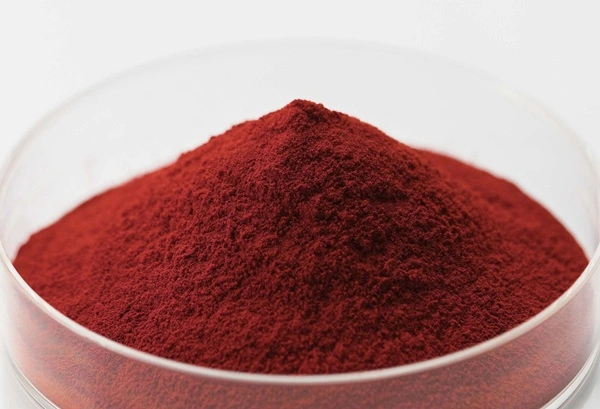
Astaxanthin Powder and Oil, which comes naturally from Haematococcus pluvialis microalgae, is the best antioxidant defence you can get. This keto-carotenoid chemical, which comes in powder and oil forms, has changed how companies that make food supplements, cosmetics, and nutraceuticals come up with new products. Studies show that this pigment neutralises free radicals much more effectively than vitamin E. Because of this, it is an essential ingredient in anti-ageing products, sports nutrition, and useful foods. If procurement managers know the benefits of both microencapsulated beadlets and lipid-soluble oleoresins for softgels, they can make smart sourcing choices that improve the effectiveness of their products and their ability to compete in the market.
Understanding Astaxanthin: What It Is and Its Natural Sources
Astaxanthin is a type of carotene that comes from the xanthophyll family. It has a unique chemical structure with two hydroxyl groups and two keto groups. It can cross cell walls because of this shape, protecting both directions from oxidative stress. The most biologically active form comes from Haematococcus pluvialis, a watery microalgae that makes astaxanthin to help itself stay alive when its environment is harsh.
Natural Origin and Biochemical Properties
Under controlled growing conditions, Haematococcus pluvialis can build up astaxanthin levels that reach up to 4% of the dry bulk weight. When compared to manufactured options, the natural (3S, 3'S) stereoisomer configuration found in algae sources is more bioavailable. This stereochemical specificity is very important for B2B buyers who want to make sure that their end goods work well in clinical trials. The quality of the final product depends on how it was extracted. KH uses only clean water and food-grade ethanol to extract the ingredients, instead of dangerous solvents like hexane that can leave behind residues. This clean extraction method keeps all of the mono- and di-esters that are naturally found in the algae, so the biological activity is at its highest level.
Powder Versus Oil: Extraction and Application Differences
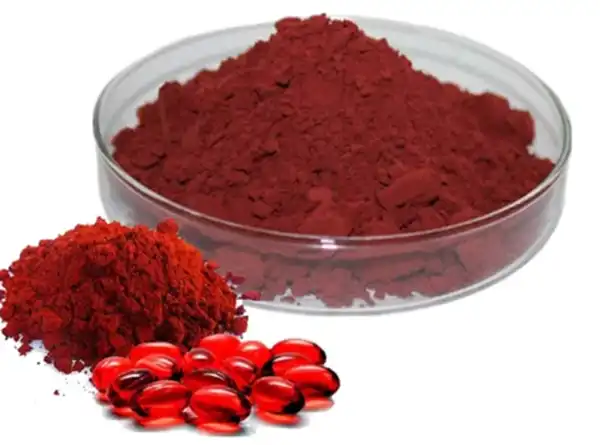
The lipophilic oleoresin extract is astaxanthin oil, which shows up as a dark red, thick liquid with amounts between 5% and 20% when analysed using HPLC. Because it dissolves in oil, it works exactly with the way lipids are absorbed in the digestive tract. This makes it great for softgel encapsulation, where bioavailability is very important. On the other hand, the powder form is either spray-dried or microencapsulated with starch or gum arabic to protect it. This makes beadlets that move freely and contain 1% to 5% active chemical. The encapsulation technology protects the heart of the carotenoids from oxidative breakdown and lets water mix with them. This is important for uses like beverage formulations, gummies, and pill compression, where oil bleeding would weaken the product.
Key Health Benefits of Astaxanthin Powder and Oil
A lot of research has been done on Natural Astaxanthin Supplement, how Astaxanthin Powder and Oil can be used as a medicine to help a lot of different body processes. Product designers who want to appeal to health-conscious customers can use these proven benefits to set their products apart in crowded markets.
Superior Antioxidant and Anti-Inflammatory Activity
Astaxanthin can stop singlet oxygen from forming 6,000 times more effectively than vitamin C and 550 times more effectively than vitamin E, according to research. Its amazing antioxidant power comes from its ability to fight both lipid-soluble and water-soluble free radicals at the same time. Among the boosted groups in clinical studies, oxidative stress biomarkers like malondialdehyde and 8-hydroxy-2'-deoxyguanosine consistently went down.
Eye Health and Visual Performance Support
The molecule gets through the blood-retinal barrier and builds up in the macular tissues, where it saves photoreceptor cells from damage caused by free radicals. Randomised controlled studies show that computer users who take 6 mg daily see better, can see more clearly, and don't get as tired from straining their eyes. This proof backs up product marketing in the area of growing digital eye strain. Procurement managers should give preference to sellers who can provide batch-specific HPLC certificates that confirm the amount of astaxanthin and the quality of the isomer. KH's analysis data includes full profiles of all the carotenoids, making sure that the natural ester forms that show the best retinal uptake are used.
Athletic Performance and Exercise Recovery
Exercise physiologists have found that astaxanthin can lower reactive stress caused by exercise and speed up healing. Athletes who take 4–12 mg of a substance every day have less lactate buildup, better time-to-exhaustion measures, and less muscle damage after exercise. The chemical makes mitochondria work better and burns more fat during long-term tasks. Sports nutrition brands can market natural astaxanthin as an option to synthetic performance boosts that don't have any bad effects on the body. Reduced tiredness and faster healing are two perks that elite athletes and fitness fans like. This is a high-growth market niche.
Astaxanthin Powder vs Oil: Comparison for B2B Buyers
To choose the right form of Astaxanthin Powder and Oil, you need to carefully look at the manufacturing needs, goal bioavailability, stability limits, and cost factors. Depending on the purpose, each style has its own benefits.
Bioavailability and Absorption Characteristics
Because it is lipid-soluble and has an esterified chemical structure, astaxanthin oil has better absorption rates. When mixed with food fats, the oil form raises plasma concentrations 1.5 to 2 times more than the same amounts in some powder forms. Putting oil into softgels with medium-chain triglycerides makes absorption even better. This is why oil is the best choice for high-potency vitamins with only one ingredient.
Stability and Shelf Life Considerations
Both types have problems with oxygen breakdown that need protection. When light, heat, and air hit raw astaxanthin, it breaks down quickly into white byproducts that don't do anything biological. Oil products need to be stored in nitrogen-flushed, light-resistant metal bottles or foil bags. If kept in the fridge, they will stay effective for 24 months. Powder beadlets enclosed in protection structures are more stable and can usually be stored at room temperature for 36 months. The physical layer protects the body of the carotenoid from outside influences, which slows down the rate of breakdown. KH's microencapsulation technology includes oxygen scavengers and antioxidants that work together in the matrix, a Natural Astaxanthin Supplement, which makes it even more stable along the distribution chain.
Economic and Procurement Factors
Oil usually has a higher quantity of active ingredients per kilogram, which could lower the cost of shipping in bulk. But when you figure out the total cost, you have to account for things like special packing, the need for a cold chain, and any losses that might happen when you handle thick materials. Powder types usually make logistics easier because they can be shipped at room temperature, and inventory control is easier.KH can handle both sample needs for R&D and commercial sales, starting at 25 kg drums. They have a lot of stock on hand, so they can deliver within 3–5 business days. This adaptability helps product development processes and lowers the risk of stock-outs for new brands that are testing the market.
How to Use Astaxanthin Powder and Oil: Practical Guidelines for Industrial and Commercial Applications
To successfully integrate Astaxanthin Powder and Oil, you need to know about dose factors, optimising stability, and regulatory compliance. These useful rules make the process of developing new formulations and scaling them up easier.
Recommended Dosage and Safety Profile
Clinical research backs up daily doses between 4 mg and 12 mg for healing and health benefits. Safety tests show that doses up to 40 mg per day for long periods of time are well tolerated, with no major side effects recorded. The compound is not as harmful as vitamin A, even though its structure is identical, because it does not have retinol action. Formulators should use active content to figure out how much raw material they need. For instance, 60mg of oil ingredient is needed for a final amount of 6 mg of 10% oil. To make 2% powder, you would need 300 mg of beadlet material for every dose. Overages of 10 to 15 per cent are meant to make up for the fact that products may go bad over time, especially in tough keeping conditions.
Formulation Integration Methods
To get the right amounts, astaxanthin oil is mixed with carrier oils like medium-chain triglycerides, sunflower oil, or olive oil during the softgel-making process. Adding 0.1% to 0.3% of vitamin E (mixed tocopherols) protects against free radicals while the product is being stored and sealed. To make gelatin shells opaque, titanium dioxide is added. This stops light from passing through, which would break down the filling. When making tablets and capsules with powder, it's important to choose the excipients carefully. Because the deep red colour can react with some binders and disintegrants, they need to be tested to make sure they work well together. Microencapsulated beadlets that have good flow features work well with direct compression. Wet granulation is usually not done because being exposed to wetness while drying can cause damage.
Regulatory Compliance and Documentation
Dietary supplement laws in the US require supplement facts labels to be correct and based on real content that has been confirmed through HPLC analysis. Finished goods should be tested near the date they were made and again close to the date they go bad to make sure the label is correct throughout their shelf life. KH gives out records of analysis that are special to each batch and lists the active ingredients, microbial limits, heavy metals, and chemical residues. Natural astaxanthin from Haematococcus pluvialis is GRAS (Generally Recognised As Safe) in the US, permitting use in conventional foods and beverages within specified levels. Cosmetic applications require compliance with FDA cosmetic regulations and potentially EU Cosmetics Regulation Astaxanthin Powder And Oil standards for international distribution. KH maintains comprehensive regulatory dossiers supporting global market access.
Choosing the Right Astaxanthin Supplier: Ensuring Quality and Reliability
The choice of supplier for Astaxanthin Powder and Oil has a big effect on product quality, the security of the supply chain, and, in the end, market success. Besides unit price, procurement managers should look at possible partners on several other important factors.
Essential Certifications and Quality Systems
Suppliers with a good reputation keep their ISO 9001 quality management approval up to date, which shows that they have organised process controls. Food safety standards, such as FSSC 22000 or HACCP, make sure that steps are taken to keep work areas clean. KH has many certificates, such as ISO9001, FSSC22000, KOSHER, HALAL, HACCP, and FDA registration, which means it can meet the needs of a wide range of global markets.
Traceability and Supply Chain Transparency
End-to-end tracking, from growing the algae to making the finished product, lets problems with quality be fixed quickly and backs up claims of sustainability. Leading sellers work with specialised algae farms that choose which strains to grow, how to grow them, and when to gather them. This vertical merger makes sure that the quality of the raw materials stays the same, which isn't possible with wild-harvested or commodity-traded sources.KH keeps close ties with specialised Haematococcus farming sites and oversees every step, from seed culture to harvest optimisation. This exact tracking makes it possible to keep records at the batch level that connect finished goods to specific runs of algae production.
Flexibility in Order Quantities and Delivery
New brands and study teams need suppliers that can provide small sample amounts for the first review. KH takes trial orders starting with 100g to 10kg samples, which lets people test the market's viability without spending a lot of money. The minimum order size for commercial production is 25 kg, which strikes a balance between the supplier's efficiency and the customer's freedom. Ready stock availability eliminates long lead times that can disrupt product launches. KH keeps a stock of standard grades that can be shipped within three to five business days by express, air freight, or ocean transport, based on the urgency and volume. This quick delivery feature helps just-in-time production methods keep working capital from getting stuck in extra stockpiles.
Conclusion
Astaxanthin is a key nutrient in dietary vitamins, functional foods, cosmetics, and sports nutrition because it has so many health benefits. To make a good product, you need to choose the right form of Astaxanthin Powder and Oil—oil for maximum bioavailability in softgels or powder for a wider range of uses besides capsules—and work with suppliers who can provide uniform quality, expert support, and a reliable supply chain. When purchasing managers look at sources, they should give more weight to sellers that can show they have all the necessary certifications, clean extraction methods, strong tracking, and helpful customer service. As more people learn about the health benefits of this amazing carotene, brands that use high-quality ingredients will be able to get a bigger share of the growing antioxidant wellness market.
FAQ
1. Which form provides better bioavailability—powder or oil?
Because it is lipid-soluble and naturally structured as an ester, Astaxanthin Powder And Oil in oil form usually has better absorption. When oil forms are eaten with fats, they raise plasma amounts about 1.5 to 2 times higher than regular powder formats. But new microencapsulated powders that use nano-emulsion technology can get close to the accessibility of oils while still being able to be used in places like drinks where oils aren't appropriate.
2. What are the typical side effects of astaxanthin supplementation?
In clinical tests, amounts up to 40 mg per day have been very safe, with few side effects. Some people get a slightly reddish tint to their skin at high amounts because of the carotenoid buildup, which goes away when they stop taking the drug. Mild stomach problems happen very rarely. In a large body of clinical research, no major side effects have been reported.
3. How can buyers verify astaxanthin authenticity and quality?
Ask for batch-specific HPLC analysis certificates that show the amount of total astaxanthin present and prove that the sources are natural (3S, 3'S) stereoisomers. Through residual solvent tests, you can be sure that the extraction method doesn't use any dangerous chemicals. Make sure the company has all the necessary certifications, such as ISO, FSSC22000, and any native standards that apply. Check the materials you've gotten in a third-party lab to make sure the information on the paperwork is correct.
Partner with KH for Premium Astaxanthin Solutions
KH is ready to help you reach your product development goals by providing pharmaceutical-grade Astaxanthin Powder and Oil, and decades of experience in extracting plants. Our offerings range in concentration from 1% to 96% astaxanthin, and each batch is checked using HPLC to make sure the description is correct. We are a well-known supplier with a wide range of certifications, such as ISO9001, FSSC22000, KOSHER, HALAL, and FDA registration. Our technical team can help you with composition and stability testing, whether you need a cold water dispersible powder for a new drink or a high-potency oil for high-end softgels. Contact info@kingherbs.com today to request samples, discuss custom specifications, or explore competitive pricing for bulk procurement starting at 25kg commercial minimums.
References
1. Fassett RG, Coombes JS. "Astaxanthin: A Potential Therapeutic Agent in Cardiovascular Disease." Marine Drugs 2011; 9(3): 447-465.
2. Tominaga K, Hongo N, Karato M, Yamashita E. "Cosmetic Benefits of Astaxanthin on Human Subjects." Acta Biochimica Polonica 2012; 59(1): 43-47.
3. Guerin M, Huntley ME, Olaizola M. "Haematococcus Astaxanthin: Applications for Human Health and Nutrition." Trends in Biotechnology 2003; 21(5): 210-216.
4. Ambati RR, Phang SM, Ravi S, Aswathanarayana RG. "Astaxanthin: Sources, Extraction, Stability, Biological Activities and Its Commercial Applications—A Review." Marine Drugs 2014; 12(1): 128-152.
5. Nishida Y, Yamashita E, Miki W. "Quenching Activities of Common Hydrophilic and Lipophilic Antioxidants against Singlet Oxygen Using Chemiluminescence Detection System." Carotenoid Science 2007; 11: 16-20.
6. Kidd P. "Astaxanthin, Cell Membrane Nutrient with Diverse Clinical Benefits and Anti-Ageing Potential." Alternative Medicine Review 2011; 16(4): 355-364.
Send Inquiry
Related Industry Knowledge
- Can Bamboo Leaf Extract Boost Antioxidant Levels Naturally?
- Angelica Officinalis Extract in Functional Food Applications
- Does Macleaya Cordata Extract Help With Digestive Balance?
- Wild Yam Extract Powder: Top Uses in Nutritional Products
- Can Watermelon Powder Aid Weight Management?
- What Makes Valerian Root Extract Powder So Effective?
- White Paeony Extract: Anti-Inflammatory Advantages Explained
- Lespedeza Capitata Extract for Natural Diuretic Applications
- What Are the Key Nutrients in Purple Sweet Potato Extract?
- Can Lespedeza Capitata Extract Promote Healthy Fluid Balance?