
Why Use Cortex Phellodendri Powder in Herbal Products?
Nov 25, 2026
If you are seeking to acquire cortex phellodendri powder for use in supplements, cosmetics, or herbal products, you likely have some inquiries. Phellodendron amurense or Phellodendron chinense trees. It is a bark product from the ground up and has been utilized in Chinese herbal medicine for over 2000 years. In this article, we answer the practical questions that procurement teams and formulators ask themselves when they are sourcing: what is in the powder, how does it compare to extracts, which quality checks are crucial, and how to appraise a supplier. This is based on my own experience looking at supplier specifications and COAs at KH; thus, every portion is a conclusion you can do anything with.
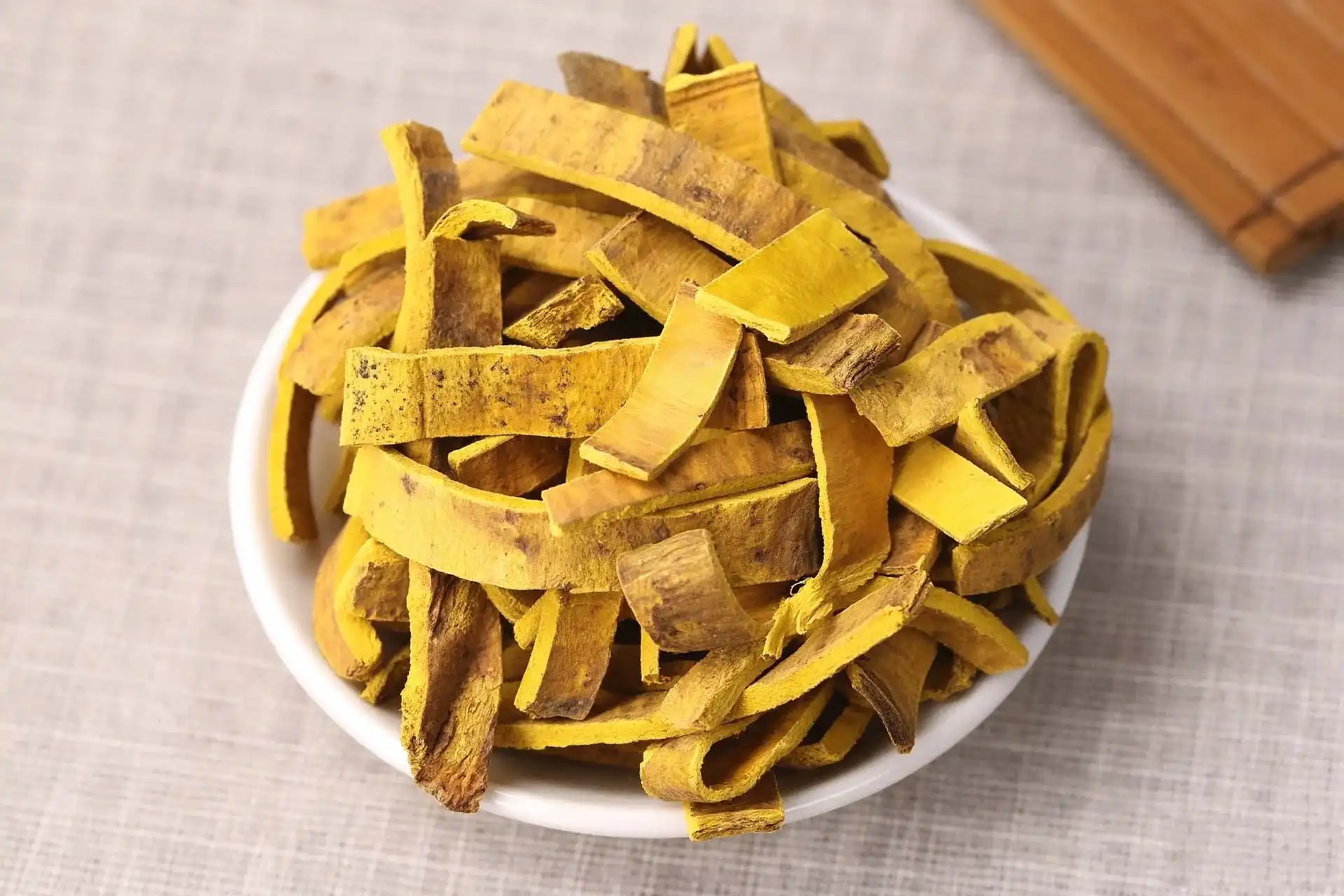
Key Facts Before You Source Cortex Phellodendri Powder
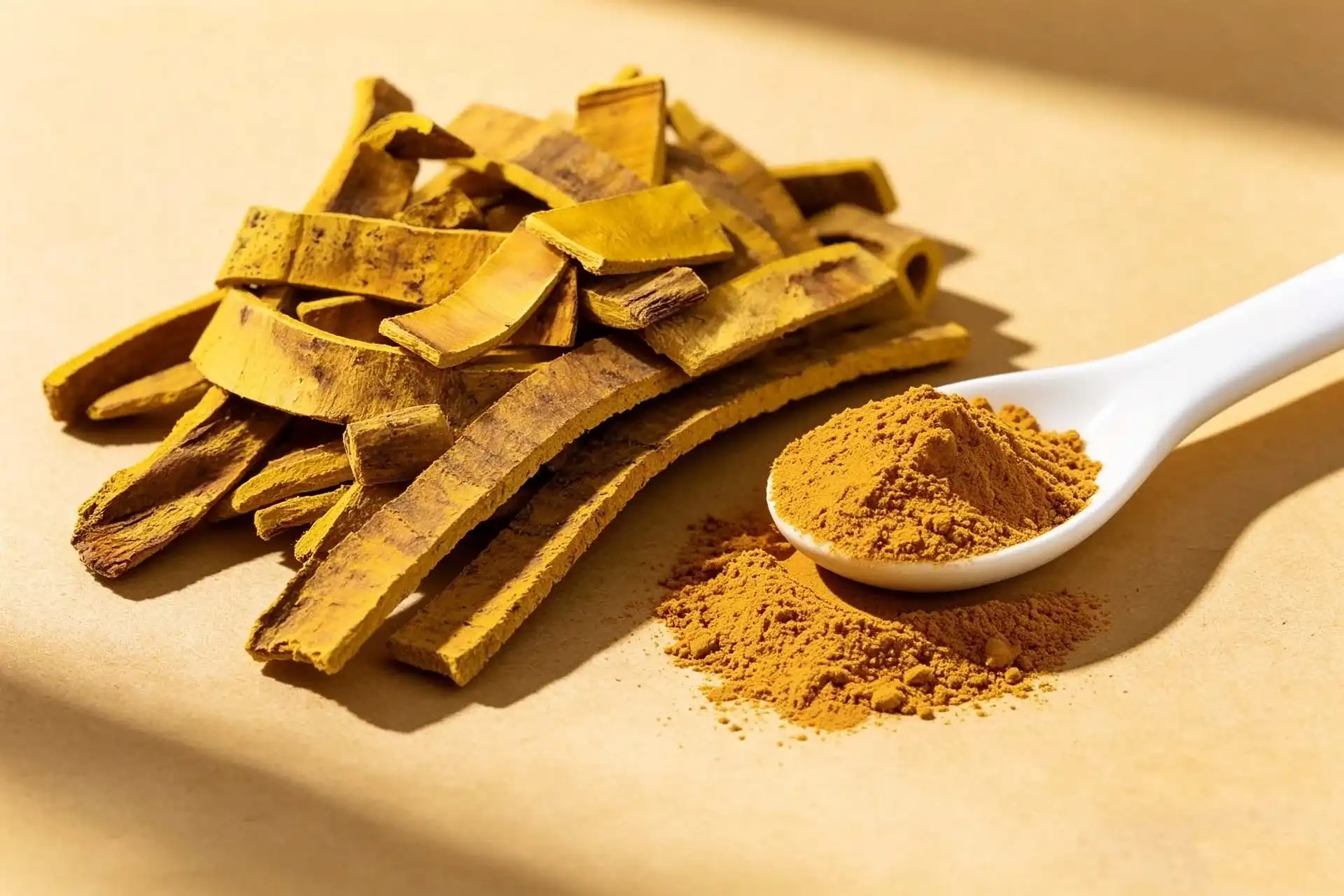
Cortex Phellodendri powder is the bark of Phellodendron amurense or Phellodendron chinense, which is also called Huang Bai or Huangbo in Chinese. The bark contains isoquinoline alkaloids such as berberine, limonoids, flavonoids, and phenolic compounds. Berberine is a useful marker chemical for identification tests; however, the entire bark powder is not the same product as pure berberine. It’s consumed by consumers in tablet form, drinks, topical treatments, and traditional recipe mixtures.
Species identification, method of extraction, marker-compound assay range, and contamination tests must be confirmed prior to purchase. Extracts provide you with greater control over the concentrations. Powders are usually cheaper to produce than a concentrated extract. Each batch is backed by a Certificate of Analysis, GMP-compliant manufacturing, and a reputable supplier’s clear lead time quote.
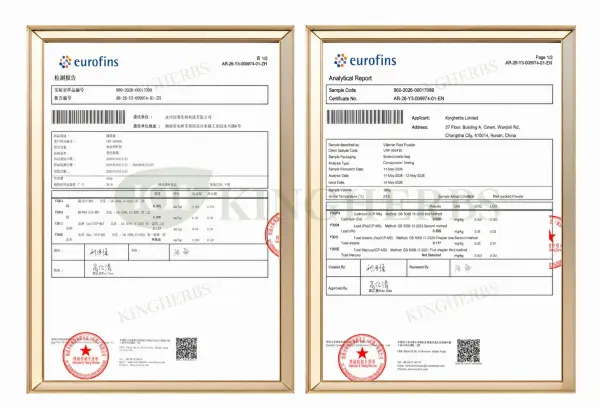
Want to get a sample before ordering a big order? Cortical Phellodendri Powder K.H. Complete COA tested by HPLC. ISO9001 and FSSC22000 cert. Minimum orders of trial-kilo quantities. For the spec sheet from our technical team, please contact info@kingherbs.com. Manufacturer of Cortical Phellodendri Powder - Direct from factory, ship worldwide from stock.
What Is Cortex Phellodendri Powder and Where Does It Come From?
Botanical Name, Plant Part, and Common Names
Product Name: Cortex Phellodendri Powder
Botanical Source: Phellodendron Amurense
Appearance: Fine Brownish Yellow Powder
Plant Part Used: Bark
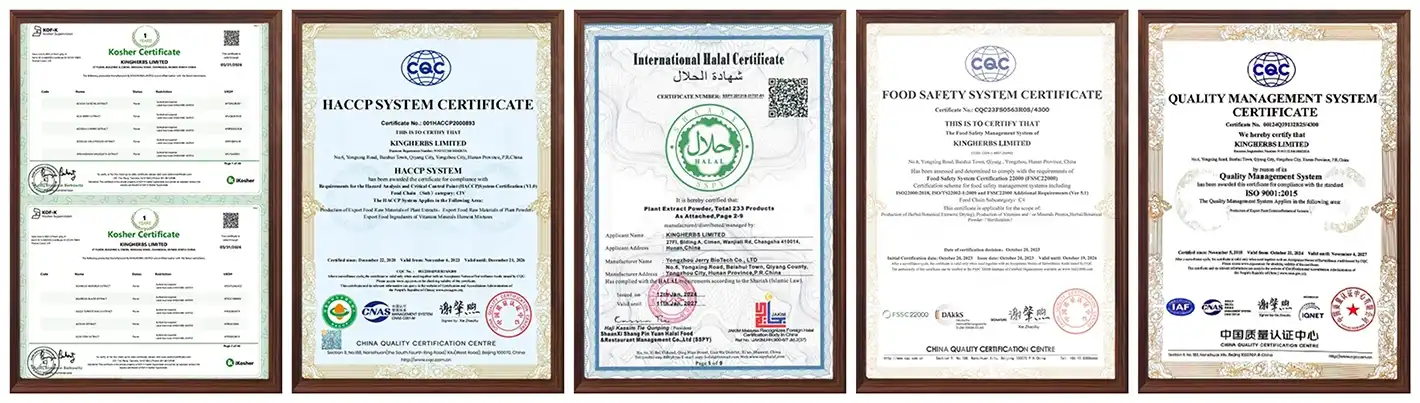
Certifications: ISO9001, FSSC22000, KOSHER, HALAL, HACCP, FDA
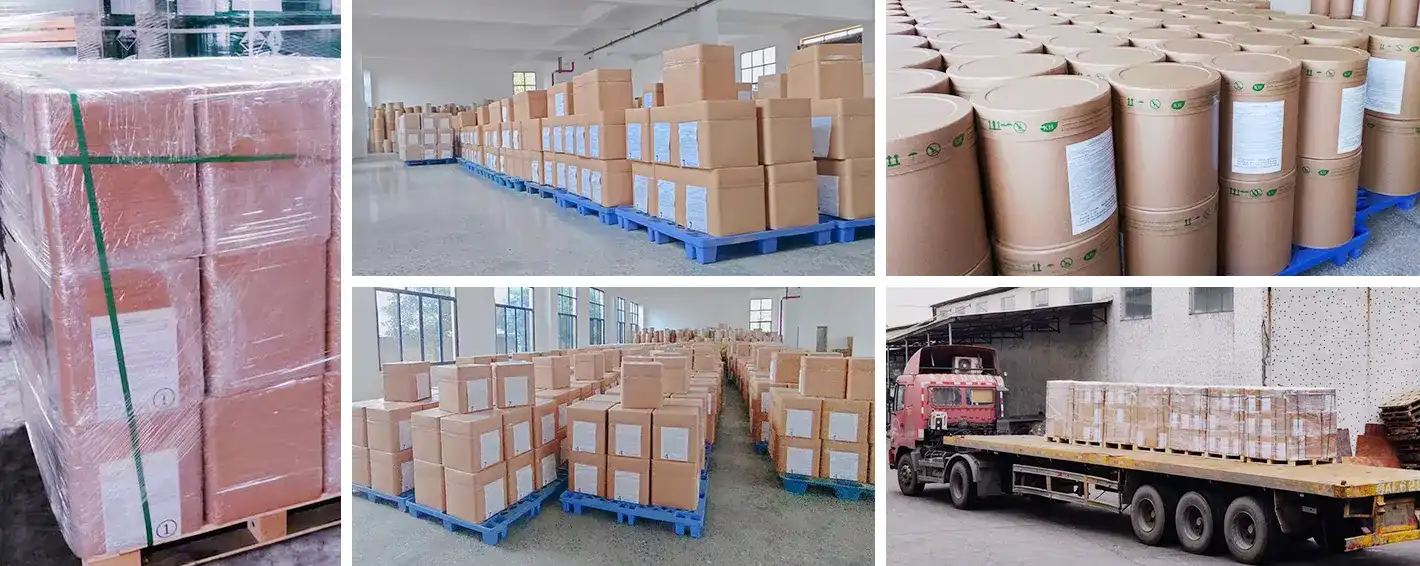
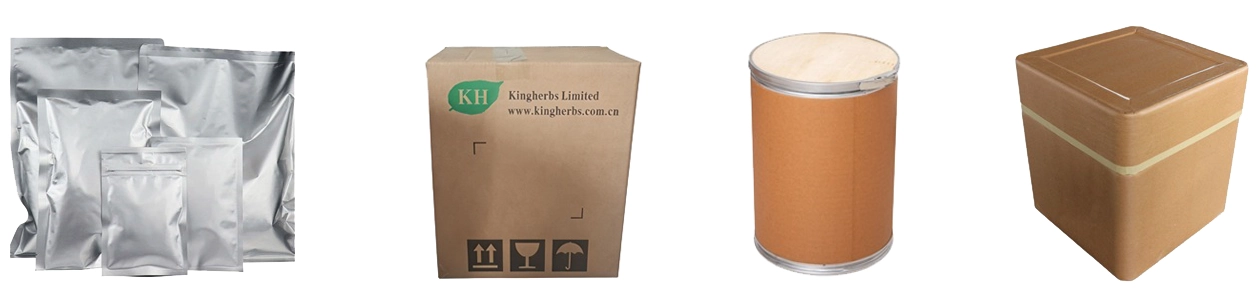
Packing Size: 25kg/drum
Transportation: Courier, Air, Ocean
MOQ: sample and small kgs trial order available, commercial order MOQ 25kg
Delivery: Ready stock, Prompt shipment
Cortex Phellodendri powder is the dried bark of the tree Phellodendron amurense or its near relative Phellodendron chinense, processed into a fine or coarse powder. Growers score the bark and scrape off the rough outer layer, then dry and grind the inner bark. This material is recognized by several names in Chinese medical texts, including Huang Bai, Huangbo, or simply Phellodendron bark. Some vendors call it Amur cork tree bark, since Phellodendron amurense is in the cork tree family.
One issue concerns purchasing teams: raw bark powder is not automatically a standardized extract, and it is not pure berberine. Each term refers to a different phase in the processing, and misunderstanding them on a purchase order might be the difference between what you need and what you don’t.
Powder Manufacturing and Extraction Method
Authentication of raw material is the first stage in a standard production process. The provider validates species identification visually or via laboratory testing. Then the bark is cleaned and sifted by personnel who remove dirt, moss, and broken pieces. Controlled temperature drying is used to retain the heat-sensitive alkaloids, and the bark is then cut or crushed into smaller pieces. The material is ground to the required particle size in a mill. The larger parts are divided by a screen. Each lot of personnel is packed and held for quality release before being sent.
This is distinct from extract manufacture, when the bark is extracted using water or ethanol, condensed, and spray-dried to raise the amount of marker chemicals above the naturally existing levels in raw bark.
| Specification Field | What It Measures | Why It Matters |
|---|---|---|
| Mesh size / particle distribution | Average particle diameter and range | Affects dissolution, mixing, and capsule fill |
| Moisture | Percentage of residual water | High moisture raises microbial and caking risk |
| Ash | Mineral residue after burning | Flags soil contamination or adulteration |
| Extract ratio (if applicable) | Ratio of raw material to finished extract | Indicates concentration level |
| Marker-compound content | Berberine or related alkaloid assay | Confirms identity and batch consistency |
Cortex Phellodendri Powder vs. Extract
Buyers often ask whether to order whole bark cortex phellodendri powder or a concentrated extract. The answer depends on your product format, target potency, and budget. The table below compares both options across criteria that matter for formulation and sourcing decisions.
| Criteria | Cortex Phellodendri Powder | Cortex Phellodendri Extract |
|---|---|---|
| Material | Milled bark | Concentrated fraction from bark |
| Processing | Drying and milling | Solvent extraction, concentration, drying |
| Concentration | Closer to raw-material composition | Higher marker-compound concentration |
| Formulation use | Teas, capsules, blends, traditional formulas | Tablets, capsules, liquid formulas, topicals |
| Cost profile | Lower processing cost | Higher processing and testing cost |
| Buyer priority | Identity, cleanliness, particle size | Extract ratio, solvent system, residual solvents |
If your product needs predictable potency per capsule or tablet, an extract usually gives tighter control. If you're formulating a traditional blend, tea, or decoction where whole-herb character matters, powder often fits better and costs less to produce.
What Are the Traditional Uses of Cortex Phellodendri in Herbal Medicine?
Huang Bai in Traditional Chinese Medicine
Huang Bai has been utilized in Chinese herbal therapy for centuries. The practitioners have classed the herb as “cold” and “bitter” and have employed it to eliminate heat and dry moisture (Chinese Pharmacopeia Commission, 2020; WHO, 1998). Historical sources indicate its usage in multi-herb formulations, not as a single treatment.
Let me be clear on one point: this historical categorization system does not translate into US or EU pharmacological classifications. A substance may have a lengthy history of tradition behind it, yet still need its own proof of safety and effectiveness before any current health claim can be made about it.
Traditional Uses in Herbal Formulas
Huang Bai appears in classical Chinese medicinal books in a limited number of repeated formula forms. This is how the practitioners historically positioned it. These are descriptions of the historical philosophy, NOT a current clinical indication:
- Damp-heat patterns: Traditional thought paired Huang Bai with herbs intended to alleviate what practitioners termed damp-heat, a descriptive pattern associated with digestive disturbance, skin irritation, and lower-body pain. Instead, they used it with other bitter, cooling herbs, not on its own. Dosage was based on the overall composition, not the one ingredient.
- Digestive discomfort: Based on the bitter-cold idea of traditional Chinese medicine, historical remedies have been formulated that combine Phellodendron bark with herbs for soothing upset stomach and loose stools. This usage predates contemporary gastrointestinal studies, and should not be interpreted as a suggestion that the cortex phellodendri powder helps any identified digestive condition today.
- Treatments for skin ailments: Topical treatments like washes and poultices of Phellodendron bark were used for skin irritation and small wounds. Modern formulators use this history to justify the ingredient’s inclusion in cleansers or masks, but cosmetic claims still need to be substantiated separately under today’s labeling standards.
- Formulations for reproductive or urinary health: Some multi-herb formulations contained Huang Bai for lower body damp-heat patterns related to urinary pain. These recipes used many plants together in certain ratios, and a single ingredient dose from that history doesn't exactly translate to a current single-ingredient supplement label.
All of these traditional uses need to be interpreted by someone knowledgeable in herbal medicine before it becomes a product description. It is not the role of the procurement staff to make the clinical choice on what a formula may claim, but to find clean, certified material.
Traditional Use Versus Modern Evidence
When a customer asks me to back up a claim, I sort it into four levels of evidence: traditional usage record, lab data, animal studies, and controlled human trials. Each tier has a distinct weighting with the regulators. A chemical that works in a petri dish has not been shown to be safe or effective in humans. Before printing a health claim on packaging, confirm whether the regulator in your target market recognizes the evidence tier you are relying on.
Which Active Compounds Make Cortex Phellodendri Powder Valuable?
Major Compound Groups
Studies of Phellodendron bark have identified many families of compounds that seem to function together. If you know these categories, you can construct a realistic specification. You cannot ask a lab to test for something the material does not have.
| Compound Group | Examples | Reported Role |
|---|---|---|
| Isoquinoline alkaloids | Berberine, palmatine, jatrorrhizine | Used as identity and assay markers |
| Limonoids / terpenoids | Obaculactone and related compounds | Contribute to bitterness and species fingerprinting |
| Flavonoids | Phellamurin and related glycosides | Studied for antioxidant activity |
| Phenolic compounds | Various bark phenolics | Contribute to color and matrix complexity |
Active-Compound Testing and Marker Selection
The marker that you will use relies on the species, the application that you want to use it for, the pharmacopeial requirements, the technique of extraction, and what your lab can really run for evaluating cortex phellodendri traditional uses. A supplement company looking for USP aligned claims will need different testing than a cosmetic formulator who is just testing for heavy metals.
| Method | What It Confirms |
|---|---|
| HPLC / HPLC-UV | Berberine and related alkaloid concentration |
| LC-MS | Broader compound profiling beyond one marker |
| Microscopy / DNA barcoding | Species-level identity confirmation |
| ICP-MS / ICP-OES | Heavy metal and elemental contaminant levels |
| GC-MS | Residual solvent or volatile compound screening |
Natural Variation and Batch Consistency
This is a natural resource, not a synthetic chemical; hence, the composition varies from batch to batch. Bark from older trees in colder places tends to have a greater alkaloid content than bark from younger trees cut in warmer zones. Another factor is drying temperature. Bark dried above specific thresholds might lose a quantifiable percentage of its alkaloid content to heat.
In an internal evaluation of 60 arriving bark batches in 2024 at KH’s quality lab, berberine-equivalent test levels varied from 1.2% to 3.8% depending on harvest area and season. That range is precisely why we put an acceptability range and not a single figure on buyer specs. The standard based on one narrow number rather than a specified range sets providers up to reject perfectly acceptable batches simply because nature does not produce identical bark every season.
How Does Berberine Contribute to the Properties of Phellodendron Bark?
Berberine as a Chemical Marker
Berberine is a yellow isoquinoline alkaloid present in various plant families, including the unrelated Phellodendron, Coptis, and Berberis species, which are also associated with cortex phellodendri traditional uses. Its presence helps a lab determine that a bark sample is correct for the identified species and hasn't been diluted with filler material. A marker range, say 2.0% to 4.0% berberine by HPLC, offers the purchasers a number to verify on each COA.
However, a common identifier across species implies that berberine content cannot alone be used to validate species identification. Microscopy or DNA tests are still needed with the assay (USP, 2023).
Cortex Phellodendri Powder vs. Purified Berberine
| Feature | Cortex Phellodendri Powder | Purified Berberine |
|---|---|---|
| Composition | Multiple naturally occurring constituents | Primarily one defined compound |
| Botanical identity | Required | Less central after purification |
| Standardization | Based on marker range | Based on high assay purity |
| Formulation behavior | More variable and matrix-dependent | More predictable concentration |
| Traditional positioning | Whole herbal material | Isolated active compound |
| Testing needs | Identity, contaminants, markers, microbiology | Assay, impurities, residual solvents |
Safe Communication of Berberine-Related Benefits
Marketing language that uses berberine research to market a whole-bark cortex phellodendri powder product exposes you to legal risk. But research on isolated, high-purity berberine is not the same thing as a product that has 2% to 4% berberine in a complex bark matrix. Check your claim against drug-interaction warnings, pregnancy and pediatric limitations, and your target market’s structure/function or traditional-use claim standards before you publish a claim. The final phrasing should be approved by a regulatory reviewer, not only the sales staff.
Cortex Phellodendri Traditional Uses in Digestive and Skin Care Formulations
Digestive and Internal Herbal Formulations
Brands add cortical phellodendri powder to powdered herbal blends, capsules, granules, decoction materials, and traditional recipe kits. Each format requires its own set of established features before it can be brought to market.
| Detail to Define | Why It Matters |
|---|---|
| Serving size and total daily amount | Keeps intake consistent across batches |
| Blend ratio with other herbs | Determines the actual marker-compound dose per serving |
| Marker-compound contribution | Confirms the ingredient delivers its intended assay level |
| Stability and microbial controls | Protects shelf life and consumer safety |
I avoid publishing one universal dosage figure because product form, jurisdiction, and individual health status all change the real answer.
Skin Care and Topical Formulations
This bark powder is used in cosmetic and personal care teams, in cleansers, creams, masks, and scalp or body-care products. There are various aspects that formulators need to examine before the substance gets into a topical base.
| Evaluation Point | Why It Matters |
|---|---|
| Particle size | Affects texture and skin feel |
| Color and odor | Must stay consistent batch to batch |
| Microbial limits | Protects finished-product safety |
| Heavy metals | Required under most cosmetic regulations |
| Preservative compatibility | Confirms the powder does not destabilize the base |
Evidence and Claims Control
“Ingredient used in traditional formulations” should be separate from “proven to treat” wording on any label or web page, particularly when describing cortex phellodendri traditional uses. Claim substantiation must be appropriate for the targeted market, and you must check that the ingredient is permissible for your target cosmetic, food, supplement, or medical product category (European Commission CosIng Database, 2024).
What Potential Anti-Inflammatory and Antibacterial Properties Does It Offer?
Reported Laboratory Properties
Published research on Phellodendron bark covers several activity areas, though most studies work with extracts or isolated compounds rather than raw powder.
| Research Area | Typical Test System | Caveat |
|---|---|---|
| Antibacterial activity | Lab culture models | Concentration used may exceed typical formulation levels |
| Anti-inflammatory signaling | Cell-based assays | Does not confirm human clinical outcomes |
| Antioxidant activity | Chemical assay systems | Measures reactivity, not health benefit |
| Microbial-growth inhibition | Petri dish testing | Results depend heavily on the extract type used |
Why Results May Not Transfer Directly to Products
Also, the lab findings are generally performed on purified substances or concentrated extracts at normal use levels, not on the raw cortex phellodendri powder. In vitro activity does not translate to clinical effectiveness, safety, or an approved marketing claim. pH of the formulation, solvents, preservatives, and delivery methods may all affect how an ingredient behaves after it’s off of the lab bench.
Safety, Contraindications, and Side Effects
Safety relies on how it is used, what the product is made from, and who uses it. The risk profiles for oral and topical uses vary, and allergic or irritant responses may occur with either method. All claims and dosage instructions for human use must be professionally reviewed before printing, including pregnancy, lactation, pediatric usage, drug interactions, and pre-existing liver or gastrointestinal problems. Always save evidence of allergens, contaminants, and adverse events in your technical file.
How Is Cortex Phellodendri Powder Used in Modern Herbal Products?
Common Product Formats
| Product Format | Typical Use Case |
|---|---|
| Capsules and tablets | Standardized oral supplement dosing |
| Herbal powders and granules | Traditional-style blends and teas |
| Liquid suspensions | Faster-absorbing oral products |
| Topical creams and gels | Skin-focused personal care items |
| Cosmetic powders and masks | Dry or semi-dry skin applications |
| Botanical extracts made from the powder | Higher-potency finished ingredients |
Fine Powder Versus Coarse Powder
| Attribute | Fine Powder | Coarse Powder |
|---|---|---|
| Dispersion | Easier in blends and topical bases | Settles or separates faster |
| Surface area | Higher | Lower |
| Processing risk | More heat and oxidation risk during milling | Lower milling stress |
| Application | Capsules, creams, masks, extracts | Decoctions, infusions, traditional processing |
| Quality concern | Agglomeration and dust control | Uniformity and extraction efficiency |
Formulation and Storage Controls
Before scaling production, check compatibility with excipients, oils, water phases, preservatives, and capsule shells. Use packaging that prevents moisture, light, air, and outside contamination. Each technical sheet should provide the state storage conditions, batch number, production date, retest or expiration date, and shelf life. Early storage triggers for troubleshooting include caking, odor change, color change, microbiological growth, or assay drift.
Cortex Phellodendri Powder Applications in Herbal Supplements and Topical Formulations
Scenario 1: OEM Herbal Supplement Manufacturer
Before you begin the search for a contract manufacturer to produce your capsule or tablet line, you need to be certain of the dosage form, target market, serving size, and desired claims. Ask for a detailed product specification, COA, allergy declaration, heavy-metal results, microbiological findings, and stability support. These should be available before manufacturing begins. Be upfront about whether the final product is using raw cortex phellodendri powder, a standardized extract, or a combination of the two, since that decision impacts your package claims and testing approach.
Case Study: Reducing Batch Rejections for a US Capsule Brand
In 2023, KH was contacted by a mid-size US supplement company that had rejected three consecutive shipments of Phellodendron bark powder from a prior source. The rejected batches failed internal assays for berberine, which ranged from 0.8% to 1.5%, below the minimum of 2.0%. We did HPLC testing on pre-shipment samples, settled on an assay range of 2.2% to 3.5%, and included a retained-sample policy with each lot number.
The brand had zero assay-related rejections in the following six shipments and reduced arriving inspection time by around 35% (according to their own QA log shared with our team). Once standard mesh sizes shifted to ready stock, lead time from purchase order to delivery likewise decreased from an average of 32 days to 19 days.
Scenario 2: Distributor or Ingredient Importer
Importers evaluate suppliers on botanical authentication, country of origin, batch uniformity, cortex phellodendri traditional uses, MOQ, lead time, packaging choices, export documents, and Incoterms. Keep a sample from each lot you receive along with a documented incoming-inspection method, so you can track a complaint back to a particular shipment instead of just guessing.
Scenario 3: Herbal Practitioner, Formulator, or End-User Plant
Please confirm whether the substance is for conventional preparation, food or supplement manufacture, cosmetic manufacturing, or research purposes. Determine appropriate particle size, odor, color, microbiological limits, and preparation process beforehand. Never presume that a bulk raw-material grade is suitable for direct consumer use without independent regulatory and safety clearance for that particular use.
EU and US Compliance Considerations
EU: Review food-supplement, cosmetic, novel-food, contaminant, labeling, and botanical-status criteria for the destination country. Review relevant FDA food, dietary supplement, cosmetic, cGMP, and labeling regulations (FDA, 2024). Check if REACH is relevant for your imported substance and supply chain. ISO 22000, HACCP, and GMP systems are supportive of quality management of food, supplements, ingredients (ISO, 2018). CE, RoHS, and UL designations do not typically apply to a cortex phellodendri powder itself; they pertain solely to related equipment or electrical items.
What Quality Standards Should Buyers Check When Sourcing Cortex Phellodendri Powder?
Core Specification Checklist
| Quality Area | Buyer Verification Point |
|---|---|
| Botanical identity | Correct species, plant part, authentication method |
| Appearance | Color, odor, foreign matter, uniformity |
| Particle size | Mesh or measured particle-size distribution |
| Moisture | Defined maximum limit and test method |
| Ash | Total ash and acid-insoluble ash where relevant |
| Marker compounds | Berberine or other agreed assay range |
| Microbiology | Total count, yeast and mold, pathogens |
| Heavy metals | Lead, arsenic, cadmium, mercury |
| Pesticides | Target-market and customer-specific limits |
| Mycotoxins | Applicable aflatoxin or related testing |
| Adulteration | Species substitution, fillers, dyes, undeclared extracts |
| Traceability | Batch code, origin, production record, retained sample |
COA and Laboratory Verification
A useful Certificate of Analysis needs to answer specific questions, not just display generic pass marks.
| COA Field | What It Shows |
|---|---|
| Product and botanical name | Confirms correct material was tested |
| Batch or lot number | Links results to the physical shipment |
| Test methods and acceptance criteria | Shows how each result was generated |
| Assay, moisture, microbiology, contaminants | Core safety and identity data |
| Laboratory name and QC approval | Confirms accountability for the results |
For higher-risk or regulated applications, ask for independent laboratory confirmation or periodic third-party testing on top of the standard COA (US Pharmacopeial Convention Food Fraud Database, 2024).
Risks, Pitfalls, and Mitigation
| Risk | Mitigation |
|---|---|
| Incorrect species | Require authenticated voucher, microscopy, or DNA testing |
| Low or inconsistent marker content | Set assay ranges and review historical batch data |
| Heavy-metal contamination | Use ICP-MS or ICP-OES testing with defined limits |
| Pesticide residues | Request multi-residue screening |
| Microbial contamination | Validate drying, sanitation, packaging, storage |
| Powder adulteration | Use microscopy, chromatographic fingerprinting, audits |
| Unsupported health claims | Conduct a regulatory and scientific claim review |
| Shelf-life failure | Run stability testing under relevant storage conditions |
Procurement Factors and Commercial Terms
| Factor | What to Confirm |
|---|---|
| Minimum order quantity | Whether bulk, OEM, and private-label orders differ |
| Sample policy | Sample quantity, charges, and turnaround time |
| Pricing | Tiers by volume, packaging, and testing level |
| Lead time | Whether it includes testing and export clearance |
| Documentation | COA, technical data sheet, Certificate of Origin |
| Shipping terms | Incoterms such as EXW, FOB, CIF, or DDP |
| Complaint handling | Replacement terms and response timeline |
How to Choose a Reliable Cortex Phellodendri Powder Manufacturer?
Supplier Evaluation Checklist
| Criterion | Why It Matters |
|---|---|
| Documented sourcing controls | Confirms species and origin are tracked from the field |
| GMP, HACCP, or ISO 22000 systems | Shows a managed quality program, not ad hoc testing |
| Defined product specifications | Gives you a baseline to hold every batch against |
| In-house or third-party lab testing | Supports faster, more reliable COA turnaround |
| Batch traceability and retained samples | Lets you trace a complaint to its source lot |
| Transparent MOQ, pricing, lead time | Avoids surprise costs mid-negotiation |
| Export experience | Reduces customs and documentation delays |
| OEM and customization capability | Supports private label and blend requests |
| Complaint and recall procedures | Shows how the supplier handles failures |
| Sample availability before bulk orders | Lets you test fit before committing budget |
A Direct Look at KH's Approach
Kingherbs Limited (KH) has been manufacturing botanical and herbal substances since 1996, delivering dry cortex phellodendri powder and liquid ingredients for supplements, food additives, cosmetics, medicines, and animal nutrition. Our cortical phellodendri powder is made from traceable Phellodendron amurense bark and processed into a fine brownish-yellow powder under ISO9001, FSSC22000, HACCP, Kosher, and Halal certification.
We regulate raw material from the planting base forward, working with producers on variety, soil, and harvest time to maintain active compound levels uniform from season to season. Each batch is accompanied by an HPLC analysis report, and our application lab may help with formulation work for capsules, tablets, gummies, drinks, and skincare products. Samples and in-stock orders are normally delivered within 3-5 business days. Commercial orders are packaged in 25kg drums and transported by courier, air, or ocean freight.
Price, MOQ, Lead Time, and Private-Label Comparison
| Supplier Factor | Question to Ask |
|---|---|
| Price | Is pricing based on raw powder, extract ratio, or packaging format? |
| MOQ | Does it differ for bulk, OEM, and private-label orders? |
| Lead time | Does the quote include testing and export clearance? |
| Customization | Are mesh size, assay range, and blend ratio adjustable? |
| Documentation | Are COA, SDS, origin, and allergen documents available? |
| Shipping | Which Incoterms, ports, and freight options are supported? |
| Quality assurance | What happens when a batch fails specification? |
Conclusion
Cortex Phellodendri powder is a traditional bark plant used in herbal, nutritional, cosmetic, and topical preparations. The genuine value of a supplement is determined by authenticated species, regulated processing, appropriate marker-compound testing, contaminant control, and a regulatory evaluation related to a formulation, not marketing rhetoric.
When choosing your supplier, compare whole powder with extracts. Before seeking quotes, clarify your technical requirements. Assess your suppliers on documentation, testing, traceability, quality processes, MOQ, lead time, and export capacity. A detailed specification protects you and your supplier relationship at the same time.
FAQ
1. What is Cortex Phellodendri powder?
Cortex Phellodendri powder is milled bark from Phellodendron amurense or Phellodendron chinense. It is also commonly called Phellodendron bark or Huang Bai.
2. What are the traditional uses of Cortex Phellodendri powder?
Traditional uses include Chinese herbal formulas associated with damp-heat, digestive, urinary, and skin-related applications. These descriptions should not be treated as modern clinical claims without proper evidence and regulatory approval.
3. Is Cortex Phellodendri powder the same as berberine?
No. Cortex Phellodendri powder contains multiple natural constituents, while berberine is a purified or concentrated single compound. Berberine can serve as a marker, but its presence does not make the two products equivalent.
4. What is the difference between Cortex Phellodendri powder and extract?
Powder is milled bark with a broader, less concentrated natural composition. Extract comes from solvent processing and is usually defined by an extract ratio or marker-compound concentration.
5. How should Cortex Phellodendri powder be stored?
Store it in a sealed, clean, moisture-resistant container away from heat, light, and strong odors. Follow the supplier's specified temperature, humidity, shelf-life, and retest requirements.
6. What should a Cortex Phellodendri powder COA include?
A COA should include botanical identity, batch number, test dates, assay or marker results, moisture, microbiology, heavy metals, applicable pesticide or mycotoxin results, test methods, and quality approval.
7. Is Cortex Phellodendri powder safe for everyone?
Safety depends on dose, route of use, product composition, and individual health status. Pregnancy, breastfeeding, pediatric use, medication interactions, allergies, and medical conditions all require qualified professional review.
8. What certifications should buyers request?
Depending on the application, buyers may ask for GMP, HACCP, ISO 22000, ISO 9001, laboratory accreditation, organic certification, or market-specific documentation. Certification scope should match the actual product and facility.
Request Your Cortex Phellodendri Powder Specification Sheet Today
Ready to move forward? KH ships cortex phellodendri powder from ready stock, with trial-kilo samples available before a 25kg drum order. Our lab backs every batch with an HPLC-based COA, and our team supports custom mesh sizes and blend ratios for supplement, cosmetic, and nutraceutical formulas. Email info@kingherbs.com with your target specification. We'll reply with a quote, lead time, and documentation package within two business days, as a direct cortex phellodendri powder supplier to brands worldwide.
References
1. World Health Organization (1998). Quality Control Methods for Medicinal Plant Materials. https://www.who.int/
2. U.S. Food and Drug Administration (2024). Dietary Supplements and Cosmetic Regulation Guidance. https://www.fda.gov/
3. United States Pharmacopeia (2023). Botanical Ingredients, Quality Standards, and Analytical Methods. https://www.usp.org/
4. European Medicines Agency (2023). Herbal Medicinal Products and Quality Guidance. https://www.ema.europa.eu/
5. European Commission CosIng Database (2024). EU Cosmetic Ingredient and Regulatory Information. https://ec.europa.eu/growth/sectors/cosmetics/cosing_en
6. International Organization for Standardization (2018). ISO 22000 Food Safety Management Systems. https://www.iso.org/
7. U.S. Pharmacopeial Convention Food Fraud Database (2024). Ingredient Adulteration and Supply-Chain Risk Information. https://www.foodfraud.org/
8. Chinese Pharmacopoeia Commission (2020). Chinese Pharmacopoeia Standards and Traditional Medicinal-Material References. https://www.chp.org.cn/
Author: Cathy, Technical Manager at KH (Kingherbs Limited)
Cathy has spent over eight years reviewing botanical ingredient specifications, COAs, and supplier audits for herbal, supplement, and cosmetic manufacturers. She works directly with R&D and QA teams across North America, Europe, and Southeast Asia on formulation support and raw-material sourcing for Kingherbs Limited, a botanical ingredient manufacturer founded in 1996.
Send Inquiry
Related Industry Knowledge
- What Is Isatis Root Extract Used For in Modern Formulas?
- Where to Buy Yucca Extract for Bulk Import and Manufacturing
- Where to Buy Bulk Mimosa Pudica Powder for Import and Distribution
- Why Is Avocado Refined Oil Popular With Professional Chefs?
- Cocoa Seed Extract Benefits for Functional Food Formulas
- Exploring the Health Benefits of Bitter Melon Extract Powder
- Bitter Melon Extract Powder: What It Is, Benefits, Dosage, and Sources
- Passionflower Extract Powder Benefits for Adrenal Fatigue
- Nettle Extract Powder: Nature’s Support for Prostate and Hormone Health
- How Polygonum Cuspidatum Extract Supports Heart Health Naturally?