_1762508637542.webp)
What are the challenges in the production of Artemisinin Powder?
Jun 2, 2026
Making very pure Artemisinin Powder is hard because farming conditions aren't always stable, the process of extraction is complicated, costs need to be kept under control, and rules need to be followed. This colourless crystalline substance comes from Artemisia annua leaves and is the basis of current antimalarial drugs. It needs to be processed carefully to keep its unique endoperoxide bridge. Manufacturers have a hard time getting regular results from their raw materials, controlling solvent residues during extraction, keeping temperatures stable during processing, and meeting strict GMP standards in a lot of different regulatory zones. These problems have a direct effect on batch accuracy, production timelines, and prices. This is why choosing the right source is so important for buying managers who need to find trusted pharmaceutical-grade ingredients.
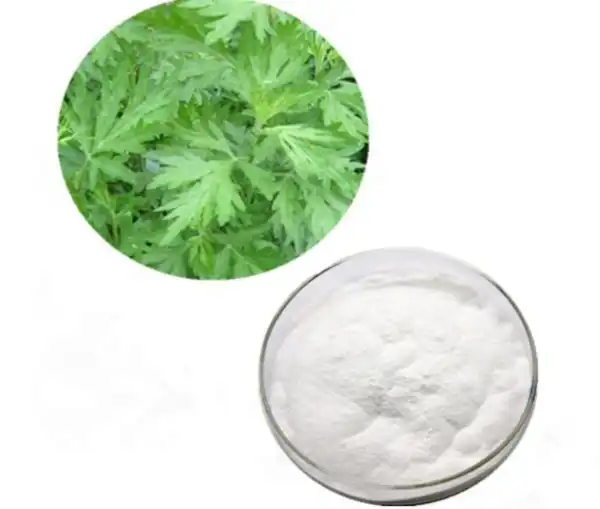
Understanding Artemisinin Powder Production Challenges
From growing Artemisia annua to finished Artemisinin Powder, many biological and technological challenges purchasing managers need to be aware of in order to keep supply lines stable.
Agricultural Variability and Raw Material Inconsistency
Artemisia annua yields change a lot based on the weather, altitude, soil quality, and when it is harvested. Studies show that the amount of artemisinin in dried leaves varies from 0.1% to 1.5%, which makes the supply numbers hard to estimate. Geographical factors are very important; plants grown in areas with certain temperature trends and amounts of sunlight have higher ratios of active ingredients. Seasonal changes make things even more complicated because picking too early or too late greatly lowers the amount of artemisinin that builds up in leaf tissues. Because of this, makers have to get their raw materials from a lot of different places and follow strict quality control procedures to make sure that each batch meets basic cleanliness standards before it is processed.
Traceability Demands from Pharmaceutical Buyers
More and more, buyers of pharmaceuticals and nutraceuticals want full traceability paperwork, such as certifications for seed varieties and HPLC analysis records for each batch. This desire comes from stricter rules and worries about buyer safety. Setting up tracked supply lines means working with farming partners to keep records of when crops were planted, how much pesticide was used, and when they were harvested. Kingherbs Limited deals with this by keeping close ties with top planting bases. This way, they have full control over the types, land management, and crop times. This full-circle supervision stops changes in the quality of the raw materials and gives customers the specific part specs and proof papers Artemisia annua Extract Powder they need for regulatory submissions.
Extraction and Purification Difficulties
There are technical trade-offs between yield efficiency, clarity, and safety when turning dried Artemisia annua leaves into pharmaceutical-grade Artemisinin Powder.
Traditional Solvent Extraction Limitations
In traditional extraction, non-polar solvents like hexane or petroleum ether are used to break down the plant structure and release artemisinin. Even though these methods are cheap, they don't work very well for extraction (usually only 40–60% recovery) and leave behind solvents that aren't allowed in medicinal ingredients according to ICH standards. Gas Chromatography testing for solvent residues is required, but even small amounts above 5 parts per million (ppm) can be enough to rule out whole production runs. Concerns about safety and the environment when getting rid of solvents add to the rules and costs of doing business. Many contract makers now turn down suppliers who can't provide a full residual solvent study. This is now a key factor in choosing a supplier.
Water-Soluble Derivative Conversion Challenges
Pure Artemisinin Powder doesn't dissolve in water at all (about 0.003 mg/mL), which means it can't be used for many medicinal purposes. To change it into artesunate that dissolves in water or artemether that dissolves in oil, more chemical steps are needed that involve reduction, esterification, or etherification processes. Each change adds the possibility of side effects, requires specific nuclear systems, and makes output take longer. To make derivatives that meet market needs, manufacturers have to make sure that their production capacity is balanced with their quality control standards at every stage of the chemical transformation process. Because it's so complicated, procurement professionals usually get both base Artemisinin Powder and special derivatives from sellers who can make a wide range of APIs.
Production Scalability and Cost Efficiency
When you go from lab-scale extraction to industrial-scale output, you find bottlenecks that have a direct effect on prices and the stability of the supply.
Process Optimization Barriers
It's not always easy to go from 10 kg pilot batches to 500 kg production runs when scaling up extraction methods. In bigger extraction tubes, the way heat moves changes, which could hurt the temperature-sensitive endoperoxide bridge. Solvent-to-biomass ratios need to be re-adjusted, and filtering systems get clogged up when more plant material is processed. Manufacturers spend months trying parameters on a range of equipment sizes to come up with methods that can be used again and again. Usually, these development costs are spread out over several production batches, which affects how the end prices are set. When buyers are in talks with possible sellers, they should ask for data on production batch stability and samples from different production runs to make sure the product can be scaled up successfully.
Equipment Depreciation and Maintenance Costs
Specialized extraction tools, like rotating evaporators, chromatography systems, and crystallization units, need to be maintained constantly and replaced every so often. After 100 to 150 rounds, column media for chromatographic purification breaks down, and each replacement costs between $10,000 and $50,000, based on the size. To keep them from getting contaminated, vacuum pumps that handle chemical solvents need to be serviced every three months. These working costs directly affect the cost of making one kilogram of goods, usually by 15 to 25 percent ontopof the base cost of Artemisia annua Extract Powdermaking goods. When buyers understand these cost drivers, they can better compare supplier price structures and tell when quotes that are significantly lower than market rates could mean that quality control has been weakened or that old extraction methods are being used to make less pure goods.
Regulatory and Safety Compliance Challenges
In the plant extract business, pharmaceutical-grade Artemisinin Powder is subject to some of the strictest regulations.
Multi-Regional Regulatory Navigation
The rules and regulations are very different in each area. For pharmaceutical excipients, the US Food and Drug Administration (FDA) needs DMF (Drug Master File) registration. The European Pharmacopeia sets clear limits on impurities and recognition tests, and China's NMPA has strict rules about paperwork. To meet the requirements of various regulatory schemes at the same time, manufacturers must keep up parallel quality systems. GMP certification, ISO9001 quality management paperwork, HACCP food safety routines, and region-specific registrations like FSSC22000 for food uses are all common parts of certificate packages. Kingherbs Limited has many certifications, such as KOSHER, HALAL, and FDA recognition. This makes it easier for foreign buyers to get governmental approval and speeds up the time it takes for finished goods to reach stores.
Documentation and Audit Preparedness
Pharmaceutical companies that do supplier checks expect complete paperwork systems that include records of each batch of production, equipment calibration logs, the ability to track down raw materials, data from stability tests, and reviews of the products every year. Procedures for investigating deviations must be written down, and correction steps must be able to be tracked. Before they can be qualified, many contract manufacturers make suppliers fill out long surveys that cover things like building design, environmental controls, employee training programs, and change control systems. To stay ready for an audit, you need dedicated quality assurance resources and strong paperwork management systems. These are skills that are usually only found among established botanical extract makers with experience in the pharmaceutical market. Because of this, choosing a seller based only on price is risky, since audit failures can disqualify suppliers and throw off production plans.
Supplier Selection and Supply Chain Management
Getting Artemisinin Powder from the right source can make or break a buying team's ability to get compliant,cost-effective materials regularly.
Critical Supplier Evaluation Criteria
Quality certificates are the basis for judging a seller. ISO9001 certification shows basic quality management skills, while FSSC22000 and GMP certifications show the ability to make medicines. In addition to documents, buyers should check the supplier's production ability. For example, can they handle orders of several tons? Kingherbs Limited can handle a variety of order forms. They can take sample and small kilogram trial orders, as well as business orders with a 25 kg minimum order quantity. Another thing that sets one seller apart from another is their analytical skills. Suppliers who have their own HPLC, GC, ICP-MS, and other analytical instruments can provide faster turnaround times for certificates of analysis and higher quality consistency than those who outsource testing.
Natural versus Synthetic Sourcing Considerations
Now that semi-synthetic artemisinin is being made through modified yeast fermentation, buying teams have more options for where to get it. Artemisinin Powder from Artemisia annua plants is a natural product that is valuable in some market groups, but the amount available changes with the seasons. Semi-synthetic production has steady capacity all year, but it costs 20–30% more per kilogram right now. Chemically, they are the same (C15H22O5 with CAS No. 63968-64-9), and they both meet the conditions for making APIs. When choosing sourcing methods, buyers have to weigh the need to place themselves in the market against the cost and dependability of the supply. It's easier to deal with supply problems when you work with companies that can both remove materials and give you access to semi-synthetic sources.
Logistics Optimization and Supply Continuity
Transportation issues have a direct effect on how stable a product is and how long it takes to send. When it comes to foreign shipping, Artemisinin Powder needs to be shielded from heat, light, and moisture. Kingherbs Limited uses protective packing and temperature tracking for both air and ocean freight to make sure the purity of the product is maintained throughout the supply chain. Standard specs (3% to 5%, 28%, 30% to 99% purity grades) are always in stock, so pressing orders can be delivered by courier within three to five business days. Custom formulations with specific ratios ship right away after production. Getting to know your suppliers and keeping strategic stock levels can help lower the supply chain risks that come with getting farming raw materials, especially during times of high demand when spot market access is limited.
Conclusion
Artemisinin Powder production problems include unpredictable weather in agriculture, complicated technical extraction, strict government rules to follow, and limited economic growth. In this environment, procurement managers need sellers to show strong quality systems, clear paperwork for tracking, improved purification capabilities, and open business terms. Successful buying strategies balance the need for purity with the reality of costs, giving priority to sellers who have experience making medicines and a full collection of certifications. As the need for artemisinin-based therapies grows around the world, it becomes more useful to work with well-known companies that can provide technical help, application guidance, and a steady supply. Knowing about these production issues gives buyers the power to ask good questions, evaluate sellers properly, and make sure they can always get this important medicinal ingredient.
FAQ
1. How do production challenges affect Artemisinin Powder pricing?
Costs of making things are directly affected by changes in agricultural yields, the efficiency of extraction, and the choice of cleaning technology. When the price of Artemisia annua biomass goes up because of the season or when extraction rates go down because of problems with the quality of the raw material, sellers have to pay more for inputs, which affects the prices they charge. Advanced methods for filtering that achieve 98% pure or higher demand higher prices to reflect the costs of purchasing the necessary equipment. Prices will vary between 30 and 50 percent between sellers based on the purity grade, the way of extraction, and the amount of certification. Long-term supply deals with manufacturers that keep direct planting ties are a better way to protect prices from price changes than buying on the spot market.
2. What distinguishes high-quality suppliers in this market?
The best sellers show a lot of proof of their quality, like HPLC analyses that are special to each batch, tests for residual solvents, heavy metal screening, and certificates for pesticide residues. Manufacturing certificates (GMP, ISO9001, FSSC22000) show that a company can make pharmaceutical-grade products. Strategic partners are different from transactional sellers because they offer more technical support than just providing ingredients. For example, they can help with formulation optimization, stable testing, and access to an application laboratory. Production flexibility that can handle sample orders up to commercial numbers and ready stock positions that allow for quick delivery are important organizational benefits during the product development and scale-up phases.
Partner with a Certified Artemisinin Powder Supplier
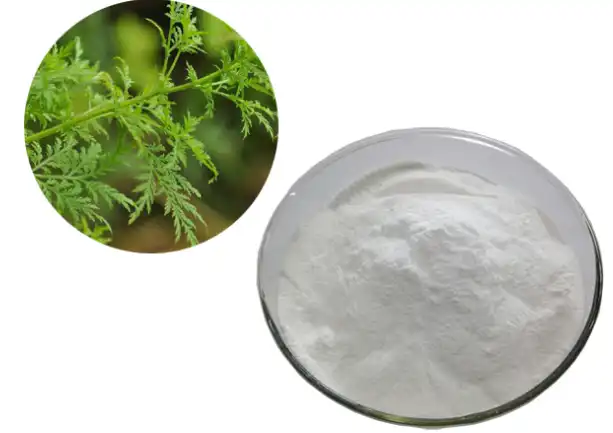
Kingherbs Limited sells Artemisinin Powder that is safe for use in medicines. They have been extracting plants for more than 25 years and have all the necessary quality certifications. We only use clean water and food-grade ethanol in our extraction process. We don't use any dangerous solvents that could affect the safety of the product or our ability to follow the rules. Through exact variety control, optimal soil management, and planned harvest timing, direct relationships with premium Artemisia annua planting bases ensure consistent raw material quality. This gets rid of the supply unpredictability that throws off production plans. We always have a wide range of ready-to-ship products in different purity ranges (3% to 5%, 28% to 30%, and 30% to 99%), which have been confirmed by HPLC testing. This means that standard orders can be delivered quickly (within 3 to 5 business days), and we can also make custom recipes with specific ratios or functional goals.
Our ISO9001, FSSC22000, KOSHER, HALAL, HACCP, and FDA certifications make it easier for regulators to give you approval. And our application laboratory helps you improve formulations for medical, food, and animal uses. Our open MOQ structure (sample and small kg trial orders welcome, 25 kg commercial minimum) means that we can grow with your business, whether you need small amounts for R&D trials or large orders that weigh many tons. Contact info@kingherbs.com right away to get batch-specific certificates of analysis, talk to our formulation experts about your technical needs, or get a full quote for buying Artemisinin Powder.
References
1. World Health Organization. (2015). Guidelines for the Treatment of Malaria, 3rd Edition. WHO Press, Geneva.
2. Klayman, D.L. (1985). "Qinghaosu (Artemisinin): An Antimalarial Drug from China." Science, 228(4703), 1049-1055.
3. Ferreira, J.F.S., Luthria, D.L., Sasaki, T., & Heyerick, A. (2010). "Flavonoids from Artemisia annua L. as Antioxidants and Their Potential Synergism with Artemisinin against Malaria and Cancer." Molecules, 15(5), 3135-3170.
4. Eckstein-Ludwig, U., Webb, R.J., Van Goethem, I.D., East, J.M., Lee, A.G., Kimura, M., O'Neill, P.M., Bray, P.G., Ward, S.A., & Krishna, S. (2003). "Artemisinins Target the SERCA of Plasmodium falciparum." Nature, 424(6951), 957-961.
5. Paddon, C.J., Westfall, P.J., Pitera, D.J., Benjamin, K., Fisher, K., McPhee, D., Leavell, M.D., Tai, A., Main, A., Eng, D., Polichuk, D.R., Teoh, K.H., Reed, D.W., Treynor, T., Lenihan, J., Fleck, M., Bajad, S., Dang, G., Dengrove, D., Diola, D., Dorin, G., Ellens, K.W., Fickes, S., Galazzo, J., Gaucher, S.P., Geistlinger, T., Henry, R., Hepp, M., Horning, T., Iqbal, T., Jiang, H., Kizer, L., Lieu, B., Melis, D., Moss, N., Regentin, R., Secrest, S., Tsuruta, H., Vazquez, R., Westblade, L.F., Xu, L., Yu, M., Zhang, Y., Zhao, L., Lievense, J., Covello, P.S., Keasling, J.D., Reiling, K.K., Renninger, N.S., & Newman, J.D. (2013). "High-Level Semi-Synthetic Production of the Potent Antimalarial Artemisinin." Nature, 496(7446), 528-532.
6. Räth, K., Taxis, K., Walz, G., Gleiter, C.H., Li, S.M., & Heide, L. (2004). "Pharmacokinetic Study of Artemisinin after Oral Intake of a Traditional Preparation of Artemisia annua L. (Annual Wormwood)." American Journal of Tropical Medicine and Hygiene, 70(2), 128-132.
Send Inquiry
_1773796485210.webp "Honeysuckle Flower Extract Powder")
Related Industry Knowledge
- White Willow Bark Extract Powder Benefits: Nature’s Time-Tested Remedy for Resilience and Relief
- How Does Rhizoma Coptidis Powder Improve Gut Health?
- Is Cortex Phellodendri Powder Safe for Daily Use?
- How to Select Premium Macleaya Cordata Extract Powder?
- Macleaya Cordata Extract for Antimicrobial Support
- Mango Leaf Extract Powder for Skin: Anti-Aging & Protection
- Can White Paeony Extract Help Balance Hormones Naturally?
- Consumer Guide: Mango Leaf Extract Powder Benefits & Uses
- Can Vine Tea Extract Support Healthy Metabolism Naturally?
- How Mango Leaf Extract Powder Supports Blood Sugar Balance?