_1762508637542.webp)
What Are the Benefits of Chamomile Extract Powder for Skin?
Oct 6, 2026
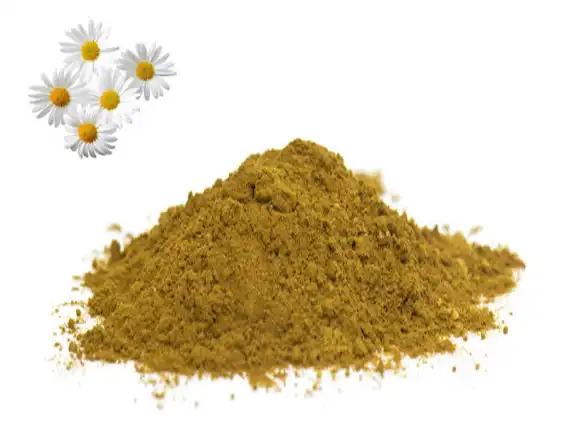
Many modern skincare products include chamomile extract powder because of its calming effects on the skin, anti-inflammatory properties, and capacity to increase antioxidant production. Derived from Matricaria recutita flowers, this fine brown-yellow powder contains three main bioactives: apigenin, bisabolol, and flavonoids. All three of these bioactives—redness reduction, skin barrier reinforcement, and oxidative stress protection—operate in tandem. A growing body of clinical research and centuries of traditional use both attest to the consistent and quantitative usefulness of chamomile extract powder. Lotions, serums, and after-sun formulas made by B2B formulators for sensitive skin will benefit from these properties.
Understanding Chamomile Extract Powder and Its Skin Benefits
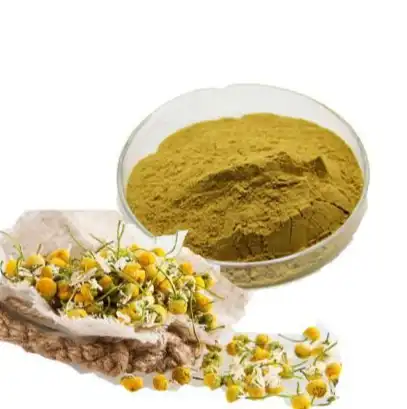
The nutritional composition of chamomile extract powder distinguishes it from other plant-based fillers and sets it apart from other varieties. Flavonoids (standardised at 6%–10%), apigenin (varying from 0.3% to 98% by HPLC), and terpenoids such as bisabolol and chamazulene are the three primary types of skin-active substances concentrated through the use of water/ethanol to extract the dried flower heads of Matricaria recutita and then spray-dried to form the powder. These compounds affect the skin in several ways, and they work together to improve its appearance.
Anti-Inflammatory Action
The use of bisabolol and chamazulene inhibits the synthesis of cytokines that are responsible for inflammation. At the cellular level, this compound reduces the temperature of the skin and provides relief from any discomfort. One of the most important factors in skin disorders that induce inflammation is NF-κB signalling, which, according to a study published in the journal Phytotherapy Research, was found to be significantly reduced by bisabolol. The formulation process is clinically significant for formulators who seek to create products that aid in the healing process after surgery or in treating eczema.
Antioxidant Protection from Flavonoids
Free radicals are produced by ultraviolet (UV) radiation and pollution in the environment. The flavonoids included in chamomile extract powder, particularly apigenin and luteolin, eliminate these free radicals within the body. The presence of this antioxidant activity slows down the process of photoaging, maintains the integrity of collagen, and reduces the breakdown of lipids in the membranes of skin cells. These are all advantages that provide concrete evidence to support assertions that anti-ageing products are effective.
Skin Barrier Support and Hydration
Apigenin helps keratinocytes differentiate, which makes the skin's natural barrier function stronger. Researchers studying skin care and cosmetics have found that actives derived from chamomile can lower transepidermal water loss (TEWL). This makes the extract useful for baby care lines and other formulations for dry, damaged, or sensitive skin.
How to Use Chamomile Extract Powder Effectively in Skincare?
It's not enough to just know what the rewards are. To use chamomile extract powder correctly in a commercial formula, you need to pay attention to the processing conditions, concentration, and pH compatibility. Here are the most important things for B2B product makers to think about when making an application:
- Topical creams and lotions: Incorporate at 0.5%–2.0% w/w in the aqueous phase. The powder's good water dispersibility at this concentration prevents particle agglomeration and maintains emulsion stability across standard viscosity ranges.
- Serums and essence formulas: Use at 0.3%–1.0% with a pH range of 4.5–6.5 to preserve apigenin stability. High-apigenin grades (above 10% HPLC) are preferable here for quantifiable bioactive delivery.
- After-sun and baby care products: Chamomile extract powder pairs well with aloe vera extract and panthenol in soothing systems. Its gentle phytochemical profile meets the safety thresholds required for baby-grade formulation.
Chamomile extract powder works well in relaxing systems with aloe vera extract and panthenol for after-sun and baby care. Its gentle phytochemical profile meets the safety standards needed for formulations that are safe for babies.
Comparing Chamomile Extract Powder with Other Chamomile Forms
There are times when procurement teams have to choose between chamomile flower powder, chamomile extract powder, and chamomile essential oil. Each form has a different amount of active compound, a different way of processing it, and a different set of functions that it can do.
Chamomile Extract Powder vs. Flower Powder
Chamomile flower powder is just ground-up dried flowers that haven't been standardized for their active ingredients. There is a lot of variation from batch to batch, more microbes are present, and the product is less bioavailable. Chamomile extract powder, which has been tested by UV/HPLC and standardized to known apigenin and flavonoid assays, removes these factors. The extract powder is the only choice that can be defended for any product that needs a label claim or scientific proof.
Chamomile Extract Powder vs. Essential Oil
The essential oil of chamomile contains a significant amount of chamazulene and alpha-bisabolol; nevertheless, when used in greater quantities, it has the potential to make your skin more sensitive. In formulations that are based on water, it decreases the stability of the substance. There are more bioactive ingredients in chamomile extract powder than there are in essential oil. These compounds include flavonoids, which are not present in essential oil. Additionally, it is simple to combine with water-based systems, in contrast to oil-based systems, which can have difficulties with emulsification whenever certain components are present.
Standardized Extract vs. Non-Standardised Alternatives
However, because non-standardised chamomile extracts do not have their active ingredient content tested, it is not possible to guarantee that the batch will be consistent. There are two distinct extract ratios available for our chamomile extract powder: 4:1 and 10:1.a. 1. HPLC analysis has demonstrated that it has been standardised to contain apigenin at a concentration ranging from 0.3 percent to 98 percent. By providing this level of detail, purchasing managers can exercise precise control over the raw materials used and the extent to which the final product functions.
Selecting the Right Chamomile Extract Powder Supplier for B2B Needs
When you choose a supplier, you either control or create procurement risk. When it comes to chamomile extract powder, these things set a reliable production partner apart from a market trader:
Certifications and Compliance
A reliable company that makes chamomile extract powder should have at least FDA registration, ISO9001, FSSC22000, HACCP, KOSHER, and HALAL certifications. These certificates show that the company follows consistent production practices, manages food safety, and is ready to sell in the U.S. This is proof that KH's chamomile extract powder is in line with all six of these certifications, making it easy to import.
Traceability and Batch Documentation
An HPLC analytical report should be included with each and every commercial batch. This report should include a listing of the amount of apigenin, flavonoids, heavy metals, and microbiological tests that were performed. In order to properly control the liability of the finished product, it is impossible to ignore this batch-level paperwork. Complete HPLC component spectra are included with each and every package that is shipped from KH. This provides the sourcing and quality assurance teams with the ability to view all of the components.
Supply Chain Reliability and Lead Times
KH always has 25 kg drums of chamomile extract powder on hand and can ship it quickly by courier, air, or ocean freight. Sample and small-kilogram trial orders are welcome, and the minimum order quantity (MOQ) for business use is 25 kg. Standard shipping time for samples and in-stock items is 3–5 business days. This lets you make new goods quickly without having to wait for long periods of time for raw materials.
Potential Side Effects and Quality Considerations in Procurement
Chamomile extract powder is typically well accepted when used topically, but buying teams should take the following quality and safety factors into account.
Allergic Reactions in Asteraceae-Sensitive Individuals
Matricaria recutita belongs to the family of plants known as Asteraceae. Those allergic to chrysanthemums or ragweed may also be allergic to chamomile components. A warning concerning allergies should be included on formulae that are intended to be marketed to a large number of people, since such action is the best practice for finished product labels in the United States market.
Heavy Metals and Contaminant Testing
Agricultural chamomile can take in lead and cadmium from the dirt. Any company that sells chamomile extract powder should have to give procurement teams heavy metals certificates that are specific to each batch. As a normal part of its quality control process, KH has heavy metals tested by a third-party lab to ensure it meets USP and EP standards.
Storage and Handling Guidelines
Chamomile extract powder needs to be kept in sealed containers that are kept below 25°C and out of direct sunlight and water. In these conditions, the shelf life is usually 24 months from the date it was made. Apigenin doesn't break down when it's stored properly, and the fine brown-yellow powder keeps its ability to flow and mix with other ingredients for consistent recipe performance.
Conclusion
Because of its standardized apigenin and flavonoid content, chamomile extract powder from Matricaria recutita has been shown to have anti-inflammatory, antioxidant, and skin barrier properties. The extract is a reliable raw material for B2B formulators because it has a stable bioactive profile, a clean extraction method, and works with all skincare systems. The most important thing that separates a high-performance finished product from an inconsistent one is choosing a recognised provider that can fully track each batch and offer technical support. All of these things are available from KH, which has been making botanical products for almost 30 years.
FAQ
Does chamomile extract powder cause skin irritation?
Most skin types, even sensitive skin, can handle chamomile extract powder at levels used in cosmetics (0.5% to 2.0%). Itching is rare and generally happens when someone is allergic to Asteraceae. Patch testing is suggested to make sure the final product works.
What is the shelf life of chamomile extract powder?
Chamomile extract powder can be kept for 24 months if it is sealed, stored below 25°C, and kept out of light and moisture. Each Certificate of Analysis from KH comes with batch paperwork that has both a production date and a retest date.
How do I verify a supplier's authenticity?
Ask the seller for their ISO9001 and FSSC22000 certificates, proof of their FDA registration, and a batch-specific HPLC result. Genuine companies that make chamomile extract powder will gladly give these to you. If you ask, KH will give you all of the certification documents.
What apigenin standardisation levels are available?
KH sells chamomile extract powder that has been tested for apigenin levels ranging from 0.3% to 98% using high-performance liquid chromatography. This powder meets the standards for both cosmetic use and high-potency nutritional use. To meet different manufacturing needs, extract ratios of 4:1 and 10:1 are available.
Can small-batch orders be placed before committing to commercial volumes?
Yes, KH does accept sample and small-kilogram trial orders with no minimum order size before the business MOQ of 25 kg takes effect.
Partner with KH for Premium Chamomile Extract Powder Supply
Since 1996, KH has been making plant ingredients. As a chamomile extract powder producer, we can do extraction, standardisation, and batch paperwork under FDA, ISO9001, FSSC22000, KOSHER, HALAL, HACCP, and other certificates. In 3–5 business days, ready stock will be sent out. We also help with formulation, make unique apigenin ratios, and provide HPLC component results for each run. Visit www.kingherbs.com or email info@kingherbs.com with your requirements or to ask for a sample.
References
1. Srivastava, J. K., Shankar, E., & Gupta, S. (2010). Chamomile: A herbal medicine of the past with a bright future. Molecular Medicine Reports, 3(6), 895–901.
2. Della Loggia, R., Tubaro, A., Dri, P., Zilli, C., & Del Negro, P. (1986). The role of flavonoids in the anti-inflammatory activity of Matricaria chamomilla. Planta Medica, 52(6), 508–509.
3. Kaur, C. D., & Saraf, S. (2011). Photochemoprotective activity of the alcoholic extract of Matricaria chamomilla. International Journal of Applied Basic Medical Research, 1(1), 38–42.
4. Viola, H., Wasowski, C., De Stein, M. L., Wolfman, C., Silveira, R., Dajas, F., & Medina, J. H. (1995). Apigenin, a component of Matricaria recutita flowers, is a central benzodiazepine receptor ligand. Planta Medica, 61(3), 213–216.
5. Franke, R., & Schilcher, H. (2005). Chamomile: Industrial Profiles. CRC Press, Taylor & Francis Group.
6. Nissen, H. P., Blitz, H., & Kreysel, H. W. (1988). Bisabolol in the treatment of inflammatory skin conditions: A clinical assessment. Journal of the Society of Cosmetic Chemists, 39(2), 107–114.
Send Inquiry
Related Industry Knowledge
- How is Pure Artemisinin Powder extracted and standardized for purity?
- Can Artemisinin Powder Outperform Artemisinin-B in Pharma Supply?
- How Cortex Phellodendri Powder Supports Immune Balance
- Does Watermelon Powder Retain Fresh Fruit Nutrients?
- Bacopa Monnieri Extract Powder for Stress Relief?
- What Makes Valerian Root Extract Powder So Effective?
- Couch Grass Rhizome Extract Powder: Complete Buyer’s Guide
- Can White Paeony Extract Help Balance Hormones Naturally?
- Can Olive Extract Powder Support Healthy Blood Sugar?
- Mango Leaf Extract Powder vs Other Botanical Extracts