_1762508637542.webp)
How Does Ivy Extract Powder Thin Mucus Effectively?
Jul 16, 2026
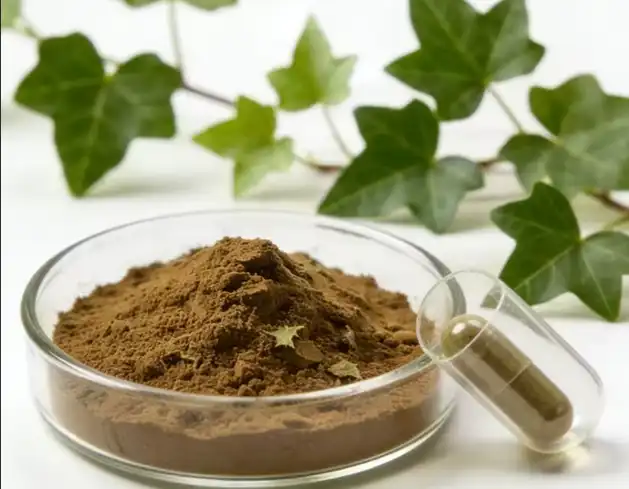
Due to its high concentration of triterpenoid saponins, especially hederacoside C and alpha-hederin, Ivy Extract Powder made from Hedera helix leaves thins mucus successfully. These bioactive chemicals work by telling cells in the lung epithelium to make more fluid secretions. These secretions thin out thick mucus and make it less viscous. The saponins also have mild bronchodilatory effects that relax the smooth muscle in the airways, making it easier to clear mucus. Because it works in two ways, ivy leaf extract is a natural expectorant that has been shown to work in clinical studies and is used in many lung health products around the world.
Introduction
Respiratory health is still a big deal in the global health market, and managing mucus is a key part of keeping breathing easy and airways working properly. When mucus gets too thick or is thickly produced, it hurts and makes breathing harder, which can cause coughing fits and serious breathing problems. Natural botanical products have become very popular among companies that want to make effective, customer-favourite options to synthetic expectorants.
Ivy Extract Powder, a concentrated botanical ingredient made from normal Hedera helix leaf material, has become the best choice for people who are making goods to help the lungs. People have used it for hundreds of years, and clinical studies have shown that it helps with mucolytic and expectorant problems. In this guide, procurement managers, R&D directors, and formulation experts will learn all about how to add this plant ingredient to their products, as well as how to source it and what uses it can be used for. If you know about the science behind mucus shrinking and the technical specs of good extract powders, you can make decisions that improve the performance of your product and make your business more competitive.
Understanding the Role of Ivy Extract Powder in Mucus Thinning
Biochemical Components Driving Efficacy
This plant part works as medicine because it has many saponins in it. These are triterpenoid saponins, such as hederacoside C (which can be found in amounts from 1% to 10% in standardised samples) and alpha-hederin. These chemicals work directly with cells in the nasal tract to make clearer fluid, which thins out thick mucus. Because of these effects, the thickness of the mucus decreases, making it easier to cough up mucus and clearing the airways better. Standardised extracts with total hederacosides ranging from 5% to 30% make dosing uniform and therapeutic results known, which is important for pharmaceutical-grade formulations and high-end dietary supplements.
Mechanisms of Mucus Viscosity Reduction
The main way it works is by stimulating the bronchial membrane to make thin, sticky fluids. By balancing the mucus naturally, this process makes it less sticky and easier to get rid of through coughing reactions. The saponins can also help relax smooth muscles in the lungs and open up the airways by reducing spasms. This benefit takes into account both the physical properties of mucus and the mechanical difficulties of cleaning. The natural surfactant-like properties of the extract help break down the structure of mucus at the molecular level.
Additional Health Benefits Beyond Respiratory Support
In addition to its main role as an expectorant, ivy leaf extract is a significant source of antioxidants thanks to the flavonoids and phenolic compounds it contains. These secondary molecules help keep lung tissues safe from oxidative stress and keep inflammatory reactions healthy. The extract has also been used in topical products, where its active chemicals help the skin's microcirculation and appearance. Because it can be used in so many different products, this ingredient has a higher economic value across a wide range of categories, from cough syrups and lung supplements to functional skin care lines.
Clinical Evidence and Research Validation
In a number of clinical studies, researchers have shown that Standardised Ivy Extract Powder products help people with acute bronchitis and productive coughs. Research in respiratory medicine journals has shown that treatment groups have much better changes in cough frequency, mucus thickness, and breathing ease compared to control groups. In these studies, extracts are usually standardised to certain amounts of saponins, which are then tested using HPLC. This ensures that the results are repeatable and that the studies are clinically reliable. For B2B clients, this body of data gives them the scientific basis they need for marketing claims and regulatory reports.
Comparing Ivy Extract Powder with Other Natural Mucus Thinners
Active Compound Comparison with Alternative Botanicals
Procurement workers should know how ivy leaf extract stacks up against other natural expectorants like liquorice root, eucalyptus oil, and thyme extract. Eucalyptus mostly works through volatile oil compounds like cineole, which are pleasant-smelling and mildly antibacterial but don't have the same mucus-thinning saponin action as ivy extracts. Thyme extract has thymol and carvacrol in it, which are antimicrobial and have slight expectorant effects. However, there is more clinical evidence to back Ivy's saponin-driven process. Liquorice root has glycyrrhizin that can help with inflammation, but higher doses can be dangerous. Ivy Extract Powder, on the other hand, has a favourable safety profile across all tested groups.
Quality Variations Between Organic and Conventional Sources
The way the plants are grown affects both how pure the end extract powder is and how much active chemical is in it. Organic approval makes sure that there are no synthetic pesticide leftovers, which is crucial for brands that want to sell to natural and clean-label customers. However, standard extracts from normal sources that are handled under strict quality controls can be just as effective and cost less. It's not just the organic state that matters; it's also how well the provider can provide constant hederacoside content that has been checked by HPLC testing, along with full reports of analysis that show heavy metal limits, microbial counts, and solvent residues.
Supplier Selection Criteria for Bulk Procurement
To pick the right extract provider, you need to look at a lot of technical and business factors. Specifications for purity should ensure that there is little to no carrier or filler content, and there should be clear proof of the extraction solvent that was used, which should preferably be food-grade ethanol or water. For formulation stability, concentration consistency from batch to batch is important. This means that suppliers must have strong analysis skills and quality management systems that ISO9001 and FSSC22000 standards approve. Regulatory compliance paperwork, such as FDA registration, KOSHER certification, and Halal certification, provides businesses with more options to serve a wide range of customers. Suppliers with flexible minimum order amounts can handle both small samples for research and development (R&D) trials and large-scale business production. This makes it easier for new product development projects to launch.
Practical Applications of Ivy Extract Powder in B2B Settings
Respiratory Supplement Formulations
The expectorant qualities of Ivy Extract Powder can help companies that make cough syrups, lozenges, and capsule-based respiratory supplements make goods that stand out. Depending on the target audience and how often the product is going to be used, the usual dose range is between 20 mg and 50 mg of standardised extract per serve. The powder dissolves easily in water, which makes it perfect for liquid formulas. It is also stable when dry, which makes it suitable for packing and tablet compression. Adding complementary plants like marshmallow root or mullein leaf to the extract can make it more soothing and help with a wider range of health problems.
Herbal Tea and Functional Beverage Integration
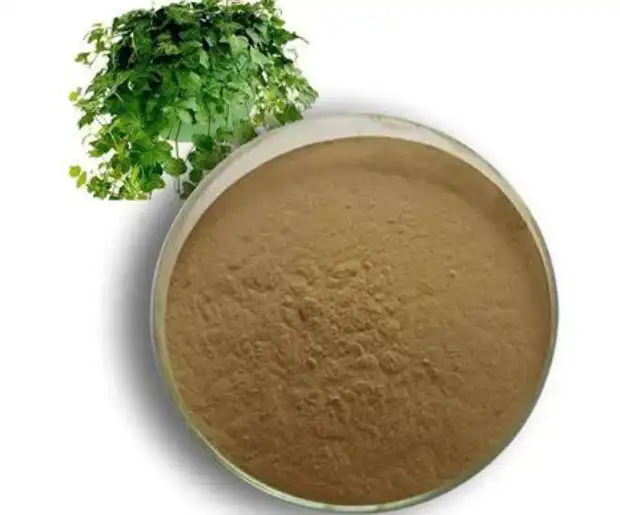
As the market for functional drinks grows, there are opportunities to add lung-friendly ingredients to ready-to-drink beverages and tea mixes. The extract looks like a brownish powder and has a mild plant flavour. It works well in organic teas that focus on seasonal health and immune support themes. If higher amounts are used, drink makers should consider ways to mask the taste, such as using natural sugar or fruit flavours to balance the earthy notes. It is suggested that stability tests be done on acidic beverages and heat treatment to ensure that beneficial substances remain in the food throughout its shelf life.
Cosmetic and Personal Care Applications
Ivy extract is useful for more than just eating; it can also be used in skin care products. When applied to skin, the saponin helps keep the microcirculation healthy. This makes it a useful ingredient in body care products that aim to even out skin tone and stiffness. Cosmetic scientists can add the extract to creams, serums, and body lotions in amounts of 0.5% to 3%. The antioxidants give the face extra protection, which is appealing to brands that talk about natural active ingredients and botanical accuracy in their product descriptions.
Safety Considerations and Dosage Guidelines
Ivy leaf extract is usually thought to be safe when used correctly, but it should be used with care to avoid exceeding the suggested dosage limits. In clinical studies, daily doses of 100 mg to 200 mg of standardised extract for adults are usually used. These amounts are split up into several meals. Labels should make it clear that this product is not for children under two years old without first talking to a doctor. People who are allergic to plants in the Araliaceae family have had very few recorded responses. Stability studies and making sure that formula parts work well with each other help make sure that the product is safe and effective throughout its entire lifecycle.
Procurement Insights for Buying Ivy Extract Powder in Bulk
Evaluating Supplier Credibility and Documentation
When evaluating a provider, the first thing that needs to be done is to make sure that the quality system and manufacturing licenses are valid. Suppliers with a good reputation keep their ISO9001 quality management certification, FSSC22000 food safety certification, and building registrations with the right authorities up to date. Ask for specific HPLC chromatograms that show the total saponin profile and hederacoside C amount for each batch that is being sold. Full lab reports should include tests for microbes (like total plate count, yeast, mould, and pathogens), heavy metals (like lead, arsenic, cadmium, and mercury), and any liquid amounts that were left over, if they were used. Traceability paperwork that connects the extract batch to information about how the source material was harvested shows quality control from start to finish and meets standards for supply chain transparency.
Logistics and Order Flexibility
Knowing the minimum order amounts and different packing choices helps make sure that purchasing and inventory management strategies work together. Commercial orders start at 25 kg bin numbers, but forward-thinking providers can handle smaller orders, like 100g to 10 kg, for samples and trials. This gives you more options, which lowers your financial risk during the product development stages and lets you test the recipe before making big purchases. As shipping choices, you should have courier services for quick delivery of samples (three to five business days), air freight for modest amounts that need to be sent quickly, and sea freight for large shipments that need to be sent at the lowest cost. Make sure that the package is made of food-grade materials and has moisture-resistant bags inside to keep the Ivy Extract Powder's integrity while it's being shipped.
Pricing Strategies and Value Optimisation
Standardised extracts are sold at different prices on the market depending on their concentration, approval status, and order number. Baseline prices usually show how much it costs to get raw materials, prepare them, make sure they are all the same, do standardisation and analysis work, and keep the certification up to date. To get the best value, purchasing managers can combine orders from different product lines to get bulk discounts, make long-term supply deals that lock in good prices, and compare total landed costs instead of just unit prices. Creating strategic relationships with suppliers who can help with technical formulation and offer customisation adds non-monetary value that can shorten the time it takes to create a product and lower the cost of R&D.
Private Labelling and Custom Formulation Opportunities
A lot of providers offer more than just providing ingredients. They also create unique blends and make products under their own brands. Partnering with suppliers who can make unique ratios, combine multiple plant extracts, or make finished soft capsule products can make it easier for brands to get into the market. Talk about how to protect intellectual property for custom formulas and make sure you know if the provider will stick to agreements for exclusivity in certain channels or markets. With these value-added services, suppliers stop being transactional providers and become strategic growth partners.
Ensuring Quality and Safety in Ivy Extract Powder Products
Critical Chemical and Nutritional Attributes
Buyers should make sure that the material they are buying meets certain technical requirements that are related to the uses they want to use it for. The particle size distribution affects both how well something dissolves and how easy it is to make. For most pharmaceutical and nutritional uses, 95% to 100% of the particles should be able to pass through an 80-mesh sieve. HPLC research with clear limits for hederacoside C and total hederacosides is needed to confirm the amount of active compounds. To keep caking and bacterial growth from happening during storage, the moisture level should stay below 5%. Measurements of bulk density help with dose calculations and figuring out how much space is needed for packing. Ask for full specification sheets that list these factors along with organoleptic qualities like smell, taste, and look.
Addressing Side Effects and Risk Mitigation
Even though side effects are rare at suggested doses, being honest about possible risks helps customers trust you and encourages responsible use. Some people have reported mild stomach pain after taking higher doses, and some sensitive people may have rare allergic responses. Formulation workers should put the right warnings on product labels and think about situations where Ivy Extract Powder shouldn't be used, like when someone is pregnant, nursing, or taking other medications at the same time. Working with regulatory experts makes sure that the labelling, marketing claims, and safety information on a product are all in line with FDA rules for dietary supplements or OTC monograph standards for pharmaceutical uses.
International Certification Standards and Commercial Value
Quality standards do two things: they make sure that the product is safe, and they make the market more competitive. The ISO9001 certification shows that the company uses organised quality management practices. The FSSC22000 certification, on the other hand, makes sure that food is safe at all stages of the supply chain. The KOSHER and HALAL approvals make it easier for people with religious dietary needs to buy things in stores. These people make up big parts of the North American and world markets. HACCP certification makes sure that important control points for food safety risks are handled in a planned way. These qualifications not only meet legal and customer needs, but they also set suppliers apart when making decisions about where to get materials, which is why certified materials cost more.
Stability Testing and Shelf Life Validation
To make sure a product works well in the long term, you need to know how stable the ingredients are in different storage conditions. The extract powder usually stays effective for 24 months if it is kept in a cool, dry place below 25°C and away from direct light and water. By putting samples in high-temperature and high-humidity conditions and then using HPLC analysis to measure active chemical breakdown, accelerated stability studies act like long-term storage. When formulators mix the extract with other ingredients, they should do interaction studies first because metal ions, oxidising agents, or pH conditions may change how stable the mixture is. By adding enough stable margins to recipes, you can keep the product's potency from going down before it goes bad.
Conclusion
Adding Ivy Extract Powder to lung health products gives companies a natural way to control mucus that has been shown to work in studies and is liked by customers. The science behind its saponin-driven expectorant mechanism, along with its good safety rating and wide range of uses, makes it an appealing ingredient for companies that want to make their products stand out. To be successful at procurement, you need to choose providers with strict quality systems, full analytical tools, and open business terms that can support both small-scale production and large-scale production. Your ingredient partner's licenses, standardisation methods, and technical support services have a direct effect on how well your product does in the market and how well it meets legal requirements. This guide explains the biochemical mechanisms, comparative advantages, and best practices for sourcing this botanical ingredient. With this information, B2B decision-makers can confidently use it in formulations that meet both therapeutic efficacy standards and business goals.
FAQ
Is ivy extract powder safe for paediatric formulations?
Most clinical studies have focused on adults, and most manufacturers recommend that only people aged two years or older should use it. Paediatric versions need to have clear age-appropriate labelling and dosages that are carefully adjusted based on body weight. By talking to regulatory experts, you can make sure that your children's vitamins and over-the-counter (OTC) goods obey all FDA rules.
Can we request custom hederacoside C concentrations for specialised applications?
Suppliers with a good reputation and advanced extraction and standardisation tools can create unique concentration specifications that go above and beyond what is normally available. To make this customisation possible, you usually need to commit to a minimum order size to pay for the extra handling and testing. Early on in the product creation process, talking about technical practicality and business terms helps make sure that ingredient requirements are in line with formulation goals and budget limits.
What lead times should we expect for commercial bulk orders?
Suppliers who keep standard specs in ready stock can usually fill orders for up to several hundred kilograms within one to two weeks. Lead times may go up to four to six weeks if you need custom ratios or organic certifications. This depends on how quickly you can get the raw materials and how busy the testing line is. Setting up anticipated demand dates with your seller lets you plan production ahead of time and keeps supply chain disruptions to a minimum.
Partner with KH for Premium Ivy Extract Powder Supply
Since 1996, KH (Kingherbs Limited) has been making plant ingredients. They offer standardised Ivy Extract Powder with confirmed hederacoside content ranging from 1% to 30% and full HPLC paperwork for each batch. Our building keeps its ISO9001, FSSC22000, KOSHER, HALAL, HACCP, and FDA certifications up to date, making sure that it meets the standards of all global markets. We only remove with pure water or food-grade ethanol, so our methods are safe, and the natural products stay true to themselves. We have samples ready to ship within 3–5 business days, and we can handle both small trial sales and commercial amounts starting at 25 kg. Our application laboratory can help you improve your recipe, test its safety, and come up with custom compounding solutions that are perfect for your product. Get in touch with our expert team at info@kingherbs.com to discuss your Ivy Extract Powder supplier needs and to get prices and full specs.
References
1. Holzinger F, Chenot JF. Systematic review of clinical trials assessing the effectiveness of ivy leaf (Hedera helix) for acute upper respiratory tract infections. Evidence-Based Complementary and Alternative Medicine 2011;2011:382789.
2. Kraft K. Complementary/alternative medicine in the context of prevention of disease and maintenance of health. Preventive Medicine 2009;49(2-3):88-92.
3. Sieben A, Prenner L, Sorkalla T, et al. Alpha-hederin, but not hederacoside C and hederagenin from Hedera helix, affects the binding behaviour, dynamics and regulation of beta-2 adrenergic receptors. Biochemistry 2009;48(15):3477-3482.
4. Fazio S, Pouso J, Dolinsky D, et al. Tolerance, safety and efficacy of Hedera helix extract in inflammatory bronchial diseases under clinical practice conditions: a prospective, open, multicentre postmarketing study in 9657 patients. Phytomedicine 2009;16(1):17-24.
5. Schulte-Michels J, Keksel N, Glaas S, et al. Anti-inflammatory effects of dry ivy leaf extract: influence on transcriptional activity of NFκB. Inflammopharmacology 2019;27(2):339-347.
6. European Medicines Agency Committee on Herbal Medicinal Products. Assessment report on Hedera helix L. folium. EMA/HMPC/325715/2017. London: European Medicines Agency, 2017.
Send Inquiry
Related Industry Knowledge
- Angelica Officinalis Extract Health Benefits & Medicinal Uses
- What is Astaxanthin? Benefits, Dosage and More!
- Can Maca Extract Powder Help with Hormonal Imbalance?
- Premium Valerian Root Extract Powder for Sleep & Calm Support
- Is Olive Extract Powder Effective for Inflammation Control?
- Olive Extract Powder vs Standard Olive Leaf: Key Differences
- What Are the Key Nutrients in Purple Sweet Potato Extract?
- Can Vine Tea Extract Support Healthy Metabolism Naturally?
- What Are the Active Compounds in White Paeony Extract?
- What Makes Olive Extract Powder a Potent Antioxidant Ingredient?