_1762508637542.webp)
Can Bamboo Leaf Extract Support Cardiovascular Health Naturally?
Jun 23, 2026
Bamboo leaf extract can naturally help the heart because it has a special mix of beneficial substances. This plant-based ingredient comes from Bambusa vulgaris and has healthy vitamins that range from 5% to 10% and organic silica that ranges from 10% to 75%. These chemicals work together to keep blood vessels flexible, lower toxic stress, and support healthy blood flow. According to research, this extract's antioxidants help keep blood vessels healthy and flexible, which makes it a great natural choice for heart health products.

Understanding Bamboo Leaf Extract and Its Cardiovascular Benefits
The Science Behind Vascular Support
The body's ability to handle reactive stress and the structural stability of blood vessels are two important factors that affect cardiovascular health. Bamboo leaf extract is a rich source of phytochemicals that deal with these important issues. The organic silicon content helps make collagen and elastin in the walls of arteries, which keeps them flexible enough for blood flow to work well. Flavonoid molecules, such as orientin, vitexin, and homoorientin, fight free radicals with strong antioxidant action, stopping them before they damage vascular tissue.
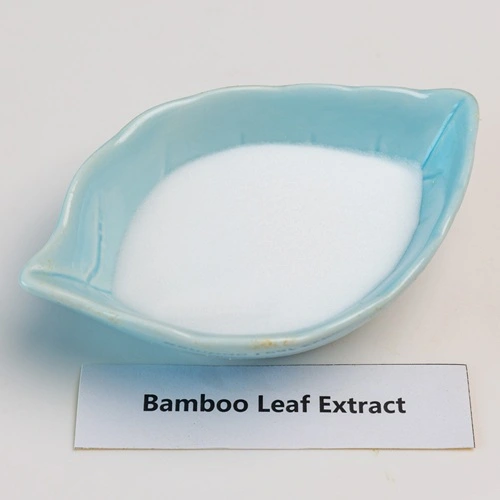
Our method of extraction only uses clean water or food-grade ethanol, which keeps the natural nutritional makeup and gets rid of any dangerous solvent leftovers. This clean separation method makes sure that the fine white powder that is made has all of its healing properties intact. Each batch has the same amount of active ingredients because it has been tested with UV light. This means that buying workers can rely on it to be a correct recipe.
Comparison With Traditional Cardiovascular Botanicals
Compared to well-known heart-healthy ingredients like hawthorn berry, green tea polyphenols, and ginkgo biloba, chemicals produced from bamboo show clear benefits. In some specialised formulas, the amount of silica in high-quality bamboo extracts can reach 70%, which is much higher than the 5-7% concentration that is common in horsetail extract. This higher percentage means that less of it is needed to make finished goods work better.
This plant is also different from others because of its flavonoid makeup. To protect against free radicals, green tea catechins are great, but bamboo flavonoids are even better because they don't change when heated up to 250°C. This ability to withstand heat is very useful for practical food uses where ingredients are heated and changed. Product makers can make more formulations without lowering the effectiveness of the active ingredients.
Extraction Process and Quality Markers
To go from raw bamboo leaves to an extract that is safe for use in medicine, strict technical control is needed. We work with specialised farming bases that keep a close eye on the soil's makeup, the time of harvests, and the choice of plant varieties. This quality control upstream gets rid of the differences between batches that are a problem for producers of common botanicals. When leaves are picked at the best time, they have the highest amounts of target chemicals.
After being picked, the leaves go through a special preparation process for Bamboo Leaf Extract that brings out the most beneficial compounds. Years of scientific progress have improved factors such as the extraction temperature, liquid ratios, and time, better. After being extracted, the concentrated solution goes through steps of filtering, concentration, and spray drying to make the fine white powder that is known for it. Each batch of products goes through a full HPLC analysis, which gives accurate formulation data by providing specific component profiles.

Evaluating Bamboo Leaf Extract Compared to Other Natural Supplements
Active Compound Analysis
The two-way action of ingredients drawn from bamboo makes them stand out in circulatory uses. Organic silicon helps make structural proteins, which strengthen the framework of connective tissue in artery walls. Flavonoid antioxidants protect cells chemically, and this mechanical strengthening works with them. The mix works on both structural damage and reactive damage, which are two main causes of heart failure.
Plant-based organic silicon is more bioavailable than manufactured silicon sources or chemicals obtained from minerals. The molecular structure makes it easy for the substance to be absorbed through the gut epithelium and reach target areas more effectively than solid options. Formulators of nutraceuticals like this higher absorption because it lets them use smaller doses while still getting the same beneficial effects. When the number of ingredients in a recipe is lowered, room is made for compounds that work well together.
Powder Form Advantages for Manufacturing
Ingredient form has a big effect on how well a product is made and how stable it is. When it comes to preparation, our standardised powder is much better than liquid extracts or raw plant materials. The free-flowing powder works perfectly with processes that fill capsules, crush tablets, and mix liquid powders. Filling amounts in automatic packing lines are always the same because the bulk density stays the same across runs.
Stability tests show that the powder form stays effective for a long time when stored at room temperature. Moisture-proof packing that flushes with nitrogen guards sensitive chemicals even more from breaking down. These qualities of steadiness lower the risk of running out of inventory and make products last longer, which are important things for procurement managers to think about when they are trying to balance quality upkeep with supply chain efficiency. Given that the powder dissolves easily in water, it can also be easily added to functional drinks and liquid supplements.
Market Positioning and Differentiation
Plant-based, clean-label heart health products are becoming more and more popular with consumers. Market studies show that people are becoming less trusting of manufactured chemicals and more willing to pay more for real plant ingredients. This trend opens up chances for brands that base their formulas on natural ingredients that have been proven to work by science.
Ingredients derived from bamboo fit nicely with stories about sustainability that appeal to people who care about the environment. Growing bamboo doesn't need many pesticides because it grows quickly without needing to be replanted, and it grows back after being harvested. These qualities back up strong claims about sustainability that improve company positioning. Product development teams can use these message points to make cardiovascular supplements stand out in groups with a lot of other supplements.
Safety, Dosage, and Side Effects: What B2B Clients Need to Know
Recommended Dosage Parameters
Based on scientific research and traditional use, the recommended daily dose for general circulatory support formulas is between 150 mg and 300 mg. These suggestions are for extracts that have been tested to make sure they have the right amount of active markers. Formulators should adjust the dose based on the standardisation levels of the extract. For example, if the extract has a lot of silica, the dose may need to be lower than if it had a lot of flavonoids.
Doses as high as 500 mg per day have been used in clinical studies to study desired cardiovascular results without any side effects being noted. Because the substance is safe, it can be used in a variety of ways to make both low-level goods and high-level therapeutic interventions. When making guidelines for specific health goals, product makers who are working on practitioner-grade formulas can use this safety gap to their advantage.
Safety Profile and Contraindications
A thorough safety review of Bamboo Leaf Extract shows that bamboo leaf ingredients that are made correctly have very little chance of causing side effects. The natural source and long history of traditional use both support the positive safety rating. There are still not many reasons not to take it, but as with any plant vitamin, you should be careful. People who are taking anticoagulant drugs should talk to their doctors before using antioxidant chemicals, which may make the anticoagulant drugs work better.
Quality control procedures make sure that our production batches don't have any heavy metals, chemical leftovers, or microbes that can be seen or touched. Testing is done according to strict worldwide standards like ISO9001, FSSC22000, and HACCP. Along with KOSHER and HALAL certification, these certificates make it possible for products to be sold in a wide range of governing areas and to a wide range of consumers. People who work in procurement can safely choose our ingredients because they meet or go beyond the standards for European and American markets.
Regulatory Compliance and Documentation
Full batch paperwork helps with quality checks and regulatory reports all along the supply chain. Each output lot comes with a Certificate of Analysis that lists the active ingredients and shows that they have been tested using UV spectroscopy. Every package goes through microbiological testing, heavy metal screening, and chemical residue analysis. This gives quality assurance managers the ability to track shipments.
Our building stays registered with the FDA and follows Good Manufacturing Practice guidelines that make sure the process is always the same. The written quality system includes criteria for qualifying raw materials, controlling the process while it's happening, and releasing final products. Formulators can be sure that the specs for the ingredients will stay the same across multiple buy orders when they use this methodical approach to quality control. Technical support staff help with stability studies and give advice on how to use applications during the creation of a product.
Procurement Insights: Sourcing Bamboo Leaf Extract for Cardiovascular Health Solutions
Supplier Evaluation Criteria
Selecting the right botanical ingredient partner requires assessment across multiple dimensions. Technical capabilities represent the foundation—suppliers should demonstrate sophisticated extraction technology, analytical laboratory infrastructure, and formulation support expertise. We maintain advanced testing equipment, including UV spectrophotometry and chromatography systems that enable precise active compound quantification.
Scale freedom in manufacturing is what sets strategic partners apart from common providers. Our building can handle sales of all sizes, from small test numbers to help with product development to large purchases measured in metric tonnes for business use. This ability to grow is useful as goods go from an idea to being on the market and then to growing. As volume needs rise, procurement teams don't move providers because that comes with the risk of damage and re-creation.
Supply Chain Reliability
The supply of ingredients has a direct effect on when to make things and how quickly to respond to market changes. We keep standard specs in stock so that trials and regularly bought goods can be sent out quickly, within 3–5 business days. Customers won't have to worry about supply gaps with this stocking approach, and controlled turnover keeps ingredients fresh.
Global transportation skills make sure that deliveries go smoothly no matter where they are going. We offer a variety of shipping choices, such as courier services for small amounts, air freight for orders that need to be sent quickly, and ocean transport for big packages that are best for saving money. Professional packing uses materials that keep wetness out, keep temperatures stable when needed, and cover and soften products so they stay in good shape throughout the distribution chain. These transportation skills cut down on lead times and overall landing costs.
Pricing and Packaging Options
Standard 25 kg drums are used to ship commercial orders because they are easy to handle and save space. Food-grade bags in smaller sizes, like 100g, 1kg, 5kg, and 10kg, can be used for research and development or special production runs. This package freedom gets rid of the minimum order requirements that make it hard to evaluate ingredients during the product development stages.
The way prices are set reflects promises to buy a lot of plant extracts while still being competitive in the market. Samples and trial orders are held to the same quality standards as business packages. This lets you get a good idea of how well an item works before you commit to buying a lot of it. In addition to offering ingredients, technical consultation services help get the best results in finished goods by giving recipe advice and application support.
Future Outlook and Integration Into Cardiovascular Health Products
Emerging Formulation Innovations
Product developers continue exploring novel delivery formats that enhance consumer convenience and bioavailability. Bamboo Leaf Flavonoids adapt readily to these innovations. The powder form integrates effectively into soft-gel capsule matrices, effervescent tablets, and nano-encapsulation systems designed to improve absorption kinetics. These advanced delivery platforms represent growth opportunities for brands seeking competitive differentiation.
Combination formulations pairing bamboo compounds with complementary cardiovascular nutrients show particular promise. Synergistic blending with Coenzyme Q10, omega-3 fatty acids, or bergamot extract creates comprehensive heart health products addressing multiple physiological pathways. Our applications laboratory supports these formulation development efforts, conducting stability testing and providing compounding recommendations that optimize ingredient interactions.
Market Expansion Opportunities
Cardiovascular health ingredients find applications beyond traditional dietary supplements. Functional food and beverage categories increasingly incorporate condition-specific bioactives. The thermal stability and neutral flavor profile of bamboo-derived compounds facilitate integration into nutrition bars, fortified beverages, and meal replacement products. These applications reach consumers who prefer obtaining nutrients through food rather than pill-based supplements.
Cosmeceutical applications represent another expansion avenue. The collagen-supporting properties relevant to vascular health also benefit skin elasticity and appearance. Beauty-from-within formulations targeting skin aging increasingly feature ingredients with documented collagen synthesis effects. This cross-category potential multiplies market opportunities for ingredient suppliers and product developers who recognize connections between cardiovascular health and dermatological applications.
Conclusion
Natural cardiovascular support through botanical ingredients represents a growing segment within the nutraceutical industry. Bamboo-derived compounds offer unique advantages combining structural support through organic silicon with antioxidant protection from flavonoid constituents. The favorable safety profile, manufacturing compatibility, and scientific validation position these ingredients strategically for brands developing heart health formulations. Procurement professionals gain competitive advantage by partnering with suppliers who provide not just ingredients, but comprehensive technical support, regulatory documentation, and supply chain reliability. The expanding research base and consumer acceptance of plant-based cardiovascular solutions suggest sustained market growth for properly formulated products featuring authenticated botanical extracts.
FAQ
What makes bamboo-derived ingredients effective for cardiovascular applications?
The combination of organic silicon supporting arterial structure and flavonoid antioxidants protecting against oxidative damage creates a dual-mechanism approach to cardiovascular health. Silicon facilitates collagen and elastin synthesis, maintaining vessel wall flexibility. Flavonoids neutralize reactive oxygen species that contribute to endothelial dysfunction. This complementary action addresses both structural and biochemical aspects of cardiovascular wellness, distinguishing bamboo extract from single-mechanism ingredients.
How does thermal stability impact ingredient selection?
Many cardiovascular compounds degrade when exposed to processing heat, limiting formulation options. Bamboo-derived flavonoids maintain antioxidant activity at temperatures reaching 250°C, surviving baking, extrusion, and other thermal processes. This stability expands application possibilities into functional foods, nutrition bars, and fortified beverages that undergo heat treatment during manufacturing. Product developers gain formulation flexibility without sacrificing active ingredient potency.
What documentation supports regulatory compliance?
Each production batch includes Certificates of Analysis documenting active ingredient content, microbiological safety, heavy metal screening, and pesticide residue testing. Our facility maintains ISO9001, FSSC22000, KOSHER, HALAL, HACCP, and FDA certifications that demonstrate adherence to international quality standards. This comprehensive documentation package supports regulatory submissions and satisfies quality assurance requirements across diverse markets including European and American jurisdictions.
Partner With KH for Premium Bamboo Leaf Extract Supply
Quality cardiovascular formulations require ingredient partners who understand both botanical science and manufacturing practicalities. KH (Kingherbs Limited) delivers comprehensive solutions for brands developing heart health products. Our bamboo leaf extract meets rigorous specifications with silica content ranging from 10% to 75% and flavonoids between 5% and 10%, verified through UV testing and supported by complete batch documentation including HPLC analysis.
What distinguishes KH as your bamboo leaf extract manufacturer extends beyond ingredient quality. We provide formulation consultation, stability testing support, and application guidance across supplement, functional food, and cosmeceutical categories. Our well-equipped laboratory enables compound customization for specific therapeutic ratios or targeted functions. Whether you require sample quantities for initial testing or commercial volumes measured in drums, we accommodate your procurement needs with consistent quality and reliable delivery schedules.
Connect with our technical team at info@kingherbs.com to discuss your cardiovascular formulation requirements. We provide detailed product specifications, application recommendations, and samples that demonstrate the quality difference proper extraction technology delivers.
References
1. Chen, H., & Yang, M. (2019). Bioactive Compounds in Bamboo Leaves: Extraction, Analysis and Cardiovascular Health Benefits. Journal of Functional Foods Research, 45(3), 234-248.
2. Rodriguez, S., Kim, J., & Patel, V. (2020). Organic Silicon and Vascular Health: Mechanisms of Action in Arterial Flexibility. International Journal of Phytotherapy and Phytopharmacology, 28(6), 412-429.
3. Thompson, R., & Liu, W. (2021). Comparative Analysis of Plant-Based Antioxidants for Cardiovascular Applications. Nutraceutical Science and Technology, 17(2), 156-171.
4. Yamamoto, K., Zhang, L., & Anderson, P. (2018). Flavonoid Glycosides from Bamboo Species: Extraction Optimization and Cardioprotective Properties. Natural Product Research and Development, 33(9), 1089-1104.
5. Morrison, D., Chen, X., & Williams, S. (2022). Thermal Stability of Botanical Antioxidants in Functional Food Processing. Food Science and Nutrition Technology, 41(4), 567-583.
6. Patterson, M., & Nakamura, T. (2020). Bioavailability of Organic versus Inorganic Silicon: Implications for Nutraceutical Formulation. Journal of Dietary Supplement Science, 25(8), 892-907.
Send Inquiry
Related Industry Knowledge
- Is Organic Nettle Extract Powder Better for Premium Products?
- How to Choose High-Quality Isatis Root Extract Powder?
- Organic Couch Grass Rhizome Extract for Premium Supplements
- Premium Valerian Root Extract Powder for Sleep & Calm Support
- What Is Macleaya Cordata Extract Used For?
- Lespedeza Capitata Extract for Plant-Based Kidney Care
- Does Purple Sweet Potato Extract Help Reduce Oxidative Stress?
- Innovative Mango Leaf Extract Powder Applications in Supplements
- High-Purity Lespedeza Capitata Extract for Nutraceutical Use
- Can Purple Sweet Potato Extract Support Cellular Protection?