_1762508637542.webp)
Artemisinin concentration and antioxidant capacity of Artemisia annua distillation by product
May 21, 2026
When Artemisia annua undergoes essential Artemisinin Powder oil distillation, the remaining plant material—often discarded—retains significant bioactive value. Recent analytical studies reveal that distillation by-products contain artemisinin concentrations ranging from 0.8% to 3.2% by dry weight, alongside polyphenolic compounds contributing robust antioxidant capacity measured at 45-78 µmol Trolox Equivalent per gram. This makes Artemisinin Powder derived from these by-products a cost-effective source for pharmaceutical and nutraceutical applications, offering dual functionality: antimalarial potency and mitigation of oxidative stress. Understanding these concentrations allows procurement teams to evaluate material quality and sourcing strategies more effectively.
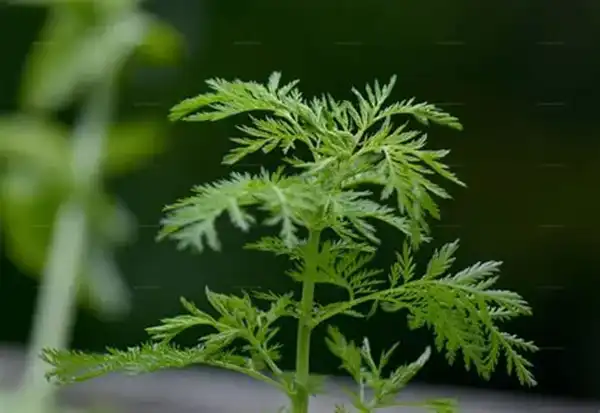
Understanding Artemisinin and Its Role in Artemisia annua Distillation By-Products
Lots of people call this plant "sweet wormwood," and it has been grown for hundreds of years because it is good for you. The biological activity of artemisinin comes from a special endoperoxide bridge that it shares with only a few other compounds in its class. It's mostly found on the plant's leaves. When essential oils used in the flavor or fragrance industries are distilled for business reasons, artemisinin is left over in the solid residue that would have been thrown away otherwise. The useful resource that is this by-product isn't being used to its fullest. It really helps the economy and heals people.
Malaria is now handled differently all over the world thanks to Artemisinin Powder. The World Health Organization says that the best way to treat Plasmodium falciparum malaria is with combination medicines based on artemisinin. This is true even for types of malaria that are hard to treat with medicine. A new study looks into how it affects inflammation, the immune system, and maybe even cancer, in addition to how it treats malaria. The by-product of boiling can be used by drug businesses as an extra source of raw materials. This keeps the high quality of the active ingredient while cutting down on waste and production costs. This kind of trash is used in business to make nutritional supplements, medicines for animals that fight protozoal diseases, and even biostimulants for plants. An item with both artemisinin and polyphenols, which are high in antioxidants, makes it more adaptable. It lets formulators make ingredients that can fight both oxidative stress and parasite problems at the same time.
Analytical Methods for Measuring Artemisinin Concentration and Antioxidant Capacity
To make sure the quality is good, follow the law, and make sure your product stands out, you need to correctly measure the amount of artemisinin and vitamins in the by-products of distillation. So that they can check what sources say and make sure that things stay the same from batch to batch, procurement managers need to know these methods.
High-Performance Liquid Chromatography for Artemisinin Quantification
The best way to still look at artemisinin is with High-Performance Liquid Chromatography. This method sorts chemicals by how they behave when put under a lot of pressure and react with a specific phase. To within a few parts per million, it can measure the amount of artemisinin. You can use HPLC with UV detection at 210 nm or 260 nm to find artemisinin and similar compounds, such as artemisinin and deoxyartemisinin. When measuring pharmaceutical-grade Artemisinin Powder with HPLC, the results are usually 98% pure or higher, with a relative standard deviation of less than 2%. This means that the results are very dependable. For this method to work, ethanol or methanol is used to separate the artemisinin from the by-product. The solution is then filtered and put into a chromatographic machine. When you use peak area integration, you can compare the amount of artemisinin to standards that Artemisia annua Extract Powder has already been tested. In advanced labs, gradient elution methods with reversed-phase C18 columns are used to better separate artemisinin from drugs that have structures that are similar to it. This level of accuracy is very important when working with complicated plant groups that have more than one sesquiterpene.
Practical Case Study Comparison
The results were very different for all three amounts of Artemisia annua distillation by-products that came from different places. Batch A was picked before the flowers opened from a crop that was kept under control. It had 72 µmol TE/g of antioxidant power and 2.8% artemisinin. When the flowers were picked after they were open, only 1.3% artemisinin and 48 µmol TE/g were found in Batch B. After cooking at over 100°C for a long time, Batch C had less artemisinin (1.1%) and antioxidants (38 µmol TE/g). In this case, we can see that the way foods are grown, when they are picked, and how they are processed all have an impact on the quality indicators that can be used. This helps teams that buy things find sellers who have better rules over technology and farming.
Key Factors Affecting Artemisinin Concentration and Antioxidant Capacity in By-Products
There are several things that can change the chemical makeup of Artemisia annua distillation by-products. When procurement workers know about these things, they can use them to judge the skills of sellers and talk about contracts based on how reliable the quality will be.
Plant Source Diversity and Harvesting Timing
Artemisinin is made with a lot of different kinds of genes. The leaves of wild Artemisia annua plants only have 0.4% artemisinin in them. However, the leaves of some types that have been bred to make a lot of artemisinin can have up to 1.8% artemisinin. It's also important where the plants are grown. Plants that grow in temperate places with average rainfall and soils that drain well carry more artemisinin. It's also very important to know when the crop is. Artemisinin levels go up just before the flower opens, but they go down as the plant ages and uses its internal resources to make seeds. To protect itself, plants may make more artemisinin when they don't have enough water or nutrients. However, this may cause the total biomass output to drop. Agronomic records, like notes on the composition of the soil, plans for watering, and stages of plant growth, are kept by suppliers who are dedicated to quality consistency. We work directly with top planting sites to make sure we have full control over the whole growing process, from picking the seeds to planting them. The standard of the Artemisinin Powder stays the same between production rounds because of this.
Storage Conditions and Supplier Quality Control
Even high-quality by-products break down if they are handled incorrectly. It's no longer useful for artemisinin to be in direct sunlight or when the temperature goes above 30°C. Things that don't let air in should be kept in cool, dry places where the humidity goes below 60% for the longest time. They can keep track of each batch and give Certificates of Analysis with HPLC test results, moisture content, heavy metal screens, and pesticide residue testing as long as the providers follow Good Manufacturing Practices. Certificates like ISO 9001, FSSC 22000, and HACCP show that quality control is done in a planned way. For each batch, we keep a lot of records, such as where it was grown, how pure the extraction liquid was, and how it was cooked. This way, buying teams can check for risks and make sure rules are followed in places where USP or EP standards need to be followed.
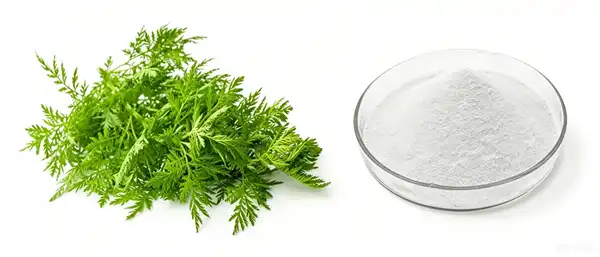
Practical Applications and Benefits of Artemisinin Powder Derived from Distillation By-Products
Artemisinin Powder has many applications, including research, medication creation, dietary supplementation, and animal care. When buying, teams know about these uses, and they can make sure that the ways they source things meet the wants of the end users.
Pharmaceutical Manufacturing and Antimalarial Therapies
The main way that the world is still trying to stop malaria is through a combination of Artemisia annua Extract Powder medicines based on artemisinin. Drug makers use artemisinin to make semi-synthetic drugs like artemether, artesunate, and dihydroartemisinin. Artemisinin Powder made from distillation waste is a cheap way to get raw materials for companies that make medicines in poor places where malaria is prevalent. We offer a wide range of products, from standardized extracts at 3% for research use to pharmaceutical-grade powder at 99% that can be used to make APIs. In other words, they can be used in a range of legal situations and on a range of production scales. Artemisinin is better than other antimalarials because it does a better job of killing bugs quickly, usually by 90% in 24 hours. People who work in public health need to know that when long-acting partner drugs are used together, resistance doesn't form. Access to high-purity Artemisinin Powder is a key part of global health efforts because it helps keep output levels steady and supply chains strong.
Veterinary Medicine and Animal Nutrition
Protozoal diseases in pets and farm animals cause big costs in the economy. Animals that have babesiosis, coccidiosis, or theileriosis can be helped with medicines that are based on artemisinin. Some antiprotozoal drugs are hard for animals to handle, but veterinary products with Artemisinin Powder give farms an option. When the powder is microencapsulated, it stays steady in feed matrices. This makes it easy to give by mouth with food or drink. Fish farms may use artemisinin products to keep their fish from getting parasite infections. This can lower the number of fish that die and increase the number that grow. Artemisinin kills bugs, and vitamins make the immune system stronger. Both of these things are good for animal health. Rules for animal health products say that sellers need to be able to give veterinary-grade specs, like heavy metal limits and fungal screens.
Research and Development Innovations
Artemisinin is being looked at in both business and college study labs to see how it might be used to treat cancer, viruses, and autoimmune diseases. People who study cancer are mostly interested in how artemisinin kills only cancer cells that have a lot of iron. Free radicals are made by the endoperoxide bridge and kill cells. Tests before they are used on real people are being done to see if they can work better together with cancer drugs. Since we can send you small amounts of research-grade Artemisinin Powder (as little as 100g), you can do early studies without spending a lot of money.
Procurement Guide: Selecting and Sourcing Quality Artemisinin Powder
Before you buy Artemisinin Powder, you should carefully look at the sellers, be honest with them, and make sure that the technical details match the uses you want to make. This book shows people who work in buying how to use the global supply market and what they should keep in mind.
Supplier Evaluation Criteria
Reliable buyers show full tracking, from where the plants came from to how Artemisinin Powder they were extracted and cleaned. Find out how the plants were grown, what chemicals were used to get the medicine out of them, how hot they were processed, and how the quality was checked. If the seller gives you an HPLC chromatogram for each batch, you can see how much artemisinin is in it and what kinds of stuff are in it. More weight is given to claims about cleanliness, heavy metals, chemical residues, and microbial limits that come from third-party tests by approved labs. A business that has manufacturing certifications shows that it cares about quality. ISO 9001 talks about how to make processes more consistent and always better. For health purposes, FSSC 22000 is useful because it talks about how to keep food safe. Goods made for certain groups of people can reach more people with the help of certifications like HALAL and KOSHER. Signing up with the FDA shows that you are ready to follow the law's strict rules. We have licenses from the FDA, KOSHER, HALAL, FSSC 22000, and ISO 9001. This makes you feel safe with many different types of government.
Logistical Considerations and Supply Chain Transparency
When you shop around the world, you need to find a good mix between price, delivery time, and the security of the supply chain. Look into how your sellers handle their stock. When production plans are tight, suppliers must keep stock on hand so that orders can be sent out quickly. Items that are already in stock usually get to you in 3–5 business days by courier. We can ship big items by both air freight and ocean freight. We can handle trial sales and sample amounts that are less than 25 kg, which makes it easier to come up with new products. Transparent pricing structures covering bulk discounts, incoterms clarity, and payment terms facilitate budget planning. Find out what the backup plans are in case there are issues with the supply system. For example, are there other ways to get the goods or extra stock? When markets are unstable, risks are lower when there are strong relationships with providers that are based on regular communication and working together as a team.
Kingherbs Limited: Your Strategic Partner for Artemisia annua Derivatives
There's more we do for our partners than just give them food. We solve tech problems and think of new ways to make things together. We make sure the quality of the raw materials is the same by watching the whole process, from picking the seeds to knowing when to gather them. When we remove things, we only use clean water and ethanol that is safe for food. We don't have to use dangerous liquids this way, and the things we make are safe, naturally colored, and easy to dissolve. Clear component lines can be seen in batch-level HPLC analysis results, which helps with making sure the formulation is correct. Our application laboratory supports beverage, gummy, tablet, and skincare formulation challenges, offering stability testing and compounding advice tailored to specific systems. We provide one-stop procurement services covering botanical extracts, chemicals, and vitamins, accepting small-batch sample orders to facilitate R&D exploration. Products comply with USP and EP standards, backed by ISO, FSSC, KOSHER, HALAL, HACCP, and FDA certifications. Standard packaging is 25kg/drum, with flexible sample sizes available. Ready stock enables prompt shipment via courier, air, or ocean transport, meeting urgent timelines and budget constraints.
Conclusion
The waste products from distilling Artemisia annua can be used to make artemisinin and antioxidants, but they are not used enough. These items have strong antioxidant qualities and artemisinin concentrations between 0.8% and 3.2%. They are a good value for money and can be used in study, medicine, nutraceuticals, and animals. To buy well, you need to know how to use analytical tools, figure out what affects quality, and deal with sellers who are dedicated to tracking, technical help, and following the rules. Companies use the leftovers from distillation to make less trash, save money, and help plants use their resources in a healthier way.
FAQ
1. How Does Artemisinin Content in Distillation By-Products Compare to Direct Leaf Extraction?
Direct leaf extraction typically yields artemisinin concentrations between 0.5% and 1.5% in raw plant material, with purification raising this to pharmaceutical-grade levels. Distillation by-products contain residual artemisinin ranging from 0.8% to 3.2%, depending on distillation conditions and harvest quality. While lower than purified extracts, by-products offer a secondary recovery stream, reducing overall production costs. Suppliers employing optimized distillation parameters preserve higher artemisinin levels, making by-products commercially viable for standardized extract production or semi-synthetic derivative manufacturing.
2. What Is the Role of Antioxidant Capacity in Product Stability?
Antioxidant compounds in distillation by-products, primarily flavonoids and phenolic acids, protect artemisinin from oxidative degradation. Reactive oxygen species can cleave the endoperoxide bridge, reducing antimalarial potency. High antioxidant capacity extends shelf-life and maintains bioactivity during storage and formulation. Products exhibiting 60+ µmol TE/g antioxidant capacity demonstrate superior stability in accelerated aging tests, supporting longer expiration dates and broader distribution logistics.
3. Can Artemisinin Powder from By-Products Meet Pharmaceutical Standards?
Yes, when subjected to rigorous purification and quality control. Pharmaceutical-grade Artemisinin Powder requires 98% minimum purity, verified by HPLC, with stringent limits on related substances, residual solvents, heavy metals, and microbial contamination. By-products serve as raw material for purification processes, including crystallization and chromatographic separation, achieving API-grade specifications suitable for ACT manufacturing and regulatory submission.
Partner with KH for Premium Artemisinin Powder Supply
Procurement managers seeking a reliable Artemisinin Powder supplier will find Kingherbs Limited uniquely positioned to meet demanding quality and logistical requirements. You can be sure that we will always have raw products because we have direct relationships with growing bases. Our products are clean and safe because they are extracted naturally with pure water and food-grade ethanol. We follow the rules and use quality methods, as shown by our many certificates, such as ISO 9001, FSSC 22000, KOSHER, HALAL, HACCP, and FDA. Because our standards can range from 3% to 99% artemisinin, they can be used in a variety of settings, such as research, pharmaceuticals, nutraceuticals, and animal care. You can try things out without any risk by buying samples or trial amounts. When we have standard goods in stock, we can send them out in three to five days, so we can meet tight production needs. Our application lab does more than just check the safety of formulas because we are your strategic ingredient partner. Also, it gives us expert help and changes us from a service. Email us at info@kingherbs.com if you need specs on a product, scientific data, or to talk about different ways to formulate it.
References
1. World Health Organization. (2021). Guidelines for Malaria Treatment and Artemisinin-Based Combination Therapies. Geneva: WHO Press.
2. Brown, G.D. (2010). The Biosynthesis of Artemisinin and the Phytochemistry of Artemisia annua. Molecules, 15(11), 7603-7698.
3. Ferreira, J.F., Luthria, D.L., Sasaki, T., & Heyerick, A. (2010). Flavonoids from Artemisia annua L. as Antioxidants and Their Potential Synergism with Artemisinin against Malaria and Cancer. Molecules, 15(5), 3135-3170.
4. Jiang, H., Jiang, F., & Wu, C. (2018). Quality Control and Analytical Methods for Artemisinin in Botanical Raw Materials. Journal of Pharmaceutical and Biomedical Analysis, 152, 254-267.
5. Suberu, J.O., Gorka, A.P., Jacobs, L., Roepe, P.D., & Sullivan, N. (2013). Chloroquine Analogs in Drug Discovery: New Directions of Antimalarial Drug Development. Medical Research Reviews, 33(6), 1297-1333.
6. Tu, Y. (2011). The Discovery of Artemisinin and the Nobel Prize in Physiology or Medicine. Natural Products and Bioprospecting, 6(5), 229-230.
Send Inquiry
Related Industry Knowledge
- How Dill Seed Extract Supports Detox and Cleansing
- Can Rhizoma Coptidis Powder Help with Weight Management?
- Bacopa Monnieri Extract Powder for Focus and Productivity
- How to Use Cortex Phellodendri Powder for Best Results?
- Why Choose Organic Sea Buckthorn Seed Oil for Skincare?
- Premium Couch Grass Rhizome Extract for Urinary Tract Support
- Can Purple Sweet Potato Extract Improve Nutrient Stability?
- Olive Extract Powder Benefits: Antioxidant & Health Support
- Vine Tea Extract vs Other Herbal Antioxidants: What Sets It Apart?
- How Polygonum Cuspidatum Extract Supports Heart Health Naturally?