
White Paeony Extract Uses in Supplements and Beauty Products
Nov 3, 2026
You'll see white paeony extract in dietary supplements that target women's wellness, stress balance, and general botanical formulas. You'll also find it in skin care products that revolve around comfort, antioxidant-focused care, and conditioning. Makers derive it from the dried root of Paeonia lactiflora Pall. and standardize it to paeoniflorin, which they measure by HPLC. Supplement brands add it to capsules, tablets, and powders. Cosmetic formulators add it to serums, creams, and toners. In this guide, I peel back the layers of the properties, applications, safety points, and buying criteria that procurement and R&D teams need before they approve a new lot.
What Are the Main Properties and Active Compounds of White Paeony Extract?
Botanical Source and Paeoniflorin Content
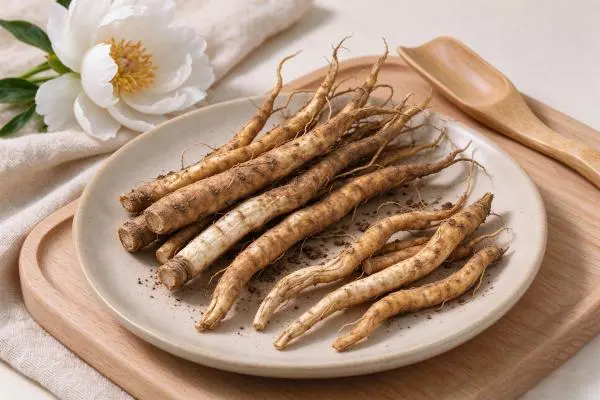
Paeonia lactiflora Pall. is an Asian flowering plant that grows wild. The dried root of this plant produces white paeony extract. In Chinese medicine, this root has been used for hundreds of years. In the Pharmacopoeia of the People's Republic of China, it is called Paeoniae Radix Alba. A monoterpene glycoside called paeoniflorin is the most important marker. Laboratories use it to make sure that samples are real and to find out how strong each lot is. HPLC tests have shown that the levels of paeoniflorin we sell range from 4% to 90%. We also offer ratio extracts. When you mix a lot of different plants, a grade with a smaller percentage works well. A higher percentage grade is best for tasks that need a clear marker level in a small area.
Appearance, Solubility, and Stability
Our white paeony extract is a very fine, golden-brown to off-white powder. The colors of better grades are more off-white, while the colors of worse grades are more dark yellow. Shade can be a little different from lot to lot because it comes from plants. This is good for drinks, liquid supplements, and skin care products that use water because it dissolves. Very high or very low pH, heat, and light can all hurt plant glycosides, which is why I tell formulators to test the finished base to make sure it is stable. To extract, we only use clean water or ethanol that is safe for food. We never use solvents that are bad for you. This means that the color stays clear, the powder goes away quickly, and the beneficial chemicals stay the same.
White Paeony Extract vs. Red Peony and Other Similar Ingredients
Some merchants utilize the white peony, the white paeony root, and the Paeonia lactiflora extract together. That works if the name, the Latin name, and the portion of the plant are the same. And be sure you know the difference between white and crimson peonies before you swap them. They may be distinct in their origin, how they are produced, what chemicals are in them, how they are generally utilized and what color they are. A plain root powder is also not the same thing as a pure white paeony extract. The extract concentrates the water-soluble components and may guarantee a specific level of paeoniflorin. The powder represents the whole ground root. Latin name, plant part (root), and HPLC technique are required on each purchase order and certificate of analysis. In this method, manufacturing batches and samples will all be the same thing.
White Paeony Extract Uses in Dietary Supplements
Common Supplement Concepts
An extract of white paeony root is used in medicines for women's health, helping with periods, stress and balance, general botanicals, and inflammation. Product teams can use paeoniflorin's long history to teach people about it, and it also gives them a way to measure how well their work is going. White paeony extract is intriguing, according to research. In 2011, Frontiers in Pharmacology published a review on how Paeonia lactiflora can reduce inflammation and change the immune system. In 2020, Pharmacology & Therapeutics published a review about paeoniflorin and the total glucosides of paeony. Traditional medicine also says that the root can help keep the liver healthy. Scientists are still looking into this. These studies don't use all end products or lab models, so they can't say for sure that a product has an effect on all of them. I think the item should be sold as an ingredient in a recipe, not as a cure or medicine.
Formats and Dosage Considerations
It's simple to make powder for dry premixes, capsules, tablets, sachets, and functional powders. Paeoniflorin can be used in plant drinks and liquid medicines because it breaks down in water. For each item, a different amount of white paeony extract must be used. It depends on the drug's other chemicals, the dose size, the amount of paeoniflorin, and the laws in your area. The number of markers per gram is very different for grades of 90% and 4%. So, I always ask each person how much paeoniflorin they want in their drink. After that, we go backward to find the right grade and ratio. Your team in charge of safety should test the recipe and make sure that the serving size and label directions are correct. Finished products can be bought too, but they can only be bought as soft capsules.
Responsible Claims for the U.S. Market
The Dietary Supplement Health and Education Act lets supplement labels in the U.S. say what the supplement does and how it works. There needs to be the usual FDA disclaimer next to these promises. It's not okay to say that a product diagnoses, treats, heals, or stops disease. This rule is important for white peony extract because immunity or inflammation problems show up a lot in lab studies and standard books. I think you should use language that stays on the topic of general health support. The 21 CFR Part 111 good manufacturing practice rule says that food products need to be checked to see if they are what they say they are. With a batch-level HPLC report and certificate of analysis, your quality team can meet that need. Different things need to be done to look at the EU and UK claims.
White Paeony Extract Uses in Beauty and Skin Care Products
Where It Fits in Skin Care Formulas
Serums, creams, lotions, toners, essences, masks, ampoules, and products for the scalp all contain white paeony extract. In general, the goals are to make the skin feel better, care for it with antioxidants, condition it, and make skin that looks dull or stressed look better. Roots have been used for a long time to make skin tone even and bring out natural beauty. This is why they are used in so many beauty ideas. Don't say anything about how it treats skin problems or permanently whitens your skin. Just say nice things about how it looks. You should test on your own base because plant extracts can change the way something looks and feels when mixed with other things.
Formulation Checks Before Scale-Up
Before going for a test run, I think you should do a short set of bench tests. These checks help you avoid a lot of work:
- Color and smell: A clear gel or white cream can change color. When you reach the goal level, mix the powder with the real base. Compare the shade against a control on the first day and after four weeks. To fix the tint, ask for a lighter grade with a higher assay.
- pH and preservatives: Plant glycosides can be changed by high or low pH, so make sure to measure the finished recipe and keep track of all the changes you make. Check the whole recipe, not just the base, for preservative efficacy. It is possible for the extracts to change how well the preservative works. Keep a copy of each report in your regulatory file.
- Light and oxygen: Store test jars in clear and opaque containers at room temperature and in a warm chamber. Look at the containers again after several weeks for changes in the way it looks, smells, or feels. These results help you pick between tubes, dark glass, and airless pumps.
Most problems with compatibility are found by these checks before they reach a production run, which can cost a lot of money. Our application laboratory can also help you change the formula of skin care products, drinks, gummies, and tablets and test how stable they are.
Documentation Cosmetic Buyers Should Request
The FDA now has more control over makeup thanks to the Modernization of Cosmetics Regulation Act of 2022. It established requirements such as registering facilities, making lists of products, and showing proof of safety standards. For this reason, formulators need clear paperwork for every batch of white paeony extract. Find out what the product is supposed to do, get a certificate of analysis for each batch, the HPLC report, information on microbes and heavy metals, allergens, and how to store the product. Our goods follow USP and EP rules, and every batch has a full HPLC analysis report with a list of all its parts. When records are kept well, safety checks and supplier audits are completed faster.
White Paeony Extract Safety and Quality Control
Safety, Side Effects, and Who Should Be Careful
White paeony extract is safe depending on the kind of plant used, the purity of the extract, the amount utilized, and the final product. Some individuals become sick from chemicals in plants, such as gastrointestinal problems or skin irritation. Pregnant or breastfeeding women, children, those taking prescription medications, those with plant allergies, persons undergoing surgery, or those with pre-existing health conditions should take extra precautions. There should be signs saying you should talk to a healthcare professional about these things. Brands should also evaluate goods that go on the skin for patches. Although you read that the plant is safe, you should nevertheless test your own final batch.
All Batches Must Pass Tests
Quality begins with identity. They measure the quantity of paeoniflorin in the lot to ensure it fulfills the declared percentage. Then you must examine the pollutants, including heavy metals, solvent residues, microbiological limits, and pesticide residues. We only use pure water or food-safe ethanol, so it's easy to track and minimize residual solvents. Ask for a Certificate of Analysis for the specific lot you will get, NOT a sample example. Verify the lot values are in accordance with the requirements you approved before releasing materials into production.
A Practical Approval Workflow
I believe there should be five stages. First, check the Latin name, the root as a plant component, the location it originates from, and the HPLC technique for identification. Second, adopt a written standard that covers paeoniflorin content, appearance, solubility, moisture, microbiology, heavy metals, pesticides, residual solvents, and allowable lot variation. 3. Test samples for compatibility, sensory quality, and stability, and compare findings with the supplier's COA. 4. Review regulatory documents, labeling, storage, shelf-life, and packaging. Fifth, place a pilot order and establish an incoming inspection plan and a change-notification method. This method reduces sourcing risk. We have traceability on planting bases, soil types, and harvest periods, which offers your quality team a clear record to audit.
How to Choose a White Paeony Extract Supplier and Buy in Bulk
Supplier Selection Criteria
First of all, you must write down your paeoniflorin aim, application, target market, yearly volume, trial amount, and delivery location. Then, assess each supplier based on batch consistency, paperwork, certifications, pricing, lead time, and technical support. What you intend to sell and the credentials you need should go together. Our white paeony extract has been authorized by the FDA, FSSC22000, Kosher, Halal, HACCP, ISO9001, and both the EU and USDA organic systems. Planting Bases for Quality Control from Seed Kingherbs Limited has been producing botanical and herbal substances since 1996. That control helps to keep the active content consistent from batch to batch.
Technical Support & Customization
We provide you with more than simply a drum. In our application lab, we work with you technically, providing formulation assistance for beverages, gummies, pills, and skin care. We can design compounding solutions with specified ratios or functionalities, too. We provide one-stop procurement of extracts, chemicals, vitamins, and other substances, accept small-batch sample orders, and organize expert logistics. Finished goods are offered as soft capsules only. This assistance enables R&D teams to save development time and procurement teams to consolidate vendors.
Conclusion
White paeony extract is extracted from the root of Paeonia lactiflora Pall. and standardized to paeoniflorin, verified by HPLC. Supplement brands use it in capsules, tablets, powders, and drinks. Skin care formulators use it in serums, creams and toners. Responsible claims are important in both fields. Laboratory studies and traditional usage provide helpful background but do not establish impacts for every completed product. Safety, solvent control, and documentation at the batch level protect both brands and consumers. Buyers should verify the Latin name, plant part, specification, and certificate of analysis, and then test samples in their own formulas. Price is not the only consideration when considering supplier choice. Consistency, certifications, minimum order quantity, lead time, and technical support should all be taken into consideration.
FAQ
What is white paeony extract made from?
It comes from the dried root of Paeonia lactiflora Pall. Producers standardize it to paeoniflorin and test it by HPLC.
Is white peony extract the same as red peony extract?
No. They can differ in botanical source, processing, chemical profile, and traditional use. Always verify the Latin name and specification.
Which paeoniflorin levels are available?
Our range runs from 4% to 90%, and ratio extracts are available. The right grade depends on your target serving and product format.
What are the MOQ and delivery time?
Samples and small trial orders are available, and commercial orders start at 25kg. Samples and regular in-stock products ship within 3-5 business days.
Request White Paeony Extract Samples From KH
Ready to test white paeony extract in your next supplement or skin care formula? KH, the brand of Kingherbs Limited, offers batch-level HPLC reports, USP and EP-compliant products, ready stock, and a 25kg commercial MOQ. As a white paeony extract supplier since 1996, we welcome your specifications. Email info@kingherbs.com with your application, target paeoniflorin level, and volume.
References
1. Frontiers in Pharmacology, 2011. He DY, Dai SM. Anti-inflammatory and immunomodulatory effects of Paeonia lactiflora Pall., a traditional Chinese herbal medicine.
2. Pharmacology & Therapeutics, 2020. Zhang L, Wei W. Anti-inflammatory and immunoregulatory effects of paeoniflorin and total glucosides of paeony.
3. Pharmacopoeia of the People's Republic of China, 2020. Monograph on Paeoniae Radix Alba.
4. United States Pharmacopeia–National Formulary, 2023. General Chapter <561> Articles of Botanical Origin.
5. Federal Register, 2007. Current Good Manufacturing Practice in Manufacturing, Packaging, Labeling, or Holding Operations for Dietary Supplements (21 CFR Part 111).
6. U.S. Food and Drug Administration, 2022. Modernization of Cosmetics Regulation Act of 2022 (MoCRA).
Send Inquiry
You may like