_1762508637542.webp)
Why Work With a Scutellaria Baicalensis Extract Supplier?
Oct 16, 2026
Working with a trusted scutellaria baicalensis extract supplier is one of the most consequential sourcing decisions a formulator or procurement team can make. As demand for Huang Qin root extract grows across dietary supplements, cosmetics, and pharmaceutical applications, the gap between reliable and unreliable supply chains has widened. Choosing the right partner means securing verified baicalin content, clean extraction methods, and batch-level documentation — factors that directly affect product quality, regulatory standing, and your brand's reputation in the US market.

Understanding Scutellaria Baicalensis Extract and Market Demand
What Makes This Botanical Ingredient Unique
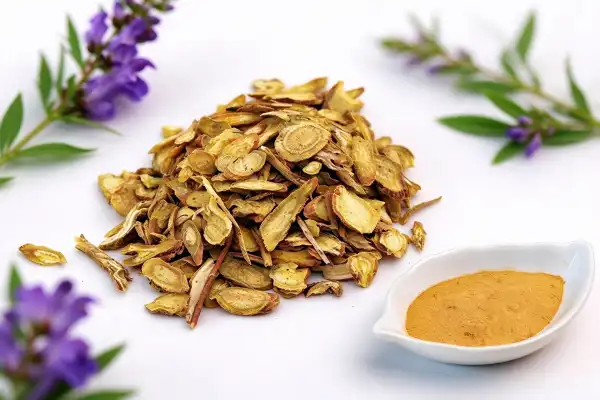
The plant Scutellaria baicalensis Georgi is in the Lamiaceae family and is commonly known as Chinese skullcap. When the roots are dried, they turn into a fine yellow powder that is full of three important bioactive flavonoids: wogonin, baicalein, and baicalin. As the main marker chemical, baicalin is usually standardized from 5% to 85% using HPLC. The aglycone form of baicalein can be 98% pure. These chemicals have more than one effect; they inhibit the COX-2 and NF-κB inflammatory pathways, remove free radicals, and stop the release of histamine.
Why Is Demand Rising Across Industries
The world market for plant extracts is growing very quickly, and Huang Qin extract is at a key point where three areas of growth meet. Nutraceutical companies use it to make products that protect the liver and fight free radicals. It is used in anti-inflammatory and acne-control serums by cosmetic formulators because it stops the production of sebum and targets Propionibacterium acnes. Pharmaceutical companies like that have been shown to fight viruses like flu and hepatitis B. This demand from different industries drives the amount that is bought and raises the bar for what buyers expect from a seller of skullcap extract.
Trends Shaping Procurement Strategy
More and more buyers want organic approval, proof of solvent-free extraction, and proof of sustainability. People who only use clean water or food-grade ethanol and not Class 1 or Class 2 solvents have a big edge in the market. It is now standard practice to do HPLC fingerprint analysis, ICP-MS heavy metal testing, and GC-MS/LC-MS pesticide residue screening. These tests are not extras that can be chosen. When procurement teams match their sourcing criteria with these trends, they lower their regulatory risk and put their brands in a better position to compete.
Core Challenges in Procuring Scutellaria Baicalensis Extract
Quality Variability and Adulteration Risk
One issue that keeps happening in the market is that baicalin products are being tampered with by adding rutin or quercetin from Sophora japonica, which is a much less expensive source. Buyers can't be sure that a species is real unless the HPLC fingerprint shows the correct Baicalin-to-Wogonin ratio. Different extraction methods lead to batches with very different amounts of active ingredient, which directly contradicts what the product label says and makes it less effective. This scenario means that Certificates of Analysis (CoA) at the batch level can't be changed for any major procurement activity.
Supply Chain and Logistics Risks
Root crops like Scutellaria baicalensis gather soil pollutants. Without proof of heavy metal tests (Lead below 3 ppm, Arsenic below 1 ppm, Cadmium below 1 ppm, and Mercury below 0.1 ppm according to Proposition 65 and EU supplement rules), sellers could face market exit events. Aside from pollution, yearly harvests can also cause price changes and shipping problems that stop production lines. Buyers can avoid these problems by working with suppliers who have ready stock and can ship quickly.
Regulatory Compliance Demands
To sell in the US market, suppliers must follow FDA rules and help buyers with their compliance processes. The products must meet USP and EP standards, and the paperwork must be ready for an audit. Not just marketing labels, but also ISO9001, FSSC22000, KOSHER, HALAL, HACCP, and FDA registration are real signs of a supplier's quality infrastructure. When gaps occur here, buyers later bear responsibility, especially for dietary supplements and drugs.
Criteria for Selecting the Right Scutellaria Baicalensis Extract Supplier
Certification and Quality Infrastructure
A reliable source of scutellaria baicalensis extract will have a number of well-known certifications that show quality control from start to finish. ISO9001 talks about methods for managing quality. FSSC22000 talks about keeping food safe. Certifications like KOSHER and HALAL let you sell to a wider range of people. At the production level, HACCP shows how to do hazard analysis. Before making a business order, buyers should ask for proof of all necessary certifications and make sure they are still valid.
Product Specifications and Customization Capability
Strong manufacturers offer a range of specs to meet the needs of different applications. Some of these are 4:1 and 10:1 ratio extracts, standardized baicalin from 5% to 85%, and high-purity baicalein at 98%. All of these have been tested by HPLC. A technical partner is different from a basic raw material seller because they can adjust extract ratios or create specific functional profiles, such as a formula to help with sleep versus one for joint health. This is especially helpful for brands that focus on research and development and are making their own formulas.
Logistics, MOQ, and Delivery Terms
When buying something, practical concerns are just as important as technical ones. The basic unit for bulk buyers is a 25 kg drum with two plastic liners that is used for commercial sales. Smaller packaging sizes, like 100g, 1kg, 5kg, and 10kg food-grade bags, make it easier to test samples and do small production runs. Buyers can choose from courier, air freight, and ocean shipping, so they can get what they need quickly and on a budget. A strong sign that a supplier can reliably support your production schedule is ready stock that can be shipped quickly.
Benefits of Working with a Professional Scutellaria Baicalensis Extract Supplier
When purchasing teams work with a professional skullcap root extract supplier, they get more than just regular access to raw materials. They get a partner to work with who has the professional know-how to help with formulating, quality issues, and regulatory paperwork at every stage.
When you buy something from a professional supplier, these are the main benefits:
- Batch-Level HPLC Reports: Every production lot comes with a detailed HPLC analysis report, giving procurement and QA teams transparent data on baicalin and baicalein content, moisture, heavy metals, and pesticide residue status. This documentation supports FDA audit readiness and private label compliance workflows.
- Solvent-Safe Extraction: Extraction using only pure water or food-grade ethanol eliminates solvent residue concerns. Headspace GC verification confirms ethanol levels below 5,000 ppm with no Class 1 solvents detected — a requirement for clean-label supplement and cosmetic applications.
- Application Laboratory Support: Beyond supplying powder, technical teams provide compounding advice, formulation optimization, and stability testing for beverages, gummies, tablets, and skincare systems. This is particularly valuable for brands that lack in-house formulation depth.
These benefits directly help buying managers with the problems they face every day with production and safety. Your buying process works much better when a provider offers good paperwork, clean chemistry, and application knowledge all in one package.
Making an Informed Procurement Decision: Best Practices and Recommendations
Conduct Structured Supplier Audits
Request a full documentation package before placing a business order for the extract of Scutellaria baicalensis root. This should include a certificate of analysis (COA), an HPLC fingerprint report, heavy metal test results, a pesticide residue screening report, and solvent residue data. If you can, check certifications directly with the groups that issued them. A seller who is sure of their quality system will quickly give you this information.
Start with Sample Evaluation.
Most professional suppliers will give you a free 100g sample to try out first. During this phase, you should do your own HPLC tests, check the quality of the powder color (the extract should look like a fine yellow powder), and make sure that it will dissolve in the carrier system you want to use. For water-based uses, high-purity baicalin needs to be dissolved in an alkaline phase or with a solubiliser like Propanediol.
Build Long-Term Supplier Relationships
Buying on the spot from several unnamed sources leads to variations in quality that build up over time and cause formulation inconsistencies. Working with a company that only makes Scutellaria baicalensis extract and sources plants from limited planting sites in Liaoning, Hebei, Henan, Gansu, Shaanxi, and Shanxi provinces gives buyers and regulatory bodies the chain of custody that they need. When people have been working together for a long time, they can respond faster to calls for custom development.
Conclusion
To find the best Huang Qin root extract partner, you need to look at their quality documentation, extraction standards, legal certifications, and ability to provide technical help. Procurement teams can be sure that their product lines are consistent and legal if their suppliers offer HPLC batch reporting, solvent-safe processes, and customisable MOQs. Working with a verified scutellaria baicalensis extract manufacturer lowers the risk of sourcing and improves the market position of your product, whether it's for dietary supplements, cosmetic serums, or pharmaceutical intermediates.
FAQ
What specifications does your Scutellaria baicalensis extract come in?
We offer ratio extracts at 4:1 and 10:1, baicalin that is measured from 5% to 85%, and baicalein that is 98% pure. All of the goods are checked with HPLC and come in the form of a fine yellow powder that comes from the root of Scutellaria baicalensis Georgi. For sample and trial orders, smaller packaging sizes from 100g to 10 kg are available. The minimum order quantity (MOQ) for business sales is 25 kg.
How do I verify the authenticity of the extract?
For each batch, ask for the full HPLC fingerprint report. The Baicalin-to-Wogonin peak ratio in real Chinese skullcap extract is very specific.
Is the extraction process solvent-free?
Yes. We only use clean water or ethanol that is safe for food. There are no Class 1 or Class 2 solvents used.
What certifications support US market entry?
Our building is registered with FDA, ISO9001, FSSC22000, KOSHER, HALAL, and HACCP. The products are up to USP and EP standards, and you can get full paperwork on request.
What is the shelf life and storage requirement?
The extract can be kept for 24 to 36 months if it is kept in a cool, dry place below 25°C and out of direct sunlight. Double-lined plastic packaging inside drums keeps water from getting inside.
Partner with KH for Your Scutellaria Baicalensis Extract Supply
Since 1996, KH has been a specialist in botanical ingredients. They offer scutellaria baicalensis extract with confirmed baicalin content, processing without solvents, and full certification support, such as FDA registration, ISO9001, and FSSC22000. We are a direct manufacturer of scutellaria baicalensis extract and have controlled planting bases and an in-house application laboratory. We can help with everything from testing samples to placing large orders. You can ask for a free 100g sample today by emailing info@kingherbs.com or going to www.kingherbs.com.
References
1. Shi, Y., et al. "Pharmacological Activities of Baicalin and Baicalein." Journal of Pharmacy and Pharmacology, 2016.
2. Li, B. Q., et al. "Anti-inflammatory Effects of Flavonoids from Scutellaria baicalensis." Phytomedicine, 2000.
3. Huang, W. H., et al. "Antioxidant and Anti-inflammatory Properties of Baicalein and Baicalin." Food Chemistry, 2006.
4. European Pharmacopoeia. "Baicalin Monograph". European Pharmacopoeia, 10th Edition, 2019.
5. United States Pharmacopoeia. "Botanical Ingredients Quality Standards." USP-NF, 2022.
6. Grand View Research. "Botanical Extracts Market Size, Share & Trends Analysis Report." Grand View Research, 2023.
Send Inquiry
You may like