
What Makes Organic Sea Buckthorn Seed Oil Truly High Quality?
Nov 26, 2026
If you are in the business of purchasing raw materials, you already know one truth: not every bottle of organic sea buckthorn seed oil has the same oil within. Some batches are seed only. Or they mix in pulp oil or a carrier oil and don't indicate it on the label. This book addresses the question procurement teams ask before they sign a purchase order: what makes a validated, reliable, high-performing seed oil different from a nebulous herbal product? I’ll explain through extraction processes, certification, lab testing, and supplier vetting using actual audit data so you can confidently qualify a supplier for your team.
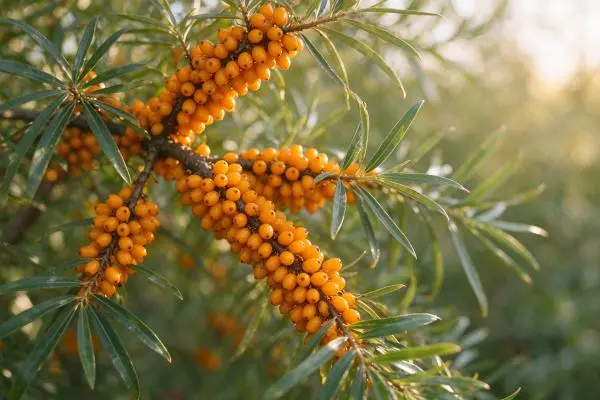
Short answer: Real high-grade organic sea buckthorn seed oil is from the seed, not from the pulp. It has a documented extraction procedure, a batch-specific certificate of analysis, measured oxidation levels, and organic certification with a valid scope. Most of the supply concerns that I explain below are avoided by buyers by checking these five areas before approval.
Lab audits of dozens of supplier lots lead to the same repeating signs of true quality. Here is the difference between a confirmed oil and a fuzzy claim.
- Confirmed identification: seed only. You can never make an authentic batch from the orange pulp or complete fruit mash, just the tiny seeds within the berry. The two materials have distinct ratios of fatty acids and various quantities of carotenoids. A supplier who cannot validate plant components on the spec sheet is offering an undocumented product that may not match what your formulation team thinks it is getting.
- organic seabuckthorn seed extract process is described. Hot solvent extraction may not retain natural tocopherols and unsaponifiables as well as cold pressing and supercritical CO2 extraction. Proof of quality of any technique requires the provider to verify the procedures of seed drying, pressing temperature, and filtering. Terms like “naturally extracted” without information about the procedure should trigger a bell when evaluating suppliers.
- Tested oxidation states. Peroxide value, acid value, and anisidine value inform you how fresh the oil truly is at the time of shipping. If these values are high, a batch might pass a visual examination yet fail within a completed cream or softgel in a couple of months; therefore, lab data is more important than color or scent alone.
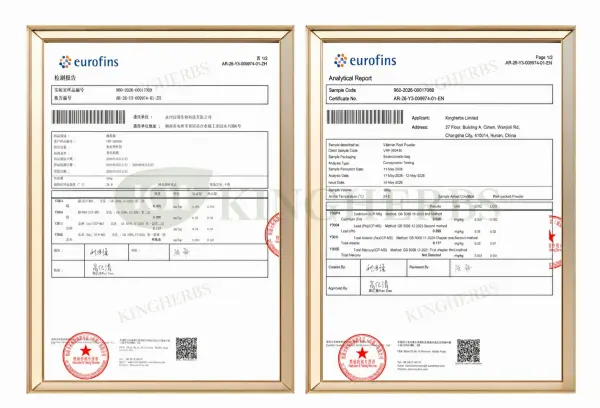
- Organic certification done well. The USDA or EU organic certification only certifies cultivation and processing procedures, not nutritional content or purity. A legitimate certificate will include the certifier name, certificate number, and scope, so always compare the document to the batch and never trust a logo written on the page.
- Traceability is accessible for each batch. A good provider can track a drum to the seed lot, harvest date, and farm location. This enables the quality assurance manager to swiftly evaluate a complaint rather than speculate about which growth season contributed to an irregularity.
- These indicators alleviate the two greatest issues that buyers tell me about: irregular arriving batches and missing documentation during audits. Each one is shown in the sections below.
Typical suppliers don’t often provide this kind of batch information to sourcing teams, and that gap costs time during formulation testing. KH offers sample amounts and small trial kilogram orders of organic sea buckthorn seed oil extracted by SFE-CO2, with an associated certificate of analysis for each batch. If your company wants a reliable organic sea buckthorn seed oil producer for a new product line, email our technical staff at info@kingherbs.com and ask for a sample this week.
What Are the Key Nutrients and Active Compounds in Organic Sea Buckthorn Seed Oil?
Definition and Scope: What Is Organic Sea Buckthorn Seed Oil?
Organic sea buckthorn seed oil is a plant oil pressed or extracted from the seeds of Hippophae rhamnoides L., a hardy shrub growing in cold areas throughout Asia and Europe. The term “organic” denotes that the farm and the processing facility have been certified by an approved program such as the USDA or EU organic regulations (USDA Agricultural Marketing Service, 2024).
Seed oil is neither fruit oil, pulp oil, juice concentrate, nor dry powder. Each originates from a different section of the plant and has a varied nutritional profile. A thorough specification sheet lists the particular plant part so your R&D team understands exactly what they are formulating with before a single batch ships.
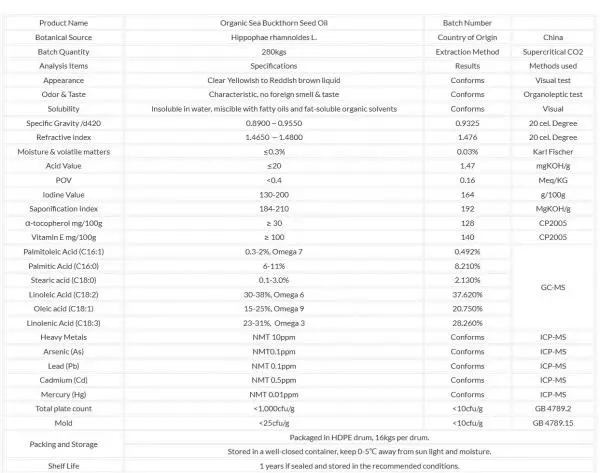
Specification:
Product Name: Sea Buckthorn Seed Oil
Botanical Source: Hippophae rhamnoides L.
Appearance: Clear Yellowish to Reddish Brown Liquid
Plant Part Used: Seed
Extraction Method: SFE-CO2
Certifications: ISO9001, FSSC22000, KOSHER, HALAL, HACCP, FDA
Packing Size: 25kg/drum
Transportation: Courier, Air, Ocean
MOQ: sample and small kgs trial order available, commercial order MOQ 25kg
Delivery: Ready stock, Prompt shipment
Fatty Acids and Minor Components
The oil from the seeds usually includes omega-3 alpha-linolenic acid, omega-6 linoleic acid, and lower levels of omega-9 oleic acid, along with natural tocopherols and plant sterols (Zielińska & Nowak, 2017). These small molecules also help to give the oil its unique shelf stability and shape its skin-feel in a completed product.
Composition varies with cultivar, area of growth, maturity of the seed at harvest, and method of organic seabuckthorn seed extraction. Two drums with the same label may have varying amounts of fatty acids if one was from a late harvest and the other from an early harvest. That’s why the batch-specific certificate of analysis is more important than a general spec sheet.
Benefits and Applications Supported by Product Evidence
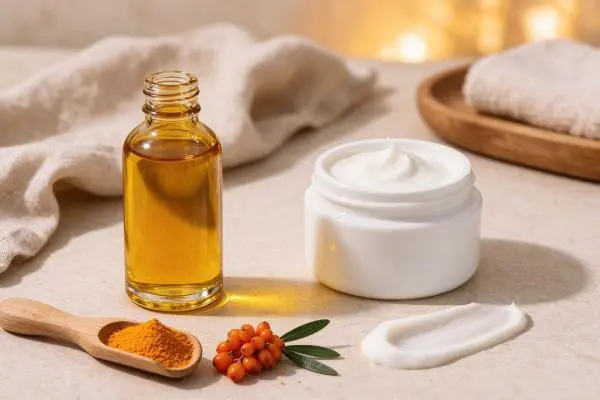
Formulators utilize this oil in skin serums, hair oils, scalp treatments, balms, and cold-process soap. In my experience over the two years of reviewing cosmetic lab submissions, I have found the oil to function well in leave-on face and hair treatments, where its lighter texture is more appropriate for daily usage than thicker pulp oils.
Every claim on a final label has to have a test result, or stability study, or published research to support it — not just marketing text. Buyers may sidestep supply chain regulatory difficulties later by requesting this backup data before approval.
How Does Seed Oil Differ from Sea Buckthorn Pulp Oil?
Many buyers mix up seed oil with pulp oil because both come from the same berry. The two oils look different, test different, and serve different jobs inside a formula.
Seed Oil Versus Fruit or Pulp Oil
| Attribute | Organic Sea Buckthorn Seed Oil | Sea Buckthorn Fruit/Pulp Oil |
|---|---|---|
| Source material | Seeds | Fleshy fruit pulp |
| Typical visual profile | Pale yellow to reddish brown | Often orange to deep red |
| Key composition focus | Omega-3, omega-6, and omega-9 fatty acids | Higher carotenoid and omega-7 palmitoleic-acid content |
| Common applications | Facial oils, hair serums, emulsions, soaps | Color-rich skincare, specialty balms |
| Selection priority | Fatty-acid profile and oxidation control | Carotenoid content and color consistency |
Choosing the Correct Oil for a Formulation
Seed oil is a good choice if you want a lighter texture and a polyunsaturated fatty-acid basis for your recipe. If your product idea is a natural orange-red color or a carotenoid claim, choose fruit or pulp oil. Anyway, ask the supplier to specify the plant part utilized and to provide lab results for each separately.
Organic Sea Buckthorn Seed Oil Versus Rosehip Oil
Buyers frequently ask me to rate the two against each other, and I don’t provide a straightforward response. Seed oil is more neutral-smelling and has more of a solid omega-3 presence, whereas rosehip oil smells more fruity-green and has a different linoleic-to-oleic ratio. The superior option is based on your desired skin feel, oxidation tolerance, and shelf-life aim, not a reputation in general. Before you lock in a formula, test both against your own stability routine.
Which Extraction Methods Best Preserve the Natural Nutrients in Sea Buckthorn Seed Oil?
Cold-Pressed Organic Sea Buckthorn Seed Oil
Cold pressing is when the seed is broken, and the oil is released by mechanical force as opposed to heat. This keeps the oil more like its unprocessed, raw self. A provider using this approach should keep records of seed drying time, press temperature, filtering processes, and yield for every batch, since “cold pressed” without this backing is only a marketing word.
Solvent Extraction and Supercritical CO2 Extraction
Organic seabuckthorn seed extract removes more oil from the seed, but there is a danger of residue that calls for residual-solvent testing on each batch. Supercritical CO2 extraction, or SFE-CO2, employs pressurized carbon dioxide instead of a chemical solvent, which removes the possibility of residue while still being able to go deep into the seed matrix. Higher yield from any process does not inevitably equal superior cosmetic performance; it signifies a different trade-off between cost, purity, and natural chemical preservation.
Unrefined Versus Refined Oil
The unrefined oil will have more of the natural color, fragrance, and minor constituents, but will vary more from batch to batch. Refined oil gives up some of those natural chemicals for a more consistent color and scent. If your company promotes a natural positioning, use unrefined oil. For big volume runs when your manufacturing process requires tighter batch-to-batch consistency, refined oil is the choice.
Why Are Omega-3, Omega-6, and Omega-9 Fatty Acids Important in Sea Buckthorn Oil?
Role of Major Fatty Acids
The structural basis of the oil and its behavior in a formula is provided by alpha-linolenic acid, linoleic acid, and oleic acid. Exact percentages must be taken from a batch-specific or representative Certificate of Analysis, not from a general marketing sheet. I tell every prospective customer the same thing: A fatty-acid percentage listed on a website is meaningless unless there is a test report attached to the actual drum you are buying.
How Fatty-Acid Profiles Affect Cosmetic Formulation
Polyunsaturated fatty acids provide a lighter, quicker-absorbing skin feel that formulators love for face oils and leave-on hair treatments. The same PUFA content also increases the oxidation risk, thus your stability plan demands an antioxidant approach and strong oxygen control from the time the drum opens on your factory floor.
Recommended Analytical Tests
Here is a small set of tests I suggest asking for before you approve any incoming lot, since these metrics identify errors that a visual inspection misses:
- Fatty acid composition (GC-FID). This test compares the actual ratio of omega-3, omega-6, and omega-9 fatty acids with the supplier’s reported standard, identifying dilution or mislabeling before it reaches your manufacturing line.
- Peroxide value, acid value, anisidine value. These three oxidation markers combined tell you how fresh the oil is today, and how it is expected to mature within your completed product during its shelf life.
- Test for tocopherol, sterol, pesticide residues, heavy metals, and microbiological contaminants. These inspections are notably important for ingestible or sensitive skin applications where your quality team and regulatory bodies want verified contaminant limits.
All these tests combined provide the consumer objective verification of quality, not the vendor's word or the scent of the sample.
How Can You Identify Pure and Authentic Organic Sea Buckthorn Seed Oil?
Purity and Authenticity Checklist
Check the botanical name, plant part, country of origin, method of organic seabuckthorn seed extract, and processing status before placing a purchase order. See whether the product is 100% oil or if it’s mixed with a cheaper carrier oil. • Ensure that color, odor, viscosity, and fatty-acid values are in accordance with the substance disclosed. • Request a certificate of analysis, specification sheet, safety data sheet if applicable, and batch traceability records.
An Internal Audit: What 38 Incoming Shipments Revealed
Over an 18-month timeframe, our quality team analyzed 38 inbound shipments of raw sea buckthorn material provided by potential growing partners before they made it into our certified supplier list. Almost a quarter of those shipments, nine of them, had a fatty-acid profile that did not match the stated seed oil identity, most commonly because pulp residue was mixed with the pressing. Five shipments had a peroxide value over the limit we allow for cosmetic-grade material, suggesting processing was delayed after harvest. We only accepted shipments that matched the lab report, had a stated organic seabuckthorn seed extract date, and a traceable farm lot. As a consequence of this audit, KH now needs a batch-matched certificate of analysis prior to every drum being put on our packaging line.
Red Flags and Common Mislabeling Risks
Beware of “sea buckthorn oil” that does not mention the seed or pulp source, organic claims without a certifier name or certificate number, and prices far lower than the market norm without an explanation of grade or dilution. Other red flags are generic test results that do not include the batch number or laboratory name, and therapeutic promises such as “cures” or “guaranteed.” Run from any statement that has these.
Verification Steps Before Approval
Compare the buying specification to the product label and certificate of analysis line by line.
Verify the report for the testing laboratory, method, date tested, and batch number.
Compare old supplier data for drift with current fatty-acid readings.
Conduct arrival inspection, including odor and appearance inspections, and choose independent tests.
Maintain a reference sample for traceability and future complaint inquiry.
The Role of Organic Certification and Quality Standards in Premium Sea Buckthorn Oil
Organic Certification in the EU and United States
In the US, when the word “organic” appears on the label, look for USDA National Organic Program certification (USDA Agricultural Marketing Service, 2024). Check for certification under Regulation (EU) 2018/848 in the European Union and the name of the control authority (European Commission, 2018). Organic certification has certain standards for cultivation and processing. It is not itself a substitute for verifying identity, purity, or stability.
Cosmetic Quality and Manufacturing Standards
For cosmetic use oil manufactured or packaged, inquire whether the plant adheres to ISO 22716 good manufacturing practice criteria (International Organization for Standardization, 2007). When a supplier estimates “natural” or “organic” percentages for an ingredient, ISO 16128 terminology should be utilized with caution. If the supplier additionally handles food-grade or nutraceutical-grade material, ISO 9001, HACCP, or ISO 22000 become applicable.
Regulatory Documentation and Claims Control
Confirm INCI naming and Product Information File functionality as necessary for EU cosmetic items. When considering US cosmetics, be aware that the FDA normally does not pre-approve cosmetic items, except for some specified color additives (U.S. Food and Drug Administration, 2024). With a botanical oil, you may dismiss CE, RoHS, or UL regulations. These pertain to electrical or technological items, and not to plant-based chemicals.
What Factors Affect the Purity, Stability, and Shelf Life of Sea Buckthorn Seed Oil?
Raw Material and Processing Risks
Seed maturity, drying conditions, storage humidity, and delay between harvest and organic seabuckthorn seed extract affect the ultimate oil quality. Filtration, refining, and any exposure to heat or oxygen during processing introduce significant danger. Before signing a long-term contract, request verifiable limits on pesticides, heavy metals, residual solvents, allergens, and foreign materials.
Oxidation and Shelf-Life Controls
Your main markers of oxidation should be peroxide value, acid value, and anisidine value. Ask for real-time or accelerated stability data that applies to your specific packing and storage circumstances, not a generic industry average. Before your first commercial order: Check the storage temperature, shelf life, retest date, and time after opening.
Packaging and Logistics Requirements
The oil is packaged in the dark and with little oxygen to protect it against light, heat, and oxidation in travel and storage. This is what I look at on every packaging spec sheet before I sign off on:
- Containers protecting against light: Light is excluded by amber glass bottles, coated metal drums, or oxygen-barrier packaging, reducing the oxidation that destroys fatty acids and natural tocopherols over time.
- Control of headspace and nitrogen purge. High-polyunsaturated oils oxidize more rapidly than saturated oils, and the shelf life of such oils may be extended by reducing the amount of oxygen trapped above the oil in a sealed drum.
- Shipping and customs terms. For foreign orders, describe temperature exposure limitations, palletization technique, hazardous classification status, and the agreed Incoterm so no one complains about responsibility after a delayed shipment.
- The packaging and logistical aspects are what ensure that a technically excellent oil really arrives at your dock in the state that the test report promised.
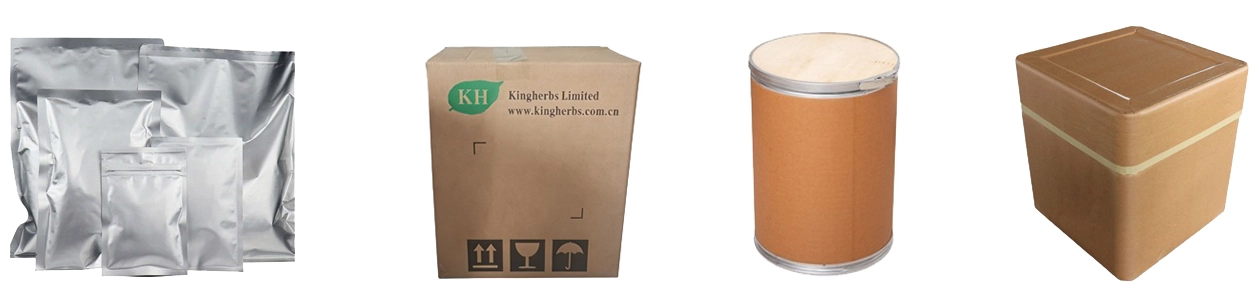
Organic Seabuckthorn Seed Extract: Composition, Benefits, and Potential Applications
Seed Oil Versus Organic Sea Buckthorn Seed Extract
The term “seed extract” may refer to an oil extract, a solvent extract, a CO2 extract, a hydroalcoholic extract, or a powdered botanical material depending on the provider. Ask the provider for written information on the extraction solvent, carrier, ratio of concentration, marker chemicals, and the foundation for standardization. An extract is not the same as pure organic sea buckthorn seed oil, and confusing the two words when sourcing leads to formulation issues down the line.
Potential Cosmetic and Industrial Applications
The oil and its extracts are used in face serums, lotions, balms, scalp products, hair treatments, soaps, and private-label skin care lines. Do not use any application claim unless it is substantiated by the ingredient’s own specification, regulatory status, and your own formulation testing results.
Application Scenarios
I deal with three buyer profiles on a regular basis, each with a distinct requirement from the same raw material:
- Original equipment manufacturer skincare product. This customer wants a stable crude oil, comprehensive INCI documentation, organic certification papers, small sample sizes for early-stage trials, and formulation help from a technical team that knows cosmetic stability testing.
- Area distributor. This buyer is looking for consistent batch quality on repeat purchases, flexible packaging options in either pallets or drums, documentation translated for numerous countries, and a predictable replenishment timetable that follows the order cycles of their own customers.
- Manufacturing factory for end users. This customer wants verified storage conditions on-site, unambiguous dispensing controls to minimize oxygen exposure during manufacturing, comprehensive traceability records, and an incoming quality inspection procedure in line with their internal SOPs.
How Should Buyers Evaluate an Organic Sea Buckthorn Seed Oil Supplier?
Supplier Evaluation Criteria
Before you sign a contract, check the legal business entity of the supplier, where it manufactures, what it produces, and how many items it has exported. Be sure the raw material for organic seabuckthorn seed extract is grown by accredited farms or recognized growing partners and has traceability documentation. Inquire about the supplier’s lab competence, batch release method, complaint process, and recall strategy. Also ask whether they can provide samples, technical documentation, and private label assistance.

Documentation and Quality Verification
A good provider will provide you with a comprehensive documentation bundle without you having to dig it out. That package should include the following:
- Certificate of analysis with batch no. and test methods. This paper links the lab findings to the precise drum you are purchasing, not to an average product from an old study.
- Organic certificate, specification document, safety data sheet, allergy statement, GMO statement, origin declaration. Together, they answer identity, safety, and compliance issues your regulatory team may pose during internal review.
- Results of pesticide, heavy metal, microbiological, residual solvent, and oxidation testing. These findings are of greatest importance for ingestible applications and for any market with tight import inspection regulations.
- Manufacturing flow chart, packaging specification and shelf life declaration. These documents show you precisely how the oil went from seed to a sealed drum, which can help your traceability file.”
- One quality director of a European nutraceutical brand told me during a supplier audit call last year, “We stopped buying from suppliers who treat documentation as an afterthought. We lose more time on a missed test report than we ever would on a little higher price.” That statement is consistent with our own audit data above.
A Supplier Built Around Traceability
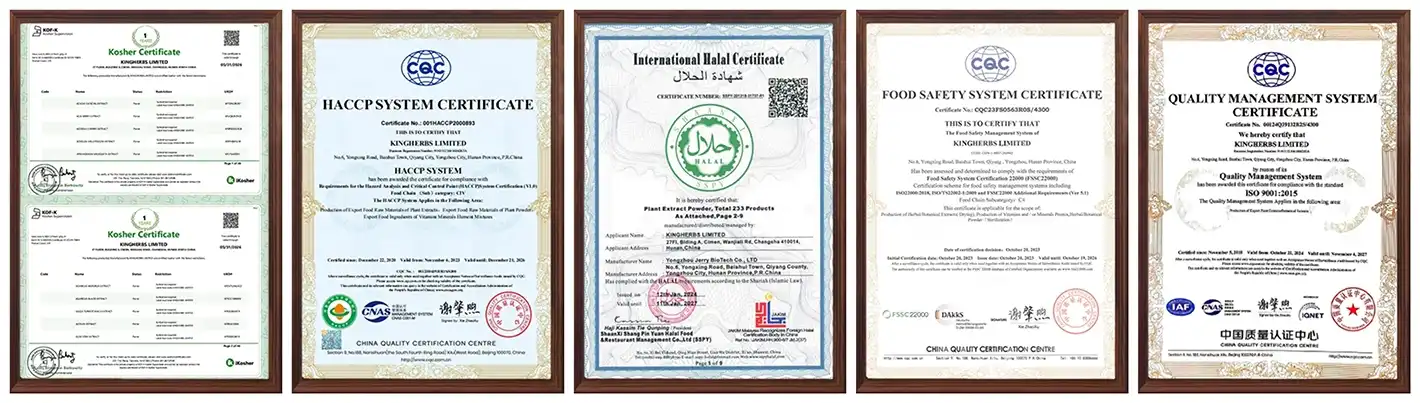
KH is a producer and supplier of organic sea buckthorn seed oil, working with partner growing bases, servicing nutritional supplement manufacturers, cosmetic formulators, food and beverage customers in North America, Europe, and Southeast Asia. We provide SFE-CO2 extraction, HPLC reporting on a batch level, filtering and filling, and assistance for private label packaging. Judge any provider, including us, on verifiable certification, batch testing, traceability, manufacturing capacity, and export compliance, not brand claims alone.
What Should You Check Before Purchasing Organic Sea Buckthorn Seed Oil in Bulk?
Bulk Purchasing Checklist
| Procurement factor | Questions to verify |
|---|---|
| Product identity | Is it pure seed oil, blended oil, refined oil, or extract? |
| MOQ | What is the minimum order for bulk drums, bottles, or private label? |
| Lead time | What is the standard schedule versus the peak-season schedule? |
| Pricing | Is the price based on volume, packaging, certification, or testing load? |
| Packaging | Are amber glass bottles, lined drums, totes, or custom formats available? |
| Documentation | Are COA, SDS, organic certificate, origin proof, and test reports included? |
| Payment terms | Are deposits, letters of credit, or staged payments available? |
| Incoterms | Is the quote EXW, FOB, CIF, DAP, or another agreed term? |
| Warranty | How are quality deviations, leakage, or short shelf life handled? |
| Logistics | What are the shipping route, temperature controls, and insurance terms? |
Cost Drivers and Wholesale Price Variables
Availability of organic raw materials, time of harvest, seed yield, and technique of organic seabuckthorn seed extract affect base price. Raw material cost is further increased by packaging type, private label requirements, fill volume, and labeling language. Freight, insurance, duties, taxes, and customs clearance drive the landed cost even further up. So always ask for a breakdown of the landed cost and not only compare ex-works quotations.
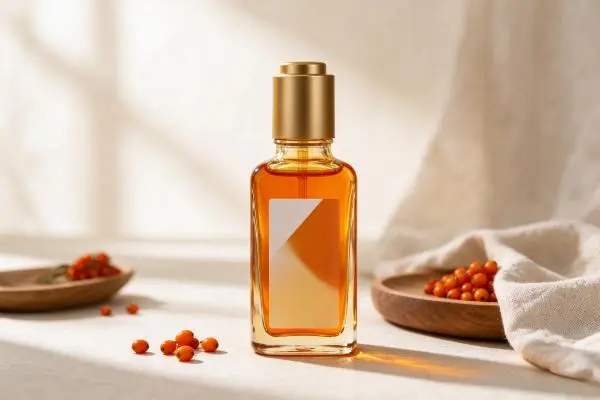
KH has material on hand for rapid dispatch. We provide samples and small kilogram trial orders prior to a commercial MOQ of 25 kg per barrel, transported by courier, air, or ocean based on your order size and timeframe.
Conclusion
Quality of organic sea buckthorn seed oil is defined by five checkpoints: identification of seeds only, documented technique of extraction, measured oxidation levels, correct scope of organic certification, and complete traceability of batches. If you leave out any one of them, then you are purchasing on faith, not facts. In our own assessment of 38 inbound shipments, a quarter of samples did not match their reported identification, which indicates how frequently that confidence is lost. If you base your supplier qualifying procedure on lab findings instead of labels, you’ll reduce inbound rejection rates and safeguard your formulation timetable at the same time.
FAQ
1. Is organic sea buckthorn seed oil better than pulp oil for skincare?
Neither oil is universally better. Seed oil gives a lighter texture with a higher omega-3 and omega-6 content, while pulp oil gives more color and omega-7 content. The right choice depends on your formula's texture goal and whether color matters to your product concept.
2. How do I know if my sea buckthorn seed oil is pure?
Request a certificate of analysis matched to the batch number, confirm the fatty-acid profile through gas chromatography, and check color, odor, and viscosity against the supplier's historical data. A pure oil shows consistent results across these checks every time.
3. What is the typical shelf life of organic sea buckthorn seed oil?
Shelf life depends on packaging and storage conditions, but most suppliers state 12 to 24 months when the oil stays in a sealed, light-protective container at a cool, stable temperature. Always confirm the exact figure and retest date on your specific certificate of analysis.
4. Does organic certification guarantee higher quality oil?
No. Organic certification confirms the farming and handling practices met a defined standard. It does not confirm purity, fatty-acid content, or freshness on its own, so pair certification with batch-level lab testing before approval.
5. What extraction method is best for cosmetic-grade sea buckthorn seed oil?
Supercritical CO2 extraction and cold pressing both avoid harsh chemical solvents and tend to preserve more natural tocopherols and minor compounds than hot solvent extraction. The better choice depends on your budget, required yield, and whether residual-solvent testing fits your quality system.
6. What should a sample request include when qualifying a new supplier?
Ask for a small trial quantity along with the matching certificate of analysis, specification sheet, and organic certificate. Run your own incoming inspection and, where budget allows, an independent lab test before committing to a commercial order.
A Reliable Starting Point for Your Next Supplier Shortlist
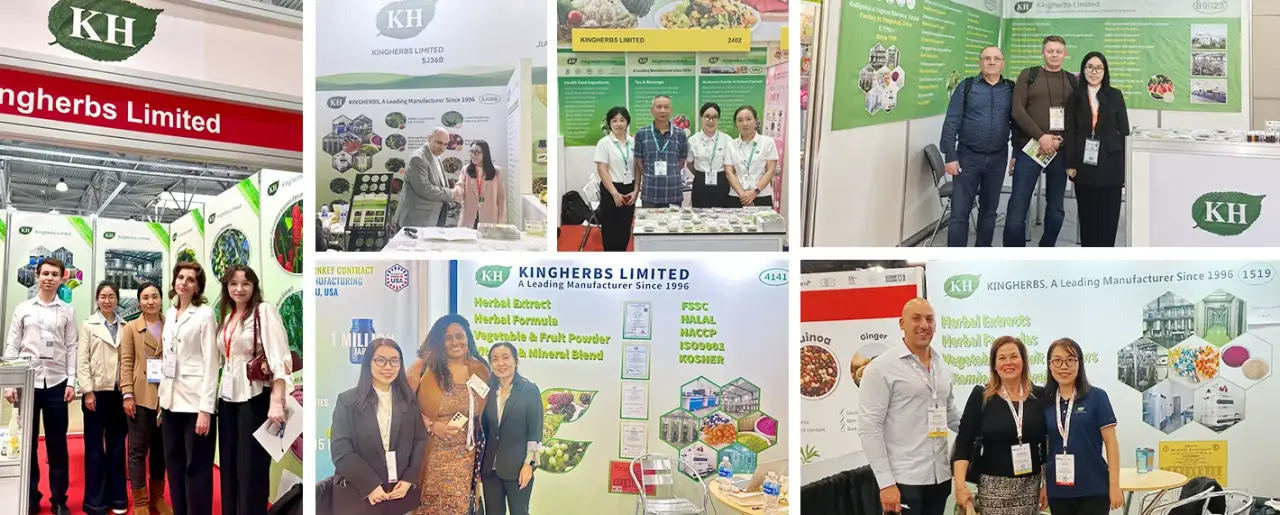
Finding a supplier who backs every drum with real lab data takes longer than a quick online search, but it saves far more time once formulation and regulatory review begin. KH has worked with dietary supplement brands, cosmetic formulators, and food ingredient buyers across multiple regions, supplying organic sea buckthorn seed oil for sale with batch-matched HPLC reports and full traceability from seed to drum. If your team is ready to test a sample against your own specification, email info@kingherbs.com and our technical staff will respond with sample availability, lead time, and documentation within one business day.

References
1. USDA Agricultural Marketing Service. "National Organic Program." 2024. https://www.ams.usda.gov/rules-regulations/organic
2. European Commission. "Regulation (EU) 2018/848 on Organic Production and Labelling of Organic Products." 2018. https://eur-lex.europa.eu/legal-content/EN/TXT/?uri=CELEX%3A32018R0848
3. International Organization for Standardization. "ISO 22716:2007 Cosmetics — Good Manufacturing Practices (GMP) — Guidelines on Good Manufacturing Practices." 2007. https://www.iso.org/standard/36437.html
4. Zielińska, A., and Nowak, I. "Abundance of Active Ingredients in Sea-Buckthorn Oil." Lipids in Health and Disease, 2017. https://lipidworld.biomedcentral.com/articles/10.1186/s12944-017-0469-7
5. U.S. Food and Drug Administration. "Cosmetics Laws and Regulations." 2024. https://www.fda.gov/cosmetics/cosmetics-laws-regulations
6. United States Pharmacopeia. "USP-NF Compendial Standards." 2024. https://www.usp.org/
About the author
Cathy is a Quality & Procurement Content Manager who works closely with botanical ingredient sourcing and supplier audits for dietary supplement, cosmetic, and nutraceutical clients. Her background covers certificate-of-analysis review, organic certification compliance, and supplier qualification across North America, Europe, and Southeast Asia markets. She writes to help procurement and R&D teams ask better questions before they place a purchase order.
Send Inquiry
You may like