_1762508637542.webp)
Harnessing the Power of Rose Hip Extract Powder for Wellness
May 12, 2026
Rose Hip Extract Powder is a powerful plant ingredient that comes from the Rosa rugosa fruit. It has a high nutritional value and can be used in a wide range of recipes. This concentrated powder has standard amounts of bioactive galactolipids, polyphenols, and vitamin C (5% to 70%). It was made using modern extraction methods that keep the phytonutrients' purity. If procurement managers and R&D directors are looking for natural ingredients that have been backed by science, this botanical solution can help with a wide range of health issues, from supporting the immune system and promoting joint health to making cosmetics that meet strict quality standards like ISO9001, FSSC22000, and USP/EP compliance. Knowing what it is made of, how to get it, and how to integrate it into other goods helps companies make unique products that appeal to health-conscious customers today.

Understanding Rose Hip Extract Powder: Composition, Benefits, and Applications
What Makes Rose Hip Extract Powder Unique
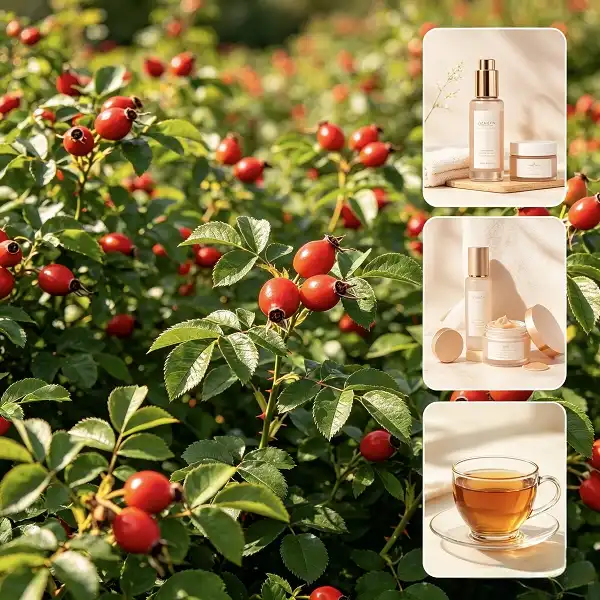
Rose Hip Extract Powder comes from the fruit of Rosa rugosa plants, which are picked after they flower and when the quantity of nutrients is highest. Pure water or food-grade ethanol is used in the extraction process. These are never dangerous solvents, so the natural vitamin C complex, bioflavonoids, polyphenols, and important galactolipids are all kept. This natural ingredient is a fine, yellowish-brown powder with controlled particle size (95% of the particles are smaller than 80 mesh), which makes it easy to mix evenly in a wide range of formulas. Unlike manufactured ascorbic acid, the vitamin C in this plant matrix is naturally mixed with other substances that make it more bioavailable. Various testing methods, such as HPLC, UV spectrophotometry, and titration, are used to make sure that the amounts of active ingredients are correct across ratio extracts (4:1, 10:1) and standard guidelines. Low-temperature spray drying or freeze-drying keeps the powder stable at high temperatures, which protects nutrients that are sensitive to heat during processing and later uses in production.
Industry Applications Across Sectors
Rose Hip Extract Powder is added by companies that make dietary supplements to immune support pills, joint health formulations, and complete multivitamin mixes. The powder can handle being compressed very hard during pill production without losing its sensitive galactolipid content. This means that it stays effective during the whole process and for as long as the product is on the shelf. When adding botanical ingredients to drinks to make them healthier, functional beverage makers face unique technology hurdles. Rose Hip Extract Powder that dissolves in water solves problems with solubility and pH stability. It stops sedimentation and keeps the color stable in acidic settings (pH 3.5–4.5). This type of processing works well for ready-to-drink mixes and powdered drink mixes. The collagen-supporting qualities of the product are used in cosmetics. Formulators often use liposomal coating to help oil-in-water emulsions penetrate deeper into the skin and stop breakdown. Standardized extracts are used in anti-aging creams and brightening serums to give regular effects that people can see and measure. Nutraceutical food businesses add this ingredient to smoothie powders, energy bars, and fortified snacks to make them healthier and give them a unique, tangy taste. The food-grade powder adds natural color and functional benefits, supporting a clean-label stance that appeals to customers who care about being honest. Even the animal feeding industry knows that Rose Hip Extract Powder is useful. Supplement companies for pets use it in products that help the immune system,Rose Hip Extract Powder,and joints work better, using the same biological processes that are good for human health.
Choosing the Right Rose Hip Extract Powder: Comparison and Quality Factors
Sourcing Methods and Their Impact on Quality
Traceability starts with growing the plants. Premium providers work directly with approved organic farms to choose which varieties to grow, what the soil is made of, and when to gather. This end-to-end control gets rid of the variability in the raw materials, which is a problem that always comes up when buying from commodity traders who combine materials from different sources. Organic approval does more than just look good on a marketing flyer. Organic Rose Hip Extract Powder farming usually results in foods with higher polyphenol levels because of the plants' natural reactions to stress. At the same time, it makes sure that no synthetic pesticides or herbicides are used. Testing for heavy metals becomes very important; reliable sources keep lead levels below 3.0 mg/kg, which is well within the guidelines set by the USP and EP monographs. The separation method is the most important factor in determining the quality of the end product. When you use water for extraction instead of ethanol, you get different solubility patterns. For manufacturers who need material for drinks, water-soluble types are best. For those who are making softgels or lipid-based delivery systems, ethanol-extracted grades with better lipophilic chemical retention may be better.
Comparing Leading Suppliers and Market Options
There are specialty producers, wholesale wholesalers, and global supplement companies in the B2B botanical ingredient market. When you work directly with a manufacturer, you can often get better customization options, expert help, and lower costs, especially when you need to buy a lot of something. Different providers have very different minimum order amounts. Partners who can handle both small sample amounts for R&D testing and large production numbers are helpful for procurement teams. Ordering trial amounts, sometimes as little as 1 kg, before committing to 25 kg drum sales lowers the financial risk while a product is being developed. Planning for output is affected by lead times. When suppliers keep items in stock, they can ship quickly (often within three to five business days), which stops formulation delays and helps just-in-time stocking tactics work. Custom specs that need specific amounts of vitamin C or specialty tests may make delivery times longer, but they also give you the chance to stand out. The type of packaging affects how easy it is to handle and how much it costs to store. For industrial production, standard 25 kg fiber drums with double polyethylene bags work well. For research and development (R&D) and small-batch production, food-grade plastic bags in 100g, 1kg, and 5kg amounts are more useful. Custom packing is made to fit specific business needs or branding strategies.
How to Integrate Rose Hip Extract Powder into Your Product Line: Dosage, Delivery & Safety
Recommended Dosages for Various Applications
Rose Hip Extract Powder doses of 2.5 grams to 5 grams per day are common in clinical studies that look at joint health uses. These numbers give you enough galactolipids to get anti-inflammatory benefits that you can measure. Formulators have to figure out how many servings of the end product there are, taking into account the amounts of extract concentration and standardization levels. Formulations that help the immune system usually aim for 500 mg to 2000 mg of vitamin C per day from natural sources. A Rose Hip Extract Powder measured at 10% vitamin C gives 100 mg of vitamin C per gram of powder, which makes preparation easy. When bioflavonoids are present, they may help the body absorb vitamin C better. This means that formulators can get the nutritional benefits they want with smaller amounts of vitamin C than with synthetic options. When it comes to cosmetics, concentration rules are different. Most topical versions have between 2% and 5% Rose Hip Extract Powder in them. This is done to balance the product's effectiveness with its pleasant smell and low cost. Stability testing Rose Hip Extract Powderunder fast settings shows that the antioxidant activity stays the same for as long as the product is supposed to last.
Real-World Integration Strategies
Well-known supplement brands use Rose Hip Extract Powder successfully in mixed products that work on several health paths. When mixed with glucosamine and chondroitin, the extract makes joint health products that work well. When mixed with elderberry, zinc, and echinacea, it makes immune support products that work well. Solubility problems can be solved by making sure that the right steps are taken at the right time during production. Adding cool water to the water-soluble extract grade before adding other ingredients keeps it from sticking. Using food-grade buffers to change the pH level keeps the color stable while improving the taste profile. Some formulators use natural sugar or fruit juices to balance out the naturally sour taste of the extract. Manufacturers of soft capsules prefer that the ingredient work with transport methods that use oil. It is easy to mix Rose Hip Extract Powder with carrier oils or add it to softgel matrices that are already there, as long as the moisture levels meet the standards for packaging. The natural color of the extract helps make the pills look good without any extra coloring. Technical agreements with providers of ingredients speed up the development of new products. Formulators can guess how different parts will interact with each other when they have access to full HPLC analysis reports. Application laboratories help improve formulations, stability test, and give compounding advice that is special to different delivery forms, like pills, gummies, capsules, or topical treatments.
Procurement Strategies for Rose Hip Extract Powder: Sourcing, Pricing, and Vendor Management
Strategic Supplier Evaluation Criteria
The state of a supplier's certification shows right away what they can do and how committed they are to quality standards. ISO9001 certification shows organized quality management, and FSSC22000 certification focuses on food safety management, which is important for items that will be used by people. Religious licenses, like Kosher and Halal, make it easier for brands that cater to certain groups of people to get into new markets. Professional sellers and commodity traders can be told apart by traceability documents. Brands can back up their marketing claims about buying methods with full chain-of-custody records, which include identifying the botanical source and keeping track of processing and packing. Direct partnerships with businesses that grow cannabis offer openness that isn't possible with middleman vendors. Testing skills show whether sellers only buy materials from other companies or actually make things themselves. There are HPLC, UV spectrophotometry, heavy metals analysis, and microbial testing labs inside the company that show vertical integration and quality control depth. Additional proof comes from testing done by a third party in a recognized laboratory. The supply of technical help has a big effect on how well a product is developed. Suppliers who are more like scientific partners than just sellers of ingredients can help with formulation, compatibility tests, and stability studies. Access to application labs where brands can do early tests lowers the risk of development and speeds up the time it takes to get a product on the market.
Building Resilient Vendor Relationships
As world events made it harder to get ingredients, supply chain stability became more important. Diversified buying strategies, like keeping in touch with both primary and secondary sources, lower the risk of crop failures, production problems, and logistics problems. When demand goes up, suppliers who keep a lot of widely asked specifications on hand can help. Communication habits show how professional and reliable a seller is. Technical support that is quick to respond, early warnings of possible delays, and openness about changes to specifications all help build trust, Rose Hip Extract Powderwhich is important for long-term relationships. Having access to expert staff who speak English makes problem-solving more efficient across time zones. Complete documentation helps with legal compliance and running operations more efficiently. Quality assurance teams don't have to do as much work when suppliers provide full batch paperwork, such as COA, MSDS, allergen statements, BSE/TSE declarations, and related certifications. Electronic document management systems make it easy to find documents quickly during audits or governmental inquiries. Full-service suppliers are different from ingredient-only sellers because they offer value-added services like contract manufacturing. Brands that can't encapsulate or table themselves can benefit from partners who can make final products in formats like softgels and give the raw materials. This one-stop buying approach makes managing vendors easier and could lower the total cost of production.
Ensuring Long-Term Success: Market Insights and Future Trends in Rose Hip Extract Powder
Consumer Demand Drivers and Market Growth
The popularity of natural ingredients keeps growing across all types of health products. Labels are getting more and more scrutinized by consumers, who prefer natural sources to manufactured ones. Rose Hip Extract Powder has a well-known name and has been used for a long time, which helps it sell better than less common foreign plants. In the supplement and functional food businesses, reformulation is driven by the idea of "clean label positioning." Companies that switch from manufactured vitamin C to natural Rose Hip Extract Powder take advantage of the fact that people are willing to pay more for something that they think is natural and has better solubility. Even though the prices of ingredients are going up, this trend is still driving demand growth. People in developed markets are living longer, which means that more people are likely to buy joint health goods. Osteoarthritis is becoming more common as populations age, which is causing the need for natural treatments that work and are well accepted. The clinical proof behind Rose Hip Extract Powder makes it a good choice for this growing market niche. Recently, people became more aware than ever before about their immune health, which led to steady growth in the area that went beyond seasonal trends. People now take immune-supporting supplements all year long, which is good for products that are high in vitamin C and also have antioxidant qualities. This behavior change completely changed the way the market worked, turning seasonal demand for immune support into constant demand.
Risk Management and Supply Chain Considerations
Changing climates are making it harder for supply lines for farming ingredients. Extreme temperature changes, changes in rainfall patterns, and extreme weather events all have an effect on food output and the concentrations of plant chemicals. Long-term supplier ties with cultivation networks that are spread out geographically make crops more resistant to localized climate effects. As regulations change, people must always be on guard. As governmental agencies around the world tighten their control of botanical ingredients, the specifications of ingredients that are currently allowed may be looked at more closely. Suppliers who are dedicated to going above and beyond current standards through thorough testing, paperwork, and quality systems protect against changes in the rules that could make lower-quality options ineligible. When brands try to stand out by using secret extraction methods or certain ingredient amounts, intellectual property issues come up. Brands can make product positions that they can defend by working together with suppliers who can do custom development work, which means making products to specific requirements while keeping those details secret. Trends toward market mergers change how suppliers work. When bigger ingredient companies buy smaller, more specialized makers, procurement teams have to figure out whether the deals improve or hurt the supplier's skills and the quality of customer service. Strategic flexibility comes from keeping ties with both small, agile makers and large, well-known multinationals.
Conclusion
Rose Hip Extract Powder is very useful for making health products because it has a concentrated bioactive profile, a lot of clinical proof, and can be used in a lot of different ways. For procurement to go well, suppliers need to be carefully chosen with an emphasis on transparency, analytical rigor, and technical help that goes beyond just providing ingredients. When development teams know about dosage guidelines, regulatory requirements, and best practices for integration, they can make effective, legal goods that meet customers' desire for natural, science-based health solutions. The market is growing because people are living longer and prefer clean labels. This means that brands can keep making money by carefully placing Rose Hip Extract Powder in their product lines and keeping the quality and supply chain stable.
FAQ
1. What advantages does natural rose hip extract offer over synthetic vitamin C?
Vitamin C is naturally complexed with bioflavonoids, polyphenols, and other phytonutrients that make it easier for the body to absorb and use. This synergistic structure might have more health benefits than manufactured ascorbic acid that is used alone. Complementary compounds like quercetin and rutin boost the antioxidant activity of vitamin C alone, and natural buffering compounds lower the stomach discomfort that can happen with high doses of manufactured forms.
2. How do I verify rose hip extract quality before committing to large purchases?
To get full batch paperwork, you should ask for HPLC analysis reports with specific component profiles, heavy metals testing that shows compliance with USP/EP limits, microbiological testing results, and pesticide screening data. Along with certificates like ISO9001 and FSSC22000, reputable providers give Certificates of Analysis for every batch of production. Sample sizes allow testing and formulation tests to be done in-house before going to market numbers.
3. What particle size specifications matter for different applications?
The best way to mix Rose Hip Extract Powder for pill filling, tableting, and beverage uses is to make sure that 95% of it passes through an 80-mesh sieve. For certain uses that need fast breakdown, finer mesh sizes may be better, while rougher grades are better for some food uses. Talk to providers about your unique particle size needs. They can change the milling specs to fit your production equipment and product format needs.
Partner with KH for Premium Rose Hip Extract Powder Supply
Wellness goods that work are built on high-quality materials. KH (Kingherbs Limited) sells pharmaceutical-grade Rose Hip Extract Powder that is made from Rosa rugosa fruit using safe solvent-based extraction methods that keep important phytonutrients. Our fully integrated supply chain, which starts with approved growing partners and ends with state-of-the-art processing facilities, makes sure that every batch is the same and that everything can be tracked back to its source. We offer a range of specs, such as ratio extracts (4:1, 10:1) and uniform grades (5% to 70% vitamin C, 5% to 25% polyphenols) that have been checked using HPLC, UV, and titration. We are more than just a provider of Rose Hip Extract Powder; we are also your scientific partner, helping you with thorough component analysis, formulation optimization, and stability testing. Our ready-stock inventory allows for shipping within 3–5 days for normal specs, and our custom development services can meet the needs of formulators who need something different. Our team can handle projects of all sizes, from small samples for R&D to large amounts in 25 kg drums for business use. Email our technical team at info@kingherbs.com to talk about your unique needs and get full specs, pricing, and application advice that is tailored to your product development goals.
References
1. Chrubasik, C., Roufogalis, B.D., Müller-Ladner, U., & Chrubasik, S. (2008). "A systematic review on the Rosa canina effect and efficacy profiles." Phytotherapy Research, 22(6), 725-733.
2. Winther, K., Apel, K., & Thamsborg, G. (2005). "A powder made from seeds and shells of a rose-hip subspecies (Rosa canina) reduces symptoms of knee and hip osteoarthritis: a randomized, double-blind, placebo-controlled clinical trial." Scandinavian Journal of Rheumatology, 34(4), 302-308.
3. Lattanzio, V., Kroon, P.A., Linsalata, V., & Cardinali, A. (2009). "Globe artichoke: A functional food and source of nutraceutical ingredients." Journal of Functional Foods, 1(2), 131-144.
4. Pullar, J.M., Carr, A.C., & Vissers, M.C.M. (2017). "The Roles of Vitamin C in Skin Health." Nutrients, 9(8), 866.
5. Cohen, M. (2012). "Rosehip - an evidence-based herbal medicine for inflammation and arthritis." Australian Family Physician, 41(7), 495-498.
6. Phetcharat, L., Wongsuphasawat, K., & Winther, K. (2015). "The effectiveness of a standardized rose hip powder, containing seeds and shells of Rosa canina, on cell longevity, skin wrinkles, moisture, and elasticity." Clinical Interventions in Aging, 10, 1849-1856.
Send Inquiry
_1779935700347.webp "Onion Extract")
Related Industry Knowledge
- How to Choose High-Quality Isatis Root Extract Powder?
- Cortex Phellodendri Powder: Benefits, Uses, and Dosage
- What Are the Key Benefits of Couch Grass Rhizome Extract?
- Natural Red Colorant: Watermelon Powder Advantage
- Premium Couch Grass Rhizome Extract for Urinary Tract Support
- Vine Tea Extract Uses, Benefits & Results
- Can Purple Sweet Potato Extract Improve Nutrient Stability?
- Lespedeza Capitata Extract for Plant-Based Kidney Care
- What Are the Active Compounds in Mulberry Leaf Extract Powder?
- Vine Tea Extract: Antioxidant Power for Modern Wellness Formulas